Lippert axle identification starts with locating the manufacturer’s identification tag on the trailer axle and recording its serial number, part number, and available specifications. These details help determine the axle’s identity, weight capacity, and configuration. When the identification tag is missing or unreadable, axle measurements and trailer manufacturer records provide alternative ways to narrow down the axle model.
Correctly identifying a Lippert axle is essential when replacing wheel bearings, grease seals, brake assemblies, hubs, or the entire axle. Trailer axles can share similar external dimensions while having different load ratings, spindle configurations, and mounting specifications. Selecting replacement components based only on appearance or wheel bolt patterns can result in incompatible parts or unsafe installations.
The identification process involves four main steps: locating the axle identification tag, checking the serial or part number, measuring key dimensions such as hub face length and spring center spacing, and verifying the information against Lippert or trailer manufacturer records. Axle weight ratings and component specifications should be confirmed through manufacturer documentation rather than estimated from physical measurements alone.
This guide explains how to identify a Lippert trailer axle, interpret its identification information, determine its specifications, and gather the details needed to select compatible replacement parts.
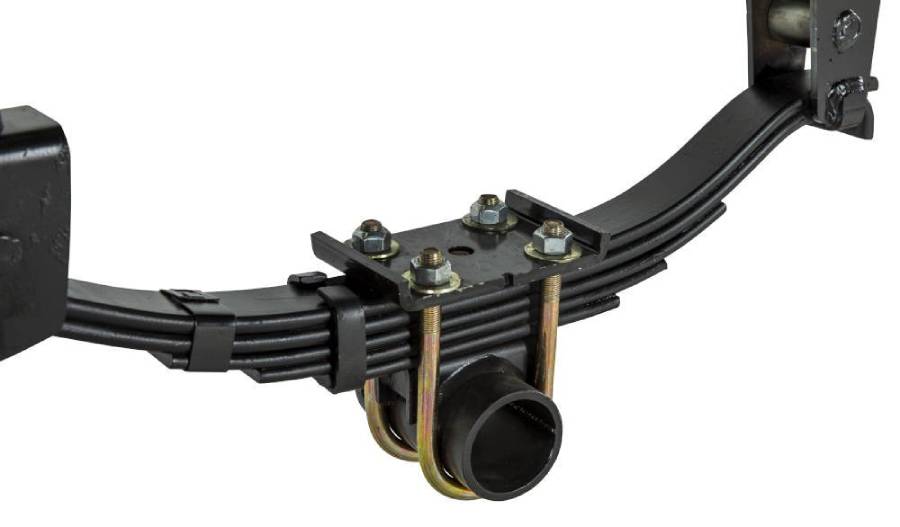
How Do You Identify a Lippert Axle?
To identify a Lippert axle, locate the axle identification tag, record its serial number or part number, check its weight rating, and verify the specifications with Lippert or the trailer manufacturer. The identification tag is the most reliable starting point because it provides manufacturer-specific information that physical measurements alone cannot confirm.
Start by inspecting the axle beam underneath the trailer. Look for a manufacturer label, sticker, or identification marking attached to the axle tube. Depending on the axle model and manufacturing configuration, identifying information may appear on different areas of the assembly. Clean accumulated dirt or road debris carefully to make the markings readable. Record every visible number and letter, including the manufacturer name, serial number, part number, and weight rating when available.
Next, compare the identification information with the trailer’s documentation. The trailer manufacturer’s build records, original equipment specifications, and maintenance history can help establish which axle was installed during production. The trailer’s Vehicle Identification Number (VIN) can also help the trailer manufacturer retrieve original equipment information. However, a trailer VIN is not the same as an axle serial number and does not independently identify every axle component.
Physical measurements provide additional identification details. Three useful measurements are hub face length, spring center spacing, and wheel bolt pattern. Hub face length describes the distance between the wheel-mounting surfaces of the hubs, while spring center spacing identifies the distance between the centers of the leaf spring mounting positions. The bolt pattern describes the number and arrangement of wheel studs. These measurements help distinguish axle configurations and evaluate replacement compatibility.
Finally, contact Lippert or the trailer manufacturer when the identification information is incomplete or conflicting. Provide photographs of the axle, available identification numbers, trailer details, and relevant measurements. Manufacturer verification is particularly important before ordering a replacement axle or selecting components that depend on the axle’s exact configuration.
Where Is the Identification Tag on a Lippert Axle?
A Lippert axle identification tag is generally found on the axle assembly, with the axle tube being the primary area to inspect. The exact tag location varies by axle design and production configuration, so owners should examine the accessible surfaces of the axle beam rather than assume every Lippert axle has an identification label in the same position.
Begin by looking along the axle tube between the wheels. Inspect the front-facing, rear-facing, and accessible upper or lower surfaces for a label, sticker, or manufacturer marking. On trailers with tandem axles, inspect each axle separately because the assemblies may have different identification numbers or specifications. Use a flashlight to examine areas partially hidden by suspension components, brake wiring, or accumulated road debris.
An axle identification label may contain several types of information, including the manufacturer name, serial number, part number, and rated capacity. The exact fields and label format depend on the axle. Do not confuse the axle identification tag with the trailer’s certification label, which typically displays information such as the trailer VIN and Gross Axle Weight Rating (GAWR). The certification label describes the trailer’s rated configuration rather than serving as a complete identification record for the individual axle.
If the label is covered with dirt or grease, clean the surrounding surface using a soft cloth and a cleaning method that will not damage the printed information. Avoid aggressive scraping, wire brushes, or strong solvents that could remove faded characters. Photograph the label before attempting additional cleaning, especially when only part of the identification number remains visible.
When no readable tag is present, record the axle’s physical characteristics and consult the trailer manufacturer’s original equipment records. Lippert or the trailer manufacturer can use the available information to help determine the axle configuration. Identifying an unmarked axle may require additional measurements and component inspection before its specifications can be confirmed.
How Do You Read a Lippert Axle Serial Number?
To read a Lippert axle serial number, locate the identification label, record the complete alphanumeric code, and use it to request the axle’s specifications from Lippert or the trailer manufacturer. The serial number serves as a reference for identifying the axle and retrieving its manufacturing information. It should not be interpreted as a universal code for axle capacity, dimensions, or production date without manufacturer documentation.
Start by examining the axle identification label for a field marked “Serial Number,” “Serial No.,” or “S/N.” Record the characters exactly as printed, including letters, numbers, and separators. A single incorrect character can prevent an accurate match when requesting manufacturer records. Photographing the label also provides a reference if the original marking becomes damaged or unreadable.
A Lippert axle serial number may help the manufacturer locate records associated with the axle’s original configuration. Depending on the available documentation, these records can identify the axle’s rated capacity, dimensions, brake configuration, and other manufacturing specifications. However, the serial number alone does not provide a reliable way to determine these characteristics without access to the corresponding records.
When the serial number cannot be located, check the trailer’s original equipment documentation and contact the trailer manufacturer. Provide the trailer VIN, model, production year, and photographs of the axle. These details can help identify the original axle assembly, although they may not reflect modifications or replacements performed after the trailer was manufactured.
What Is the Difference Between a Lippert Axle Serial Number and Part Number?
A Lippert axle serial number identifies a specific axle for manufacturing or service reference, while a part number identifies a particular axle configuration or component within the manufacturer’s parts system. Both numbers support identification, but they serve different purposes.
A serial number is useful when requesting information about an individual axle’s original specifications. A part number is useful when locating an axle assembly or replacement component with matching characteristics. For example, two axles manufactured to the same configuration may share a part number while having different serial numbers.
Neither number should be treated as a complete specification without verification. A replacement axle must match the required load rating, dimensions, suspension mounting arrangement, and applicable brake and hub specifications. Manufacturer records establish whether a particular part number corresponds to those requirements.
Can You Identify a Lippert Axle Using the Trailer VIN?
A trailer VIN can help identify the original Lippert axle installed by the trailer manufacturer, but it does not directly encode the axle’s serial number or complete specifications. The VIN identifies the trailer and can be used to request its original equipment records.
Provide the 17-character VIN to the trailer manufacturer and request the axle information associated with the trailer’s production records. Depending on the manufacturer’s recordkeeping, the available information may include the axle supplier, axle part number, rated capacity, and original equipment configuration.
VIN-based identification has one important limitation: the axle currently installed may differ from the original assembly. Previous owners or repair facilities may have replaced the axle without updating the trailer’s manufacturing records. Compare the original specifications with the physical axle and its identification markings before ordering replacement components.
How Do You Determine the Weight Capacity of a Lippert Axle?
To determine the weight capacity of a Lippert axle, check its manufacturer-rated capacity on the identification label or verify the rating through Lippert’s axle specifications. The rated capacity represents the maximum load assigned to the axle assembly under its specified operating conditions. It should not be estimated solely from the axle tube diameter, wheel bolt pattern, or number of wheel studs.
Trailer axles are manufactured in different load capacities to support specific trailer configurations. Their ratings depend on the design and specifications of the complete assembly, including the axle beam, spindles, hubs, bearings, and other relevant components. Two axles with similar external dimensions may have different rated capacities because their internal components or manufacturing specifications differ.
The trailer’s Gross Axle Weight Rating (GAWR) provides another important reference. This rating appears on the trailer’s certification label and identifies the maximum weight permitted on an individual axle system as specified by the trailer manufacturer. However, the GAWR should not automatically be treated as the axle manufacturer’s standalone capacity rating.
When the axle identification label is missing, collect the available trailer information and axle measurements before contacting Lippert or the trailer manufacturer. Physical characteristics can help narrow down the possible axle configuration, but they cannot independently establish a safe working load rating. Use a verified manufacturer rating when selecting replacement axles or load-bearing components.
Where Can You Find the Weight Rating of a Lippert Axle?
The weight rating of a Lippert axle can be found through three primary sources: the axle manufacturer’s identification information, Lippert’s manufacturing records, and the trailer manufacturer’s original equipment documentation.
The axle identification label is the first source to inspect. Look for a capacity value expressed in pounds, often associated with the axle’s rated load. Record the complete label information because the capacity value alone may not identify the exact axle configuration.
Lippert’s manufacturing records provide another method of verification when an axle serial number or part number is available. Contact the manufacturer with the identification details and request the corresponding axle specifications.
The trailer certification label provides the GAWR for each axle system. This information helps establish the trailer’s original rated configuration, but it does not replace the need to verify the axle manufacturer’s specifications. If the trailer has undergone suspension or axle modifications, the original certification information may not describe every component currently installed.
Is Axle Capacity the Same as Trailer GAWR?
Axle capacity and trailer GAWR are related ratings, but they are not necessarily identical. Axle capacity refers to the load rating assigned to the axle assembly, while Gross Axle Weight Rating refers to the maximum allowable weight supported by an axle system as established by the trailer manufacturer.
The trailer manufacturer determines GAWR based on the applicable components and vehicle configuration. These include the axle assembly and other load-bearing components, such as tires, wheels, and suspension equipment. A component with a lower permissible rating can limit the overall axle system rating.
For example, a trailer equipped with an axle rated for 5,200 pounds does not automatically have a GAWR of 5,200 pounds. The trailer manufacturer may specify a lower GAWR because of the ratings or configuration of other components in the axle system.
The same distinction applies when replacing an axle. Installing an axle with a higher manufacturer-rated capacity does not automatically increase the trailer’s certified GAWR or Gross Vehicle Weight Rating (GVWR). The trailer’s allowable weight limits remain governed by its certified configuration unless a properly authorized rating change is made.
How Do You Measure a Lippert Axle for Identification?
To measure a Lippert axle for identification, record the hub face length, spring center distance, wheel bolt pattern, and axle tube diameter. These measurements help determine the axle’s physical configuration and identify potential replacement assemblies. However, measurements alone cannot confirm the axle’s manufacturer, serial number, or rated weight capacity.
Begin by parking the trailer on a level surface, securing the wheels, and ensuring the trailer is properly supported before working underneath it. Use a measuring tape for the axle’s overall dimensions and a caliper for smaller components when necessary. Record measurements in inches, including fractions, because replacement axle specifications require accurate dimensions.
Three measurements are particularly important when identifying a Lippert trailer axle. Hub face length determines the distance between the wheel-mounting surfaces, spring center spacing establishes the location of the suspension mounting points, and bolt pattern identifies the wheel attachment configuration. Together, these specifications help distinguish axles with similar appearances but different installation requirements.
Additional measurements include axle tube diameter, brake assembly dimensions, and spindle specifications. For example, two axles may share the same hub face length but have different spring center spacing, making them unsuitable as direct replacements without additional modifications. Compare all recorded dimensions with manufacturer specifications before selecting a replacement axle.
How Do You Measure Lippert Axle Hub Face Length?
To measure Lippert axle hub face length, measure the distance between the two wheel-mounting surfaces of the hubs, from one side of the axle to the other. This dimension is commonly called the hub face-to-hub face measurement and is essential for determining the correct replacement axle width.
The hub face is the flat mounting surface where the wheel contacts the hub or brake drum. With the wheels removed and the trailer safely supported, position the measuring tape at one hub’s wheel-mounting surface and measure straight across to the corresponding surface on the opposite hub. Keep the measurement parallel to the axle beam to avoid recording an incorrect distance.
For example, an axle with a hub face measurement of 89 inches requires a replacement configuration that provides the appropriate wheel-mounting width for the trailer. An axle measuring 87 inches would position the wheels approximately one inch farther inward on each side, assuming the assembly is centered. This difference can affect tire clearance, wheel positioning, and compatibility with the trailer frame.
Record the measurement to the nearest practical fraction of an inch and compare it with the manufacturer’s specified hub face dimension. Do not substitute the overall axle beam length for the hub face measurement because these dimensions describe different parts of the assembly.
How Do You Measure Lippert Axle Spring Center Distance?
To measure Lippert axle spring center distance, measure from the center of one leaf spring mounting seat to the center of the corresponding seat on the opposite side of the axle. This measurement determines the spacing between the axle’s suspension attachment positions.
Locate the spring seats welded to the axle tube. These mounting points support the leaf springs and establish the axle’s position relative to the trailer frame. Measure horizontally between the centerlines of the two seats, keeping the measuring tape parallel to the axle beam.
For example, an axle with a 74-inch spring center distance has its spring mounting positions spaced 74 inches apart. A replacement axle with a 72-inch spring center distance would not directly align with those same mounting positions. Incorrect spring seat spacing can prevent proper installation and create suspension alignment problems.
Spring center measurements apply primarily to leaf spring axle configurations. Torsion axles use different mounting arrangements, so their replacement specifications must account for mounting bracket spacing, bracket orientation, and other manufacturer-defined dimensions.
How Do You Identify a Lippert Axle Bolt Pattern?
To identify a Lippert axle bolt pattern, count the wheel studs and measure the diameter of the bolt circle formed by their centers. The bolt pattern determines which wheels fit the hub and helps identify compatible hub assemblies.
Trailer wheel bolt patterns are expressed using two values: the number of wheel studs and the bolt circle diameter. For example, a 5-on-4.5 pattern has five wheel studs arranged around a 4.5-inch bolt circle. A 6-on-5.5 pattern has six wheel studs positioned around a 5.5-inch bolt circle.
For an even number of studs, measure from the center of one stud to the center of the stud directly opposite it. This measurement provides the bolt circle diameter. Five-stud configurations require a different measurement method or a dedicated bolt pattern gauge because no stud sits directly opposite another.
Bolt patterns help identify wheel and hub compatibility, but they do not establish axle weight capacity. Different axle assemblies can use identical bolt patterns while having different bearing sizes, spindle configurations, and load ratings. Verify the hub specifications and axle rating separately before purchasing replacement components.
How Can You Identify a Lippert Axle Without a Tag?
To identify a Lippert axle without a tag, use the trailer’s VIN, original equipment records, axle measurements, and component identification numbers to determine its configuration. When the identification label is missing or unreadable, these sources help narrow down the axle specifications, although manufacturer verification may still be required.
Start with the trailer’s original equipment information. Locate the VIN on the trailer certification label and record the trailer manufacturer, model, and production year. Contact the trailer manufacturer to request the original axle specifications or build records. These records may identify the axle supplier, rated capacity, axle dimensions, and part number associated with the trailer’s original configuration.
Next, inspect the axle’s physical characteristics. Record the axle tube diameter, hub face length, spring center spacing, wheel bolt pattern, and suspension mounting arrangement. Also determine whether the trailer uses a leaf spring or torsion axle configuration. These characteristics help distinguish axle designs and provide useful information when comparing replacement assemblies.
Component identification numbers offer another method of narrowing down the axle configuration. Wheel bearings, grease seals, hubs, and brake assemblies may contain manufacturer markings or part numbers. For example, bearing identification numbers can help determine compatible spindle dimensions, while brake assembly markings may indicate brake size and configuration. However, these components may have been replaced during previous repairs, so their identification numbers do not necessarily establish the axle’s original specifications.
If the trailer has undergone axle replacement or suspension modifications, original equipment records may no longer match the installed assembly. Compare the physical measurements with the documented specifications and investigate any differences before selecting replacement parts. Do not assume that an axle is manufactured by Lippert simply because it resembles a Lippert axle or uses compatible components.
Finally, contact Lippert or the trailer manufacturer with photographs, available component numbers, trailer information, and axle measurements. Request confirmation of the axle’s identity, rated capacity, and replacement specifications. If the manufacturer cannot establish the axle’s identity, a qualified trailer repair technician should inspect the assembly before any load rating or replacement compatibility decision is made.
How Do You Identify Replacement Parts for a Lippert Axle?
To identify replacement parts for a Lippert axle, use the axle serial number, part number, rated capacity, and component specifications to verify compatibility. Wheel bearings, grease seals, hubs, and brake assemblies must match the axle’s mechanical configuration. Axles with similar dimensions or weight ratings do not necessarily use interchangeable components.
Start by locating the axle identification information and checking the manufacturer’s parts documentation. Lippert axle specifications can help identify the original hub assemblies, braking components, and other serviceable parts. When the axle identification tag is missing, inspect individual components for stamped part numbers or manufacturer markings. These markings provide an alternative reference for identifying compatible replacement parts.
Wheel bearings and grease seals require particular attention because their dimensions determine how they fit the spindle and hub. Bearings are identified using part numbers and dimensional specifications, including inside diameter, outside diameter, and width. Grease seals must match the hub bore and the spindle’s seal contact surface. For example, two trailer hubs may share the same wheel bolt pattern but require different inner bearings or grease seals because their spindle dimensions differ.
Brake assembly identification involves checking the brake type, assembly diameter, shoe width, mounting flange pattern, and applicable axle rating. Electric drum brakes, for instance, are available in different sizes and configurations. A brake assembly with the correct mounting pattern is not automatically compatible if its braking capacity or drum dimensions differ from the original equipment.
Before ordering replacement parts, compare the manufacturer’s part numbers with the existing component specifications. Confirm that bearings, seals, hubs, and brake assemblies are suitable for the axle’s verified configuration. Do not select replacement components based solely on trailer model, wheel bolt pattern, or estimated axle capacity, as these details cannot establish complete compatibility.
How Do You Identify the Correct Replacement Lippert Axle?
To identify the correct replacement Lippert axle, match the original axle’s rated capacity, hub face length, suspension mounting dimensions, brake configuration, and wheel compatibility. These specifications determine whether the replacement axle can support the trailer’s intended load and fit its existing suspension system.
Begin by obtaining the original axle specifications from its identification tag or manufacturer records. Record the axle part number, serial number, rated capacity, hub face measurement, and spring center spacing where applicable. For torsion axles, identify the mounting bracket configuration and manufacturer-defined mounting dimensions. These details establish the primary requirements for selecting a replacement assembly.
Next, examine the trailer’s existing suspension and wheel configuration. Leaf spring axles require compatible spring seat locations and mounting arrangements, while torsion axles require the correct mounting geometry and installation specifications. The replacement must also accommodate the required wheel bolt pattern, brake system, and tire clearance.
Axle capacity is another essential consideration. The replacement assembly must meet the trailer manufacturer’s applicable load requirements without exceeding the limitations of other components. Installing an axle with a higher rated capacity does not automatically increase the trailer’s certified Gross Axle Weight Rating (GAWR) or Gross Vehicle Weight Rating (GVWR).
When the original axle specifications are unavailable, provide the trailer manufacturer or Lippert with the trailer VIN, axle measurements, suspension details, and photographs. Manufacturer verification helps determine whether a direct replacement is available or whether additional engineering and installation considerations are necessary.
What Specifications Must Match When Replacing a Lippert Axle?
The replacement Lippert axle must have compatible load capacity, mounting dimensions, suspension configuration, hub specifications, and braking components. These characteristics affect installation, wheel alignment, load distribution, and braking performance.
Hub face length determines the lateral position of the wheels relative to the trailer frame and body. Spring center spacing establishes the attachment locations for leaf spring suspension systems. A mismatch in either measurement can prevent proper installation or create tire clearance and suspension alignment problems.
The axle’s rated capacity must also satisfy the trailer’s requirements. For example, replacing an axle rated for 5,200 pounds with one rated for 3,500 pounds would reduce the axle assembly’s load-carrying capability and would not be an acceptable direct substitution for a configuration requiring the higher rating.
Other important specifications include axle camber, spindle configuration, brake dimensions, wheel bolt pattern, and the mounting arrangement. For torsion axles, mounting bracket orientation and starting angle may also affect ride height and suspension geometry. Verify these specifications against the manufacturer’s replacement requirements rather than relying only on matching axle length or weight capacity.
Can You Replace a Lippert Axle With a Different Brand?
A Lippert axle can be replaced with an axle from another manufacturer when the replacement meets the trailer’s load, dimensional, suspension, and braking requirements. Brand compatibility alone does not determine whether an axle is suitable for installation.
Manufacturers such as Dexter produce trailer axle assemblies in configurations that may serve as alternatives to certain Lippert axles. However, equivalent weight ratings do not guarantee identical hub face lengths, spring center dimensions, spindle specifications, or suspension mounting arrangements. Each of these characteristics must be evaluated before selecting a replacement.
For example, a Dexter axle and a Lippert axle may both have a 3,500-pound rating and a five-stud wheel bolt pattern while differing in spring seat spacing or hub dimensions. These differences can affect installation and component compatibility despite the matching capacity and bolt pattern.
Before changing axle brands, compare the complete technical specifications and confirm the replacement with the axle manufacturer or a qualified trailer repair professional. The replacement must preserve the trailer’s intended suspension geometry, braking capability, and applicable weight limits. Modifications to spring seats, mounting brackets, or other structural components should follow manufacturer-approved procedures rather than being performed solely to make an incompatible axle fit.
Read more: Dexter Axle Identification: Model & Serial Number Guide
What Are the Most Common Questions About Lippert Axle Identification?
The most common questions about Lippert axle identification concern serial number availability, identification through photographs, and differences between axle configurations. The most reliable identification method combines manufacturer markings, axle measurements, and original equipment documentation. The following answers address situations where the axle’s identity or specifications remain uncertain.
Are All Lippert Axles Marked With a Serial Number?
Not every Lippert axle can be assumed to have a visible or readable serial number. Identification markings vary by axle model and production configuration, and labels may become damaged, obscured, or detached during service. When no serial number is available, use the trailer VIN, original equipment records, and physical axle measurements to help identify the assembly. Contact Lippert or the trailer manufacturer to verify the specifications before purchasing replacement components.
Can You Identify a Lippert Axle From a Photo?
A photograph can help identify a Lippert axle’s general configuration, suspension type, hub design, and visible manufacturer markings. However, a photograph alone cannot reliably confirm the axle’s rated capacity, serial number, or internal component specifications unless the relevant identification information is clearly visible. For better identification, provide photographs of the entire axle assembly, identification label, suspension mounting points, and hub configuration alongside accurate measurements.
Do Lippert Axle Identification Methods Vary by Trailer Type?
Lippert axle identification methods follow the same general process across travel trailers, fifth-wheel trailers, and utility trailers, but the axle configurations and mounting arrangements can differ. Leaf spring axles require measurements such as hub face length and spring center spacing, while torsion axles require additional attention to mounting bracket dimensions and suspension geometry. The trailer’s original equipment records and axle manufacturer specifications remain the primary references for confirming its identity and replacement compatibility.