Jeep axle identification by VIN helps you determine which front and rear axles your vehicle originally came with. A Jeep’s 17-character Vehicle Identification Number (VIN) can be used to retrieve factory build information, including axle configurations and gear ratios. However, the VIN itself does not directly encode the exact axle model, so identifying your Jeep’s axles requires checking factory equipment records or inspecting the axle assemblies.
Jeep vehicles use several axle types, including the Dana 30, Dana 35, and Dana 44, depending on the model, production year, trim level, and drivetrain configuration. For example, certain Jeep Wrangler TJ models came equipped with a Dana 30 front axle and a Dana 35 rear axle, while other configurations featured a Dana 44 rear axle. Knowing the exact axle type is essential when selecting replacement parts, upgrading differentials, or changing gear ratios.
To identify your Jeep’s axle, start by locating the VIN and checking the vehicle’s factory build sheet. Next, examine the axle identification tags, manufacturer markings, or differential housing to verify the installed components. This guide explains how to identify Jeep axles using VIN-based records, distinguish common Dana axle models, and confirm whether your vehicle still has its original factory-installed axles.
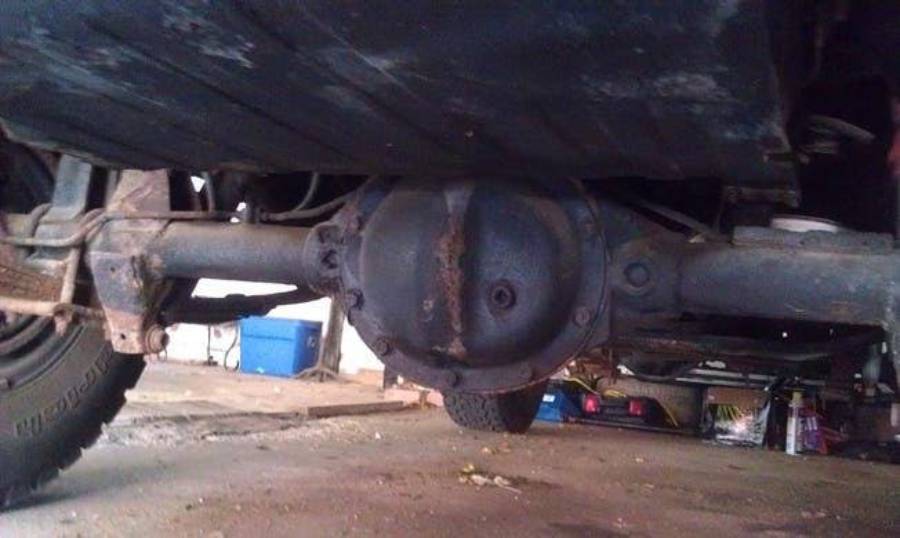
Can You Identify a Jeep’s Axle Type by VIN?
Yes, you can identify a Jeep’s original axle type using its VIN and factory build information, but the VIN alone does not directly reveal the axle model. The 17-character Vehicle Identification Number identifies the vehicle and provides access to factory specifications that may include the front axle, rear axle, differential type, and gear ratio.
A standard Jeep VIN contains information about the manufacturer, vehicle characteristics, model year, assembly plant, and production sequence. However, no universal VIN position specifically identifies a Dana 30, Dana 35, Dana 44, or another axle assembly. Instead, the VIN serves as a reference for retrieving the vehicle’s original equipment records. These records may list axle descriptions and factory-installed gear ratios that help determine the original drivetrain configuration.
For example, a Jeep Wrangler TJ equipped with a Dana 30 front axle and Dana 35 rear axle may have those components documented in its factory equipment information. A Wrangler Rubicon from the same generation may have Dana 44 axles at both ends. The exact configuration depends on the model year, trim level, and factory options rather than a single VIN character.
VIN-based axle identification confirms the original factory configuration, not necessarily the axle currently installed. A previous owner may have replaced the axle assembly, installed different differential gears, or upgraded drivetrain components without changing the vehicle’s VIN. Therefore, factory build information should be compared with axle identification tags, stamped numbers, or physical housing features before ordering replacement parts.
How Do You Identify Your Jeep’s Axle Using the VIN?
To identify your Jeep’s axle using the VIN, locate the vehicle’s identification number, retrieve its factory build information, and check the front and rear axle specifications. These three steps establish the original axle configuration. A physical inspection can then confirm whether the installed axles match the factory records.
Where Can You Find the VIN on a Jeep?
The VIN on a modern Jeep is a 17-character identification number located on the vehicle and its registration documents. The most accessible location is the driver’s side of the dashboard, where the VIN plate can be viewed through the lower corner of the windshield. Another common location is the certification label inside the driver’s door opening.
You can find your Jeep’s VIN in three primary locations:
- Driver-side dashboard: Look through the windshield at the lower dashboard near the driver’s side A-pillar.
- Driver-side door jamb: Open the driver’s door and inspect the vehicle certification label on the door opening or pillar.
- Vehicle documents: Check the registration certificate, insurance paperwork, or vehicle title.
For example, owners of Jeep Wrangler JK and JL models can typically locate the VIN through the windshield without opening the hood or removing any components. The VIN should match the identification number recorded on the vehicle’s official documents.
Standardized 17-character VINs have been used on U.S.-market vehicles since the 1981 model year. Earlier Jeep vehicles may have shorter or differently structured identification numbers, so modern VIN decoding procedures do not apply to every classic Jeep.
How Do You Look Up a Jeep’s Factory Build Sheet by VIN?
You can look up a Jeep’s factory build information by entering its VIN into a manufacturer-supported equipment lookup service or requesting the original equipment details from an authorized Jeep dealership. A factory build sheet records the vehicle’s production configuration and may include axle assemblies, differential equipment, and final-drive ratios.
Follow these steps to retrieve the relevant information:
- Copy the complete VIN. Use the 17-character number from the dashboard or vehicle registration and verify each character before submitting it.
- Access a Jeep or Mopar vehicle equipment resource. Check whether a manufacturer-supported lookup is available for your model year. If the information is unavailable online, contact an authorized Jeep dealership’s parts department.
- Request the factory equipment information. Provide the VIN and ask for the original front axle, rear axle, differential, and axle ratio specifications.
- Review the equipment descriptions. Look for entries identifying the front axle assembly, rear axle assembly, differential configuration, and final-drive ratio.
- Record the specifications. Save the axle descriptions and any associated sales codes for comparison with the components installed on your Jeep.
For example, a factory equipment record for a Jeep Wrangler JK Rubicon may identify Dana 44 front and rear axle assemblies. The record may also specify a factory axle ratio, such as 4.10:1, depending on the production year and configuration. This information establishes the original equipment specification without requiring the owner to disassemble the differential.
Factory build information is not equally accessible for every Jeep model year. Older vehicles, imported configurations, and incomplete digital records may require assistance from a dealership or additional component-level identification.
How Do You Find the Axle Type in Jeep Build Information?
To find the axle type in Jeep build information, identify the front axle and rear axle equipment descriptions, then match those descriptions with the corresponding axle models. Factory equipment records may use descriptive names, manufacturer-specific sales codes, or drivetrain terminology rather than a single standardized axle identification field.
Start by locating entries containing terms such as “Front Axle,” “Rear Axle,” “Dana,” “Differential,” or “Axle Ratio.” A description identifying a Dana 44 rear axle establishes the original axle family, while a separate entry describing a 3.73 or 4.10 axle ratio identifies the gearing. These specifications describe different characteristics and should not be treated as interchangeable.
The following table shows how to interpret common information found in Jeep factory equipment records.
| Factory equipment information | What it identifies |
|---|---|
| Front axle description | Original front axle assembly or family |
| Rear axle description | Original rear axle assembly or family |
| Axle sales code | Manufacturer-specific equipment configuration |
| Axle ratio | Original ring-and-pinion gear ratio |
| Differential description | Open, limited-slip, or locking differential equipment, where specified |
For example, a build record listing a Dana 30 front axle and a Dana 44 rear axle indicates that the vehicle originally used two different axle families. A separate 3.73 axle ratio entry describes the factory gearing rather than the physical axle model.
Jeep axle sales codes must be interpreted using the correct model-year equipment references because code meanings and available configurations can vary. A generic VIN decoder that reports only the engine, body style, and model year does not provide sufficient evidence to identify the axle assembly.
Once you have identified the original axle specifications, compare them with the identification tags, stamped numbers, or differential housing features on the vehicle. This final verification is particularly important for used Jeeps with an unknown modification history.
What Jeep Axle Types Can You Identify From Factory Build Records?
The most common Jeep axle types identified through factory build records include the Dana 30, Dana 35, and Dana 44, along with newer Dana AdvanTEK axle variants. These axle assemblies differ in housing construction, ring gear dimensions, load capacity, and vehicle applications. The exact axle installed at the factory depends on the Jeep model, production year, trim level, and drivetrain configuration.
Dana axles are manufactured by Dana Incorporated, a major supplier of drivetrain components used in Jeep vehicles. Each axle family has distinct mechanical specifications that influence its suitability for everyday driving, off-road use, towing, and drivetrain modifications. Identifying the correct axle model is essential because differential carriers, axle shafts, bearings, and ring-and-pinion gears are not universally interchangeable between axle families.
The following table compares three common Jeep axle families.
| Axle Type | Nominal Ring Gear Diameter | Common Jeep Applications | Typical Position |
|---|---|---|---|
| Dana 30 | 7.125 inches | Wrangler YJ, TJ, and selected JK models | Front |
| Dana 35 | 7.625 inches | Wrangler YJ, TJ, and selected JK models | Rear |
| Dana 44 | 8.5 inches on traditional versions | Wrangler TJ, JK, and selected other Jeep models | Front or rear |
These dimensions describe traditional axle families. Newer Dana 44 AdvanTEK assemblies use different designs and specifications, so their internal components should not be assumed to match older Dana 44 axles.
Dana 30 axles are commonly found in the front of older Jeep Wrangler models. The Dana 30 uses a relatively compact differential housing and a nominal 7.125-inch ring gear in its traditional configuration. Jeep Wrangler YJ and TJ models commonly used Dana 30 front axles, while non-Rubicon JK configurations also used Dana 30 front axle assemblies. Their construction is suitable for factory drivetrain configurations, although axle strength and component compatibility depend on the specific generation and assembly.
For example, a standard Jeep Wrangler TJ with a factory Dana 30 front axle may have a Dana 35 or Dana 44 rear axle, depending on its original equipment package. The front axle model cannot be used to determine the rear axle model without additional vehicle information.
Dana 35 axles are commonly associated with the rear drivetrain of older Jeep Wrangler models. Traditional Dana 35 assemblies use a nominal 7.625-inch ring gear and were installed in various YJ and TJ configurations. Certain Wrangler JK models also used Dana 35 rear axle assemblies. The axle family is generally associated with lighter-duty applications than traditional Dana 44 configurations, although actual durability depends on axle shafts, tire size, gearing, traction, and operating conditions.
A Jeep Wrangler TJ equipped with a Dana 35 rear axle may require different axle shafts, differential components, and bearings than a TJ equipped with an optional Dana 44 rear axle. This difference makes accurate identification necessary before purchasing replacement parts or installing a differential locker.
Dana 44 axles are used in selected Jeep front and rear applications, including factory Rubicon configurations. Traditional Dana 44 axles use a nominal 8.5-inch ring gear and generally offer greater torque-handling capability than traditional Dana 30 and Dana 35 assemblies. However, Dana 44 specifications vary significantly between vehicle generations, axle positions, and manufacturing designs.
For example, the Jeep Wrangler TJ Rubicon was equipped with Dana 44 front and rear axles, while the Wrangler JK Rubicon also featured Dana 44 axles at both ends. These assemblies are not mechanically identical across generations, despite sharing the Dana 44 designation.
Modern Jeep models also use Dana AdvanTEK axle designs, including Dana 44 variants found in selected Wrangler JL and Gladiator JT configurations. These newer assemblies incorporate updated differential housings, gear designs, and axle components. As a result, identifying an axle simply as a Dana 44 does not establish which replacement parts will fit.
Factory build records provide the starting point for identifying these axle families. For accurate parts selection, the axle model should be matched with its model year, assembly identification number, and relevant manufacturer specifications.
How Can You Identify a Jeep’s Front and Rear Axles Separately?
You can identify a Jeep’s front and rear axles separately by checking each axle description in the factory build records and verifying the corresponding axle assembly on the vehicle. Front and rear axles serve different drivetrain functions and may belong to different Dana axle families, even when installed on the same Jeep.
The front axle transfers engine torque to the front wheels when the four-wheel-drive system engages. On solid-front-axle Jeep models, the assembly also accommodates steering movement through its steering knuckles and axle shaft joints. The rear axle transfers torque to the rear wheels and supports the vehicle through its axle housing and suspension mounting points. These differences affect axle shaft design, housing construction, and component compatibility.
Jeep factory configurations illustrate why both axle positions must be identified independently.
| Jeep Configuration | Factory Front Axle | Factory Rear Axle |
|---|---|---|
| Wrangler TJ Rubicon (2003–2006) | Dana 44 | Dana 44 |
| Wrangler TJ, selected non-Rubicon configurations | Dana 30 | Dana 35 |
| Wrangler TJ, selected Dana 44 rear-axle configurations | Dana 30 | Dana 44 |
| Wrangler JK Rubicon (2007–2018) | Dana 44 | Dana 44 |
| Wrangler JK, selected non-Rubicon configurations | Dana 30 | Dana 44 |
The table represents specific factory configuration patterns rather than every axle combination available during those model years. Production options, trim packages, and regional specifications must be checked against the individual vehicle’s build information.
For example, a Jeep Wrangler TJ equipped with a Dana 30 front axle and Dana 44 rear axle requires different differential components for each axle. Although both assemblies operate within the same four-wheel-drive system, their internal dimensions, axle shafts, and housing designs are not interchangeable.
To verify the front axle, inspect the differential housing between the front wheels and locate its identification tag, stamped assembly number, or manufacturer markings. Compare these identifiers with the front axle description in the factory build records. Differential cover shape and housing construction provide additional identification clues, particularly when the original tag is missing.
To verify the rear axle, repeat the identification process at the rear differential housing. Record the axle identification number and compare it with the rear axle specification listed in the build information. Do not assume the rear axle belongs to the same Dana family as the front axle.
Front and rear axle gear ratios must also be compatible on a conventional part-time four-wheel-drive Jeep. For example, a vehicle with 4.10:1 gearing in the front axle should have matching nominal gearing in the rear axle. A substantial mismatch can cause drivetrain binding or mechanical damage when four-wheel drive is engaged on a high-traction surface.
Finally, compare the physical axle assemblies with the original factory specifications. A Jeep that has undergone an axle swap may have a Dana 44 installed where the factory records identify a Dana 35. In that situation, the identification markings on the installed axle provide more relevant information for replacement parts and repairs than the original VIN-based configuration.
Where Can You Find the Identification Number on a Jeep Axle?
You can find a Jeep axle identification number on a metal tag attached to the differential cover, a stamped area of the axle tube, or a manufacturer identification label on the axle housing. The exact location depends on the axle manufacturer, model, and production year. These identifiers help determine the installed axle assembly when factory VIN records are unavailable or the vehicle has undergone drivetrain modifications.
Traditional Dana axle assemblies commonly use identification tags or stamped numbers to distinguish axle models and manufacturing configurations. On certain assemblies, a metal tag is secured beneath one of the differential cover bolts. Other axles have identification numbers stamped into the axle tube or displayed on an adhesive label. The numbers may identify the axle assembly, production information, or manufacturer-specific specifications.
To locate your Jeep’s axle identification number, inspect the following areas:
- Differential cover bolts: Examine the perimeter of the differential cover for a metal identification tag secured beneath a bolt.
- Axle tubes: Check the metal tubes extending from the differential housing for stamped assembly numbers or manufacturing codes.
- Axle housing: Look for cast identification marks, raised numbers, or manufacturer labels near the differential housing.
- Manufacturer labels: Inspect accessible sections of the axle assembly for printed identification information, including barcodes or assembly references.
For example, an older Jeep Wrangler TJ with a Dana rear axle may have an identification tag attached near the differential cover or a stamped assembly number on the axle tube. These markings can help distinguish the installed axle from other Dana models with similar appearances.
Before inspecting the axle, park the Jeep on level ground, engage the parking brake, and secure the vehicle against movement. Use adequate lighting to examine the housing without placing yourself beneath an unsupported vehicle. Remove loose dirt with a soft brush or cloth, but avoid aggressive grinding or sanding that could damage stamped identification numbers.
Axle identification numbers provide stronger component-level evidence than VIN-based factory information when the vehicle has been modified. A factory build sheet describes the axle originally installed during production, while an identification number on the axle assembly helps establish the component currently fitted to the vehicle.
However, not every marking identifies the complete axle assembly. Casting numbers may identify a housing component rather than its final configuration. Therefore, identification markings should be interpreted using the appropriate manufacturer reference before determining exact replacement-part compatibility.
How Do You Read a Dana Axle BOM Number?
You can read a Dana axle Bill of Materials (BOM) number by locating the stamped assembly identifier and matching it with Dana’s axle identification records. The BOM number identifies a specific axle assembly configuration and can help determine its original specifications, including the axle family and applicable service components.
A Dana BOM number commonly consists of six digits, sometimes followed by a suffix that distinguishes an assembly variation. The identifier may be stamped on an axle tube or recorded on an identification tag, depending on the axle design. Its format and location vary across Dana axle generations, so not every Dana axle can be identified using the same procedure.
For example, a stamped identifier formatted as XXXXXX-X may represent a six-digit Dana assembly number followed by a revision or variation suffix. This is an illustrative format rather than an actual axle BOM. The complete identifier should be recorded exactly as it appears, including any suffix.
To identify a Dana axle using its BOM number, follow these steps:
- Locate the stamped number: Inspect the axle tube and manufacturer identification areas for the complete assembly identifier.
- Record the full identifier: Copy every digit and suffix without omitting characters.
- Consult Dana identification resources: Use manufacturer-supported axle identification documentation or contact Dana technical support with the recorded number.
- Match the assembly specification: Confirm the axle model, application, and available original configuration details.
- Verify the installed components: Compare the manufacturer information with the axle housing and any known modifications.
A Dana BOM lookup is especially useful when two axle assemblies share the same general family name but use different internal components. For instance, Dana 44 assemblies from different Jeep generations may have different axle shaft dimensions, differential carriers, bearings, or ring-and-pinion designs. The axle family name alone does not establish complete parts compatibility.
A Dana BOM number is different from a Jeep VIN. The VIN identifies the vehicle, while the BOM identifies an axle assembly as manufactured. Using both identifiers allows Jeep owners to compare the original factory configuration with the axle currently installed.
If the BOM number is missing, damaged, or unreadable, identification can continue through other stamped numbers, housing characteristics, differential cover features, and manufacturer documentation. When exact internal specifications remain uncertain, a qualified drivetrain specialist can inspect the assembly before replacement parts are ordered.
How Do You Verify a Jeep Axle Using Its Differential Cover?
You can verify a Jeep axle’s likely model by examining the differential cover shape, bolt arrangement, and surrounding housing features, then comparing them with verified axle identification references. Differential covers provide useful visual clues for distinguishing traditional Dana 30, Dana 35, and Dana 44 assemblies, especially when identification tags are missing.
The differential cover is the removable metal plate attached to the axle’s center housing. It protects the differential gears and retains lubricant inside the assembly. Its shape, mounting pattern, and relationship to the housing differ between axle designs, although some axle families share similar features.
Traditional Dana axle families have several recognizable characteristics.
| Axle Type | Differential Cover Characteristics | Additional Identification Clues |
|---|---|---|
| Dana 30 | Generally rounded or irregular oval-shaped cover with 10 mounting bolts | Relatively compact front differential housing |
| Dana 35 | Generally oval-shaped cover with 10 mounting bolts | Rear axle housing proportions and axle tube features |
| Dana 44 | Traditional versions commonly have a more angular, irregular cover shape with 10 mounting bolts | Larger traditional differential housing and model-specific casting features |
These descriptions apply to common traditional configurations and should not be treated as universal identification rules. Newer Dana AdvanTEK designs and other axle variants can have different housing and cover characteristics.
Differential cover bolt count alone cannot reliably distinguish a Dana 30, Dana 35, and traditional Dana 44. All three families commonly use 10 differential cover bolts, making the overall cover outline and housing construction more useful than bolt count by itself.
For example, a Jeep Wrangler TJ with an original Dana 35 rear axle generally has a different differential housing profile from a TJ equipped with a traditional Dana 44 rear axle. Comparing both housings with accurate reference images can narrow down the axle type without removing the cover.
However, aftermarket differential covers can change the visible appearance of an axle. Heavy-duty replacement covers may have reinforced ribs, thicker materials, or angular designs that do not resemble the original factory cover. In these cases, the axle housing, stamped assembly numbers, and manufacturer markings provide more dependable identification evidence.
The most reliable identification combines visual inspection with an axle-specific identifier. Use the differential cover to narrow down the axle family, then confirm the assembly through its BOM number, identification tag, or verified manufacturer specifications. This approach reduces the risk of ordering incompatible differential gears, axle shafts, seals, or bearings.
What Axles Came Factory-Installed on Different Jeep Wrangler Generations?
Jeep Wrangler factory axle configurations vary by generation, model year, trim level, and drivetrain package. The YJ, TJ, JK, and JL generations use different combinations of Dana 30, Dana 35, Dana 44, and newer Dana AdvanTEK axle assemblies. Identifying the Wrangler generation helps narrow down the possible axle types before checking the vehicle’s VIN-based factory equipment records.
The following table summarizes common factory axle configurations across four Jeep Wrangler generations.
| Jeep Wrangler Generation | Model Years | Common Front Axles | Common Rear Axles |
|---|---|---|---|
| Wrangler YJ | 1987–1995 | Dana 30 | Dana 35 |
| Wrangler TJ | 1997–2006 | Dana 30, Dana 44 | Dana 35, Dana 44 |
| Wrangler JK | 2007–2018 | Dana 30, Dana 44 | Dana 35, Dana 44 |
| Wrangler JL | 2018–present | Dana 30 AdvanTEK, Dana 44 AdvanTEK variants | Dana 35 AdvanTEK, Dana 44 AdvanTEK variants |
These are representative axle families rather than a complete list of every factory configuration. Specific applications depend on production year, trim, market, and optional equipment.
The Jeep Wrangler YJ (1987–1995) commonly used a Dana 30 front axle and Dana 35 rear axle. This combination was standard across many factory YJ configurations and provided a relatively straightforward drivetrain arrangement. However, decades of off-road modifications and axle replacements mean that current axle identification should not rely solely on the vehicle’s production year.
The Jeep Wrangler TJ (1997–2006) introduced more factory axle combinations, particularly with the availability of Dana 44 assemblies. Standard TJ configurations commonly featured a Dana 30 front axle and Dana 35 rear axle, while selected models offered a Dana 44 rear axle. The TJ Rubicon, introduced for the 2003 model year, featured Dana 44 front and rear axles with factory locking differentials.
The Jeep Wrangler JK (2007–2018) used different axle configurations depending on the trim and equipment package. Non-Rubicon models commonly featured a Dana 30 front axle with a Dana 35 or Dana 44 rear axle, depending on the configuration. Rubicon models used Dana 44 front and rear axles, with additional off-road drivetrain equipment.
The Jeep Wrangler JL (2018–present) uses newer axle designs, including Dana AdvanTEK assemblies. Axle configurations vary across Sport, Sahara, Rubicon, and other trim packages. Some configurations use Dana 30-family front axles, while others use Dana 44-family assemblies with different internal designs and specifications. These modern axle variants should not be assumed to share replacement components with traditional Dana axles carrying the same family designation.
For example, identifying a 2015 Wrangler JK Rubicon narrows the original factory configuration to Dana 44 front and rear axle assemblies. However, identifying a 2015 Wrangler JK without its trim or equipment information is insufficient to establish both axle models.
The most accurate identification combines the Wrangler generation with its VIN-specific factory equipment records. Model-year tables narrow down the possibilities, while build records and physical axle markings establish the original and currently installed configurations.
How Can You Find Your Jeep’s Axle Gear Ratio by VIN?
You can find your Jeep’s original axle gear ratio by using its VIN to retrieve factory equipment records and locating the axle ratio specification. The gear ratio describes the relationship between driveshaft rotation and axle shaft rotation. It is separate from the axle model and cannot be determined from a universal position within the VIN itself.
Common factory Jeep axle ratios include 3.21:1, 3.73:1, and 4.10:1, although the available ratios vary by vehicle generation, engine, transmission, trim, and drivetrain package. A 3.73:1 ratio means the driveshaft rotates approximately 3.73 times for one complete axle shaft rotation when the differential operates without wheel-speed differentiation.
The following table explains three commonly encountered Jeep axle ratios.
| Axle Gear Ratio | Driveshaft Rotations per Axle Rotation | General Characteristic |
|---|---|---|
| 3.21:1 | 3.21 | Taller gearing |
| 3.73:1 | 3.73 | Intermediate gearing |
| 4.10:1 | 4.10 | Shorter gearing with greater torque multiplication |
These descriptions compare the ratios under otherwise equivalent drivetrain conditions. Actual vehicle performance also depends on tire diameter, transmission gearing, engine output, and vehicle weight.
To identify the factory axle ratio, locate the VIN, obtain the original equipment information, and search for an axle ratio entry. Record the ratio alongside the front and rear axle descriptions. If the build record lists a 3.73 axle ratio, that figure represents the original factory gearing rather than a guarantee of the ratio currently installed.
A Jeep’s axle gear ratio can change without replacing the axle housing. Owners frequently install different ring-and-pinion gear sets when upgrading to larger tires or modifying the drivetrain for off-road use. For example, a Wrangler originally equipped with 3.73 gears may be re-geared to 4.56 while retaining its original Dana axle housings.
When the vehicle’s modification history is unknown, verify the installed gear ratio through reliable axle identification records, gear-set markings, or mechanical inspection. Counting driveshaft and wheel rotations can provide an approximate ratio, but the procedure must account for differential operation and the number of driven wheels rotating.
Matching the front and rear axle gear ratios is particularly important on four-wheel-drive Jeeps. Incompatible ratios can force the axles to operate at different rotational speeds and place excessive stress on drivetrain components when four-wheel drive is engaged.
VIN-based factory records establish the original gear ratio, while inspection establishes the current gearing. Both details should be confirmed before purchasing ring-and-pinion gears, differential carriers, or other ratio-dependent drivetrain components.
Read more: How to Reset Lippert Leveling System: Step-by-Step
Why Doesn’t Your Jeep’s Axle Match Its VIN Build Information?
A Jeep’s installed axle may not match its VIN-based factory information because of an axle swap, drivetrain modifications, incorrect equipment identification, or missing factory components. The VIN remains associated with the vehicle’s original production configuration, even when the front or rear axle has been replaced. This difference is particularly common in used Jeeps that have undergone off-road upgrades or drivetrain repairs.
There are four primary reasons why a Jeep’s current axle specifications may differ from its factory build records.
1. Complete axle replacement: An axle swap replaces the original axle assembly with another model or configuration. Jeep owners may replace a Dana 35 rear axle with a Dana 44 to accommodate larger tires, differential lockers, or more demanding off-road conditions. For example, a Wrangler TJ originally equipped with a Dana 35 rear axle may now have a Dana 44 installed. Its factory build information will still identify the original Dana 35 because replacing the axle does not change the vehicle’s VIN.
2. Differential and gear modifications: Replacing internal differential components can change the axle’s specifications without changing its housing or axle family. Common modifications include installing a different ring-and-pinion gear set, adding a locking differential, or upgrading axle shafts. For instance, a Jeep originally equipped with 3.73 gears may have been re-geared to 4.56 while retaining the same Dana 44 axle housing. In this case, the factory axle model remains correct, but the original gear ratio no longer describes the installed gearing.
3. Incorrect interpretation of factory equipment codes: Jeep build records may contain manufacturer-specific sales codes, axle descriptions, and drivetrain equipment terminology. Confusing an axle ratio code with an axle assembly code can produce an incorrect identification. Similarly, identifying an axle only as a Dana 44 does not establish its exact generation, differential design, or compatible replacement components. Factory descriptions should be interpreted using references applicable to the vehicle’s production year.
4. Missing identification tags or misleading visual features: Axle identification tags can become damaged, corroded, or detached during maintenance. Aftermarket differential covers can also change the appearance of the original assembly. For example, a reinforced aftermarket cover may resemble another axle family’s cover, even though the underlying housing remains unchanged. Stamped assembly numbers and verified housing features provide additional evidence when visual identification is uncertain.
The most reliable way to resolve an axle identification mismatch is to compare the original factory equipment record with the identification markings on the installed assembly. Start with the VIN to establish the factory configuration, then inspect the axle housing, manufacturer tag, and stamped assembly number. If the identifiers indicate a different axle family, investigate whether the vehicle has undergone a complete axle replacement.
An axle mismatch does not automatically indicate a mechanical problem. Properly engineered axle upgrades can be compatible with a Jeep’s drivetrain. However, the installed axle model, gear ratio, mounting configuration, and related drivetrain components must be verified before ordering replacement parts or making further modifications.
What Should You Do if Your Jeep’s VIN Doesn’t Show the Axle Type?
If your Jeep’s VIN does not reveal the axle type, request the original equipment information from a Jeep dealership, inspect the axle identification markings, or identify the assembly through its manufacturer specifications. A basic VIN decoder may display the vehicle’s model year, engine, body style, and assembly information without providing detailed front or rear axle specifications. This limitation does not mean the axle cannot be identified.
The first step is to verify that the VIN was entered correctly. Modern standardized Jeep VINs contain 17 characters, and an incorrect character can prevent a lookup service from finding the appropriate vehicle record. Compare the number on the dashboard with the driver’s door label and official registration documents. Vehicles manufactured before the standardized 17-character VIN system may require different identification procedures.
Next, contact an authorized Jeep dealership’s parts department and request the factory equipment information associated with the VIN. Ask specifically for the front axle assembly, rear axle assembly, and original gear ratio. A dealership may be able to access vehicle equipment details or parts catalog information that a general-purpose VIN decoder does not display. Availability depends on the model year and the manufacturer’s retained records.
When factory records are unavailable, identify the axle directly from its manufacturer markings. Inspect the differential cover area, axle tubes, and housing for identification tags, stamped assembly numbers, or a Dana Bill of Materials number. A complete Dana BOM number can be checked against the appropriate manufacturer identification reference to determine the original axle assembly configuration.
If no readable identification number remains, examine the differential housing and cover characteristics. Compare the housing shape, cover outline, axle tube arrangement, and other visible features with verified references for the suspected axle family. Differential cover bolt count alone is insufficient because several traditional Dana axle models share similar mounting patterns.
For a Jeep with an unknown modification history, a professional drivetrain inspection provides an additional identification method. A qualified mechanic can examine the axle housing, inspect accessible component markings, and determine whether internal verification is necessary. This is especially important when selecting differential carriers, ring-and-pinion gears, axle shafts, or bearings that require exact assembly compatibility.
Use the VIN and factory build information to identify the axle your Jeep originally had, but use physical axle identification to confirm what is currently installed. Combining these methods establishes a more dependable basis for drivetrain maintenance, replacement-part selection, and off-road upgrades than relying on a generic VIN decoder alone.