TrakMotive CV axles are aftermarket replacement parts worth considering for drivers who want a more affordable alternative to original equipment manufacturer (OEM) axles. They are designed to restore power transfer from the transmission to the wheels while accommodating suspension movement and steering angles. However, their overall value depends on build quality, vehicle compatibility, installation accuracy, and long-term reliability.
TrakMotive offers replacement CV axle assemblies for a wide range of vehicle applications, making the brand an option for owners dealing with worn CV joints, damaged axle boots, or drivetrain vibrations. Like other aftermarket axles, their performance depends on critical components, including inner and outer CV joints, protective rubber boots, axle shafts, and joint lubrication. Poor fitment or premature component wear can lead to clicking noises, vibration during acceleration, and additional repair costs.
This TrakMotive CV axle review examines the brand’s build quality, expected durability, common problems, and performance in everyday driving. It also compares TrakMotive with OEM CV axles to help determine whether the potential upfront savings justify the purchase. By evaluating mechanical design, reliability considerations, and replacement costs, drivers can make a more informed decision about whether TrakMotive CV axles suit their vehicles and driving needs.
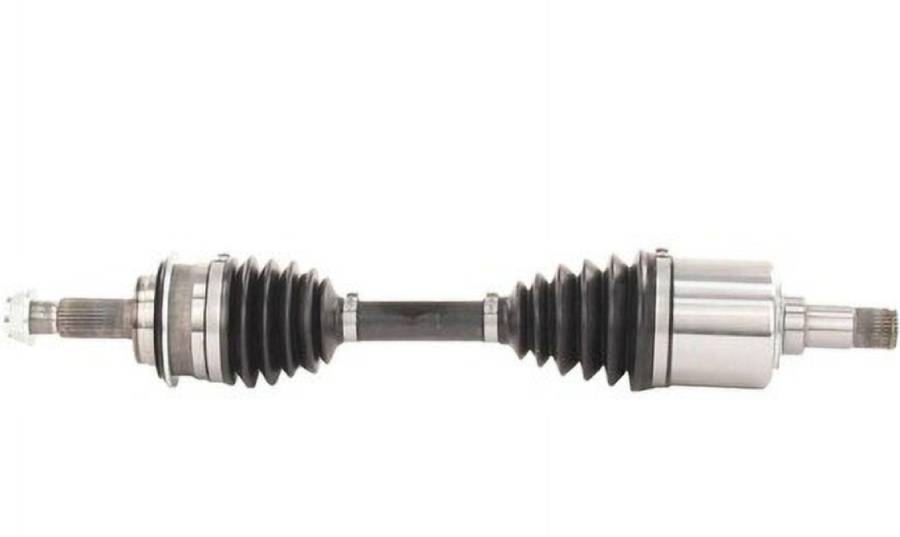
Are TrakMotive CV Axles Any Good?
TrakMotive CV axles are a reasonable aftermarket replacement option for drivers seeking affordable drivetrain repairs without paying OEM prices. The brand supplies complete CV axle assemblies designed for specific vehicle applications, allowing mechanics to replace worn axle components without rebuilding individual CV joints. However, TrakMotive’s overall reliability cannot be established from price or product availability alone. Long-term performance depends on manufacturing consistency, correct fitment, installation quality, and operating conditions.
One advantage of TrakMotive CV axles is their availability as complete replacement assemblies. A typical assembly includes an axle shaft, inner and outer CV joints, protective boots, clamps, and joint lubricant. Replacing the complete assembly eliminates the need to disassemble and rebuild a worn CV joint, reducing the complexity of the repair. For vehicles with damaged CV joints or deteriorated boots, this approach provides a practical alternative to replacing individual components.
TrakMotive CV axles also appeal to owners of older vehicles where the cost of OEM replacement parts represents a significant portion of the vehicle’s repair budget. However, the purchase price should not be the only consideration. A replacement axle that develops vibration, clicking noises, or premature joint wear may require additional labor and another replacement part. For example, an inexpensive axle that needs replacement twice can become more expensive than a higher-priced assembly that remains serviceable throughout the same ownership period.
The main limitation is the lack of comprehensive, independently verified durability data covering TrakMotive CV axles across different vehicle applications. Without controlled testing or reliable failure-rate statistics, it is not possible to establish that TrakMotive consistently matches OEM durability. TrakMotive CV axles are worth considering for cost-conscious repairs, but they should not automatically be treated as equivalent to OEM axles in long-term reliability.
How Good Is the Build Quality of TrakMotive CV Axles?
TrakMotive CV axle build quality should be evaluated through five primary components: the axle shaft, CV joints, protective boots, boot clamps, and joint lubrication. These components determine how effectively an axle transfers engine torque while accommodating steering movement and suspension travel. Although TrakMotive offers complete aftermarket axle assemblies, the exact materials, dimensions, and construction details can vary by part number and vehicle application.
The axle shaft transfers rotational force between the transmission or differential and the wheel hub. Its strength depends on material properties, shaft geometry, heat treatment, and manufacturing tolerances. The inner CV joint accommodates changes in axle length caused by suspension movement, while the outer CV joint maintains torque transfer as the steering angle changes. Accurate joint geometry is essential because excessive internal clearance, poor machining, or incorrect axle dimensions can contribute to vibration, noise, and accelerated wear.
CV boots are equally important to axle durability. These flexible protective covers retain joint grease while preventing water, road debris, and abrasive particles from entering the CV joints. A torn boot or loose clamp allows lubricant to escape and contaminants to reach the bearing surfaces. Once lubrication deteriorates, friction increases between moving components, accelerating joint wear. For example, a damaged outer CV boot that remains unrepaired can eventually lead to clicking noises during turns as the joint’s internal surfaces deteriorate.
Joint lubrication also affects operating temperature, friction, and component lifespan. CV joints require grease formulated for their specific contact pressures and movement patterns. Insufficient grease, contamination, or improper lubricant selection can accelerate wear even when the axle shaft itself remains structurally sound. Proper assembly and sealing are therefore essential to maintaining reliable operation.
Compared with OEM CV axles, aftermarket build quality must be assessed using application-specific evidence rather than brand reputation alone. OEM assemblies are designed and validated for the vehicle manufacturer’s requirements, while aftermarket replacements must reproduce the relevant dimensions and operating characteristics. This does not mean every OEM axle will outlast every TrakMotive axle, but it does mean that equivalent durability should not be assumed without comparative testing.
The most important build-quality consideration is whether a specific TrakMotive axle assembly maintains accurate fitment, properly sealed CV joints, and smooth operation under normal driving loads. Buyers should verify the correct part number and inspect the boots, clamps, splines, and supplied hardware before installation. These checks cannot establish long-term durability, but they can identify visible defects and compatibility problems before the vehicle returns to service.
How Long Do TrakMotive CV Axles Last?
The exact lifespan of TrakMotive CV axles has not been established through publicly available, independently verified durability testing. A properly installed CV axle can remain functional for tens of thousands of miles, but there is insufficient evidence to assign a reliable mileage range specifically to TrakMotive products. Actual service life depends on driving conditions, CV joint lubrication, boot integrity, suspension geometry, and installation accuracy.
CV joint condition is one of the most important factors affecting axle longevity. Constant velocity joints contain precision-machined components that transfer torque while operating at changing angles. Over time, repeated loading causes wear on the internal contact surfaces. This process accelerates when a vehicle frequently operates under heavy acceleration, sharp steering angles, or excessive suspension movement. For example, a vehicle regularly driven on rough roads places different mechanical demands on its axle assemblies than a vehicle used primarily for highway commuting.
CV boot condition also determines how long a TrakMotive axle remains serviceable. The protective boots retain grease and prevent dirt, water, and road debris from entering the joints. Once a boot cracks or tears, lubricant escapes and contaminants can damage the internal bearing surfaces. Continued operation with a damaged boot increases friction and accelerates joint deterioration. Inspecting the boots during routine vehicle maintenance helps identify these problems before they develop into complete joint failure.
Installation accuracy is another critical factor. An incorrectly seated axle, damaged spline, improper axle nut torque, or incompatible replacement assembly can produce abnormal loading and premature wear. Suspension modifications may also change operating angles beyond those intended for the original drivetrain configuration. These conditions affect aftermarket and OEM CV axles alike.
Can TrakMotive CV Axles Last as Long as OEM Axles?
TrakMotive CV axles may achieve service lives comparable to OEM axles in individual applications, but equivalent durability has not been demonstrated across the product range. OEM axle assemblies are engineered to meet vehicle-specific requirements for torque capacity, operating angles, dimensional accuracy, and durability. Aftermarket replacements must reproduce the functional characteristics necessary for proper operation, although their manufacturing processes and validation procedures may differ.
A meaningful durability comparison requires testing equivalent axle assemblies under similar loads, temperatures, operating angles, and driving conditions. For example, comparing a TrakMotive axle installed on a high-mileage vehicle with an OEM axle operating on a newer vehicle would not isolate differences in product quality.
For drivers planning to keep their vehicles for several years, the absence of reliable brand-specific lifespan data makes installation costs and warranty coverage important purchasing considerations. An axle with a lower initial price does not necessarily provide better long-term value when repeat replacement labor is included.
What Are the Common Problems With TrakMotive CV Axles?
The main problems to investigate with TrakMotive CV axles are drivetrain vibration, clicking noises, and grease leakage from damaged CV boots. These are recognized failure symptoms of CV axle assemblies generally, rather than verified defects affecting all TrakMotive products. Without reliable brand-specific failure statistics, their frequency cannot be established. Each symptom requires mechanical diagnosis because other drivetrain, steering, and suspension components can produce similar problems.
Can TrakMotive CV Axles Cause Vibration?
A TrakMotive CV axle can contribute to vehicle vibration when its joints, shaft geometry, fitment, or installation are defective. Vibration during acceleration is particularly relevant because the axle transfers engine torque while its joints accommodate suspension movement. Excessive joint clearance, shaft imbalance, or incorrect axle dimensions can introduce unwanted movement into the drivetrain.
Inner CV joint problems are one possible cause of vibration under load. The inner joint must accommodate changes in axle length as the suspension moves. Wear or damage to its internal components can produce vibration that becomes more noticeable during acceleration and decreases when the driver releases the accelerator. However, similar symptoms can result from worn engine mounts, damaged transmission mounts, bent wheels, or other drivetrain faults.
Vibration that begins immediately after axle replacement warrants an inspection of axle seating, part-number compatibility, and installation procedures. A newly installed axle should not automatically be considered defective until these factors have been checked.
Why Do TrakMotive CV Axles Make Clicking Noises?
Clicking noises from a TrakMotive CV axle can indicate wear or damage inside the outer CV joint, particularly when the vehicle turns under power. The outer joint transfers torque while accommodating the steering angle. When its internal bearing surfaces become worn or damaged, rotational movement can generate repetitive clicking or popping sounds.
The noise is often more noticeable during low-speed turns because the outer CV joint operates at a greater angle. For example, a driver may hear repeated clicking while accelerating through a tight parking-lot turn. The sound can become less noticeable when the steering wheel returns toward the straight-ahead position.
Clicking does not necessarily indicate a manufacturing defect. Insufficient lubrication, contamination, boot damage, incorrect installation, and normal mechanical wear can produce similar symptoms. A technician should inspect the joint, protective boot, axle splines, and surrounding suspension components before determining whether replacement is necessary.
Can TrakMotive CV Axle Boots Leak Grease?
TrakMotive CV axle boots can leak grease if the protective material tears, the clamps lose their seal, or the boot is damaged during installation. CV boots form a flexible barrier around the joint, retaining lubricant while allowing movement as the suspension and steering operate.
Grease leakage is particularly important because CV joints depend on continuous lubrication to prevent excessive friction and wear. A damaged boot allows lubricant to escape while exposing internal components to moisture and abrasive contaminants. As contamination increases, the joint’s bearing surfaces deteriorate, potentially leading to clicking, vibration, and eventual failure.
One visible warning sign is grease distributed around the inside of a wheel, nearby suspension components, or the surrounding underbody. Centrifugal force can throw grease outward from a rotating axle when the boot is torn or improperly sealed. However, the source of the grease should be confirmed because other lubricated components may also leak.
A leaking boot does not always require immediate replacement of the entire axle assembly. When the joint remains undamaged and uncontaminated, replacing the boot and restoring the correct lubrication may be sufficient. Complete axle replacement becomes more appropriate when the joint already exhibits excessive play, abnormal noise, or internal damage.
For TrakMotive owners, identifying boot damage early is an important way to reduce the risk of premature CV joint failure. Regular visual inspections and prompt repairs help preserve the assembly’s operating condition regardless of its manufacturer.
How Do TrakMotive CV Axles Perform in Daily Driving?
TrakMotive CV axles are designed to restore normal drivetrain operation in compatible vehicles, including acceleration, cornering, and highway driving. A correctly fitted and properly functioning axle transfers torque from the transmission or differential to the drive wheels while accommodating changes in steering angle and suspension position. However, independent performance testing is insufficient to establish whether TrakMotive consistently performs better or worse than competing aftermarket brands.
During acceleration, the inner CV joint accommodates suspension movement while transmitting engine torque. Excessive internal clearance or incorrect axle geometry can produce vibration under load, particularly when accelerating from a stop or climbing a hill. A properly functioning replacement axle should transfer torque smoothly without introducing noticeable shuddering, knocking, or abnormal drivetrain movement.
During cornering, the outer CV joint allows the driven wheel to rotate while the steering angle changes. This movement requires precise internal joint geometry and adequate lubrication. Clicking noises during tight turns can indicate joint wear, damage, or lubrication problems. For example, repetitive clicking while accelerating through a parking-lot turn warrants inspection of the outer CV joint and surrounding components.
Highway performance depends on shaft alignment, joint condition, and dimensional accuracy. An axle with incorrect dimensions or excessive rotational imbalance can contribute to vibration at certain speeds. However, tire imbalance, bent wheels, worn suspension components, and damaged engine mounts can produce similar symptoms. Accurate diagnosis is necessary before attributing highway vibration to a TrakMotive axle.
For daily drivers, TrakMotive CV axles are a practical replacement option when the correct application is selected and the assembly operates without abnormal noise or vibration. Owners of high-mileage vehicles should also consider the condition of engine mounts, wheel bearings, and suspension components, as existing mechanical wear can affect how a replacement axle performs.
TrakMotive vs OEM CV Axles: Which Is Better?
OEM CV axles are generally the more predictable choice for vehicle-specific fitment and manufacturer-validated performance, while TrakMotive CV axles offer an aftermarket replacement option that may reduce initial parts costs. The better choice depends on the vehicle, available replacement parts, installation expenses, and the owner’s expected ownership period. There is insufficient independent comparative testing to establish a universal durability advantage for either option across every application.
OEM CV axles are supplied according to the vehicle manufacturer’s original equipment specifications. Their dimensions, joint operating angles, torque requirements, and compatibility are developed for particular drivetrain configurations. TrakMotive replacement axles are intended to perform the same basic functions, but their construction details and validation requirements should be evaluated for the specific part number.
The following table compares the main purchasing considerations.
| Feature | TrakMotive CV Axles | OEM CV Axles |
|---|---|---|
| Product category | Aftermarket replacement | Original equipment replacement |
| Price | Potentially lower upfront cost | Often higher upfront cost |
| Vehicle fitment | Requires accurate application and part-number matching | Designed for the specified OEM application |
| Build quality | Varies by product design and application | Built to manufacturer specifications |
| Durability | No established brand-wide lifespan | Vehicle-specific durability validation |
| Driving performance | Intended to restore normal operation | Designed for original vehicle performance |
| Warranty | Depends on applicable product and seller terms | Depends on manufacturer and dealer terms |
| Best suited for | Cost-conscious replacement repairs | Buyers prioritizing original specifications |
Price is one of the main reasons drivers consider TrakMotive instead of OEM replacement parts. However, a valid price comparison must use equivalent axle positions and vehicle applications. A front-left axle for one vehicle cannot be meaningfully compared with a front-right axle for another because joint design, shaft length, and manufacturing requirements may differ.
Installation costs also influence overall value. Replacing a CV axle involves removing drivetrain and suspension-related components, and the labor required varies by vehicle design. When labor represents a substantial portion of the repair expense, selecting a replacement solely because it has a lower purchase price may create financial risk. A premature failure can require paying for the same repair procedure again, even when the replacement part itself qualifies for warranty coverage.
When Should You Choose OEM CV Axles Instead of TrakMotive?
Choose an OEM CV axle when exact original-equipment compatibility, documented vehicle-specific engineering, and long-term ownership confidence outweigh the potential savings from an aftermarket replacement. OEM parts are particularly relevant for vehicles with unusual drivetrain configurations, strict fitment requirements, or limited access to reliable aftermarket alternatives.
OEM axles also deserve consideration when the vehicle has experienced repeated vibration or fitment problems after aftermarket axle installation. Differences in axle dimensions, joint design, or operating characteristics can affect certain vehicle applications. Returning to the original equipment specification provides a clearer reference point when diagnosing compatibility concerns.
For example, a driver planning to keep a vehicle for another five years may place greater importance on avoiding repeat repairs than a driver preparing to sell an older vehicle within several months. In the first situation, paying more for an OEM assembly may be justified by its vehicle-specific validation. In the second, a correctly matched TrakMotive axle may represent a reasonable repair choice if the part meets the vehicle’s requirements.
TrakMotive remains an option for owners who prioritize initial affordability and can verify fitment before installation. However, the decision should be based on total replacement cost, application compatibility, and available durability evidence rather than assuming that every aftermarket axle is inferior or that every OEM axle will last longer.
Are TrakMotive CV Axles Worth the Money?
TrakMotive CV axles can be worth the money for drivers who need an affordable aftermarket replacement and can verify compatibility with their vehicles. Their main appeal is the opportunity to reduce upfront repair costs compared with OEM parts. However, the overall value depends on the purchase price, installation expenses, warranty coverage, and long-term reliability rather than the cost of the axle alone.
The total cost of CV axle replacement includes the replacement assembly, labor, and any additional hardware or related repairs. For example, if an aftermarket axle costs $100 and installation costs $200, the initial repair totals $300. If that axle requires another replacement and the warranty covers only the part, the owner could face another $200 in labor expenses. These figures are illustrative rather than verified TrakMotive prices, but they demonstrate why the cheapest replacement part does not always provide the lowest ownership cost.
TrakMotive CV axles are particularly relevant for owners of older daily drivers who want to restore normal drivetrain operation without investing heavily in OEM components. They may also suit vehicles with readily available replacement parts and straightforward installation procedures. Before purchasing, drivers should confirm the axle’s part number, vehicle application, warranty terms, and compatibility with the existing drivetrain.
Drivers who prioritize original equipment specifications, have experienced repeated aftermarket axle failures, or plan to keep their vehicles for an extended period should also consider OEM alternatives. These situations increase the importance of fitment confidence and avoiding repeated labor expenses.
The final verdict is that TrakMotive CV axles are a reasonable budget-oriented replacement option, but their long-term value remains application-dependent. They are worth considering when the price difference is meaningful, fitment is confirmed, and the buyer accepts the uncertainty surrounding brand-wide durability. OEM axles remain a stronger reference point for original vehicle specifications, although their higher price does not guarantee that every individual assembly will last longer.
Who Makes TrakMotive CV Axles?
TrakMotive is an aftermarket automotive parts brand associated with replacement CV axle assemblies and other drivetrain components. Its products are marketed as alternatives to original equipment parts for a range of passenger vehicles. The brand’s focus on drivetrain replacement components makes it relevant to vehicle owners, independent repair shops, and automotive parts retailers.
TrakMotive CV axle assemblies are supplied as complete replacement units containing the components needed to transfer rotational power between the drivetrain and drive wheels. Depending on the vehicle application, these assemblies incorporate an axle shaft, CV joints, protective boots, clamps, and lubricant. Their specifications must correspond to the vehicle’s drivetrain configuration, axle position, and original equipment requirements.
An important distinction exists between the company marketing a replacement axle and the facility manufacturing its components. Brand identity alone does not establish the country of manufacture, production facility, or quality-control procedures for every part number. Those details require verification through manufacturer documentation, product labeling, or other reliable records. Without that information, it would be inaccurate to claim that every TrakMotive CV axle is manufactured in a particular country or factory.
For buyers, the most useful manufacturer-related information is the availability of accurate product specifications, application catalogs, warranty documentation, and replacement support. These factors help establish whether a TrakMotive axle is appropriate for a specific vehicle and what options are available if a product develops a problem after installation.
How Do You Know if a TrakMotive CV Axle Fits Your Vehicle?
A TrakMotive CV axle fits your vehicle when its part number, dimensions, joint configuration, and drivetrain specifications match the vehicle’s original equipment requirements. Vehicle year, make, and model are the starting points for identifying a compatible replacement, but these details alone may not guarantee correct fitment. Engine size, transmission type, drivetrain configuration, and axle position can also determine which assembly is required.
The most reliable way to identify a compatible TrakMotive CV axle is to use the manufacturer’s application catalog and cross-reference the original equipment part number. For example, two vehicles from the same model year may require different front axle assemblies because one uses a manual transmission while the other has an automatic transmission. Differences in shaft length, spline count, or inner joint configuration can prevent an otherwise similar replacement axle from fitting correctly.
Three mechanical specifications are particularly important: axle length, spline configuration, and joint design. Axle length determines whether the assembly can accommodate suspension movement without excessive compression or extension. Spline configuration ensures proper engagement with the transmission or differential and wheel hub. Joint design determines whether the assembly can operate within the steering and suspension angles required by the vehicle.
Before installation, the replacement axle should be compared with the original assembly. Technicians should inspect the splines, mounting interfaces, retaining clips, CV boots, and supplied hardware. Installation procedures must also follow the vehicle manufacturer’s torque specifications, particularly for axle nuts and other fasteners affecting wheel-bearing operation.
Correct fitment is essential to TrakMotive CV axle performance because an incompatible assembly can cause vibration, abnormal joint loading, installation difficulties, or premature component wear. Buyers should confirm compatibility using the exact TrakMotive part number rather than relying exclusively on general vehicle descriptions.
Read more: How Much Horsepower Does a Trackhawk Have? (707 HP)
What Warranty Comes With TrakMotive CV Axles?
TrakMotive CV axle warranty coverage depends on the applicable product line, warranty documentation, and conditions of sale. The exact warranty duration and coverage terms should be verified through current manufacturer information and the retailer supplying the replacement axle. A universal warranty period should not be assumed for every TrakMotive product without checking the specific part number.
Replacement-part warranties generally distinguish between defects in materials or workmanship and damage caused by external operating conditions. Manufacturing defects may qualify for replacement under applicable warranty terms, while damage resulting from improper installation, incorrect vehicle application, accidents, or unauthorized modifications may be excluded. The actual exclusions and eligibility requirements depend on the written warranty.
Labor coverage is another important consideration. A warranty that provides a replacement axle does not necessarily reimburse the cost of removing the defective assembly and installing another one. For example, a driver may receive a replacement part without charge but still need to pay a repair shop for additional installation labor. Shipping charges, diagnostic fees, and related repair expenses may also fall outside the warranty, depending on its terms.
Before purchasing a TrakMotive CV axle, buyers should confirm the warranty duration, required proof of purchase, claim procedure, and whether labor reimbursement is available. Keeping the original receipt and installation records can help document a claim if the replacement assembly develops a covered problem.
How Can You Tell if Your CV Axle Needs Replacement?
A CV axle may need replacement when it develops repetitive clicking during turns, vibration under acceleration, excessive joint play, or significant damage to its protective boots. These symptoms indicate possible deterioration of the CV joints or associated components, although they do not automatically confirm that the entire axle assembly has failed. A mechanical inspection is necessary to distinguish axle problems from faults involving wheel bearings, suspension components, tires, or engine mounts.
Clicking noises during turns are a recognized symptom of outer CV joint wear. The outer joint operates at changing angles as the steering wheel turns, and damaged internal contact surfaces can produce repetitive clicking under torque. For example, clicking that becomes more noticeable during tight, low-speed turns may indicate deterioration of an outer CV joint. The noise should be investigated before the joint becomes severely damaged.
Vibration during acceleration can indicate problems involving the inner CV joint or axle assembly. Inner joints accommodate suspension movement while transmitting rotational force, and excessive internal wear can create vibration when the drivetrain is under load. However, worn engine mounts, damaged transmission mounts, and other drivetrain faults can produce similar symptoms. Replacing the axle without confirming the source of vibration may leave the original problem unresolved.
Grease leakage is another warning sign. CV boots retain lubricant around the joint while preventing moisture and abrasive contaminants from entering. When a boot tears or its clamp loses sealing pressure, grease can escape and collect around nearby suspension components. Continued driving with inadequate lubrication increases friction and accelerates internal joint wear.
Not every damaged CV boot requires complete axle replacement. If the joint remains mechanically sound and contamination is limited, replacing the boot and restoring the correct lubrication may be appropriate. Complete axle replacement becomes more justified when the joint exhibits excessive play, persistent clicking, severe contamination, or physical damage.
A CV axle should be replaced when inspection confirms that its joints or structural components can no longer operate safely and reliably. For vehicles equipped with TrakMotive axles, early diagnosis of noise, vibration, and lubricant leakage helps prevent further drivetrain damage and unnecessary repair expenses.