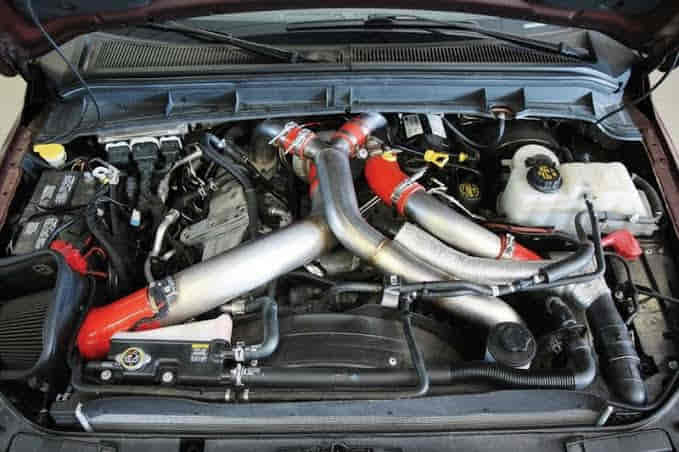
The LLY Duramax is a 6.6-liter turbocharged diesel engine developed by General Motors for heavy-duty Chevrolet Silverado and GMC Sierra trucks. Although it delivers strong torque for towing and hauling, owners may encounter problems involving the cooling system, exhaust gas recirculation (EGR), fuel injectors, turbocharger, and engine sealing. Understanding these potential issues helps owners recognize warning signs early, avoid unnecessary parts replacement, and make informed repair decisions.
Common LLY Duramax problems can produce symptoms such as overheating under heavy loads, reduced engine power, rough idling, difficult starting, excessive exhaust smoke, or a check engine light. However, these symptoms do not automatically identify a failed component. For example, reduced power may result from a turbocharger control issue, a fuel delivery problem, an air leak, or an electronic fault. Accurate diagnosis requires connecting the observed symptoms with diagnostic trouble codes, live engine data, and appropriate mechanical tests.
This guide examines the most important LLY Duramax problems, explains their possible causes, and describes how to diagnose and repair them. It also covers engine reliability, preventive maintenance, and the checks buyers should perform before purchasing a used truck equipped with this engine. By understanding how each system operates and how its failures affect engine performance, owners can prioritize repairs based on evidence rather than assumptions.
What Are the Most Common LLY Duramax Problems?
The LLY Duramax 6.6-liter diesel engine is associated with several areas that deserve attention during diagnosis and maintenance, including cooling-system performance, the exhaust gas recirculation (EGR) system, fuel injectors, the variable geometry turbocharger (VGT), and cylinder-head sealing. These systems perform different functions, but a fault in any one of them can affect engine power, operating temperature, fuel efficiency, or reliability. The specific failure should be confirmed through testing rather than assumed from the engine model alone.
Cooling-system performance is an important concern when an LLY Duramax operates under heavy loads. Some owners investigate overheating or rising coolant temperatures when towing, climbing steep grades, or driving in demanding conditions. Restricted airflow through the radiator, contamination on cooling surfaces, or faults in cooling-system components can contribute to poor heat rejection. However, overheating has several possible causes, so checking coolant level, airflow, thermostat operation, fan performance, and system pressure is more reliable than replacing a component based on temperature symptoms alone.
The EGR system and fuel injection system are two other areas to investigate when engine performance changes. The EGR system recirculates a controlled portion of exhaust gas into the intake to help manage emissions, while the injectors deliver precisely metered fuel into the cylinders. EGR-related faults may affect airflow and combustion, whereas injector problems can contribute to rough running, hard starting, misfires, or abnormal exhaust smoke. These symptoms can also originate from other systems, including electrical controls, fuel supply, or mechanical compression. Diagnostic trouble codes and appropriate system tests help narrow the possibilities before repairs begin.
Turbocharger operation and cylinder-head sealing also matter when evaluating an LLY Duramax that loses power, overheats, or develops unusual operating symptoms. The VGT adjusts exhaust-side vane position to help control boost response, so a fault involving the turbocharger, its control mechanism, intake plumbing, or related sensors can affect acceleration and engine output. Cylinder-head or head-gasket problems require a different diagnostic approach because they may involve combustion pressure, coolant loss, or abnormal pressure in the cooling system. Neither reduced boost nor overheating proves a specific mechanical failure without supporting evidence.
The most effective way to approach LLY Duramax problems is to connect each symptom with the system responsible for producing it, then verify the suspected fault with suitable tests. A truck that overheats while towing requires a different diagnostic path from one that cranks for a long time or enters limp mode. Identifying the operating conditions, reviewing fault codes, inspecting the affected systems, and comparing measurements with manufacturer specifications helps prevent unnecessary repairs and establishes a sound basis for the next diagnostic step.
Read more: Low Compression in One Cylinder
Why Does the LLY Duramax Overheat?
The LLY Duramax can experience rising coolant temperatures when the cooling system cannot remove heat as quickly as the engine generates it. This problem becomes more noticeable during heavy towing, steep climbs, high ambient temperatures, or sustained engine load. One area to investigate is the radiator and its ability to transfer heat to the surrounding air. Dirt, debris, or restricted airflow across the cooling stack can reduce heat rejection, while internal restrictions may limit coolant flow. Because several faults can produce similar temperature symptoms, overheating should be diagnosed through inspection and testing rather than attributed to a single component.
Cooling fan performance and thermostat operation are also important when investigating high operating temperatures. The cooling fan helps move air through the radiator, particularly when vehicle speed is low or the engine requires additional cooling. If the fan does not operate as intended, airflow may be insufficient under demanding conditions. A thermostat that fails to regulate coolant circulation correctly can also interfere with temperature control. The appropriate checks depend on the vehicle’s configuration and service procedure, but they should include fan operation, thermostat function, coolant condition, and evidence of restrictions or leaks.
Coolant level and system pressure provide further diagnostic clues. Low coolant may result from an external leak, a faulty pressure cap, or an internal engine problem. A cooling-system pressure test can help identify leaks that are not immediately visible, while inspection of hoses, connections, the radiator, and the water pump can reveal possible sources of coolant loss. If coolant repeatedly disappears without an obvious external leak, further testing may be necessary to investigate an internal leak. Coolant loss alone does not prove that the head gasket has failed, so additional evidence should be collected before major engine repairs are considered.
A head-gasket or cylinder-head problem becomes a concern when overheating occurs alongside other warning signs, such as unexplained coolant loss, abnormal cooling-system pressurization, or evidence of combustion gases entering the coolant. These symptoms require careful evaluation because a failed gasket, a cracked component, and other cooling-system faults can overlap in their presentation. A technician may use a combustion-gas test, cooling-system pressure test, and other manufacturer-approved procedures to narrow the cause. Continuing to operate an engine that is overheating can increase the risk of serious damage, so the vehicle should be stopped safely if the temperature rises beyond the normal range or a temperature warning appears.
The best approach to LLY Duramax overheating is to begin with basic cooling-system checks and then move to targeted diagnostic tests based on the findings. Inspecting airflow, coolant level, leaks, fan operation, and thermostat function helps identify common cooling-related causes without assuming an internal engine failure. If the problem persists, particularly under load, the diagnosis should include the cooling system’s ability to transfer heat and evidence of combustion leakage. Confirming the cause before replacing parts helps protect the engine and avoids unnecessary repair costs.
What Are the Symptoms of LLY Duramax Injector Problems?
LLY Duramax injector problems can contribute to hard starting, rough idling, engine misfires, reduced power, abnormal exhaust smoke, and changes in fuel consumption. The fuel injectors deliver precisely metered diesel fuel into the cylinders, so an injector that does not deliver the correct amount of fuel or maintain the required spray pattern can interfere with combustion. However, these symptoms do not automatically confirm injector failure. Fuel supply restrictions, electrical faults, air entering the fuel system, and mechanical engine problems can produce similar signs, making accurate diagnosis essential before replacing expensive components.
Hard starting and rough idling may occur when one or more cylinders do not receive fuel as required. The engine may crank longer than usual before starting, run unevenly after ignition, or produce noticeable vibration at idle. If fuel delivery differs between cylinders, combustion may become inconsistent and engine output may fluctuate. These symptoms can also result from inadequate fuel supply or other engine-management problems, so a technician should examine relevant diagnostic data and perform the appropriate fuel-system checks rather than rely on the symptoms alone.
Reduced power and unusual exhaust smoke can provide additional clues about combustion quality. If fuel delivery is inconsistent, the engine may respond poorly to acceleration or struggle under load. Black smoke can indicate excessive fuel relative to available air, while white or gray exhaust may have several causes depending on engine temperature and operating conditions. Neither smoke color nor reduced power identifies a faulty injector by itself. Intake-air restrictions, turbocharger problems, coolant entering the combustion chamber, and other mechanical faults should be considered when the evidence points beyond the fuel injection system.
Diagnosis should combine the vehicle’s symptoms with manufacturer-appropriate testing. A technician may review diagnostic trouble codes, inspect the fuel system, evaluate injector balance data where applicable, and perform additional tests to determine whether fuel delivery is abnormal. The interpretation of injector balance rates depends on operating conditions and the applicable service specifications; a single reading should not be treated as definitive proof that an injector has failed. If the tests confirm an injector-related fault, the repair may involve addressing an electrical or fuel-supply issue, servicing the affected component, or replacing an injector as appropriate. Confirming the cause before purchasing replacement parts helps avoid unnecessary expense and ensures that the actual source of the engine problem is addressed.
What Causes LLY Duramax EGR and Turbocharger Problems?
LLY Duramax EGR and turbocharger problems can affect combustion, boost pressure, throttle response, and overall engine performance. The exhaust gas recirculation (EGR) system redirects a controlled portion of exhaust gas into the intake, while the variable geometry turbocharger (VGT) adjusts its internal vane position to regulate boost response under different operating conditions. Because these systems influence engine airflow in different ways, a fault in either system may cause reduced power, unusual engine response, or a check engine light. The symptoms overlap with other mechanical and electronic faults, so identifying the underlying cause is more reliable than replacing the EGR valve or turbocharger based on symptoms alone.
EGR-related problems may develop when carbon deposits restrict passages or interfere with the movement of system components. The EGR system must regulate exhaust gas flow according to engine operating conditions, and restricted passages or a malfunctioning valve can disrupt the intended airflow balance. Depending on the fault, the driver may notice rough running, reduced performance, or diagnostic trouble codes associated with EGR operation. However, these symptoms can also arise from sensor faults, wiring problems, intake restrictions, or other engine-management issues. Inspecting the system and interpreting diagnostic data helps determine whether the EGR valve, passages, control circuit, or another component requires attention.
Turbocharger-related problems require a different diagnostic approach because the VGT depends on correct mechanical movement and electronic or pneumatic control, depending on the specific component and system design. If the turbocharger vanes do not move as intended, boost response may become inconsistent, potentially causing sluggish acceleration or reduced engine output. Similar symptoms can result from boost leaks, damaged intake plumbing, exhaust restrictions, faulty sensors, or control-system problems. Diagnostic trouble codes and actual-versus-commanded boost data, where supported by the diagnostic equipment, can help narrow the possibilities. A turbocharger should not be condemned until related hoses, connections, control components, and sensor readings have been checked.
EGR and turbocharger faults can also produce symptoms that resemble one another. For example, a truck that loses power under acceleration may have an airflow problem, insufficient boost, an EGR-related fault, or a fuel-delivery issue. If the engine enters limp mode, the stored diagnostic codes and operating data can help identify which system requires further testing. Clearing the codes without investigating their cause does not resolve the underlying fault and may remove useful diagnostic information.
The appropriate repair depends on the confirmed failure. An EGR problem may require cleaning where the service procedure permits it, repairing an electrical fault, or replacing a component that no longer operates within specification. A turbocharger problem may require repairing a boost leak, correcting a control-system fault, servicing the turbocharger, or replacing it if internal damage is confirmed. After repairs, the system should be retested under the appropriate conditions to verify that boost response, airflow control, and engine performance have returned to the manufacturer’s specifications. This evidence-based approach reduces unnecessary parts replacement and helps distinguish an isolated component failure from a broader engine-management problem.
What Are the Symptoms of an LLY Duramax Head Gasket Problem?
A head gasket problem on an LLY Duramax can allow combustion pressure, coolant, or engine oil to pass between areas that should remain sealed. The head gasket forms a critical seal between the cylinder head and engine block, helping maintain cylinder compression and separate the engine’s fluids. When that seal fails, the engine may develop cooling-system pressure abnormalities, coolant loss, overheating, or combustion-related performance problems. These symptoms deserve attention because continued operation with a serious sealing failure can lead to additional engine damage.
One warning sign is unexplained coolant loss. If the coolant level repeatedly drops without an obvious external leak, the cooling system should be inspected for leaks and other faults, including a possible internal leak. A head gasket failure may also allow combustion gases to enter the cooling system, creating abnormal pressure or contributing to coolant being pushed out of the reservoir. However, a faulty radiator cap, restricted cooling system, or other cooling-system defect can produce similar symptoms. A pressure test and appropriate combustion-gas testing can help distinguish these causes.
Overheating can also occur when a head gasket no longer seals correctly, but overheating alone does not confirm head gasket failure. The LLY Duramax cooling system should be evaluated for airflow restrictions, radiator condition, fan operation, coolant circulation, and other potential causes before an internal engine problem is assumed. If overheating occurs repeatedly under load, especially alongside unexplained coolant loss or abnormal cooling-system pressure, further testing is warranted. Continuing to drive an engine that is overheating can increase the risk of expensive damage.
Other possible signs include persistent white exhaust smoke after the engine reaches operating temperature, rough running, or reduced engine performance. White exhaust can indicate coolant entering the combustion process, but it can also have other causes, particularly during cold starts. A technician should consider the engine’s operating temperature, coolant consumption, diagnostic data, and results from mechanical tests rather than relying on exhaust appearance alone. Compression testing, cylinder leak-down testing, cooling-system pressure testing, and combustion-gas testing may help establish whether the head gasket is the source of the problem.
The correct response is to confirm the diagnosis before authorizing major engine repairs. If testing identifies a head gasket failure, the repair may involve removing the cylinder head, inspecting sealing surfaces, checking for cracks or warping, and following the manufacturer’s service specifications during reassembly. The underlying cause of the failure, including any previous overheating, must also be investigated. Replacing a gasket without correcting a cooling-system fault can leave the engine vulnerable to another failure.
How Do You Diagnose Common LLY Duramax Problems?
Diagnosing common LLY Duramax problems starts with identifying the symptoms, retrieving diagnostic trouble codes, and testing the systems associated with the reported fault. A check engine light, overheating, hard starting, reduced power, or unexplained coolant loss can point toward different problems, but no single symptom confirms a specific component failure. A structured diagnostic process helps separate cooling-system faults from injector issues, EGR malfunctions, turbocharger problems, and possible head gasket failures. This approach also reduces the risk of replacing expensive parts that are still functioning correctly.
The first step is to record when the problem occurs and how the truck behaves. For example, overheating under heavy towing may require a different initial investigation from overheating during ordinary driving. Hard starting when the engine is cold, rough idling after startup, and power loss under acceleration also provide different diagnostic clues. Note whether the problem occurs when the engine is cold or warm, whether it appears under load, and whether any warning lights or unusual exhaust changes accompany it. This information gives the technician a clearer starting point.
The next step is to scan the engine control module for diagnostic trouble codes and review relevant live data. Codes can identify a circuit, operating condition, or system that requires investigation, but they do not always identify the failed component. Depending on the symptoms, the technician may examine coolant temperature, boost pressure, sensor readings, fuel-system data, and other parameters supported by the diagnostic tool. For instance, a boost-related code should lead to checks of the intake plumbing, sensors, and turbocharger control system rather than an automatic turbocharger replacement.
Physical testing is necessary when scan data cannot establish the cause. Cooling-system pressure testing can help locate coolant leaks, while appropriate combustion-gas testing may help investigate suspected head gasket problems. Fuel-system checks and injector-related diagnostic procedures can help assess hard starting, rough running, or misfires. When turbocharger performance is in question, inspecting boost hoses, connections, and control components can reveal faults that mimic internal turbocharger damage. Each test should follow the applicable service procedure and specifications.
The final step is to verify the diagnosis and confirm that the repair resolves the original symptom. After the faulty component or system has been repaired, the technician should clear codes when appropriate, repeat relevant tests, and evaluate the truck under suitable operating conditions. If overheating was the complaint, coolant temperature and cooling-system behavior should be checked; if the complaint was low power, boost response and related engine data should be reassessed. A successful diagnosis connects the original symptoms to measurable test results and confirms that the identified fault has been corrected.
How Do You Fix Common LLY Duramax Problems?
Fixing common LLY Duramax problems requires matching the repair to the confirmed cause rather than replacing parts based on symptoms alone. Overheating, injector-related symptoms, EGR faults, turbocharger issues, and head gasket problems involve different systems, so each requires a specific diagnostic process. The correct repair also depends on the truck’s condition, maintenance history, installed components, and test results. Accurate diagnosis helps prevent unnecessary expenses and reduces the risk of leaving the underlying problem unresolved.
When an LLY Duramax overheats, the cooling system should be inspected before major engine repairs are considered. Relevant checks include coolant level, external leaks, radiator condition, airflow through the cooling stack, fan operation, and coolant circulation. The technician should also investigate whether combustion gases are entering the cooling system if test results or accompanying symptoms suggest a head gasket problem. Cleaning obstructed cooling surfaces, repairing a confirmed leak, or correcting a faulty component may resolve the issue when the cause is external to the engine. Repeated overheating should never be dismissed because prolonged high temperatures can damage engine components.
Injector-related problems require testing the fuel system and associated electrical components. Hard starting, rough idling, misfires, or reduced power do not automatically mean the injectors have failed. Restricted fuel supply, air entering the fuel system, wiring faults, and other mechanical issues can produce similar symptoms. The repair should follow the test results and applicable service specifications. If an injector is confirmed to be faulty, replacing the affected component and completing the required installation and verification procedures is more appropriate than replacing the entire set without evidence.
EGR and turbocharger repairs also depend on identifying the failed part or condition. An EGR-related fault may require addressing carbon restriction, repairing wiring, or replacing a valve that does not operate correctly. A turbocharger complaint may instead originate from a leaking boost hose, a faulty sensor, or a control-system issue. Inspecting these related components before replacing the turbocharger helps avoid unnecessary work. After the repair, diagnostic codes and relevant operating data should be checked to confirm that the system functions within the applicable specifications.
A confirmed head gasket failure requires more extensive repair. The cylinder head must be removed and inspected according to the manufacturer’s service procedures, including checks for damage, cracks, or surface irregularities that could prevent proper sealing. The underlying cause of the failure, particularly any cooling-system malfunction or history of overheating, must also be addressed. Replacing the gasket without correcting the original cause can allow the problem to return.
Preventing repeat failures is part of completing the repair. The technician should verify that the affected system operates correctly, check for related faults, and explain any maintenance or operating concerns that contributed to the problem. For example, a cooling-system repair should include confirmation that engine temperature remains controlled under appropriate operating conditions. A fuel-system repair should be followed by checks for the original starting or performance complaint. This final verification helps establish whether the repair has resolved the fault instead of merely removing a warning light.
Is the LLY Duramax a Reliable Engine?
The LLY Duramax can be a reliable diesel engine when it receives proper maintenance and its cooling, fuel, and engine-management systems remain in good condition. Introduced for the 2004.5–2005 Chevrolet Silverado and GMC Sierra HD model years, the LLY is part of the 6.6-liter Duramax engine family. Its reputation depends heavily on the condition of the individual truck, its maintenance history, how it has been used, and whether previous modifications or repairs were completed correctly. Commonly discussed concerns include overheating under demanding conditions, injector-related symptoms, EGR faults, turbocharger control problems, and possible head gasket issues, but these concerns do not mean every LLY engine will experience the same failures.
Cooling-system performance is an important consideration when evaluating LLY reliability. Heavy towing, high ambient temperatures, restricted airflow, and cooling-system defects can increase thermal stress. A truck that maintains stable operating temperatures and has documented cooling-system maintenance presents a different ownership risk from one with a history of recurring overheating. Before concluding that an LLY has a fundamental engine problem, the cooling system should be inspected and tested to identify the actual cause of any temperature-related complaint.
Fuel-system condition and engine maintenance also influence long-term dependability. Poor starting, rough idle, or reduced power should prompt investigation rather than an immediate assumption that the injectors have failed. Regular maintenance, appropriate fuel filtration, prompt attention to warning lights, and timely diagnosis of performance changes can help identify faults before they develop into more serious problems. Service records showing consistent maintenance and documented repairs provide useful evidence when assessing a used truck.
The LLY Duramax is therefore best judged by its actual condition rather than its reputation alone. A well-maintained truck with stable coolant temperatures, consistent performance, and no unresolved diagnostic faults may be a reasonable option for someone seeking a used diesel pickup. Conversely, a truck with unexplained coolant loss, repeated overheating, persistent warning lights, or poorly documented modifications deserves more thorough inspection. A pre-purchase assessment by a technician familiar with the Duramax platform can help determine whether the truck’s condition justifies its asking price and expected repair costs.
What Should You Check Before Buying a Used LLY Duramax Truck?
Before buying a used truck with an LLY Duramax engine, inspect the cooling system, fuel system, turbocharger, EGR system, and maintenance records. These checks help identify existing mechanical problems and distinguish a well-maintained truck from one with unresolved faults. The truck’s mileage alone does not establish its condition because maintenance quality, towing history, modifications, and previous repairs also affect reliability. A pre-purchase inspection by a diesel technician familiar with the Duramax platform can reveal issues that are not obvious during a short test drive.
Start by checking for signs of overheating or cooling-system trouble. Inspect the coolant level and condition, look for visible leaks, and ask whether the truck has experienced repeated high-temperature warnings or coolant loss. During the inspection and test drive, monitor engine temperature under appropriate operating conditions. Unexplained coolant loss, abnormal cooling-system pressure, or a history of recurring overheating deserves further investigation before purchase. These symptoms do not prove a head gasket failure, but they justify testing rather than relying on the seller’s explanation alone.
Next, evaluate engine starting, idle quality, and acceleration. The engine should be assessed when cold as well as after reaching operating temperature, where practical. Hard starting, rough idle, abnormal exhaust smoke, or hesitation under acceleration may indicate a fuel-system, injector, airflow, or engine-management problem. Because these symptoms have multiple possible causes, scan the truck for diagnostic trouble codes and review relevant live data. A seller clearing warning lights shortly before the inspection should not be treated as proof that the truck is mechanically sound.
The turbocharger and EGR system also deserve attention. Check for damaged intake plumbing, loose connections, unusual operating noises, reduced power, and stored codes associated with airflow or boost control. A test drive can reveal performance concerns, but a normal driving experience does not rule out every developing fault. If the scan results or symptoms suggest a problem, request further diagnostic testing before agreeing to the purchase price.
Finally, review service records, previous repair invoices, and any engine or performance modifications. Documentation of routine maintenance and completed repairs helps establish how the truck has been cared for. Ask whether the cooling system, injectors, turbocharger, or EGR components have required major work and whether the cause of any previous failure was corrected. If the truck has modifications, confirm that the work was installed properly and assess whether it complies with applicable emissions regulations.
A used LLY Duramax should be purchased based on verified condition rather than reputation or appearance. If the seller refuses an independent inspection, the truck has unexplained coolant loss, or diagnostic results reveal unresolved faults, consider the potential repair exposure before proceeding. A professional inspection and a review of documented maintenance provide a stronger basis for the buying decision than mileage or a brief test drive alone.
How Can You Reduce the Risk of LLY Duramax Problems?
Reducing the risk of LLY Duramax problems starts with consistent maintenance, early diagnosis, and regular inspection of the engine’s cooling, fuel, and airflow systems. Preventive maintenance cannot eliminate every mechanical failure, but it can help identify developing faults before they cause additional damage. Because the LLY Duramax relies on several interconnected systems, maintaining the engine means more than changing oil; it also involves monitoring operating temperature, maintaining fuel filtration, and responding promptly to changes in performance.
The cooling system deserves particular attention because overheating can place additional stress on engine components. Check coolant levels at appropriate intervals, inspect for leaks, and maintain the radiator and surrounding cooling surfaces according to the applicable service recommendations. If the engine begins running hotter than usual, investigate the cause instead of continuing to tow or drive under heavy load. For example, restricted airflow through the cooling stack or a faulty cooling-system component can reduce heat rejection, making early inspection important before the problem escalates.
Fuel-system maintenance is another essential part of protecting the LLY Duramax. Replace fuel filters at the intervals specified for the truck and use the correct replacement components. Poor fuel supply can contribute to hard starting, rough running, and reduced engine performance, while ignoring these symptoms may delay the diagnosis of a developing fault. If the engine develops persistent starting problems or unusual running behavior, inspect the fuel supply and related systems rather than assuming the injectors must be replaced.
The EGR system, turbocharger, intake plumbing, and associated sensors should also be investigated when performance changes occur. Reduced power, unusual boost behavior, or a check engine light may indicate an airflow or control-system issue, but the exact cause requires diagnostic testing. Avoid replacing major components based only on symptoms. Retrieving trouble codes and checking relevant operating data can help identify whether the fault involves a sensor, a connection, a control component, or the turbocharger itself.
Finally, keep maintenance records and address small problems before they become larger repairs. Document oil and filter changes, cooling-system service, fuel-filter replacement, diagnostic work, and major component repairs. If the truck is used for towing or other demanding work, follow the maintenance schedule applicable to those operating conditions. Consistent servicing, careful monitoring, and evidence-based repairs provide a practical strategy for maintaining LLY Duramax reliability over time.