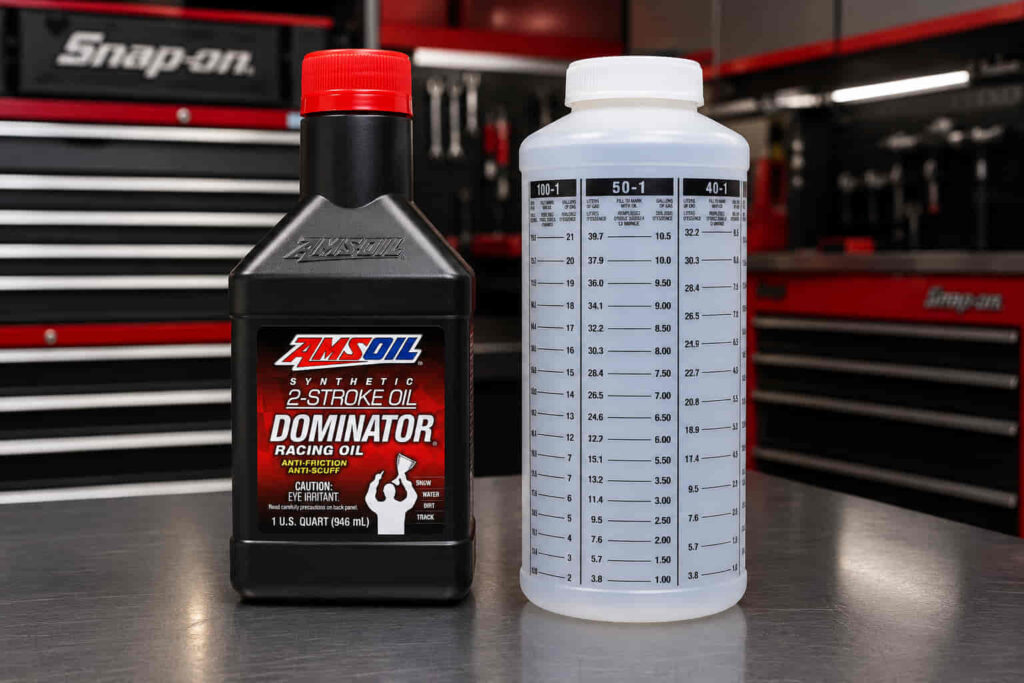
Yes, 2-stroke oil can deteriorate over time, but its usable shelf life depends on the oil formulation, storage conditions, packaging, and the manufacturer’s recommendations. Oil stored in a tightly sealed container under suitable conditions may remain usable for an extended period, while oil exposed to excessive heat, moisture, dirt, or improper storage may become unsuitable for engine use. Therefore, age alone does not always determine whether 2-stroke oil has gone bad.
It is also important to distinguish between unmixed 2-stroke oil and a 2-stroke fuel mixture. Unmixed oil is stored separately in its original container, whereas premixed fuel contains gasoline that can deteriorate during storage. These products have different storage considerations, so the recommended storage period for a bottle of oil should not be applied to a gasoline-and-oil mixture.
Before using old 2-stroke oil in a chainsaw, lawn mower, leaf blower, motorcycle, or another two-stroke engine, check the product label, inspect the container, and look for signs of contamination or unusual changes in the oil. If the oil’s condition is uncertain, consult the manufacturer’s guidance rather than relying on appearance alone. Understanding the difference between oil shelf life, storage conditions, and fuel-mixture stability helps you make a safer decision and protect your engine’s lubrication system.
How Long Does 2 Stroke Oil Last?
The shelf life of 2-stroke oil depends on the manufacturer’s formulation, packaging, and recommended storage conditions. There is no single expiration period that applies to every two-stroke oil product. Some manufacturers specify a storage life or recommend using the oil within a particular period, while others provide product-specific guidance through technical documents or customer support. The product label and official manufacturer documentation should therefore be the primary sources when determining how long a particular bottle of oil remains suitable for use.
Unopened 2-stroke oil generally has better protection against external contamination because its original container remains sealed. A closed container limits exposure to airborne moisture, dust, and other contaminants that may affect the oil during storage. However, an unopened bottle is not guaranteed to remain usable indefinitely. Prolonged exposure to excessive heat, direct sunlight, or unsuitable storage conditions can affect product quality, so an intact seal alone does not establish that old oil is still suitable for an engine.
Opened 2-stroke oil requires additional care because repeated opening can introduce moisture and contaminants. The actual effect depends on how the container is handled, how tightly it is resealed, and where it is stored. For example, a bottle kept tightly closed in a cool, dry storage area has different exposure conditions from one left open in a damp workshop. Record the date the container was opened when practical, keep the original label, and follow any storage period specified by the manufacturer.
If the bottle has no clearly stated expiration date, do not assume that the oil has expired simply because it is old, or that it remains usable simply because it looks normal. Check the product name, batch information, and manufacturer’s published guidance. If the oil has been stored for an unknown period, exposed to unsuitable conditions, or shows signs of contamination, obtain product-specific advice before using it. This approach is more reliable than applying a generic shelf-life estimate to every type of 2-stroke oil.
Read more: Volvo D13 Valve Adjustment.
What Are the Signs That 2 Stroke Oil Has Gone Bad?
You can identify potential problems with 2-stroke oil by checking its appearance, consistency, smell, and storage container. Unusual changes may indicate contamination, deterioration, or a problem with the product’s storage history. However, not every change in color or appearance means that the oil has expired. Different 2-stroke oil formulations naturally vary in color, and some contain dyes or additives that affect their appearance. The most reliable assessment combines the product manufacturer’s guidance with the oil’s condition and storage history.
One warning sign is a noticeable change in consistency or the appearance of unexpected particles, sediment, or persistent separation. If the oil looks substantially different from when it was purchased, contains foreign material, or has developed an unusual layer that does not match the manufacturer’s description, investigate before using it. Some products may have characteristics that are normal for their formulation, so appearance alone cannot establish whether the oil is defective. Compare the product with the manufacturer’s specifications rather than assuming that every color variation or settled substance indicates deterioration.
An unusual or noticeably changed smell can also justify further inspection, particularly when the container has been stored in an unsuitable environment or exposed to contamination. Nevertheless, smell is not a reliable standalone test because 2-stroke oils have different base oils, additives, and characteristic odors. Do not deliberately inhale fumes or place the oil close to your face to evaluate it. If the container smells markedly different from what you would expect, or if the oil’s history is uncertain, consult the manufacturer before deciding whether to use it.
The container itself can provide additional evidence about storage quality. A damaged cap, leaking bottle, broken seal, or evidence that water or dirt has entered the container raises concerns about contamination. Oil stored near chemicals or exposed to extreme temperatures also deserves closer attention. If you find unexplained particles, suspected water contamination, or significant changes in the oil’s consistency, do not rely on filtering or shaking the product to make it suitable for engine use. Keep it separate from usable oil and seek manufacturer guidance. When the product’s condition cannot be established confidently, replacing it is a more prudent choice than risking inadequate lubrication in a two-stroke engine.
Does 2 Stroke Oil Go Bad After It Is Mixed With Gas?
Yes, a 2-stroke fuel mixture can become unsuitable for use during storage because gasoline deteriorates over time, even when the two-stroke oil itself remains in good condition. Once gasoline and oil are mixed, the mixture must be evaluated as a fuel product rather than as a bottle of unmixed lubricant. Its usable storage period depends on the gasoline formulation, the type of oil, the container, environmental conditions, and the equipment manufacturer’s recommendations. For this reason, the shelf life of unmixed 2-stroke oil should never be used to determine how long premixed fuel remains suitable.
Gasoline can undergo chemical changes during storage as it interacts with oxygen and experiences temperature fluctuations. These changes may affect fuel volatility and combustion characteristics, while some gasoline formulations containing ethanol can be particularly sensitive to moisture-related storage problems. A tightly sealed, fuel-compatible container helps limit exposure to air and contamination, but it does not stop fuel from aging indefinitely. Storing premixed fuel in a hot shed or leaving a container partially open can increase the likelihood of fuel-quality problems.
The recommended storage period also varies by fuel type. Conventional pump gasoline mixed with two-stroke oil is not necessarily equivalent to commercially prepared, alkylate-based premixed fuel, which may be formulated for longer storage. Some premixed products carry explicit storage-life recommendations, so the manufacturer’s instructions should determine how long the fuel can be kept. For example, a premixed fuel designed for extended storage should be assessed according to its own product documentation rather than the recommendations for ordinary gasoline mixed with oil at home.
Before using an old 2-stroke fuel mixture in a chainsaw, lawn mower, leaf blower, or other compatible engine, check the equipment manual and the fuel manufacturer’s storage guidance. Be cautious if the mixture has been stored for an unknown period, the container was not sealed properly, or the fuel shows signs of contamination. Do not assume that adding fresh gasoline or more two-stroke oil will restore an aged mixture to its original condition. When the storage history is uncertain or the fuel falls outside the manufacturer’s recommended period, replacing it with a fresh, correctly prepared mixture is the more reliable approach.
What Factors Affect the Shelf Life of 2 Stroke Oil?
The shelf life of 2-stroke oil depends on its formulation, storage environment, packaging, and exposure to contaminants. These factors influence how well the product maintains its intended properties during storage. Although two-stroke oils are formulated for lubrication under demanding engine operating conditions, that does not mean every product can be stored indefinitely. Following the manufacturer’s storage instructions is the most reliable way to preserve oil quality and determine whether an older product remains suitable for use.
Temperature is one important storage factor because excessive heat and repeated temperature fluctuations can affect the long-term stability of petroleum-based products and their additives. A bottle left in direct sunlight or inside a very hot storage area experiences different conditions from one kept in a stable environment within the manufacturer’s recommended temperature range. For example, storing oil on a shelf in a suitable indoor workshop generally provides better environmental control than leaving it in an exposed outdoor shed. Avoid locations that experience extreme heat, and consult the product label for any specified temperature limits.
Exposure to air and moisture can also affect the condition of stored oil, particularly after the original container has been opened. Repeated opening, an improperly tightened cap, or a damaged seal can allow contaminants to enter the bottle. Dust, water, and residue from other products may compromise the cleanliness of the lubricant, even if the oil still looks relatively normal. Keeping the original container tightly closed and using clean handling practices helps reduce these risks. Oil should not be transferred into an unmarked container that may have previously held incompatible chemicals or other substances.
Packaging and formulation further influence storage performance. A properly sealed original container helps protect the product from contamination, while different base oils and additive systems may have different storage recommendations. Synthetic, semi-synthetic, and conventional two-stroke oils should not automatically be assigned identical shelf lives simply because they serve the same purpose. The product’s technical data sheet or manufacturer guidance should take precedence over broad assumptions about oil type. When evaluating old 2-stroke oil, consider the complete storage history, inspect the container, and follow the specific recommendations for that product rather than relying on age alone.
How Should You Store 2 Stroke Oil?
The best way to store 2-stroke oil is to keep it in its original, tightly sealed container in a cool, dry location away from direct sunlight and excessive heat. Suitable storage conditions help protect the oil from contamination and maintain its quality throughout the manufacturer’s recommended storage period. Although proper storage cannot prevent all forms of product deterioration, it reduces unnecessary exposure to environmental conditions that may compromise the lubricant.
Keep the bottle upright on a stable shelf or in a suitable storage cabinet where it is unlikely to be knocked over or damaged. After pouring oil, close the cap securely to limit exposure to air, moisture, and dust. Wipe away residue around the opening before replacing the cap, and use clean measuring equipment when preparing a fuel mixture. For example, pouring oil through a dirty funnel can introduce contaminants into an otherwise clean container, making careful handling an important part of long-term storage.
Temperature control is another important consideration. Avoid leaving 2-stroke oil in direct sunlight, near heaters, or in areas exposed to extreme temperature fluctuations. An indoor storage location that remains within the manufacturer’s recommended temperature range is generally preferable to an exposed outdoor area. Also, keep the oil away from water, solvents, and other chemicals that could contaminate the product if a container leaks or is accidentally opened.
Finally, retain the original label and record the purchase or opening date when practical. The label helps identify the exact formulation and provides access to product-specific storage instructions. If you store several types of two-stroke oil, keep them clearly identified rather than relying on the appearance of their containers. Remember that storing unmixed oil is different from storing a gasoline-and-oil mixture: premixed fuel must be kept in an approved fuel container and managed according to the fuel and equipment manufacturers’ recommendations. Good storage practices preserve product traceability and make it easier to determine whether old oil or fuel remains suitable for use.
What Happens If You Use Old or Degraded 2 Stroke Oil?
Using old 2-stroke oil does not automatically damage an engine, but using oil that has deteriorated or become contaminated can compromise lubrication. Two-stroke engines rely on the correct oil formulation to protect moving components from friction and wear. If the oil no longer meets the engine manufacturer’s requirements, it may not provide the expected level of protection under operating conditions. The actual risk depends on the oil’s condition, the engine design, the lubrication system, and whether the product is compatible with the equipment.
Inadequate lubrication can increase friction between internal engine components and accelerate wear. In a two-stroke engine, this matters because many designs rely on oil delivered through the fuel mixture or a dedicated oil-injection system rather than a conventional engine oil sump. If the lubricant is contaminated or unsuitable, critical components such as the piston, cylinder walls, and bearings may receive inadequate protection. Severe lubrication problems can contribute to overheating, reduced engine performance, and expensive mechanical damage. However, these outcomes are not inevitable simply because oil has been stored for a long time.
Old premixed fuel presents a separate concern because gasoline can deteriorate even when the two-stroke oil remains suitable. A degraded fuel mixture may cause starting difficulties, unstable running, poor combustion, or fuel-system problems. Adding fresh oil does not reverse gasoline deterioration, and adding fresh gasoline does not reliably restore a mixture that has exceeded its recommended storage period. For this reason, evaluate the age and condition of the complete mixture rather than judging it solely by the oil component.
Before using stored oil, verify that it matches the engine manufacturer’s lubrication requirements and that its storage history is acceptable. If the oil shows unexplained changes, suspected contamination, or other warning signs, do not use it until its suitability has been established. The same principle applies to premixed fuel that has been stored too long or under unsuitable conditions. Replacing questionable oil or fuel is generally a more prudent decision than risking damage to equipment that depends on correct lubrication and fuel quality.
When Should You Replace Old 2 Stroke Oil?
You should replace old 2-stroke oil when the manufacturer indicates that it has exceeded its recommended storage period, when contamination is suspected, or when its condition raises concerns about its suitability for engine use. Age alone does not always mean the oil is unusable, but an unknown storage history makes it harder to determine whether the lubricant still meets the required specifications. Checking the product label and consulting the manufacturer’s technical guidance provides a more reliable basis for deciding whether to keep or replace the oil.
A damaged container is another reason to investigate the oil before using it. A broken seal, leaking cap, visible foreign particles, or suspected water contamination can indicate that the product has not been stored properly. If the oil has developed unexplained changes in consistency or appearance, do not assume that shaking, filtering, or mixing it with fresh oil will restore its original properties. These actions cannot reliably establish whether the lubricant still provides the protection required by the engine.
The decision also depends on whether you are evaluating unmixed oil or a prepared fuel mixture. A bottle of two-stroke oil may remain within its recommended storage period even when gasoline mixed with that oil has become unsuitable for use. If premixed fuel has been stored beyond the period specified by the fuel or equipment manufacturer, prepare a fresh mixture using the correct fuel-to-oil ratio. Do not attempt to extend the life of questionable fuel simply by adding more gasoline or lubricant.
When you cannot verify the product’s age, storage conditions, or suitability, contact the oil manufacturer or replace the product with fresh oil that meets the engine’s specifications. Dispose of unwanted oil and fuel through an appropriate local waste collection or hazardous-waste service rather than pouring them onto the ground or into a drain. Making a replacement decision based on product guidance, contamination risk, and the engine’s requirements helps avoid unnecessary mechanical problems and supports responsible handling of used lubricants.