The 2026 Toyota Tacoma is available in eight main trim levels: SR, SR5, TRD PreRunner, TRD Sport, TRD Off-Road, Limited, Trailhunter, and TRD Pro. Toyota also offers i-FORCE MAX hybrid versions of the TRD Sport, TRD Off-Road, and Limited, giving buyers additional powertrain choices within the lineup. Base MSRP starts at $32,545 for the SR and reaches $64,750 for the TRD Pro.
Each Tacoma trim serves a different purpose rather than simply adding more equipment as the price increases. The SR provides the entry point to the lineup, while the SR5 adds versatility for everyday driving. The TRD Sport uses a sport-tuned suspension, whereas the TRD Off-Road adds Bilstein monotube shocks for trail-focused driving. Limited prioritizes comfort with Adaptive Variable Suspension. At the top of the off-road range, Trailhunter uses Old Man Emu suspension and overlanding-focused hardware, while TRD Pro combines FOX internal-bypass shocks with equipment designed for higher-performance off-road driving.
This guide compares the 2026 Toyota Tacoma trim packages by price, powertrain, drivetrain, suspension, capability, equipment, and intended use. It also explains which Tacoma trims are better suited to daily driving, towing, off-road driving, and overlanding so buyers can identify the configuration that best matches how they plan to use the truck.
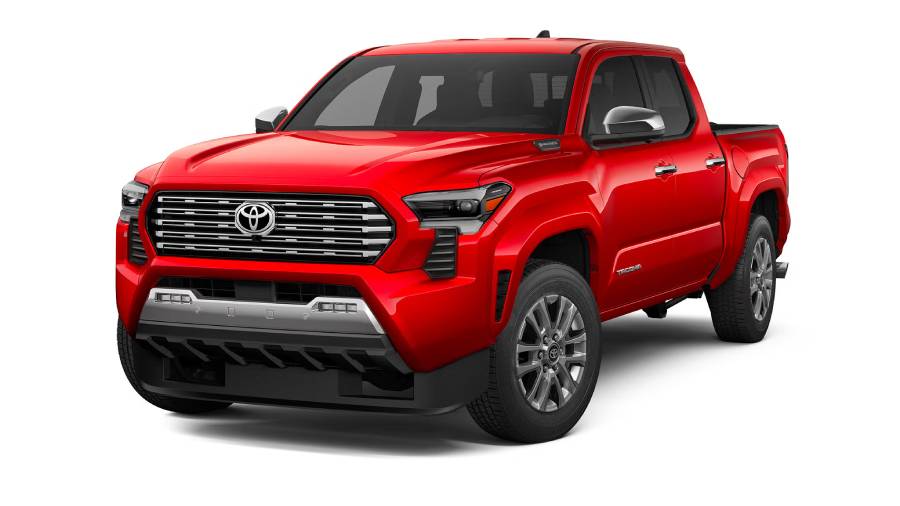
What Toyota Tacoma Trim Levels Are Available?
The 2026 Toyota Tacoma lineup has eight main trim levels: SR, SR5, TRD PreRunner, TRD Sport, TRD Off-Road, Limited, Trailhunter, and TRD Pro. Toyota also sells i-FORCE MAX versions of the TRD Sport, TRD Off-Road, and Limited, which creates additional powertrain configurations within the same trim hierarchy. Starting MSRP ranges from $32,545 for the SR to $64,750 for the TRD Pro.
The lineup separates into four practical groups based on intended use. SR and SR5 cover entry-level work and everyday driving needs. TRD PreRunner, TRD Sport, and TRD Off-Road add more specialized performance or capability equipment. Limited shifts the emphasis toward comfort and premium features. Trailhunter and TRD Pro sit at the top of the range with dedicated off-road hardware, but Trailhunter emphasizes overlanding while TRD Pro emphasizes higher-performance trail driving.
| 2026 Tacoma trim | Starting MSRP | Powertrain | Key characteristic |
|---|---|---|---|
| SR | $32,545 | i-FORCE | Entry-level Tacoma |
| SR5 | $36,635 | i-FORCE | Everyday versatility |
| TRD PreRunner | $39,135 | i-FORCE | Utility-focused rear-drive off-road configuration |
| TRD Sport | $40,415 | i-FORCE | Sport-tuned suspension |
| TRD Off-Road | $42,815 | i-FORCE | Bilstein off-road suspension |
| Limited | $53,570 | i-FORCE | Comfort-focused configuration |
| Trailhunter | $63,750 | i-FORCE MAX | Overlanding-focused configuration |
| TRD Pro | $64,750 | i-FORCE MAX | Performance off-road configuration |
The powertrain choices expand beyond this basic table. The TRD Sport, TRD Off-Road, and Limited are also offered with the i-FORCE MAX 2.4-liter turbocharged hybrid powertrain. Trailhunter and TRD Pro use i-FORCE MAX as standard equipment. This distinction matters because choosing a Tacoma involves both a trim decision and, on several trims, a separate powertrain decision.
What Does the Toyota Tacoma SR Include?
The 2026 Toyota Tacoma SR is the entry-level trim, with a $32,545 starting MSRP and a 2.4-liter turbocharged i-FORCE engine. Toyota offers the SR as a Double Cab with a 5-foot bed or an XtraCab with a 6-foot bed, allowing buyers to prioritize passenger capacity or cargo space. A six-speed manual transmission is also available on qualifying configurations.
The SR focuses on the fundamental capabilities of the Tacoma rather than specialized luxury or off-road hardware. Its aluminum-reinforced composite bed provides the basic cargo platform shared across the lineup, while the XtraCab configuration replaces conventional rear passenger space with a utility-oriented layout. Toyota lists seating for two, a fold-flat passenger seat, and lockable rear storage on the XtraCab-based configuration, making it particularly relevant to buyers who use the truck for equipment and cargo rather than regular rear-seat passengers.
The SR also establishes the Tacoma’s base mechanical platform without adding the specialized suspension systems found higher in the lineup. Buyers moving upward can get equipment such as the TRD Sport’s sport-tuned suspension, the TRD Off-Road’s Bilstein monotube shocks, the Limited’s Adaptive Variable Suspension, or the specialized FOX and Old Man Emu systems used by TRD Pro and Trailhunter. The SR therefore makes the most sense when those specialized systems are not part of the buyer’s primary use case.
The Tacoma SR is best suited to buyers who want the lowest-cost entry into the 2026 Tacoma lineup, a work-oriented truck, or a simpler configuration without paying for specialized TRD equipment. The $4,090 price difference between the SR and SR5 also makes the SR the logical baseline for determining whether the SR5’s additional versatility is worth the upgrade.
What Does the Toyota Tacoma SR5 Include?
The 2026 Toyota Tacoma SR5 starts at $36,635 and expands the Tacoma’s configuration flexibility while retaining the 2.4-liter turbocharged i-FORCE engine. Its starting MSRP is $4,090 higher than the SR. Toyota offers the SR5 as a Double Cab with either a 5-foot or 6-foot bed and as an XtraCab with a 6-foot bed, giving it a broader cab-and-bed selection than the entry-level SR.
A major mechanical distinction appears when choosing the Double Cab. The SR5 Double Cab uses a coil-spring rear suspension, which separates it from utility-oriented configurations that rely on a different rear suspension setup. The coil-spring arrangement makes the SR5 an important transition point in the lineup because buyers can combine Tacoma utility with a configuration intended for broader everyday passenger use.
The SR5 also provides a more logical starting point for buyers who need flexibility rather than the lowest purchase price. A Double Cab can accommodate passengers while retaining the choice between 5-foot and 6-foot beds, whereas the XtraCab maintains the utility-focused layout with a 6-foot bed. This configuration range means an SR5 can serve substantially different roles depending on how it is ordered, from an everyday midsize pickup to a cargo-focused truck.
The primary difference between the Tacoma SR and SR5 is that the SR prioritizes entry price, while the SR5 provides greater configuration flexibility and a coil-spring rear suspension on Double Cab models. The SR starts $4,090 lower, so buyers primarily concerned with purchase price or basic truck duties have a clear reason to remain with the SR. Buyers who want a Double Cab with more bed choices or a more versatile everyday Tacoma have a stronger reason to move to the SR5.
What Does the Toyota Tacoma TRD PreRunner Include?
The 2026 Toyota Tacoma TRD PreRunner starts at $39,135 and combines the utility-focused XtraCab layout with an electronically controlled locking rear differential. It uses the 2.4-liter turbocharged i-FORCE gasoline engine and comes with a 6-foot bed. Unlike the Double Cab-focused TRD configurations higher in the range, the TRD PreRunner uses the XtraCab’s rear area for cargo storage rather than conventional rear passenger seating.
The electronically controlled locking rear differential is one of the most important upgrades over the SR5. A locking differential allows the rear wheels to rotate together when engaged, helping maintain traction when one wheel encounters a low-grip surface. This gives the TRD PreRunner a capability advantage over a basic utility configuration without requiring buyers to move directly to the more expensive TRD Off-Road.
The XtraCab layout also defines how the TRD PreRunner should be used. It seats two occupants and provides utility-focused storage behind the front seats, including lockable compartments, while the 6-foot bed increases cargo flexibility. Toyota limits the XtraCab configuration to the SR, SR5, and TRD PreRunner in the 2026 lineup.
The TRD PreRunner is best suited to buyers who prioritize cargo utility and additional rear-wheel traction rather than rear passenger capacity. Its $39,135 starting MSRP places it $2,500 above the SR5 but $1,280 below the TRD Sport, creating a distinct position between the everyday-oriented Tacoma trims and the more specialized TRD models.
What Does the Toyota Tacoma TRD Sport Include?
The 2026 Toyota Tacoma TRD Sport starts at $40,415 and uses a TRD sport-tuned suspension designed for more responsive on-road driving. Its standard powertrain is the 2.4-liter turbocharged i-FORCE engine, while a six-speed intelligent manual transmission is available. Toyota also offers an i-FORCE MAX hybrid version of the TRD Sport for buyers who want the more powerful electrified powertrain.
Suspension tuning is the defining mechanical attribute of the TRD Sport. Toyota gives this trim sport-tuned shocks to produce a more responsive driving character, whereas the TRD Off-Road uses Bilstein monotube shocks designed around increased wheel travel and off-road control. The difference means the word “TRD” does not automatically make the TRD Sport the best Tacoma for trail driving. Its suspension has a different objective from the hardware installed on the TRD Off-Road, Trailhunter, and TRD Pro.
The TRD Sport also provides a pathway to the i-FORCE MAX hybrid system without requiring buyers to choose an upper-level Trailhunter or TRD Pro. The hybrid combines a turbocharged 2.4-liter engine with an electric motor integrated into the transmission and produces up to 326 horsepower and 465 lb-ft of torque. Hybrid Tacoma models also receive a 2400W AC power supply in the cabin and bed, adding a practical source of electricity for tools, camping equipment, and other compatible devices.
The Tacoma TRD Sport is the better TRD choice for buyers whose driving occurs primarily on pavement but who want sport-oriented suspension tuning and access to additional performance options. Buyers whose priority is traction and suspension capability on rough trails should move toward the TRD Off-Road instead.
What Does the Toyota Tacoma TRD Off-Road Include?
The 2026 Toyota Tacoma TRD Off-Road starts at $42,815 and adds dedicated trail hardware, including Bilstein monotube shocks with piggyback reservoirs. It uses the 2.4-liter turbocharged i-FORCE engine in its standard configuration, offers a six-speed intelligent manual transmission, and is also available with the i-FORCE MAX hybrid powertrain.
The Bilstein suspension is a major distinction between the TRD Off-Road and TRD Sport. Toyota states that the TRD Off-Road’s monotube Bilstein shocks provide extended wheel travel and improved heat dissipation. An end-stop control valve increases damping as the suspension approaches full compression. These characteristics address repeated suspension movement and larger impacts encountered on rough terrain rather than prioritizing the more responsive paved-road feel of the TRD Sport.
Toyota further differentiates the TRD Off-Road through its trail-control systems. Multi-Terrain Select adjusts traction management for surfaces such as mud, dirt, and sand, while CRAWL Control functions as a low-speed off-road cruise-control system. An electronically locking rear differential can distribute power evenly between the rear wheels when additional traction is required. The Stabilizer Disconnect Mechanism is also available on the TRD Off-Road and increases suspension articulation by disconnecting the front stabilizer bar when additional wheel movement is needed.
The i-FORCE MAX version adds another capability configuration to this trim. For 2026, Toyota equips TRD Off-Road i-FORCE MAX models with 33-inch FALKEN WildPeak all-terrain tires on 18-inch alloy wheels. Toyota also introduced 18-inch TRD wheels with 32-inch Goodyear all-terrain tires in the TRD Off-Road i-FORCE Premium Package for the 2026 model year.
The main difference between the Tacoma TRD Sport and TRD Off-Road is suspension and trail capability rather than styling alone. The TRD Sport starts at $40,415 and uses sport-tuned suspension for a more responsive driving character. The TRD Off-Road costs $2,400 more at its $42,815 starting MSRP and adds Bilstein off-road suspension plus access to dedicated traction and trail-control hardware.
For buyers who regularly drive on dirt roads, uneven trails, mud, sand, or other low-traction surfaces, the TRD Off-Road provides the more relevant hardware of the two trims. The TRD Sport is better aligned with buyers who spend most of their time on pavement and want a sportier Tacoma without paying for specialized off-road suspension equipment.
What Does the Toyota Tacoma Limited Include?
The 2026 Toyota Tacoma Limited starts at $53,570 and prioritizes ride comfort, technology, and premium equipment over specialized off-road performance. It is positioned above the TRD Sport and TRD Off-Road in price but serves a different purpose from the Trailhunter and TRD Pro. The Limited is available with the i-FORCE powertrain and can also be configured with the more powerful i-FORCE MAX hybrid system.
The Limited’s suspension is one of its main mechanical differences. Toyota equips this trim with Adaptive Variable Suspension, which continuously adjusts damping according to road conditions. The system changes shock absorber behavior to help balance ride comfort and vehicle control. This makes the Limited fundamentally different from the TRD Sport’s sport-tuned suspension and the TRD Off-Road’s Bilstein setup, which target more specialized driving conditions.
Technology and cabin equipment further establish the Limited as a premium Tacoma. Available equipment includes a 14-inch touchscreen, digital instrumentation, premium audio, heated and ventilated front seats, and other convenience features depending on configuration. These upgrades primarily improve everyday driving and passenger comfort rather than increasing trail capability.
Choosing the i-FORCE MAX Limited adds the hybrid system’s performance advantages. The 2.4-liter turbocharged hybrid powertrain produces up to 326 horsepower and 465 lb-ft of torque, substantially increasing torque compared with the standard gasoline powertrain. Hybrid models also include a 2400W AC power supply that can provide electricity through outlets in the cabin and truck bed.
The Tacoma Limited is best for buyers who want a more comfortable and technology-focused midsize pickup without moving into a dedicated overlanding or high-performance off-road trim. Its value comes from premium equipment and adaptive suspension rather than the specialized trail hardware that defines the Trailhunter and TRD Pro.
What Does the Toyota Tacoma Trailhunter Include?
The 2026 Toyota Tacoma Trailhunter starts at $63,750 and is a factory-built overlanding trim powered by the i-FORCE MAX hybrid system. The hybrid powertrain produces up to 326 horsepower and 465 lb-ft of torque, while Trailhunter-specific suspension, protection, and utility equipment prepare the truck for extended travel beyond paved roads.
Toyota developed the Trailhunter around an Old Man Emu suspension system from ARB. The setup uses 2.5-inch forged monotube position-sensitive shocks with rear external piggyback reservoirs. The suspension is designed to support off-road travel while accounting for the additional equipment and loads associated with overlanding. This distinguishes Trailhunter from the Bilstein-equipped TRD Off-Road and FOX-equipped TRD Pro.
Trailhunter also receives hardware intended to protect the truck and maintain traction away from pavement. Toyota equips it with 33-inch Goodyear Territory R/T tires and underbody protection, while an electronically controlled locking rear differential helps maintain traction on uneven or low-grip terrain. Rock rails provide additional protection along vulnerable lower body areas.
The trim’s overlanding focus extends beyond suspension and traction. Trailhunter includes an integrated high-output air compressor in the bed, allowing drivers to adjust tire pressure after trail use without carrying a separate compressor. Its 2400W AC inverter can also power compatible camping equipment, tools, and accessories. These features address practical requirements that occur during longer self-supported trips rather than simply improving maximum off-road speed.
An ARB steel rear bumper with recovery points further supports the Trailhunter’s intended use. Toyota also integrates exterior equipment and accessory provisions designed around camping and overland travel. The result is a Tacoma configured from the factory for buyers who would otherwise add several aftermarket components to a conventional pickup.
The Trailhunter differs from other Tacoma trims because its hardware is organized around overlanding rather than one individual performance attribute. Suspension, recovery equipment, electrical power, tire capability, protection, and onboard air work together for extended off-pavement travel. Buyers planning camping trips, remote travel, or overland builds therefore have a stronger reason to choose Trailhunter than buyers primarily seeking aggressive trail performance.
What Does the Toyota Tacoma TRD Pro Include?
The 2026 Toyota Tacoma TRD Pro starts at $64,750 and is the lineup’s performance-oriented off-road trim. It comes standard with the i-FORCE MAX hybrid powertrain producing up to 326 horsepower and 465 lb-ft of torque and combines that output with FOX suspension, 33-inch all-terrain tires, specialized seating, and dedicated off-road hardware.
The TRD Pro’s FOX suspension is central to its purpose. Toyota uses 2.5-inch FOX internal-bypass QS3 shocks with rear remote reservoirs. Internal-bypass technology controls damping differently through stages of shock travel, allowing the suspension to respond to changing levels of compression during demanding off-road driving. This setup gives the TRD Pro a different performance objective from Trailhunter’s Old Man Emu overlanding-oriented suspension.
IsoDynamic Performance front seats are another defining TRD Pro feature. The seats use an air-over-oil shock absorber system that allows controlled vertical and lateral movement to help stabilize occupants as the truck moves over rough terrain. The damping can be adjusted according to occupant preference, and the system can be bypassed when conventional seat behavior is preferred.
The TRD Pro also combines its suspension with off-road traction and protection equipment. Its 33-inch Goodyear Territory R/T tires increase terrain capability, while the locking rear differential assists when traction differs between the rear wheels. Underbody protection helps shield vulnerable components during trail driving. The i-FORCE MAX powertrain’s 465 lb-ft of torque provides substantial low-speed output for situations where controlled power delivery is required.
The TRD Pro is best suited to buyers who place high-performance off-road driving above overlanding utility or luxury. The Trailhunter provides more equipment specifically oriented toward self-supported travel, while the TRD Pro concentrates its engineering around suspension performance, occupant control, traction, and capability on demanding terrain.
What Is the Difference Between the Tacoma Trailhunter and TRD Pro?
The main difference between the 2026 Tacoma Trailhunter and TRD Pro is their intended use: Trailhunter is designed for overlanding, while TRD Pro is designed for performance-oriented off-road driving. Both sit near the top of the Tacoma lineup, use the i-FORCE MAX hybrid powertrain, and include substantial off-road hardware, but their suspension and supporting equipment address different types of buyers.
Trailhunter uses Old Man Emu 2.5-inch forged monotube position-sensitive shocks, whereas TRD Pro uses 2.5-inch FOX internal-bypass QS3 shocks. The Trailhunter system supports an overlanding configuration that may carry camping equipment and additional cargo across extended trips. The TRD Pro’s FOX system places greater emphasis on controlling suspension movement during more aggressive off-road driving.
The supporting hardware makes the distinction clearer. Trailhunter provides equipment such as an integrated bed-mounted air compressor, ARB steel rear bumper with recovery points, rock rails, and a 2400W AC inverter. These components solve common overlanding requirements including tire-pressure adjustment, vehicle recovery, body protection, and powering equipment away from conventional electrical sources.
TRD Pro instead adds performance-specific equipment such as IsoDynamic Performance front seats. The seat suspension system is designed to reduce occupant movement over rough terrain, complementing the FOX suspension underneath the truck. This equipment has less relevance to setting up a campsite but greater relevance to maintaining occupant control during demanding trail driving.
| Attribute | Tacoma Trailhunter | Tacoma TRD Pro |
|---|---|---|
| Primary purpose | Overlanding | Performance off-road driving |
| Standard powertrain | i-FORCE MAX | i-FORCE MAX |
| Maximum output | 326 hp | 326 hp |
| Maximum torque | 465 lb-ft | 465 lb-ft |
| Suspension | Old Man Emu 2.5-in. shocks | FOX 2.5-in. internal-bypass QS3 shocks |
| Tires | 33-in. Goodyear Territory R/T | 33-in. Goodyear Territory R/T |
| Integrated air compressor | Yes | Not a defining feature |
| ARB rear bumper | Yes | No |
| IsoDynamic Performance seats | No | Yes |
| Best suited for | Extended self-supported travel | More aggressive off-road driving |
| Starting MSRP | $63,750 | $64,750 |
The price difference is relatively small at the starting-MSRP level: TRD Pro costs $1,000 more than Trailhunter. Price therefore should not be the primary deciding factor between these two trims. Intended use provides the stronger distinction.
Choose the Tacoma Trailhunter when overlanding, remote camping, recovery equipment, and extended off-pavement travel are priorities. Choose the Tacoma TRD Pro when suspension performance and more aggressive trail driving are the priorities. Both deliver the strongest factory off-road specialization in the Tacoma range, but they achieve that specialization through different combinations of equipment.
Which Toyota Tacoma Trims Have the i-FORCE MAX Hybrid Powertrain?
Five 2026 Toyota Tacoma trim configurations use the i-FORCE MAX hybrid powertrain: TRD Sport i-FORCE MAX, TRD Off-Road i-FORCE MAX, Limited i-FORCE MAX, Trailhunter, and TRD Pro. The hybrid powertrain is available as a separate configuration on TRD Sport, TRD Off-Road, and Limited, while Trailhunter and TRD Pro receive i-FORCE MAX as standard equipment.
The i-FORCE MAX combines a 2.4-liter turbocharged four-cylinder engine with an electric motor integrated into the eight-speed automatic transmission. The system produces up to 326 horsepower and 465 lb-ft of torque, compared with up to 278 horsepower and 317 lb-ft from the standard i-FORCE engine. The 148 lb-ft torque increase is particularly relevant when buyers compare the hybrid and non-hybrid versions of the same Tacoma trim.
Toyota also equips hybrid Tacoma models with a standard 2400W AC power supply in the cabin and bed. This feature gives owners a built-in source of AC electricity for compatible tools, camping equipment, and other devices. The power supply has particular relevance to Trailhunter because that trim is designed around overlanding and extended outdoor use rather than daily driving alone.
Choosing i-FORCE MAX does not require moving directly to the two most expensive Tacoma trims. The TRD Sport i-FORCE MAX starts at $47,335, the TRD Off-Road i-FORCE MAX at $47,635, and the Limited i-FORCE MAX at $56,895. Trailhunter starts at $63,750, while TRD Pro starts at $64,750. This structure allows buyers to obtain the hybrid powertrain while retaining the suspension and intended use of the TRD Sport, TRD Off-Road, or Limited.
The TRD Off-Road i-FORCE MAX provides the most direct combination of hybrid output and conventional trail-focused hardware below the Trailhunter and TRD Pro. For 2026, Toyota equips this configuration with 33-inch FALKEN WildPeak all-terrain tires and 18-inch alloy wheels, while its Bilstein suspension remains focused on off-road use.
Which Toyota Tacoma Trims Are Available With Four-Wheel Drive?
The 2026 Toyota Tacoma offers both part-time and full-time four-wheel-drive systems, with the exact system determined by powertrain and trim configuration. Toyota’s 4WDemand part-time system uses an electronically controlled two-speed transfer case with high and low ranges, while the full-time 4WD system uses an electronic locking center differential.
The distinction matters because “4WD Tacoma” does not refer to one identical drivetrain across the entire lineup. The standard i-FORCE and i-FORCE MAX configurations use different drivetrain combinations depending on trim. Toyota therefore lists 4WD as either available or standard according to the specific configuration rather than treating it as a single feature attached to every Tacoma trim.
Four-wheel drive becomes especially important in the off-road-focused part of the lineup. TRD Off-Road combines its drivetrain with Bilstein shocks and available Stabilizer Disconnect Mechanism, while Trailhunter and TRD Pro add specialized suspension systems and receive Stabilizer Disconnect Mechanism as standard equipment. Multi-Terrain Select provides terrain-specific traction management for mud, dirt, and sand in both 4WD-High and 4WD-Low.
Four-wheel drive should therefore be selected according to terrain rather than trim prestige. A buyer who primarily drives on paved roads does not automatically need a higher off-road trim simply to obtain a Tacoma with additional traction capability. Buyers who regularly encounter steep trails, loose surfaces, mud, sand, or uneven terrain gain more value when 4WD is combined with the suspension, differential, protection, and traction systems of the TRD Off-Road, Trailhunter, or TRD Pro.
Which Toyota Tacoma Trim Is Best for Off-Road Driving?
The 2026 Toyota Tacoma TRD Pro is the best trim for performance-oriented off-road driving, while the TRD Off-Road is the stronger value choice for buyers who want substantial trail capability without paying for the flagship model. Trailhunter is the better choice when off-road driving is part of a broader overlanding or remote-travel use case. These three trims occupy different positions even though all are designed to operate beyond paved roads.
TRD Pro has the most performance-focused suspension of the three. Its 2.5-inch FOX Internal Bypass QS3 shocks use rear piggyback reservoirs and accompany a factory lift of approximately 1 inch at the front and 0.5 inch at the rear. Toyota lists maximum TRD Pro figures of up to 35.7 degrees for approach angle, 24.6 degrees for breakover angle, 22.6 degrees for departure angle, and 11.5 inches of ground clearance. These dimensions and suspension components directly improve its ability to negotiate uneven terrain and obstacles.
TRD Pro also receives Stabilizer Disconnect Mechanism as standard. The system disconnects the front stabilizer bar at the push of a button to increase suspension articulation, allowing the wheels to maintain contact more effectively as the terrain changes underneath the truck. Multi-Terrain Select and CRAWL Control add electronic assistance for low-traction surfaces and controlled low-speed driving.
TRD Off-Road is the more cost-conscious trail choice. It starts at $42,815 with the i-FORCE engine, which is $21,935 below the $64,750 starting MSRP of TRD Pro. Despite that difference, it retains important off-road hardware such as Bilstein monotube shocks with piggyback reservoirs and access to systems including Multi-Terrain Select, CRAWL Control, an electronically locking rear differential, and available Stabilizer Disconnect Mechanism.
The TRD Off-Road i-FORCE MAX closes part of the mechanical gap while remaining substantially less expensive than TRD Pro. It combines the 326-horsepower, 465-lb-ft i-FORCE MAX system with Bilstein suspension and 33-inch FALKEN WildPeak all-terrain tires. Its $47,635 starting MSRP is $17,115 below TRD Pro, making it particularly relevant for buyers who prioritize capability per dollar.
Trailhunter addresses a different type of off-road use. Its Old Man Emu 2.5-inch forged monotube position-sensitive shocks, high-clearance front bumper, rock rails, ARB steel rear bumper, recovery hardware, high-mount air intake, and other overlanding-oriented components prepare it for extended self-supported travel. Trailhunter is therefore a stronger fit for remote camping and overland trips than for a buyer whose primary goal is the TRD Pro’s more performance-oriented suspension behavior.
The choice between the three trims can be reduced to three distinct use cases. Choose TRD Off-Road for trail capability and value, Trailhunter for overlanding, and TRD Pro for the highest level of factory performance-oriented off-road equipment. This distinction is more useful than ranking all three solely by price because their suspension systems and supporting hardware are designed around different forms of off-pavement driving.
Which Toyota Tacoma Trim Is Best for Daily Driving?
The 2026 Toyota Tacoma SR5 is the best all-around trim for daily driving because it combines a $36,635 starting MSRP with flexible cab and bed configurations and a coil-spring rear suspension on Double Cab models. Buyers who prioritize additional road-focused performance should consider the TRD Sport, while those who place comfort and premium equipment above price should consider the Limited.
The SR5 has a practical advantage because Toyota offers it in three cab-and-bed combinations: Double Cab with a 5-foot bed, Double Cab with a 6-foot bed, and XtraCab with a 6-foot bed. A buyer who regularly carries passengers can select the Double Cab, while someone who needs more cargo length can move to the 6-foot bed. Toyota also equips Double Cab versions with a coil-spring rear suspension, making the SR5 a more passenger-oriented starting point than a basic work-truck configuration.
The TRD Sport is the stronger alternative for buyers who want a more road-focused Tacoma. It starts at $40,415, which is $3,780 more than the SR5, and replaces the SR5’s general-purpose positioning with TRD sport-tuned suspension. It also provides access to the i-FORCE MAX hybrid configuration, which starts at $47,335 and combines the sport-tuned suspension with Toyota’s more powerful hybrid powertrain.
Limited moves further toward comfort. Its $53,570 starting MSRP is $16,935 higher than the SR5, but Toyota equips it with Adaptive Variable Suspension and 18-inch chrome-finish alloy wheels and exterior accents. The Limited is therefore more appropriate when ride refinement and premium equipment are priorities, but its substantially higher entry price makes it harder to justify for a buyer who primarily needs a Tacoma for commuting and routine everyday use.
Fuel economy also favors the SR5 in relevant gasoline configurations. Toyota lists the SR5 at up to an estimated 21 mpg city and 26 mpg highway, compared with 20/24 mpg for the TRD Sport and 20/23 mpg for the Limited. Actual fuel economy depends on configuration and driving conditions, but these estimates reinforce the SR5’s position as a balanced everyday Tacoma rather than a specialized performance or luxury trim.
Choose the SR5 for the best balance of price, passenger utility, bed options, and everyday usability. Choose the TRD Sport when road-oriented suspension and stronger performance options justify the additional cost, and choose the Limited when comfort takes priority over value.
Which Toyota Tacoma Trim Is Best for Towing?
The best 2026 Toyota Tacoma for towing depends on the exact cab, drivetrain, powertrain, and equipment configuration rather than the trim name alone. Toyota rates the 2026 Tacoma to tow up to 6,500 pounds, but that figure represents the maximum capability of qualifying configurations and does not apply to every Tacoma.
This distinction is important because moving to a more expensive trim does not automatically increase towing capacity. Towing limits depend on vehicle configuration, curb weight, passengers, cargo, accessories, and other equipment. Toyota specifically advises owners to confirm the published towing capacity for the individual vehicle and account for occupants, cargo, and added equipment before towing.
For 2026, Toyota has also increased the utility of the entry-level lineup by making a tow hitch standard on SR XtraCab models. This change makes the SR XtraCab more relevant to buyers who need an affordable Tacoma for work-related hauling without purchasing a higher TRD or premium trim solely to gain towing equipment.
Buyers who tow frequently should evaluate more than the maximum rating. Trailer weight, tongue weight, payload, passengers, bed cargo, drivetrain, and trailer-assistance equipment all affect the practical towing setup. For example, Toyota lists the Tacoma’s maximum payload at 1,705 pounds, but payload also varies by configuration. Adding passengers and cargo reduces the capacity available for trailer tongue weight and other loads.
Available towing technology can also influence the configuration decision. Toyota offers Trailer Backup Guide and Trailer Blind Spot Monitor Trailer Camera equipment to assist with trailer positioning and visibility. These systems do not increase the truck’s mechanical towing limit, but they can make trailer maneuvering and monitoring easier.
Do not select a Tacoma trim for towing based only on the trim hierarchy. Select the exact configuration that carries the required published tow rating for the trailer being used. A buyer who needs the full 6,500-pound maximum should verify that rating for the specific engine, cab, bed, drivetrain, and equipment combination before purchase rather than assuming a Limited, Trailhunter, or TRD Pro automatically provides the highest capacity.
Which Toyota Tacoma Trim Offers the Best Value?
The 2026 Toyota Tacoma SR5 offers the best value for most buyers, while the TRD Off-Road offers the best value for buyers who need genuine trail capability. The SR5 starts at $36,635, only $4,090 above the $32,545 SR, but provides broader configuration flexibility and a coil-spring rear suspension on Double Cab models.
The SR remains the least expensive Tacoma and is the better value when minimizing purchase price is the only priority. However, value is not identical to lowest price. The SR5 can be configured as a Double Cab with either a 5-foot or 6-foot bed or as an XtraCab with a 6-foot bed. This range allows one trim to accommodate passenger-focused, cargo-focused, and mixed-use requirements without moving into the TRD range.
TRD Sport costs $40,415, or $3,780 more than the SR5. Its main mechanical differentiator is the TRD sport-tuned suspension, making the additional expense easier to justify for buyers specifically seeking its road-oriented character. For a general-use buyer who does not prioritize sport-tuned suspension, the SR5 retains the stronger price-to-utility position.
The value calculation changes for off-road buyers. TRD Off-Road starts at $42,815, only $2,400 above TRD Sport, but adds Bilstein monotube shocks with piggyback reservoirs and access to specialized trail systems. Toyota offers Multi-Terrain Select and CRAWL Control for managing low-traction and low-speed off-road situations, while the Stabilizer Disconnect Mechanism is available to increase suspension articulation. These additions provide functional capability rather than cosmetic differentiation.
The TRD Off-Road also creates a large price gap to the flagship off-road trims. At $42,815, it starts $20,935 below the $63,750 Trailhunter and $21,935 below the $64,750 TRD Pro. Trailhunter and TRD Pro justify their higher prices with specialized Old Man Emu and FOX suspension systems and other purpose-built hardware, but buyers do not need to spend more than $60,000 to obtain a Tacoma with dedicated factory off-road equipment.
For buyers who want hybrid performance as well as trail hardware, the TRD Off-Road i-FORCE MAX creates another strong value point. It starts at $47,635 and adds the i-FORCE MAX hybrid powertrain while retaining the Bilstein off-road suspension. That places it $17,115 below TRD Pro and $16,115 below Trailhunter at starting MSRP.
Choose the SR5 when value means getting the most useful everyday Tacoma without paying for specialized equipment. Choose the TRD Off-Road when value means obtaining substantial factory off-road capability at a price well below Trailhunter and TRD Pro. The SR is the better choice only when minimizing initial cost outweighs the additional versatility available higher in the lineup.
Read more: Toyota Tacoma Fuel Filter Location: Complete Guide by Model Year
Which Toyota Tacoma Trim Should You Buy?
The 2026 Toyota Tacoma SR5 is the best choice for most buyers, while the TRD Off-Road, Limited, Trailhunter, and TRD Pro are better choices when off-road capability, comfort, overlanding, or performance becomes the primary requirement. Toyota offers eight main trim names plus separate i-FORCE MAX configurations of the TRD Sport, TRD Off-Road, and Limited, so the correct choice depends more on intended use than on moving progressively toward the most expensive model.
| Buyer priority | Tacoma trim to consider | Starting MSRP |
|---|---|---|
| Lowest purchase price | SR | $32,545 |
| Everyday driving and overall value | SR5 | $36,635 |
| Utility with locking rear differential | TRD PreRunner | $39,135 |
| Road-oriented TRD suspension | TRD Sport | $40,415 |
| Off-road capability and value | TRD Off-Road | $42,815 |
| Comfort and premium equipment | Limited | $53,570 |
| Hybrid TRD performance | TRD Sport i-FORCE MAX | $47,335 |
| Hybrid off-road capability | TRD Off-Road i-FORCE MAX | $47,635 |
| Hybrid premium configuration | Limited i-FORCE MAX | $56,895 |
| Overlanding | Trailhunter | $63,750 |
| Performance-oriented off-roading | TRD Pro | $64,750 |
Toyota’s current 2026 trim listings support these starting MSRP figures and mechanical distinctions.
Choose the SR when purchase price and basic truck functionality are the priorities. At $32,545, it is the least expensive Tacoma in the 2026 lineup and uses the i-FORCE 2.4-liter turbocharged engine. Toyota offers it as a Double Cab with a 5-foot bed or an XtraCab with a 6-foot bed. The SR therefore provides access to the Tacoma platform without requiring buyers to pay for TRD suspension systems, premium equipment, or specialized off-road hardware.
Choose the SR5 when you want the most balanced Tacoma for everyday use. Its $36,635 starting MSRP is $4,090 above the SR, and Double Cab models receive a coil-spring rear suspension. Toyota also expands configuration flexibility by offering the SR5 as a Double Cab with a 5-foot or 6-foot bed and as an XtraCab with a 6-foot bed. Those combinations make the SR5 suitable for buyers who need one truck to handle commuting, passengers, cargo, and routine recreational use.
Choose the TRD PreRunner when you want the XtraCab utility layout combined with additional rear-wheel traction capability. The $39,135 TRD PreRunner pairs its 6-foot-bed XtraCab configuration with an electronically controlled locking rear differential. It occupies a narrow but distinct position in the lineup for buyers who value cargo-focused utility and traction equipment without moving into a more expensive Double Cab off-road configuration.
Choose the TRD Sport when most of your driving occurs on pavement and you want a Tacoma with sport-oriented suspension tuning. Starting at $40,415, it uses TRD sport-tuned suspension and is available with a six-speed intelligent manual transmission. Buyers who want substantially more torque can move to the $47,335 TRD Sport i-FORCE MAX, which adds the turbocharged hybrid system and a 2400W power supply while retaining the TRD Sport’s suspension focus.
Choose the TRD Off-Road when trail capability matters but the price of a Trailhunter or TRD Pro is unnecessary. It starts at $42,815 and uses Bilstein monotube shocks with piggyback reservoirs. The $47,635 i-FORCE MAX version combines the same off-road-oriented trim with Toyota’s hybrid powertrain. This makes TRD Off-Road the strongest middle-ground choice between the road-oriented TRD Sport and the significantly more expensive factory-specialized off-road models.
Choose the Limited when comfort and premium road use take priority over dedicated trail equipment. The gasoline Limited starts at $53,570 and uses Adaptive Variable Suspension instead of the specialized Bilstein, Old Man Emu, or FOX setups found on Tacoma’s off-road-focused trims. The Limited i-FORCE MAX starts at $56,895 for buyers who want the hybrid powertrain without switching to Trailhunter or TRD Pro.
Choose the Trailhunter when overlanding is the primary use case. Its $63,750 starting price includes the i-FORCE MAX powertrain, Old Man Emu 2.5-inch forged monotube position-sensitive shocks, a high-clearance front bumper, rock rails, and an ARB steel rear bumper with recovery hooks. These components create a factory configuration oriented toward extended off-pavement travel rather than simply adding more luxury equipment to a lower Tacoma trim.
Choose the TRD Pro when performance-oriented off-road driving is the priority. At $64,750, it is $1,000 more than Trailhunter and combines the standard i-FORCE MAX powertrain with 2.5-inch FOX Internal Bypass QS3 shocks and IsoDynamic Performance front seats with a damping system. The TRD Pro therefore makes the most sense when its specialized suspension and occupant-control equipment directly match how the truck will be used.
The trim hierarchy should not be interpreted as a simple progression from worst to best. SR5 provides the strongest all-around choice for everyday buyers, TRD Off-Road provides the strongest balance for trail use, Limited targets comfort, Trailhunter targets overlanding, and TRD Pro targets performance off-roading. Selecting the trim according to those functions prevents buyers from paying for specialized equipment that does not support their actual driving needs.