A Nissan Qashqai may not start because of a weak 12V battery, poor battery connections, a starter circuit fault, fuel delivery problems, ignition faults, engine-management issues, or a key and immobiliser problem. The symptoms that appear when you try to start the vehicle provide the first clues to which system needs to be checked.
The first step is to determine whether the Qashqai does not crank or cranks but does not start. A no-crank condition means the engine does not turn when you press the start button or turn the key. This directs the diagnosis toward the 12V battery, battery terminals, starter circuit, starter motor, or start-authorisation system. A crank-no-start condition means the starter turns the engine at a normal speed, but combustion does not begin. In this case, fuel delivery, ignition, engine sensors, and engine-management systems become more relevant.
Do not replace a battery, starter motor, fuel pump, or sensor based on the no-start symptom alone. The cranking behaviour, clicking sounds, dashboard lights, warning indicators, and diagnostic trouble codes help narrow the fault before parts are replaced. The sections below explain the main causes of a Nissan Qashqai not starting, how to distinguish them, and which diagnostic checks and repairs are appropriate.
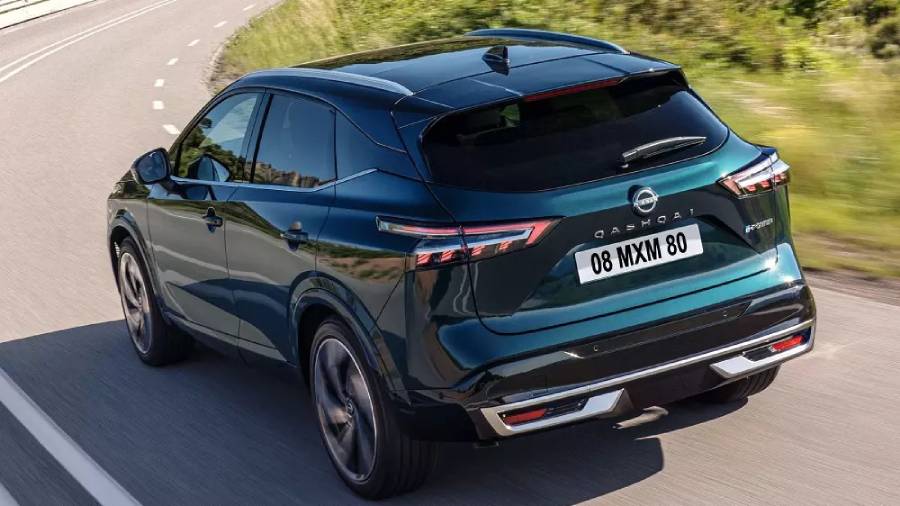
Why Is My Nissan Qashqai Not Starting?
A Nissan Qashqai may not start because of faults in 6 main systems: the 12V battery and power supply, starter circuit, fuel delivery system, ignition system, engine-management system, or key and immobiliser system. The most likely cause depends on what happens when you attempt to start the engine. A vehicle that does not crank requires a different diagnostic approach from one that cranks normally but fails to start.
The 12V battery and its electrical connections should receive early attention when the engine does not crank or turns slowly. Starting the engine requires substantially more electrical power than operating dashboard lights and accessories, so illuminated dashboard lights do not rule out a weak battery. Poor battery-terminal or ground connections can produce similar symptoms because excessive electrical resistance reduces the current available to the starter.
Starter circuit faults become more relevant when sufficient battery power reaches the vehicle but the engine still does not turn. The starting circuit includes components that transmit and execute the start command, including the starter relay, starter solenoid, wiring, and starter motor. A click without engine rotation can point toward this part of the system, although the battery and electrical connections should be checked before concluding that the starter motor has failed.
Fuel delivery, ignition, and engine-management faults become more relevant when the engine cranks at a normal speed but does not start. Combustion requires the correct fuel supply and, on petrol engines, an effective ignition source at the appropriate time. The engine control system also relies on sensor information, including engine-position and speed data, to manage the starting process. A failure in one of these areas can therefore allow the starter to turn the engine without allowing it to run.
The key and immobiliser system creates another diagnostic path. The vehicle must recognise an authorised key and satisfy the required starting conditions before starting is permitted. A key-recognition, immobiliser, or related start-authorisation problem can therefore produce a no-start condition even when the battery and mechanical components are serviceable.
What Does It Mean If Your Nissan Qashqai Does Not Crank?
A Nissan Qashqai that does not crank has a no-crank condition, meaning the starter is not turning the engine when a start is requested. The first systems to investigate are the 12V battery, battery terminals and ground connections, starter circuit, starter motor, and start-authorisation system.
The exact behaviour helps narrow the diagnosis. Rapid clicking combined with little or no engine movement directs attention toward battery voltage and electrical connections. A single click with no cranking makes the starter circuit more relevant, but it does not prove that the starter motor is defective. No response at all can require investigation of the power supply, start command, key recognition, immobiliser, or associated electrical circuit.
Dashboard lights should also be interpreted carefully. A Qashqai can have enough battery power to illuminate its instrument panel while lacking the current required to operate the starter effectively. For this reason, battery condition should be tested rather than judged only by whether lights, infotainment, or other accessories operate.
What Does It Mean If Your Nissan Qashqai Cranks but Does Not Start?
A Nissan Qashqai that cranks but does not start has a crank-no-start condition: the starter motor is turning the engine, but the engine does not begin running on its own. This symptom shifts the diagnostic focus away from the starter motor and toward fuel delivery, ignition, engine-position signals, and engine management.
Fuel must reach the engine at the required pressure and quantity for combustion to begin. A fuel-delivery fault can therefore produce normal cranking without successful starting. Depending on the engine and fault involved, diagnosis can require checking the fuel supply, fuel pressure, pump operation, injectors, and relevant electronic controls rather than replacing a fuel component based only on the no-start symptom.
Ignition and engine-management faults create a similar result. Petrol engines require an effective spark, while the engine-management system requires valid information from relevant sensors to control starting and combustion. A missing or implausible crankshaft-position signal, for example, can interfere with the ECU’s ability to determine engine position and speed.
The practical distinction is therefore simple: if the engine does not turn, begin with the battery, connections, starter circuit, and start authorisation; if it turns normally but does not run, investigate fuel delivery, ignition, sensor inputs, and engine management. Establishing this distinction first prevents unrelated components from being replaced and provides a more efficient diagnostic sequence.
What Are the Most Common Causes of a Nissan Qashqai Not Starting?
There are 8 main causes of a Nissan Qashqai not starting: a weak 12V battery, poor battery connections, a faulty starter motor, a starter solenoid or relay fault, a fuel delivery problem, an ignition fault, an engine-management or crankshaft position sensor fault, and a key or immobiliser problem. The symptoms produced by each fault overlap, so the cause should be confirmed through diagnosis rather than by replacing the component that appears most likely.
A weak or discharged 12V battery is one of the first causes to check when the Qashqai does not crank, clicks repeatedly, or cranks unusually slowly. The starter motor requires a large amount of current for a short period to turn the engine. A battery can retain enough charge to operate the dashboard, interior lights, or infotainment system while failing to supply sufficient current under starter load. Battery condition, terminal voltage, and behaviour during cranking provide more useful evidence than dashboard lights alone.
Loose, corroded, or damaged battery connections can create the same starting symptoms as a weak battery. The battery must deliver current through low-resistance connections to the starter and vehicle electrical system. Corrosion, a loose terminal, or a poor ground connection increases resistance and causes a voltage drop when the starter demands high current. Symptoms can include intermittent starting, rapid clicking, slow cranking, flickering lights, or a sudden loss of electrical power during a starting attempt. Inspecting and testing these connections should therefore come before replacing the starter motor.
A faulty starter motor can prevent the engine from cranking even when the battery is adequately charged. The starter converts electrical energy from the 12V battery into the mechanical rotation required to turn the engine. Internal wear or an electrical fault can prevent this process. A single click followed by no engine rotation can make the starter circuit a diagnostic priority, but the symptom is not sufficient to confirm starter failure because weak battery voltage and high-resistance connections can produce a similar result.
A starter solenoid or relay fault can interrupt the electrical path needed to operate the starter motor. These components help transmit or switch the start command and the electrical current required by the starting circuit. A driver may hear a click without the engine turning when part of this circuit fails. Diagnosis should establish whether the starter is receiving the correct power and command before the starter motor, solenoid, or relay is replaced.
A fuel delivery problem can cause a Nissan Qashqai to crank normally without starting. The engine requires the correct quantity of fuel under the appropriate operating conditions for combustion to begin. A fault involving fuel supply, pump operation, pressure, injectors, or their electrical controls can leave the starter capable of turning the engine while the engine itself cannot run. This distinction is important because replacing a battery or starter is unlikely to correct a vehicle that already cranks at a normal speed.
An ignition fault can produce a crank-no-start condition on petrol Nissan Qashqai models. The air-fuel mixture requires an effective spark at the correct point in the combustion cycle. Problems involving spark plugs, ignition coils, associated wiring, or engine-control signals can interfere with that process. The applicable ignition components depend on the engine configuration, so diagnosis should follow the specifications for the particular Qashqai engine rather than treating every model and powertrain as identical.
A crankshaft position sensor or another engine-management fault can prevent successful starting even when the starter, battery, and fuel supply appear functional. The engine control unit relies on sensor information to determine operating conditions and coordinate functions required for the engine to run. The crankshaft position signal is particularly relevant because it provides information about crankshaft speed and position. If a required signal is missing or implausible, the engine may crank without starting or may exhibit intermittent starting problems. An OBD-II scan can help identify the affected circuit, but a diagnostic trouble code should be treated as evidence for further testing rather than automatic proof that the named sensor has failed.
A key fob, Intelligent Key, or immobiliser problem can prevent the Nissan Qashqai from authorising a start. The vehicle must recognise an authorised key before the starting process can proceed normally. A weak key fob battery, failure to recognise the key, immobiliser-related fault, or another problem in the start-authorisation system can therefore create a no-start condition without a mechanical failure in the engine. Key or security warning indicators on the dashboard provide useful evidence when this system is involved.
The fastest way to separate these 8 causes is to classify the starting symptom first. No cranking or slow cranking directs the initial diagnosis toward the battery, electrical connections, and starter circuit; normal cranking without the engine running directs it toward fuel, ignition, sensors, and engine management; a start-authorisation or key warning directs attention toward the key and immobiliser system. This symptom-based approach reduces unnecessary component replacement and establishes which system should be tested first.
What Does the Sound Tell You When a Nissan Qashqai Will Not Start?
The sound produced during a starting attempt can separate a Nissan Qashqai no-start problem into 4 useful diagnostic patterns: rapid clicking, a single click, slow cranking, and normal cranking without starting. Sound alone does not confirm a failed component, but it identifies which systems deserve priority during testing.
Rapid clicking with no successful cranking usually directs the first checks toward the 12V battery and its electrical connections. The starter circuit places a heavy electrical load on the battery. If available voltage falls substantially under that load, the starter solenoid or related circuit can repeatedly engage and disengage, producing a series of clicks. Check battery condition, battery terminals, and ground connections before assuming that the starter motor needs replacement.
A single click followed by no engine rotation makes the starter circuit more relevant. The click indicates that at least part of the starting command may be reaching the circuit, but it does not establish that sufficient current is reaching the starter or that the starter itself is defective. Battery condition, voltage drop across the connections, starter power supply, solenoid operation, and starter motor condition should be evaluated in sequence.
Slow cranking indicates that the engine is turning, but the starting system is not rotating it at the expected speed. A weak battery is an important cause, while poor battery terminals, ground resistance, wiring losses, or excessive starter load can produce a similar symptom. The useful distinction is between available battery voltage with no load and electrical performance while the starter is operating. A battery that appears acceptable before starting can still perform poorly under cranking load.
Normal cranking without starting changes the diagnostic direction. If the engine turns at its normal cranking speed, the battery and starter have already performed their primary function well enough to rotate the engine. The next checks should focus on the conditions required for the engine to run, including fuel delivery, ignition where applicable, engine-position signals, and engine-management control.
The sound should therefore be used as the beginning of the diagnosis rather than as a final verdict. Rapid clicks suggest checking battery power first, one click shifts attention toward the starting circuit, slow cranking requires battery and voltage-drop testing, and normal cranking shifts the investigation toward combustion and engine management.
Why Won’t My Nissan Qashqai Start Even Though the Lights Work?
A Nissan Qashqai can have working dashboard lights but still fail to start because the starter motor requires substantially more electrical current than the dashboard, interior lights, or infotainment system. Working electrical accessories therefore do not prove that the 12V battery is healthy enough to start the engine.
The battery should remain one of the first components checked when the engine does not crank or cranks slowly. A partially discharged or deteriorated battery may provide enough power for low-current electrical equipment but experience a significant voltage drop when the starter is engaged. This explains why the instrument panel may illuminate normally before the start button is pressed, followed by clicking, dimming lights, or failure to crank when starting is attempted.
Battery terminals and ground connections create a second possibility. The starter depends on a low-resistance electrical path between the battery, vehicle ground, and starting circuit. A loose terminal, corrosion, damaged cable, or poor ground connection can restrict current under heavy load without preventing lower-current accessories from operating. Check the battery connections for looseness, corrosion, physical damage, and evidence of excessive voltage drop before replacing the starter.
The starter circuit becomes a stronger suspect when battery condition and electrical connections test correctly but the engine still does not crank. The starter relay, solenoid, wiring, and starter motor form parts of the electrical path that converts the driver’s start request into engine rotation. A single click with no cranking can justify testing this circuit, but the click alone does not confirm that the starter motor has failed.
Start authorisation should also be considered when the battery and starting circuit do not explain the problem. A Nissan Qashqai equipped with an Intelligent Key and push-button starting system must recognise the key and satisfy the required starting conditions. A key-recognition or immobiliser-related problem can prevent a normal start even though the dashboard and accessories remain powered.
Why Won’t My Nissan Qashqai Start With the Push Button?
A Nissan Qashqai push-button start can fail because the vehicle does not recognise the Intelligent Key, the key fob battery is weak, a required pedal input is not detected, the immobiliser does not authorise starting, or another fault interrupts the starting system. The correct diagnosis depends on whether pressing the button produces no response, a warning message, clicking, or normal engine cranking.
Begin by observing the dashboard for key-related or security warnings. A weak key fob battery can reduce reliable communication between the key and vehicle, while a key-recognition problem can prevent the normal start sequence. The owner’s manual for the specific Qashqai model should be used for the correct emergency starting procedure when the Intelligent Key battery is suspected, because procedures and system behaviour can differ by model year.
The starting system must also receive the required driver input. Depending on the transmission and vehicle configuration, the system uses inputs such as brake or clutch pedal operation as part of the starting sequence. A problem with the relevant input or its detection can prevent the start request from progressing even though electrical accessories operate normally.
An immobiliser or electronic fault becomes more relevant when the vehicle repeatedly fails to recognise an authorised key or displays a security-related warning. The immobiliser exists to prevent unauthorised engine operation, so a failure within the authorisation process can create a legitimate no-start condition. Diagnostic equipment may be required when the problem cannot be isolated to a weak key fob battery or another basic cause.
Do not assume that every push-button no-start is an Intelligent Key problem. If the starter clicks, turns slowly, or the dashboard dims substantially during the attempt, the 12V battery and power connections still require priority checks. If the engine cranks normally but does not run, the diagnostic path should instead move toward fuel delivery, ignition, sensor inputs, and engine management.
How Do You Diagnose a Nissan Qashqai That Will Not Start?
Diagnose a Nissan Qashqai that will not start by following 5 stages: identify the starting symptom, inspect the 12V power supply, test the starting system, investigate fuel and ignition when the engine cranks, and scan the engine-management system when basic checks do not identify the fault. This order prevents unrelated parts from being replaced before the faulty system has been isolated.
What Should You Check First When a Nissan Qashqai Will Not Start?
First, observe exactly what the Nissan Qashqai does when you attempt to start it. Determine whether there is no response, rapid clicking, one click, slow cranking, or normal cranking without starting. Check the dashboard at the same time for dimming lights, battery-related behaviour, key warnings, security indicators, and other relevant warning messages.
Next, classify the fault as no-crank or crank-no-start. A no-crank condition makes the battery, terminals, grounds, starter circuit, and start-authorisation system the initial priorities. A normal crank-no-start condition means the starter is already rotating the engine, so diagnosis should move toward fuel delivery, ignition where applicable, engine-position signals, and engine management.
A visual inspection should follow before components are removed. Check the accessible battery terminals and cables for looseness, corrosion, or damage. Evidence of a poor connection can explain intermittent power, clicking, or slow cranking. Do not work on electrical or fuel-system components beyond your skill level; incorrect testing can damage vehicle electronics or create a safety hazard.
How Do You Check the Battery and Starting System?
Check the battery and starting system by evaluating battery condition, inspecting the electrical connections, observing voltage behaviour under starting load, and confirming whether the starter responds correctly. A static battery-voltage reading provides useful information, but it does not by itself establish that the battery can supply sufficient current during cranking.
Start with the battery terminals and main connections. They should be secure and free from significant corrosion or physical damage. The ground path is equally important because the starting circuit requires a complete low-resistance path. Excessive resistance anywhere in this circuit can reduce the voltage available to the starter even when the battery itself remains serviceable.
A battery test becomes more informative when its behaviour under load is considered. If voltage falls excessively while a start is attempted, the battery may be discharged or deteriorated, although connection resistance can contribute to the same observation. A proper battery or load test can separate battery capacity problems from faults elsewhere in the circuit.
Evaluate the starter only after the power supply and major connections have been checked. If adequate power and the correct start command reach the starter but the engine does not crank, starter motor or solenoid failure becomes more likely. This diagnostic order matters because replacing a starter will not correct a weak battery or high-resistance battery connection.
How Do You Diagnose a Nissan Qashqai That Cranks but Does Not Start?
Diagnose a Nissan Qashqai that cranks but does not start by checking fuel delivery, ignition where applicable, engine-position signals, and diagnostic trouble codes. Normal cranking indicates that the battery and starter are performing their primary task sufficiently to rotate the engine, so continued starter-system diagnosis is unlikely to address the central problem.
Fuel delivery is one of the required conditions to investigate. The engine needs fuel in the correct quantity and under the correct operating conditions before combustion can continue. Diagnosis may involve determining whether the fuel system is operating, whether adequate pressure is available, and whether the injectors and their controls are functioning. Fuel-system testing can involve pressure and electrical hazards, so procedures requiring specialist equipment are better handled by a qualified technician.
For petrol engines, ignition must also be considered. Spark plugs, ignition coils, wiring, and ECU control can affect whether combustion begins. The exact diagnostic procedure depends on the engine fitted to the vehicle, making model year, engine type, and powertrain configuration important when moving beyond basic troubleshooting.
Engine-position information is another requirement. The ECU uses signals such as crankshaft position and engine speed to control functions needed during starting. A missing or implausible sensor signal can therefore result in an engine that turns normally but does not start.
An OBD-II diagnostic scan should be used when an electronic, sensor, fuel-control, or ignition fault is suspected. A diagnostic trouble code identifies a circuit, operating condition, or system requiring investigation; it does not automatically prove that the component named in the code needs replacement. For example, wiring, connectors, power supply, or another related fault can produce a code associated with a sensor. Test the affected system before purchasing replacement parts.
How Do You Fix a Nissan Qashqai That Will Not Start?
Fix a Nissan Qashqai that will not start by repairing the fault identified during diagnosis rather than replacing parts based on the no-start symptom alone. The appropriate repair may involve charging or replacing the 12V battery, restoring an electrical connection, repairing the starter circuit, correcting a fuel or ignition fault, or resolving a key, immobiliser, or engine-management problem.
A discharged battery should first be distinguished from a battery that has deteriorated and can no longer provide adequate starting power. Charging or jump-starting can restore enough electrical power to start the vehicle when discharge is the immediate problem. However, a successful jump-start does not prove that the battery is healthy. A battery that repeatedly loses charge requires further testing, and the charging system should be investigated when the battery becomes discharged again after the vehicle has been driven.
Replace the 12V battery when testing confirms that it can no longer provide the required performance and recovery through normal charging is not appropriate. The replacement battery must meet the specifications required for the particular Nissan Qashqai. Battery requirements can differ according to model year, engine, electrical equipment, and start-stop configuration, so the correct specification should be confirmed before installation.
Poor electrical connections require a different repair. Loose battery terminals should be secured correctly, while corrosion or damaged connections should be cleaned or repaired as appropriate. Ground connections and main battery cables also require attention when testing identifies excessive resistance. Restoring a low-resistance electrical path can correct clicking, slow cranking, intermittent starting, or complete no-crank symptoms without replacing the battery or starter.
Repair or replace the starter motor only after the battery and power-delivery circuit have been tested. If the starter receives the required electrical supply and start command but cannot turn the engine correctly, a starter motor or solenoid fault becomes more likely. Testing the circuit first prevents a serviceable starter from being replaced when the actual problem is a weak battery, poor terminal connection, or wiring fault.
A Qashqai that cranks normally but does not start requires a repair directed at the system preventing combustion. A confirmed fuel-delivery fault may require repair of the affected pump, electrical circuit, injector control, or another fuel-system component. A confirmed ignition fault on a petrol engine may involve spark plugs, ignition coils, wiring, or control-related components. The exact repair should follow the diagnostic result rather than the assumption that every crank-no-start condition has the same cause.
Sensor and engine-management problems require the same evidence-based approach. A diagnostic trouble code can identify where further investigation is required, but replacing the component named in a code without testing its circuit can result in an unnecessary repair. Confirm the component, connector, wiring, power supply, ground, and relevant signals before determining the corrective action.
Key-recognition and immobiliser faults may require a different level of intervention. A weak key fob battery is a relatively simple cause to address, while persistent key-recognition, immobiliser, programming, or control-module faults can require appropriate diagnostic equipment. Use the starting and emergency key procedures specified for the particular Qashqai model rather than bypassing security or start-authorisation systems.
Can Cold Weather Cause a Nissan Qashqai Not to Start?
Cold weather can contribute to a Nissan Qashqai not starting because low temperatures reduce available 12V battery performance while the engine may require greater starting effort. A battery that starts the vehicle normally in mild conditions can therefore show its first obvious symptoms during colder weather.
The battery is particularly important because the starting system depends on a short period of high electrical demand. When battery performance is already reduced by age, low state of charge, or deterioration, colder conditions can expose the weakness. The result may be slow cranking, rapid clicking, or a complete failure to crank. This does not mean that cold weather itself has damaged the starter; the temperature may simply reveal a battery or connection problem that was already developing.
Electrical connections can also become more noticeable during cold-start conditions. A marginal terminal, cable, or ground connection that provides barely adequate current under favourable conditions may cause a larger practical problem when the battery has less available starting performance. Battery condition and connections should therefore be checked together when a Qashqai develops cold-weather starting problems.
Engine type also affects the diagnostic context. Petrol and diesel engines do not use identical combustion and cold-start systems, so a cold-weather no-start should be investigated according to the engine installed in the vehicle. Avoid applying a diesel-specific cold-start diagnosis to a petrol Qashqai, or assuming that every winter starting problem is caused by the battery.
A repeated cold-weather no-start is a reason to test the underlying system rather than relying on repeated jump-starts. If the same Qashqai consistently struggles to start as temperatures fall, battery condition, charging performance, electrical connections, and engine-specific cold-start systems should be evaluated before the vehicle becomes completely unable to start.
Why Does My Nissan Qashqai Start Sometimes but Not Others?
A Nissan Qashqai that starts intermittently can have an unstable electrical connection, deteriorating battery or starter circuit, intermittent key recognition, or an engine-management fault that appears only under specific operating conditions. An intermittent no-start should not be considered resolved simply because the engine starts normally on the next attempt.
Electrical faults are important because connection quality can change with vibration, temperature, component position, and electrical load. A loose battery terminal, damaged cable, poor ground, or deteriorating starter connection may allow normal starting during one attempt and fail during another. Recording whether the failure produces clicking, slow cranking, or no response helps identify which part of the starting system should be tested.
A deteriorating starter circuit can also fail intermittently before becoming completely inoperative. If the battery and connections test correctly but the vehicle occasionally produces a single click or no crank, the starter motor, solenoid, relay, wiring, and start-command circuit require further investigation. The fact that the starter works on another attempt does not eliminate an intermittent electrical or mechanical fault.
Key recognition provides another possible intermittent pattern on Qashqai models equipped with an Intelligent Key system. If starting failures coincide with a key-related warning or inconsistent key detection, the key fob battery and start-authorisation system deserve attention. Comparing the dashboard behaviour during successful and unsuccessful attempts can provide useful diagnostic evidence.
Intermittent crank-no-start symptoms shift attention toward engine-management and related systems. A sensor or electrical signal may fail under particular temperature or operating conditions and function normally again later. Diagnostic trouble codes, stored fault information, and live data can be especially useful because the fault may not be present when the vehicle reaches a workshop.
The most useful approach is to record the conditions under which the no-start occurs. Note whether the engine was hot or cold, whether it cranked, what sounds were produced, which warning lights appeared, and whether the fault disappeared after waiting or trying again. These observations turn an unpredictable starting complaint into a repeatable diagnostic pattern and help prevent unnecessary component replacement.
Read more: Nissan Frontier vs Toyota Tacoma: Which Is Better?
Can an Alternator Problem Cause a Nissan Qashqai Not to Start?
An alternator problem can indirectly cause a Nissan Qashqai not to start because the alternator charges the 12V battery while the engine is running; if the charging system fails, the battery can eventually become too discharged to start the engine. The alternator does not perform the actual cranking process, so a no-start condition should not automatically be diagnosed as an alternator failure.
The distinction between the battery, starter, and alternator is important. The battery supplies electrical power for starting, the starter motor uses that power to turn the engine, and the alternator replenishes the battery after the engine starts while supplying electrical power during operation. A fault in any part of this sequence can eventually appear to the driver as a starting problem, but the underlying mechanism is different.
A charging-system problem becomes more likely when a charged or serviceable battery repeatedly becomes discharged after the vehicle has been driven. Other electrical symptoms occurring before the no-start condition can also provide useful evidence. Testing should establish whether the battery can hold a charge and whether the charging system operates correctly rather than replacing either component based solely on a flat battery.
A successful jump-start does not distinguish between these faults. Jump-starting supplies external electrical power that may allow the engine to crank and run, but it does not establish why the battery lacked sufficient power in the first place. The battery may have been discharged by lights or accessories left operating, may have deteriorated internally, or may not have received adequate charging while the engine was running.
The practical diagnostic sequence is to test the battery first when the immediate symptom is weak or absent cranking, then investigate charging performance if the battery repeatedly becomes discharged. This keeps the causal relationship clear: an alternator fault can lead to a discharged battery, and the discharged battery then produces the subsequent no-start condition.
When Should You Call a Mechanic for a Nissan Qashqai That Will Not Start?
Call a mechanic when basic battery and connection checks do not identify the cause, the Nissan Qashqai repeatedly fails to start, or diagnosis requires work on the starter circuit, fuel system, immobiliser, engine management, or other systems that require specialist testing. Professional diagnosis is particularly valuable when replacing parts based on symptoms would involve guesswork.
A persistent crank-no-start condition is one reason to seek professional diagnosis. Once the engine is cranking normally, determining whether the problem involves fuel pressure, ignition, injector operation, engine-position signals, wiring, or ECU control can require diagnostic equipment and vehicle-specific procedures. These systems should be tested rather than having individual components replaced until the engine happens to start.
Repeated electrical problems also require further investigation. If the battery becomes discharged again after charging or replacement, the underlying cause may involve charging performance, an electrical connection, or another electrical fault. Repeatedly jump-starting the vehicle addresses the immediate lack of starting power but does not identify why that condition keeps returning.
Professional assistance is also appropriate when the vehicle displays persistent key, immobiliser, or security-related symptoms. These systems can involve key recognition, programming, control modules, wiring, and stored diagnostic information. A key fob battery can be checked or replaced relatively easily, but a persistent authorisation fault may require vehicle-compatible diagnostic equipment.
Stop attempting to start the vehicle and arrange professional assistance if there is smoke, a burning smell, obvious electrical overheating, leaking fuel, or another sign that continued testing could be unsafe. Repeated cranking should not be used as a substitute for diagnosis when the vehicle shows signs of an electrical, fuel, or mechanical problem.
Before contacting a mechanic, record the behaviour of the vehicle during the failed start. Note whether the engine cranks, how quickly it turns, whether clicking occurs, which warning indicators appear, whether the failure happens when the engine is hot or cold, and whether the problem is intermittent. Diagnostic trouble codes should also be recorded rather than immediately cleared when they are available.
The central diagnostic rule is straightforward: identify whether the Nissan Qashqai has a no-crank or crank-no-start condition before replacing components. No-crank problems direct attention toward the 12V battery, electrical connections, starter circuit, and start authorisation. Crank-no-start problems direct attention toward fuel delivery, ignition, engine-position signals, and engine management. This distinction provides a more reliable route from the original symptom to the actual repair.