Mud flaps should sit close to the road without touching it during normal driving. The correct ground clearance depends on the vehicle, tire size, suspension, load, and mud flap design. Local regulations can also set specific clearance or coverage requirements. For that reason, one measurement does not fit every vehicle.
The best starting point is to measure the distance from the bottom edge of the mud flap to the road. Check the vehicle under its normal operating conditions. A loaded truck can sit lower than an unloaded truck because the suspension compresses under weight. Larger tires and suspension modifications can also change the relationship between the tire, mud flap, and road.
A mud flap that sits too high may allow more water, mud, and road debris to reach vehicles behind it. A mud flap that sits too low may drag on the road and suffer unnecessary wear or damage. The goal is to find a position that provides effective tire coverage while maintaining enough clearance for normal road conditions.
This guide explains how to measure mud flap clearance, how vehicle type and load affect the correct position, and how to adjust mud flaps when they sit too high or too low.
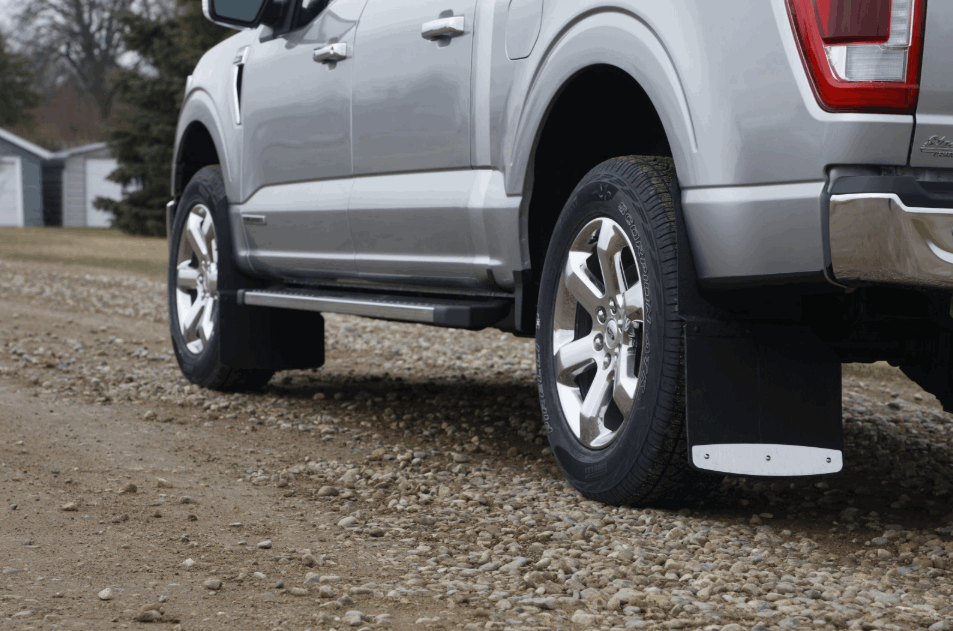
How High Should Mud Flaps Be Off the Ground?
The correct mud flap height depends on the vehicle and the applicable installation requirements. There is no universal ground clearance that works for every truck, trailer, or passenger vehicle. Different jurisdictions use different measurements. Oregon, for example, requires mud guards on certain vehicles to extend to a point no more than 27 inches above the highway surface for noncommercial vehicles under 8,000 pounds. Commercial vehicles have a different requirement that places the mud guard within 10 inches behind all wheels.
Some regulations set a minimum distance from the road instead of giving one universal mounting height. Maryland requires certain trucks, trailers, and semitrailers to use flaps that maintain a ground clearance based on the distance from the flap to the axle centerline. The regulation also states that the flap does not need to sit closer than 6 inches to the ground under any loading condition.
For practical installation, measure from the bottom edge of the mud flap to the road surface. Check the vehicle at its normal operating height and consider how the suspension changes when the vehicle carries its typical load. The mud flap should provide enough coverage to control water, mud, and debris without dragging across the road. Always check the rules that apply to your vehicle and location before using a specific measurement as a legal requirement. Oregon’s requirements, for example, differ between vehicle classes.
How Do You Measure Mud Flap Ground Clearance?
To measure mud flap ground clearance, park the vehicle on a level surface and measure the vertical distance between the bottom edge of the mud flap and the road. Use the lowest point of the flap as the reference point. Keep the measuring tool perpendicular to the road so the measurement reflects the actual clearance.
Check the vehicle at its normal operating height before making an adjustment. Vehicle load affects suspension height, especially on trucks and trailers. A vehicle carrying cargo can sit lower than the same vehicle without cargo. This change reduces the distance between the mud flap and the road. If you normally drive with a load, include that condition when you check the clearance.
Next, inspect the position of the mud flap in relation to the tire. The flap should cover the area behind the tire without contacting the tire during normal suspension movement. Check the installation after changing tire size, wheel size, suspension components, or vehicle load because these changes can alter the available clearance.
After measuring the flap, compare the result with the installation instructions and applicable regulations for your vehicle. Do not assume that one measurement applies to every vehicle. The correct position must provide effective coverage while allowing enough clearance for normal road conditions. This approach also helps prevent dragging, premature wear, and unnecessary damage to the mud flap or its mounting hardware.
How Far Should Mud Flaps Be From the Tires?
Mud flaps should sit far enough behind the tires to avoid contact during normal driving and suspension movement. The exact distance depends on the vehicle design, tire dimensions, mud flap shape, and mounting system. The mud flap should protect the area behind the tire without interfering with the tire as it rotates or moves with the suspension.
Check the clearance between the tire and mud flap after setting the flap height. Look at the entire area around the tire, not only the bottom edge. A tire can move vertically when the suspension compresses, and the tire can also move relative to the mud flap on some vehicle designs. The flap should remain clear of the tire during these movements.
Tire size also affects the correct position. Wider or larger tires can reduce the available space between the tire and mud flap. After installing larger tires, changing wheels, or modifying the suspension, inspect the mud flap position again. A mounting position that worked with the original tire configuration may no longer provide adequate clearance.
The mud flap should also remain close enough to the tire to provide effective protection from water, mud, and road debris. Excessive spacing can reduce coverage behind the tire. Insufficient spacing can create contact and damage risks. Check both measurements together: ground clearance and tire clearance. This gives you a more reliable installation than setting the flap height alone.
How Does Mud Flap Height Change for Trucks and Trailers?
Mud flap height can change between trucks and trailers because these vehicles have different suspension systems, tire sizes, ride heights, and loading conditions. The correct position should match the vehicle’s normal operating conditions rather than follow one fixed measurement for every vehicle. A pickup truck, heavy duty truck, and trailer can therefore require different mud flap positions.
Pickup trucks often have different ride heights depending on their suspension and tire configuration. A lifted truck can place the body and mud flap higher above the road. Larger tires can also change the distance between the tire, mud flap, and road. Check the flap after changing the suspension or installing larger wheels and tires.
Heavy duty trucks require additional attention because their suspension height can change significantly with cargo. A loaded truck can compress its suspension and reduce mud flap ground clearance. The flap should maintain effective tire coverage without dragging when the vehicle carries its normal operating load.
Trailers also require careful positioning because their suspension and axle configuration affect ground clearance. Trailer loads can change ride height and alter the position of the mud flaps relative to the road. Check the clearance with the trailer in its normal operating condition and inspect the tire-to-flap position before use.
For all three vehicle types, focus on the same basic principle: the mud flap should provide effective coverage while maintaining adequate clearance and avoiding tire contact. Always compare the installation with the requirements that apply to the specific vehicle and location.
What Happens if Mud Flaps Are Too High?
Mud flaps that sit too high can reduce their ability to control water, mud, and road debris. The main problem is reduced coverage behind the tire. When the lower edge sits too far above the road, more spray and debris can pass underneath the flap instead of reaching its protective surface.
The effect becomes more noticeable when the vehicle travels through wet or muddy conditions. Rotating tires can throw water, dirt, gravel, and other road debris backward. A properly positioned mud flap helps intercept this material. Raising the flap too far can create a larger opening between the flap and the road. That opening gives spray and debris more space to escape.
A mud flap that sits too high can also fail to meet requirements that apply to the vehicle. Some jurisdictions specify how far a mud guard may extend above the road or require particular coverage around the tires. These requirements differ by vehicle type and location, so a general installation recommendation should not replace a check of local regulations.
Avoid solving ground contact problems by simply moving the mud flap upward. First identify why the flap sits too low. The vehicle may have excessive suspension compression, an incorrect mounting position, or a configuration that requires adjustment. The correct installation balances road clearance with effective tire coverage.
What Happens if Mud Flaps Are Too Low?
Mud flaps that sit too low can drag against the road and suffer unnecessary wear. The main problem occurs when the bottom edge contacts the pavement during normal driving. Repeated contact can bend, tear, or deform the flap and can also place extra stress on the mounting brackets.
Road conditions can make the problem worse. Uneven surfaces, steep driveways, ramps, and road obstacles can bring a low mounted mud flap into contact with the ground. The flap can catch on the surface when the vehicle moves through these areas. A flexible flap may bend and recover, but repeated contact can shorten its service life.
Vehicle load also affects this problem. When a truck or trailer carries additional weight, the suspension can compress and reduce the distance between the mud flap and the road. A flap that clears the road when the vehicle is empty may sit much closer to the ground when the vehicle carries its normal load. This makes load conditions an important part of the installation check.
Raising the flap can solve excessive ground contact, but moving it too high can reduce tire coverage. The correct position should provide enough clearance for normal road conditions while keeping the flap close enough to control spray and debris. After adjusting the height, check both ground clearance and tire clearance before driving.
Does Vehicle Load Affect Mud Flap Ground Clearance?
Vehicle load affects mud flap ground clearance because additional weight can compress the suspension. A loaded vehicle can sit lower than an unloaded vehicle, which reduces the distance between the mud flap and the road. This effect matters most on trucks and trailers that regularly carry cargo.
Check the mud flap position under the vehicle’s normal operating load. An empty truck may show adequate clearance during installation, but the suspension can compress after you add cargo. The lower ride height can bring the mud flap closer to the road and increase the risk of dragging on uneven surfaces.
Load also affects the relationship between the tire and mud flap. As the suspension moves under weight, the tire and wheel assembly can change position relative to the body. The mud flap must maintain sufficient clearance from the tire throughout normal suspension movement. Check both areas instead of measuring only the distance from the flap to the ground.
For vehicles that carry different loads, consider the conditions that occur during regular use. A work truck, towing vehicle, and trailer may operate at different weights throughout the week. The correct mud flap position should account for the vehicle’s normal load range, not only its empty condition. After loading the vehicle, inspect the flap again to confirm that it does not drag on the road or contact the tire.
Do Larger Tires Change the Correct Mud Flap Position?
Larger tires can change the correct mud flap position because they alter the space around the wheel and the distance between the tire, flap, and road. A mud flap that fits correctly with the original tire size may need adjustment after installing larger or wider tires. The change depends on tire dimensions, wheel position, suspension height, and the mud flap mounting location.
Larger tires can reduce the available space between the tire and mud flap. A wider tire may sit closer to the flap, while a taller tire can change the vertical relationship between the tire and the lower edge of the flap. Check the tire clearance after installing a different tire size. The tire should not contact the flap during normal rotation or suspension movement.
Suspension modifications can create another change. A lift kit can raise the vehicle body and increase the distance between the mud flap and road. Lowering the vehicle can reduce that distance. Wheel offset can also move the tire outward or inward and change the space around the mud flap.
Check mud flap height again after changing tires, wheels, or suspension components. Do not assume that the original mounting position remains correct after a vehicle modification. Measure the ground clearance and inspect the tire-to-flap clearance under normal operating conditions. This helps maintain effective coverage while reducing the risk of tire contact and road damage.
Are There Legal Requirements for Mud Flap Height?
Mud flap requirements vary by location and vehicle type. You should not treat one mud flap height as a universal legal requirement. Different jurisdictions can regulate ground clearance, tire coverage, flap position, or the distance between the flap and the axle. The vehicle’s classification can also change the applicable rule.
For example, Oregon requires noncommercial vehicles under 8,000 pounds to have fenders or mud guards within 27 inches of the pavement behind the tire. Oregon also requires these guards to cover the full tread width of the tire. Commercial vehicles follow a different requirement, with fenders or mud guards required within 10 inches behind all wheels.
Maryland uses a different method. Its law requires certain buses, trucks, trailers, and semitrailers to have protectors or flexible flaps behind the rear-most wheels. The ground clearance cannot exceed one-third of the horizontal distance from the bottom edge of the flap to the axle centerline. The flap also does not need to sit closer than 6 inches to the ground under any loading condition.
These examples show why you should check local regulations before choosing a specific legal measurement. A practical installation height and a legal requirement are not always the same thing. Check the rules for your vehicle class and location, then confirm that the mud flap provides adequate tire coverage and maintains suitable ground clearance.
How Do You Adjust Mud Flaps to the Correct Height?
To adjust mud flaps to the correct height, first park the vehicle on a level surface and check its current position. Measure the distance from the bottom edge of the mud flap to the road before changing the mounting position. This gives you a clear starting point and helps you identify whether the flap sits too high or too low.
Next, check the vehicle under its normal operating conditions. Consider the typical load because cargo can compress the suspension and reduce ground clearance. Inspect the space between the tire and mud flap as well. The tire should not contact the flap during normal rotation or suspension movement. If the vehicle has larger tires, different wheels, or modified suspension, check these clearances again.
Loosen the mounting hardware and reposition the mud flap as needed. Raise it if the flap contacts the road during normal driving. Lower it if excessive space reduces tire coverage and allows more spray or debris to pass underneath. After making the adjustment, tighten the mounting hardware and measure the clearance again.
Finally, test the installation under normal driving conditions. Check for signs of dragging, tire contact, or poor coverage. The final position should balance ground clearance, tire clearance, and effective protection from water, mud, and road debris. Verify applicable local requirements before treating the final measurement as legally compliant.
What Is the Correct Mud Flap Height for Your Vehicle?
The correct mud flap height depends on your vehicle, tire configuration, suspension, normal load, and local requirements. There is no single clearance that works for every truck, trailer, or passenger vehicle. Start by measuring the distance from the bottom edge of the mud flap to the road on a level surface. Then check the tire clearance and consider how the suspension changes under normal loads.
A properly positioned mud flap should provide effective protection from water, mud, and road debris without dragging on the road or contacting the tire. Larger tires, suspension changes, and heavier loads can change the available clearance. Recheck the installation whenever you change these components or conditions.
Legal requirements also vary by location and vehicle class. Some jurisdictions regulate mud flap height, tire coverage, or the position of the flap behind the wheels. Check the rules that apply to your vehicle before using a specific measurement as a legal standard.
For the best result, measure the current position, adjust the mounting height when necessary, and inspect the mud flap under normal operating conditions. This approach helps maintain effective coverage while reducing unnecessary wear and contact with the road.