NGK is generally the better choice for drivers who prioritize broad vehicle compatibility and OEM specific applications, while Bosch is an equally strong option when its spark plugs match the engine manufacturer’s requirements. Neither brand is automatically better for every vehicle because spark plug performance depends more on the correct heat range, electrode material, dimensions, gap, and engine compatibility than the brand name alone.
Bosch and NGK both produce nickel, platinum, and iridium spark plugs for a wide range of gasoline engines. Their products differ in electrode design, heat range classification, application coverage, expected service life, and price. These differences affect how each spark plug performs in a specific ignition system, but installing the correct plug is more important than choosing Bosch or NGK based only on reputation.
Comparing Bosch spark plugs vs NGK therefore requires looking at equivalent products under the same operating conditions. This comparison examines their design, materials, ignition performance, durability, heat range, vehicle compatibility, interchangeability, and value. It also explains when Bosch is the better choice, when NGK makes more sense, and how to identify the correct spark plug for your car.
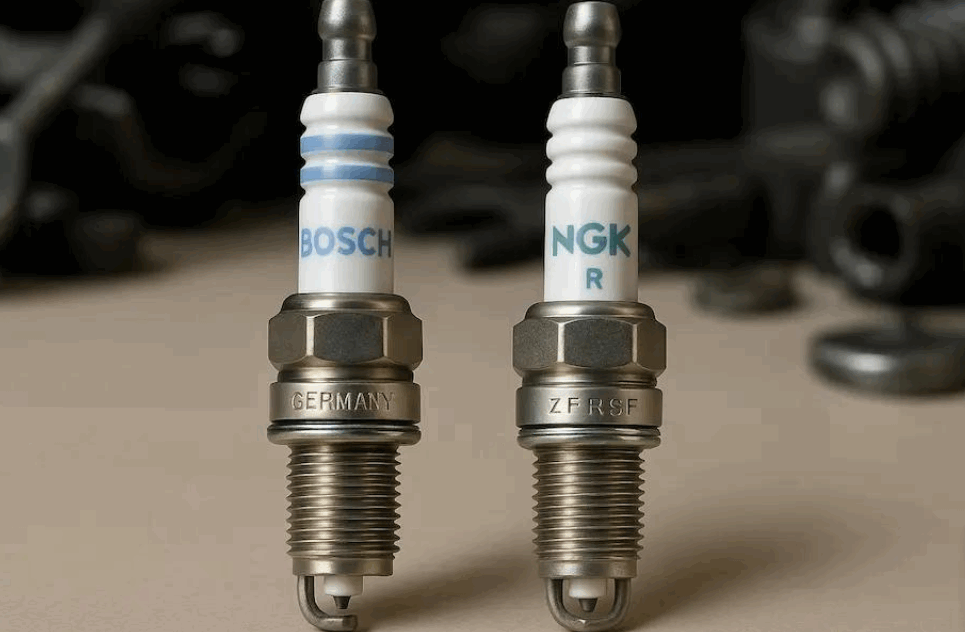
What Is the Difference Between Bosch and NGK Spark Plugs?
The main difference between Bosch and NGK spark plugs is how each manufacturer designs and specifies its plugs for different engines and ignition systems. Both brands produce nickel, platinum, and iridium spark plugs, but their electrode designs, heat range systems, product specifications, and vehicle applications vary. As a result, two spark plugs made from the same electrode material are not necessarily interchangeable.
Bosch develops several spark plug designs for different engine requirements, while NGK also offers multiple product families with different electrode configurations and performance characteristics. The material used at the firing end is especially important. Nickel plugs generally provide a lower cost replacement option, while platinum and iridium electrodes offer greater resistance to electrode wear. However, material alone does not determine whether a Bosch or NGK plug is suitable for a specific engine.
Heat range is another important difference. Bosch and NGK use their own heat range classification systems, so similar numbers on two spark plugs should not be treated as equivalent without checking a manufacturer cross reference. Thread dimensions, seat design, electrode gap, resistance, and application specifications must also correspond with the engine requirements.
For most drivers, the practical difference between Bosch and NGK therefore depends on vehicle compatibility rather than brand reputation. A correctly specified Bosch plug can perform better than an incorrectly selected NGK plug, and the reverse is also true. The vehicle manufacturer’s requirements provide the correct starting point when comparing the two brands.
| Comparison Factor | Bosch Spark Plugs | NGK Spark Plugs |
|---|---|---|
| Electrode materials | Nickel, platinum, iridium | Nickel, platinum, iridium |
| Heat range | Bosch specific system | NGK specific system |
| Electrode design | Varies by product line | Varies by product line |
| Vehicle compatibility | Application specific | Application specific |
| Service life | Depends on material and design | Depends on material and design |
| Selection priority | Engine and OEM specifications | Engine and OEM specifications |
How Do Bosch and NGK Spark Plug Designs Compare?
Bosch and NGK spark plug designs differ mainly in electrode construction, firing tip geometry, materials, and application specific configurations. Both manufacturers use nickel, platinum, and iridium across their product ranges, but the exact construction varies between individual spark plug series. For this reason, Bosch and NGK plugs should be compared within equivalent material and application categories.
Nickel spark plugs generally use a larger center electrode and provide a cost effective option for engines designed for conventional plugs. Platinum improves resistance to electrode erosion because the firing surface can withstand extended exposure to high combustion temperatures. Iridium provides even greater wear resistance and allows manufacturers to use a fine center electrode in compatible designs. A smaller firing tip can reduce the voltage required to initiate a spark, although the actual ignition process still depends on the complete ignition system and the specifications of the engine.
Electrode configuration also affects how a spark plug operates. The center electrode, ground electrode, insulator, and electrode gap must work together under the temperature and pressure inside the combustion chamber. Bosch and NGK use different configurations across their product lines to meet these operating requirements. A visible difference in electrode shape does not automatically mean one design provides better performance.
The most useful comparison is therefore between Bosch and NGK plugs designed for the same engine and built to equivalent specifications. Electrode material influences wear resistance and service life, while the complete spark plug design determines whether that material works correctly in a particular application. Choosing the correct design is more important than selecting a plug simply because it uses platinum or iridium.
Which Has Better Performance, Bosch or NGK Spark Plugs?
Neither Bosch nor NGK automatically delivers better engine performance when both spark plugs meet the correct specifications for the vehicle. Engine performance depends on consistent ignition, the correct electrode gap, an appropriate heat range, and compatibility with the ignition system. A properly matched plug from either brand can support stable combustion, smooth acceleration, reliable starting, and consistent engine operation.
Spark plug condition has a greater effect on performance than switching between two correctly specified Bosch and NGK plugs. Worn electrodes increase the distance and voltage requirements for reliable ignition. Deposits can also interfere with the spark at the firing end. These conditions can contribute to misfires, rough idling, difficult starting, and weaker acceleration. Replacing a worn plug with the correct new plug can restore normal ignition performance, regardless of whether Bosch or NGK appears on the replacement.
Electrode design also influences ignition characteristics. Fine wire platinum and iridium designs can use smaller firing tips while maintaining resistance to electrode wear. However, a premium electrode material does not guarantee more horsepower. The ignition coil, electrode gap, air and fuel mixture, combustion chamber conditions, and engine management system still determine how effectively combustion occurs.
Fuel economy follows the same principle. Installing Bosch or NGK spark plugs does not automatically improve fuel economy when the existing plugs already operate correctly. A measurable improvement is more likely when new plugs correct an ignition problem caused by worn, fouled, damaged, or incorrectly specified plugs. For performance, the correct application and plug condition matter more than choosing Bosch or NGK by brand alone.
Which Lasts Longer, Bosch or NGK Spark Plugs?
Neither Bosch nor NGK spark plugs always last longer because service life depends primarily on electrode material, plug construction, engine condition, and the specified replacement interval. A comparable iridium plug will generally resist electrode wear better than a conventional nickel plug, regardless of whether Bosch or NGK manufactures it. The correct comparison is therefore between equivalent spark plug types designed for the same engine application.
Electrode material is one of the main factors that determines durability. Nickel electrodes experience gradual erosion as the plug repeatedly produces sparks under high combustion temperatures. Platinum provides greater resistance to this wear, while iridium combines high temperature resistance with the ability to maintain a fine firing tip. These properties can help platinum and iridium plugs maintain their specified electrode geometry for longer periods than conventional designs.
Engine condition also affects how long Bosch and NGK plugs remain effective. Oil entering the combustion chamber can contaminate the firing end, while excessive carbon deposits can interfere with reliable ignition. An incorrect air and fuel mixture, abnormal combustion, or an unsuitable heat range can also shorten usable plug life. Installing a premium spark plug does not eliminate these underlying engine problems.
The vehicle manufacturer’s maintenance schedule should therefore determine when a spark plug is replaced. Bosch and NGK service life should be compared by equivalent plug type and vehicle application rather than by brand alone. When both plugs meet the same engine requirements, material, construction, operating conditions, and maintenance specifications provide a more useful indication of durability than the manufacturer name.
How Do Bosch and NGK Spark Plug Heat Ranges Compare?
Bosch and NGK use different heat range systems, so their heat range numbers cannot be compared directly. A number shown on a Bosch spark plug does not automatically represent the same thermal characteristics as the same number on an NGK plug. Drivers should use the vehicle specification or a verified manufacturer cross reference when selecting an equivalent plug between the two brands.
Spark plug heat range describes how effectively the plug transfers heat from its firing end into the cylinder head and cooling system. A colder plug transfers heat away from the firing end more quickly, while a hotter plug retains more heat. The correct range keeps the firing end within its intended operating temperature so that the plug can resist deposits without becoming excessively hot.
Using the wrong heat range can create two different problems. A plug that operates too cold may accumulate carbon and other deposits because its firing end does not reach an effective self cleaning temperature. This contamination can contribute to fouling and misfires. A plug that operates too hot can increase the risk of abnormal combustion and thermal damage under severe conditions.
For this reason, heat range is more important than finding similar numbers on Bosch and NGK packaging. A Bosch plug should replace an NGK plug only when its heat range and other specifications correspond with the requirements of the same engine application. The vehicle manufacturer’s specification should be checked first, followed by the Bosch or NGK application catalog and an appropriate cross reference when changing brands.
Are Bosch and NGK Spark Plugs Interchangeable?
Bosch and NGK spark plugs are interchangeable only when both plugs meet the specifications required for the same engine application. A Bosch plug should not replace an NGK plug simply because both products have similar dimensions or electrode materials. The replacement must match the engine requirements for fit, operating temperature, ignition characteristics, and installation.
There are 7 main specifications to check when comparing Bosch and NGK spark plugs: thread diameter, thread reach, seat type, heat range, electrode gap, resistor specification, and terminal or electrode configuration. Thread diameter and reach determine how the plug fits into the cylinder head. Seat type affects how the plug seals and transfers heat. Heat range controls heat transfer from the firing end, while the electrode gap influences the voltage required to create a reliable spark.
Resistance and terminal configuration must also match the ignition system requirements. A spark plug that physically screws into the cylinder head is not necessarily a correct replacement. Differences in reach, heat range, or other specifications can change how the plug operates inside the combustion chamber and may cause poor ignition or incorrect thermal behavior.
The safest way to cross reference Bosch and NGK is to start with the exact vehicle and engine application. Confirm the original spark plug specification, then use the manufacturer’s application data or cross reference information to identify an equivalent plug. A verified cross reference provides a stronger basis for interchangeability than matching Bosch and NGK plugs by appearance, size, or part number alone.
Which Has Better Vehicle Compatibility, Bosch or NGK?
NGK has broad vehicle application coverage, but neither NGK nor Bosch is universally more compatible because spark plug fitment depends on the specific vehicle and engine. The correct plug must match the manufacturer’s requirements for the model year, engine configuration, dimensions, heat range, electrode design, and other application specific characteristics. Brand origin alone does not determine whether a spark plug fits a car.
Bosch and NGK both manufacture spark plugs for multiple vehicle manufacturers and engine families. This makes general rules based on vehicle origin unreliable. For example, choosing Bosch only because a vehicle is European or choosing NGK only because a vehicle is Japanese ignores the actual spark plug specification. A particular engine may have compatible products from both brands, while another application may have a more limited selection.
Vehicle compatibility should therefore be checked using the exact make, model, model year, and engine. These details identify the correct application before the driver compares electrode material, price, or expected service life. The vehicle owner’s manual and manufacturer application data provide stronger selection criteria than a general preference for Bosch or NGK.
When both brands list compatible plugs for the same engine, the comparison can move to other attributes such as electrode construction, replacement interval, availability, and cost. NGK or Bosch is the better fit only when the specific spark plug meets the requirements of the vehicle. This application based approach reduces the risk of selecting a plug that fits physically but does not operate according to the engine manufacturer’s specifications.
Which Is More Expensive, Bosch or NGK Spark Plugs?
NGK is the better general choice for drivers who prioritize broad application coverage and vehicle specific fitment. Bosch is equally suitable when the correct plug meets the engine manufacturer’s specifications. There is no universal winner for every vehicle. The correct heat range, dimensions, electrode design, and gap all affect spark plug compatibility.
Choose Bosch when its application data lists an exact plug for your engine. The plug must also meet the specifications required by the vehicle manufacturer. Bosch offers nickel, platinum, and iridium options for different engine applications. The appropriate product therefore depends on the engine and its ignition requirements. A correctly specified Bosch plug can provide reliable ignition and the required service life.
Choose NGK when its catalog lists the correct application for your engine. The plug must have the required heat range, dimensions, electrode configuration, and gap. NGK offers extensive application coverage across many vehicle and engine types. However, that coverage does not make every NGK plug suitable for every engine. An incorrect NGK plug remains a worse choice than a correctly specified Bosch equivalent.
When both brands offer compatible plugs, compare 4 factors. These are electrode material, specified service life, availability, and price. These factors help separate equivalent products after vehicle compatibility has been confirmed.
For most drivers comparing Bosch spark plugs vs NGK, NGK is a strong first choice. However, the best option is the plug that matches the vehicle manufacturer’s exact requirements. Correct specifications should always take priority over brand preference.
How Do You Choose the Right Spark Plug for Your Car?
Choose the right spark plug by matching it to your vehicle, engine, and manufacturer specifications. Start with the vehicle make, model, model year, and exact engine. These details narrow the available plugs to products designed for that application. Brand preference should come after compatibility has been confirmed.
The owner’s manual or manufacturer specifications provide the best starting point. Check the required thread diameter, thread reach, seat type, heat range, and electrode gap. The plug must also use the correct resistor and terminal configuration. These specifications affect installation, heat transfer, and ignition inside the combustion chamber.
Electrode material is another selection factor. Nickel, platinum, and iridium plugs have different wear characteristics. However, a more expensive material is not automatically a better upgrade. Use the electrode type specified for the engine or a verified equivalent. This helps maintain the intended ignition characteristics and replacement schedule.
Next, confirm the exact Bosch or NGK application before buying the plug. Use the manufacturer’s vehicle catalog or verified cross reference data. Do not select a plug only because its dimensions look similar to the original part. Physical fit does not confirm the correct heat range or operating characteristics.
The right spark plug is the one that matches the engine specifications first. After confirming compatibility, compare Bosch and NGK by material, service interval, availability, and price. This process gives brand comparison a clear technical basis.
What Happens If You Install the Wrong Spark Plug?
Installing the wrong spark plug can cause misfires, rough idling, hard starting, fouling, overheating, and poor combustion. The severity depends on which specification is incorrect. A plug may physically fit the cylinder head but still operate incorrectly inside the engine.
An incorrect heat range creates one important risk. A plug that runs too cold may not reach its intended operating temperature. Carbon deposits can then accumulate around the firing end and contribute to fouling. A plug that runs too hot transfers heat differently and can expose the firing end to excessive temperatures. Correct thermal behavior therefore depends on using the specified heat range.
Incorrect dimensions can create more serious problems. Thread reach determines how far the plug extends into the combustion chamber. A plug with the wrong reach can position the firing end incorrectly. Seat type and thread dimensions must also match the cylinder head. These specifications affect installation, sealing, and heat transfer.
The wrong electrode gap can also affect ignition. A gap that is too large can increase the voltage required to produce a spark. A gap that is too small changes the spark characteristics inside the combustion chamber. Worn ignition components can make these problems more noticeable.
Choosing the correct specification prevents more problems than choosing Bosch or NGK based on brand preference. Verify the exact engine application before changing brands or spark plug types. This ensures the plug has the required dimensions, heat range, gap, and electrical characteristics.
Are Bosch or NGK Spark Plugs Better for Your Car?
NGK is a strong general choice for broad vehicle coverage, while Bosch is equally suitable for engines that specify a compatible Bosch plug. Neither brand is better for every car. The correct choice depends on the requirements of the engine and ignition system.
Start with the specifications provided for your vehicle. Check the required heat range, thread dimensions, seat type, electrode gap, and electrode design. Then confirm that the Bosch or NGK plug is listed for the exact engine application. These checks are more reliable than choosing a plug based on brand reputation.
When both brands provide compatible options, compare equivalent spark plug types. Consider electrode material, expected service life, availability, and price. A compatible iridium plug should be compared with another compatible iridium plug. The same principle applies to platinum and conventional designs.
For most Bosch spark plugs vs NGK comparisons, correct vehicle fitment should decide the winner. Choose NGK when its specified plug best matches your application. Choose Bosch when its equivalent meets the same engine requirements. In either case, following the vehicle manufacturer’s specifications provides the strongest basis for reliable ignition and normal engine operation.