Many Toyota owners search for who makes Toyota oil because they want to understand the source behind their engine lubricant. Toyota Genuine Motor Oil is a branded product designed for Toyota vehicles. However, Toyota does not operate as a global oil company that produces every bottle itself.
Toyota works with specialized lubricant manufacturers to create engine oils that meet its requirements. These partners produce Toyota oil according to approved specifications for different markets. The manufacturer can change depending on the country, supply chain, and regional agreements.
Toyota focuses on engine compatibility, performance standards, and quality control. The company develops oil requirements that support Toyota engines, including viscosity levels, fuel efficiency targets, and long term protection.
Knowing who makes Toyota oil helps drivers understand OEM lubricants better. It also explains why Toyota Genuine Motor Oil can differ from standard aftermarket products. This article explores Toyota oil manufacturers, supplier relationships, production processes, and the factors that make Toyota oil suitable for Toyota vehicles.
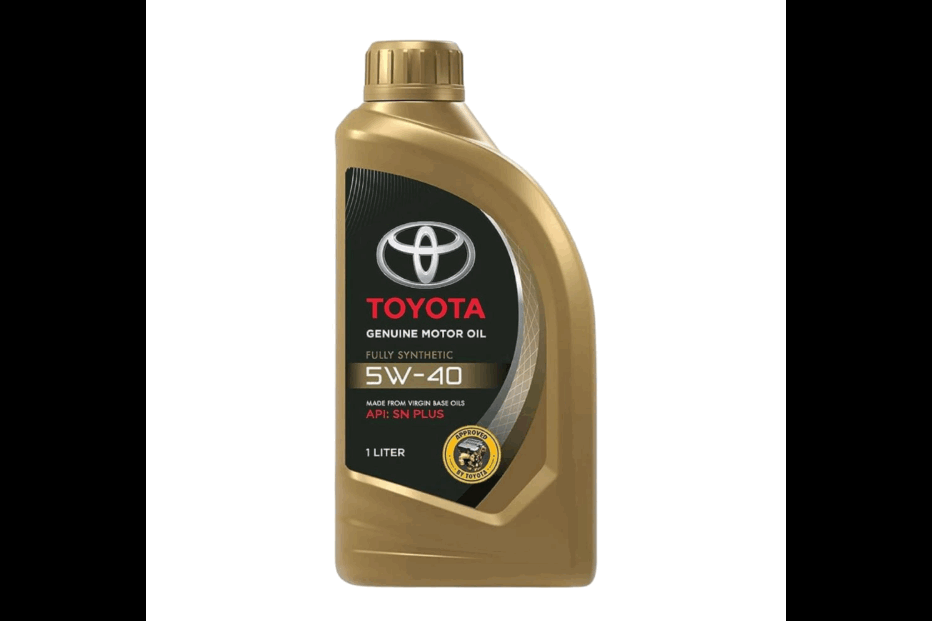
Who Makes Toyota Oil?
Toyota does not make all of its engine oil directly. Toyota Genuine Motor Oil comes from authorized lubricant manufacturers that produce oil according to Toyota’s specifications. Toyota focuses on designing vehicle requirements and quality standards, while specialized oil companies handle formulation and production.
The manufacturing process requires advanced lubricant technology, base oil selection, additive development, and quality testing. Toyota works with suppliers that understand engine lubrication requirements to create oils that support Toyota engines. These requirements include proper viscosity, engine protection, fuel efficiency performance, and compatibility with modern engine designs.
The actual company that produces Toyota oil depends on the market. Toyota uses different supply networks across regions because lubricant production follows local regulations, logistics systems, and business agreements. A bottle of Toyota Genuine Motor Oil sold in Japan may come from a different production partner than one sold in North America or another country.
Toyota Genuine Motor Oil remains connected to Toyota because the brand controls the required specifications. The oil manufacturer provides production capability, while Toyota defines the performance requirements that the lubricant must achieve.
For example, Toyota may recommend 0W-20 oil for many newer engines because this viscosity supports fuel efficiency and cold start performance. The supplier produces the oil, but Toyota determines whether the formulation meets its engine requirements.
Does Toyota Manufacture Its Own Motor Oil?
Toyota does not operate as a petroleum company that produces all of its own engine oil. The company specializes in vehicle engineering, manufacturing, and maintenance standards rather than owning a global network of oil production facilities.
Engine oil manufacturing requires specialized equipment and technical expertise. Lubricant companies develop base oil formulas, additive packages, and blending processes inside dedicated production facilities. These companies already have the infrastructure needed to create automotive lubricants that meet industry standards.
Toyota uses its automotive expertise to define the requirements for Toyota Genuine Motor Oil. These requirements focus on engine protection, fuel economy, emissions performance, and compatibility with Toyota powertrains. The oil must match the technical needs of Toyota engines before it receives approval for use.
This approach follows a common OEM manufacturing model in the automotive industry. Many vehicle manufacturers work with specialized suppliers to produce fluids, filters, batteries, and other maintenance products. The vehicle brand controls specifications, while experienced manufacturers provide production capabilities.
For Toyota owners, the important factor is not only the company that blends the oil but also whether the lubricant meets Toyota’s required standards. A properly specified oil protects engine components, maintains lubrication performance, and supports the expected operation of Toyota vehicles.
Who Supplies Toyota Genuine Motor Oil?
Toyota Genuine Motor Oil suppliers provide the manufacturing capability needed to produce Toyota branded engine lubricants. Toyota works with lubricant companies that can meet its technical requirements and maintain consistent product quality across different markets.
The supplier network changes based on location because each region has different regulations, transportation systems, and business relationships. Toyota may use different manufacturing partners in Japan, North America, Europe, and other markets. This regional approach allows Toyota to provide suitable engine oil products for local vehicles and customers.
Toyota oil suppliers must follow specific requirements before producing Genuine Motor Oil. These requirements include formulation standards, viscosity grades, quality testing procedures, and packaging specifications. The goal is to ensure that Toyota oil performs correctly inside Toyota engines.
For example, Toyota Genuine Motor Oil products often include popular viscosity grades such as 0W-20 and 5W-30. These oils must meet industry certifications such as API and ILSAC standards when required. The supplier produces the lubricant, but Toyota connects the product with its vehicle engineering requirements.
Understanding the supplier relationship helps explain why Toyota oil does not have one universal manufacturer worldwide. The brand represents Toyota’s specifications and quality expectations, while different authorized producers support manufacturing in specific regions.
Are Toyota Oil Suppliers the Same in Every Country?
Toyota oil suppliers are not always the same in every country. Toyota adjusts its lubricant supply chain according to regional market conditions, manufacturing partnerships, and distribution requirements.
Different countries may receive Toyota Genuine Motor Oil from different production facilities. Local suppliers can improve availability, reduce transportation costs, and comply with regional lubricant regulations. This system allows Toyota to maintain consistent product standards without relying on one global production source.
The label on Toyota oil packaging can provide useful information about the product origin. Owners should check the manufacturer details, specifications, and authorized distribution channels when they want to confirm product authenticity.
A Toyota oil bottle purchased from an official Toyota dealership should match the required specifications for that market. The important factor is whether the oil meets Toyota’s approved requirements rather than whether every country uses the same supplier.
Which Companies Have Manufactured Toyota Oil?
Toyota Genuine Motor Oil does not have one single manufacturer that produces every bottle worldwide. Toyota uses different lubricant manufacturing partners depending on the market, production agreements, and regional supply requirements.
Some Toyota oil products have been associated with major lubricant companies that manufacture or supply automotive oils. However, the exact supplier can change over time and may differ between countries. Toyota does not publicly present one universal global manufacturer for all Genuine Motor Oil products.
The relationship between Toyota and its lubricant partners follows an OEM production model. Toyota defines the technical requirements, while approved manufacturers use their production facilities to create the lubricant. This process allows Toyota to maintain consistent oil specifications across different markets.
Toyota oil suppliers must produce lubricants that match important technical factors. These factors include viscosity grade, additive performance, engine compatibility, and industry certification requirements. For example, a Toyota 0W-20 oil product must provide suitable lubrication performance for engines designed to use that specification.
Owners should avoid assuming that every Toyota oil bottle comes from the same company. The correct approach is to check the product label, regional information, and Toyota recommendations for the specific vehicle.
How Is Toyota Genuine Motor Oil Different From Regular Motor Oil?
Toyota Genuine Motor Oil differs from regular motor oil because Toyota develops it around the requirements of Toyota engines. The main difference comes from the connection between the lubricant specifications and Toyota’s engine design standards.
Toyota engineers consider factors such as engine components, operating temperatures, fuel efficiency targets, and emissions requirements when defining oil specifications. These factors influence the recommended viscosity grades and performance standards for Toyota vehicles.
Regular aftermarket oils can also protect Toyota engines when they meet the required specifications. The important factor is not only the brand name but whether the oil matches the vehicle manufacturer’s requirements.
For example, a Toyota engine that requires 0W-20 oil should use a lubricant with the correct viscosity and certification. Using an oil that does not meet these requirements can affect lubrication performance and engine protection.
Toyota Genuine Motor Oil provides a convenient option because it follows Toyota’s recommended specifications. Drivers who choose other brands should compare the product specifications rather than only comparing brand names.
Does Toyota Oil Meet Specific Engine Requirements?
Toyota Genuine Motor Oil meets specific engine requirements because Toyota develops lubricant standards around its vehicle designs. Engine oil must provide suitable protection for internal components while supporting the performance goals of each Toyota engine.
Toyota considers several technical factors when selecting oil requirements. These factors include viscosity, temperature performance, friction control, fuel efficiency, and engine durability. A lubricant that matches these requirements helps maintain proper oil flow and reduces wear between moving engine parts.
Modern Toyota engines often require specific oil grades such as 0W-20 or 5W-30. These numbers describe how the oil performs at different temperatures. The first number represents low temperature flow performance, while the second number represents oil thickness at operating temperature.
Toyota also uses industry certifications to define oil quality requirements. Common standards include API and ILSAC specifications, which evaluate factors such as oxidation resistance, deposit control, and engine protection.
For example, many newer Toyota vehicles recommend 0W-20 synthetic oil because the formulation supports fuel efficiency and provides quick lubrication during engine startup. Following the recommended oil specification helps the engine operate according to Toyota’s original design expectations.
Is Toyota Oil Better Than Aftermarket Oil Brands?
Toyota oil is not automatically better than every aftermarket oil brand because performance depends on specifications, not only branding. A high quality aftermarket oil can also protect Toyota engines when it meets the required standards.
The main advantage of Toyota Genuine Motor Oil is convenience and compatibility. Toyota owners can choose an oil that already follows the manufacturer’s recommended specifications. This reduces uncertainty during routine maintenance.
Aftermarket brands offer many alternatives with similar certifications and performance characteristics. Products from established lubricant companies can meet Toyota requirements when they provide the correct viscosity grade and industry approvals.
The comparison between Toyota oil and aftermarket oil should focus on technical specifications. Important factors include SAE viscosity grade, API certification, ILSAC certification, synthetic formulation, and manufacturer recommendations.
For example, a certified 0W-20 synthetic oil from another reputable brand may perform similarly to Toyota Genuine Motor Oil in a Toyota engine designed for that specification. The correct
What Types of Toyota Genuine Motor Oil Are Available?
Toyota Genuine Motor Oil comes in different formulations and viscosity grades to match specific Toyota engine requirements. Toyota selects these oil specifications based on engine design, operating conditions, fuel efficiency goals, and long term protection needs.
The most common Toyota oil grades include 0W-20 and 5W-30 synthetic motor oils. Each grade provides different lubrication characteristics at various temperatures. The first number describes cold temperature performance, while the second number describes oil thickness when the engine reaches normal operating temperature.
Toyota 0W-20 oil supports many modern Toyota engines because it flows quickly during cold starts and helps reduce internal friction. This characteristic supports fuel efficiency and helps protect engine components during frequent startup cycles. Toyota commonly recommends this grade for newer vehicles and many hybrid models.
Toyota 5W-30 oil provides a slightly thicker oil film during normal operating conditions. Some Toyota engines use this grade because it offers suitable protection under specific driving conditions and engine designs. The correct choice depends on the manufacturer recommendation for each vehicle.
Toyota owners should always follow the oil specification listed in the owner’s manual. The correct viscosity grade and certification matter more than choosing oil based only on brand name. Using the recommended Toyota oil specification helps maintain engine performance, lubrication efficiency, and long term reliability.
How Can You Tell If Toyota Oil Is Genuine?
You can identify genuine Toyota oil by checking the product packaging, specifications, and purchase source. Counterfeit lubricants exist in the automotive market, so Toyota owners should verify important product details before using engine oil.
The first step is checking the oil container label. Genuine Toyota oil should display accurate product information, including the viscosity grade, certification details, and manufacturer information. The label should match the oil specification recommended for the vehicle.
The second step is comparing the oil specification with the owner’s manual. Toyota vehicles require specific viscosity grades and performance standards. For example, a vehicle designed for 0W-20 oil should use a product that meets the required 0W-20 specification rather than choosing an oil based only on appearance or price.
The third step is buying from reliable sources. Authorized Toyota dealerships and trusted automotive retailers provide a lower risk of receiving counterfeit products. Unknown sellers with unusually low prices may sell products that do not meet Toyota’s quality expectations.
Authentic Toyota oil also includes consistent packaging quality. Differences in bottle design, spelling errors, unclear labels, or missing technical information can indicate a problem with the product.
Using genuine Toyota oil or another approved lubricant helps ensure that the engine receives the correct protection. The most important factor is confirming that the oil meets Toyota’s required specifications for the specific vehicle.
Should You Use Toyota Genuine Motor Oil in Your Toyota?
You should use Toyota Genuine Motor Oil if you want a lubricant that follows Toyota’s recommended specifications. Toyota develops oil requirements based on its engine designs, so Genuine Motor Oil provides a convenient option for owners who prefer an OEM maintenance product.
The most important factor in choosing engine oil is meeting the vehicle’s required specifications. Toyota owners should check the owner’s manual for the correct viscosity grade, certification requirements, and recommended oil type. A suitable lubricant helps maintain proper engine operation and protects internal components.
Toyota Genuine Motor Oil offers several advantages for routine maintenance. It simplifies the selection process because owners can choose a product designed around Toyota vehicle requirements. It also supports consistent maintenance practices at Toyota dealerships and authorized service centers.
However, Toyota oil is not the only suitable option for Toyota vehicles. Other lubricant brands can also work effectively when they meet the required standards. Drivers should compare technical specifications instead of choosing oil based only on brand recognition.
For example, a Toyota vehicle that requires API certified 0W-20 synthetic oil can use another approved 0W-20 product that meets the same requirements. The engine responds to the oil’s properties and specifications, not only the logo on the bottle.
Choosing the correct engine oil helps maintain lubrication performance, fuel efficiency, and long term engine reliability. Following Toyota’s recommendations remains the safest approach for selecting the right lubricant.
Where Can You Buy Toyota Genuine Motor Oil?
You can buy Toyota Genuine Motor Oil from authorized Toyota dealerships, official parts channels, and trusted automotive retailers. Choosing a reliable seller helps ensure that the product matches Toyota’s quality standards and vehicle requirements.
Toyota dealerships remain one of the safest sources because they provide products designed for Toyota vehicles. Dealership service centers also have access to Toyota maintenance information, which helps them recommend the correct oil specification for each model.
Trusted automotive retailers can also provide suitable Toyota oil products. However, buyers should verify important details before purchasing, including viscosity grade, certification information, packaging quality, and compatibility with their vehicle.
Online marketplaces require additional attention because counterfeit automotive products can appear through unknown sellers. Extremely low prices, unclear product descriptions, or missing manufacturer information may indicate that the product does not meet Toyota standards.
The correct Toyota oil depends on the vehicle’s engine requirements rather than the seller alone. Owners should confirm the recommended oil grade through the owner’s manual before buying. For example, a Toyota engine that requires 0W-20 synthetic oil should receive a product that matches that specification.
Buying Toyota Genuine Motor Oil from a reliable source supports proper maintenance and reduces the risk of using unsuitable lubricants. The combination of correct specifications and trustworthy distribution helps maintain engine performance and long term reliability.