A blinking Drive light on a Honda CR-V usually signals a transmission-related problem. The warning appears when the Powertrain Control Module or Transmission Control Module detects abnormal operating data. It is not a routine maintenance reminder. Instead, it indicates that the transmission system needs attention.
The fault does not always mean the transmission has failed. In many cases, the problem starts with low transmission fluid, a faulty pressure switch, a failed shift solenoid, or a damaged speed sensor. Wiring issues can also trigger the warning. These components help the control module monitor shifting performance and hydraulic pressure. When the recorded data falls outside the expected range, the Drive light begins to blink.
The severity of the problem depends on the vehicle’s behavior. A Honda CR-V that shifts smoothly may have a minor electrical fault or an early sensor issue. However, harsh shifting, delayed engagement, slipping, or a burning smell often point to a more serious transmission problem. Continuing to drive under these conditions can increase internal wear and lead to expensive repairs.
This guide explains what a blinking Drive light means and why it happens. You will also learn when it is safe to drive, how to diagnose the fault, and which repairs are commonly required. Finally, the article covers repair costs, model-year differences, and maintenance practices that help prevent the warning from returning.
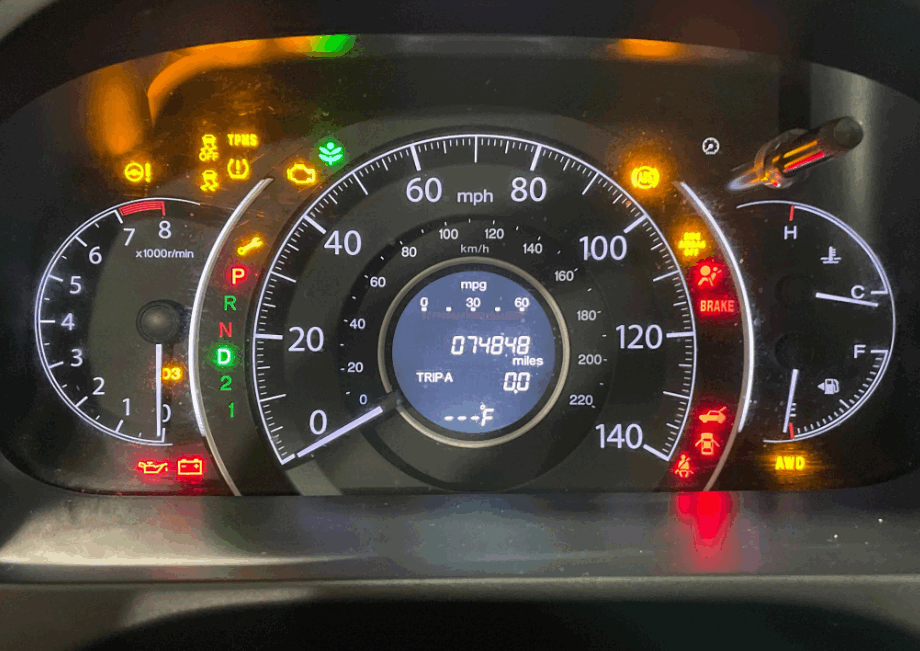
What Does a Blinking Drive Light Mean on a Honda CR-V?
A blinking Drive light on a Honda CR-V means the transmission control system has detected a fault. The warning appears when the Powertrain Control Module (PCM) or Transmission Control Module (TCM) receives data outside the normal operating range. In most cases, the system also stores one or more diagnostic trouble codes. These codes help technicians identify the affected circuit or component during diagnosis.
Under normal conditions, the Drive indicator remains steady after you shift into gear. A blinking indicator is different because it signals an active transmission concern. The control module constantly monitors hydraulic pressure, shift timing, transmission speed, and electrical signals. If one of these values becomes abnormal, the module activates the warning to protect the transmission from additional damage.
A blinking Drive light does not always mean the transmission has suffered severe internal damage. Many Honda CR-V models display the warning because of a faulty pressure switch, a worn shift solenoid, contaminated transmission fluid, or an inaccurate speed sensor. Electrical problems such as damaged wiring or poor connector contact can also trigger the same warning. These faults interfere with the information sent to the control module, making it difficult to control gear changes correctly.
Some drivers notice that the blinking stops after restarting the engine. This does not mean the problem has disappeared. The control module may stop displaying the warning until the fault occurs again during normal driving. The stored diagnostic code usually remains in memory, even if the indicator temporarily turns off.
It is also important to distinguish a blinking Drive light from a Check Engine Light. A blinking Drive light focuses on transmission operation, while the Check Engine Light covers the entire powertrain. In some situations, both indicators appear together because the engine and transmission control systems share operating data. Scanning every available control module is the only reliable way to confirm the actual cause instead of replacing parts based on symptoms alone.
Can You Drive a Honda CR-V With the Drive Light Blinking?
Whether you can continue driving depends on how the vehicle behaves after the Drive light starts blinking. If the Honda CR-V shifts smoothly and responds normally, you may be able to drive a short distance to a repair shop. Even so, the warning should not be ignored because the transmission control system has already detected a fault. Driving for an extended period without diagnosis can allow a minor issue to develop into a more expensive repair.
Pay close attention to how the transmission performs. Smooth gear changes, stable acceleration, and normal engine speed usually suggest that the fault is still in its early stage. The problem may involve a pressure switch, a speed sensor, contaminated transmission fluid, or another electronic component. Although these faults are sometimes less severe than internal transmission damage, they still require prompt inspection to prevent additional wear.
You should stop driving immediately if the vehicle shows signs of serious transmission trouble. Common warning signs include delayed gear engagement, harsh shifting, transmission slipping, poor acceleration, overheating, or a burning smell. Grinding noises, fluid leaks, or a vehicle that enters limp mode also indicate that continuing to drive could damage internal components. Under these conditions, towing the vehicle is often the safest option.
Ignoring a blinking Drive light can increase repair costs over time. A simple electrical fault may eventually lead to excessive heat, unstable hydraulic pressure, or abnormal clutch wear if left unresolved. These conditions place additional stress on the valve body, clutch packs, and torque converter. Repairing a small fault early is usually much less expensive than rebuilding or replacing the entire transmission.
The safest approach is to treat a blinking Drive light as an early warning rather than a temporary inconvenience. Record any unusual symptoms before turning the engine off. Then scan the vehicle for diagnostic trouble codes as soon as possible. An accurate diagnosis identifies the real cause and helps prevent unnecessary parts replacement.
What Are the Most Common Causes of a Blinking Drive Light on a Honda CR-V?
A blinking Drive light on a Honda CR-V can be triggered by several transmission-related problems. In most cases, the warning appears because the control module detects abnormal data from the transmission or one of its supporting components. While the exact cause varies by model year and transmission type, the underlying issue usually falls into one of several common categories. Identifying the correct cause is essential because the same warning light can be triggered by both minor electrical faults and serious mechanical failures.
Low or contaminated transmission fluid is one of the most common causes. Automatic transmissions rely on clean fluid to create hydraulic pressure, lubricate internal components, and control operating temperature. If the fluid level drops because of a leak or the fluid becomes worn over time, the transmission may shift improperly. The control module detects these abnormal conditions and activates the blinking Drive light.
Faulty transmission pressure switches and shift solenoids are also frequent sources of the warning. Pressure switches monitor hydraulic pressure inside the transmission, while shift solenoids regulate fluid flow between gears. A failed component can send incorrect information or prevent normal gear changes. As a result, the transmission control system recognizes inconsistent operation and stores a diagnostic trouble code.
Sensor failures can produce similar symptoms. Input speed sensors, output speed sensors, and vehicle speed sensors provide the data needed to calculate shift timing and gear ratios. If one sensor sends inaccurate readings, the control module may detect a mismatch between expected and actual transmission performance. This often causes the Drive light to blink even before noticeable shifting problems develop.
Electrical faults should not be overlooked during diagnosis. Damaged wiring, loose connectors, corrosion, or low battery voltage can interrupt communication between the transmission and its control module. These issues sometimes create intermittent warnings that appear and disappear without obvious changes in driving performance. A complete electrical inspection is often necessary before replacing any transmission component.
Some cases involve overheating or internal transmission damage. Excessive heat can reduce fluid performance and accelerate clutch wear, while worn clutch packs, valve body problems, or torque converter failure can prevent the transmission from operating correctly. These faults are usually accompanied by symptoms such as slipping, delayed engagement, harsh shifting, or unusual noises. When these symptoms occur together with a blinking Drive light, professional diagnosis should not be delayed.
What Symptoms Can Appear With a Blinking Honda CR-V D Light?
A blinking Drive light is often accompanied by other symptoms that help identify the type and severity of the transmission problem. Some symptoms point to a minor electrical fault, while others suggest internal transmission damage. Recognizing these warning signs can help narrow the diagnosis before the vehicle is inspected. However, symptoms alone cannot confirm the exact cause without reading the stored diagnostic trouble codes.
Some Honda CR-V models continue to drive normally after the Drive light begins blinking. Gear changes may remain smooth, and the vehicle may accelerate without hesitation. In these situations, the problem is often linked to a faulty sensor, a pressure switch, damaged wiring, or another electrical component. Drivers may also notice that the warning appears only after the engine warms up or disappears after restarting the vehicle. These intermittent symptoms should still be investigated because electrical faults often become more frequent over time.
More noticeable symptoms usually indicate that the transmission is no longer operating as intended. Delayed gear engagement, harsh shifting, gear hunting, or unexpected changes in engine speed often occur when hydraulic pressure becomes unstable or shift timing is affected. Some drivers also experience reduced acceleration because the transmission cannot hold the correct gear. If these symptoms continue, excessive heat and clutch wear may develop inside the transmission.
Severe symptoms require immediate attention because they often indicate significant mechanical damage. Transmission slipping under acceleration is one of the clearest warning signs. Other serious symptoms include a burning smell, grinding or whining noises, transmission fluid leaks, or a vehicle that enters limp mode. In advanced cases, the transmission may fail to engage Drive or Reverse altogether. Continuing to drive under these conditions can increase internal damage and lead to a complete transmission failure.
The combination of symptoms is often more valuable than any single warning sign. For example, a blinking Drive light with harsh shifting usually suggests a different fault than a blinking Drive light with normal shifting but an intermittent speedometer problem. Recording every symptom before scanning the vehicle gives technicians more information and improves diagnostic accuracy. This approach also reduces the risk of replacing parts that are not actually causing the problem.
Why Are the Drive Light and Check Engine Light On at the Same Time?
A blinking Drive light and an illuminated Check Engine Light can appear at the same time because the engine and transmission control systems work together. Modern Honda CR-V models constantly exchange information between the Powertrain Control Module (PCM) and the Transmission Control Module (TCM). When one system detects abnormal data that affects overall powertrain performance, both warning lights may be activated. This does not automatically mean the engine is the source of the problem.
In many cases, the transmission is still the primary concern. A faulty shift solenoid, transmission pressure switch, or speed sensor can affect gear changes and trigger transmission-related diagnostic trouble codes. Since these components also influence engine load and torque management, the PCM may illuminate the Check Engine Light to alert the driver that the powertrain is no longer operating within normal limits.
The opposite situation is also possible. Certain engine problems can affect transmission performance even though the transmission itself is functioning correctly. An engine misfire, unstable throttle position signal, or incorrect airflow reading can interfere with shift timing and torque delivery. The transmission control system responds to these abnormal conditions, which may cause the Drive light to blink even though the original fault began in the engine management system.
The only reliable way to identify the actual cause is to scan every available control module. A basic OBD-II scanner may retrieve generic engine codes but fail to access manufacturer-specific transmission data. A professional scan tool with Honda-specific functions provides a more complete picture by reading both engine and transmission modules, along with freeze-frame data and live operating values.
Avoid clearing diagnostic trouble codes before the vehicle has been inspected. Clearing the codes may turn the warning lights off temporarily, but it also removes valuable diagnostic information. Freeze-frame data records the vehicle’s operating conditions when the fault first occurred. That information often helps technicians identify intermittent problems that are difficult to reproduce during a road test.
How Do You Diagnose a Blinking Drive Light on a Honda CR-V?
Diagnosing a blinking Drive light requires a systematic process. The warning only tells you that the transmission control system has detected a fault. It does not identify the failed component. A complete inspection helps you determine whether the problem comes from a sensor, an electrical circuit, low transmission fluid, or internal transmission damage.
Start by identifying the vehicle’s model year, engine, and transmission type. Honda uses different transmission designs across CR-V generations, and each design follows its own diagnostic procedure. Record recent repairs, maintenance history, and every symptom the driver notices. This information helps narrow the possible causes before testing begins.
Next, inspect the transmission fluid and the surrounding components. Verify the fluid level by following the correct procedure for the specific transmission. Examine the fluid for contamination, discoloration, or a burnt odor. Then inspect the wiring harness, electrical connectors, battery terminals, and transmission housing for visible damage or leaks. A weak battery or poor electrical connection can trigger the same warning as a transmission fault.
After the visual inspection, connect a scan tool that supports Honda-specific transmission diagnostics. Read every stored, pending, and manufacturer-specific trouble code before clearing anything. Save the freeze-frame data because it records the operating conditions when the fault occurred. Review the live data stream and compare transmission temperature, gear position, hydraulic pressure commands, and speed sensor readings. This information often reveals problems that remain hidden during a basic inspection.
If the scan results do not identify the root cause, continue with targeted testing. Measure the resistance of each shift solenoid, check wiring continuity, and test voltage at critical connectors. Compare the results with Honda’s service specifications. When necessary, perform hydraulic pressure tests and a controlled road test to confirm the fault under real driving conditions.
A structured diagnostic process reduces unnecessary repairs. It also helps technicians identify the real cause before replacing expensive components. In many cases, a careful diagnosis solves the problem faster and lowers the overall repair cost.
Which Trouble Codes Can Cause the Honda CR-V D Light to Blink?
Several diagnostic trouble codes can trigger a blinking Drive light on a Honda CR-V. The warning itself does not point to a specific failed part. Instead, the control module stores one or more codes that identify the system or circuit with abnormal operation. Reading these codes is the fastest way to narrow the diagnosis and avoid replacing parts unnecessarily.
Many Honda CR-V models store codes related to shift solenoids and transmission pressure switches. The control module expects these components to respond within a specific range. When the measured values differ from the expected values, it records a fault and activates the blinking Drive light. These codes often appear with symptoms such as harsh shifting, delayed engagement, or inconsistent gear changes.
Speed sensor codes also rank among the most common transmission faults. The transmission compares input shaft speed, output shaft speed, and vehicle speed to determine the correct gear ratio. When one sensor reports inaccurate data, the control module detects a mismatch and stores a diagnostic code. Drivers may notice erratic shifting, poor acceleration, or an unstable speedometer before the transmission enters a protective operating mode.
Some Honda CR-V models also generate gear ratio, torque converter, or transmission temperature codes. These faults often indicate a deeper mechanical or hydraulic problem instead of a simple electrical failure. Worn clutch packs, low hydraulic pressure, excessive heat, or internal valve body wear can all prevent the transmission from maintain the expected gear ratio. As the condition worsens, the transmission may begin to slip or shift unpredictably.
Communication and voltage-related codes deserve equal attention during diagnosis. Low battery voltage, damaged wiring, corroded connectors, or communication failures between control modules can interrupt normal transmission operation. These problems often produce intermittent symptoms that closely resemble component failure. For that reason, technicians should evaluate every stored code together with live data, freeze-frame information, and the vehicle’s driving symptoms before making a repair decision.
No diagnostic trouble code confirms a failed component by itself. Every code simply identifies where the control module detected abnormal operation. A complete diagnosis always combines trouble codes, live data, electrical testing, hydraulic inspection, and real-world symptoms before any parts are replaced.
How Do You Fix a Blinking Drive Light on a Honda CR-V?
Fixing a blinking Drive light starts with identifying the actual fault. The warning does not tell you which part has failed. It only indicates that the transmission control system has detected abnormal operation. After completing a proper diagnosis, you can match the repair to the confirmed cause instead of replacing parts through trial and error.
If low or contaminated transmission fluid triggers the warning, restore the correct fluid level and replace degraded fluid with the specification recommended for your Honda CR-V. Also inspect the transmission for leaks before adding new fluid. Replacing the fluid without repairing the leak only provides a temporary solution. Clean fluid helps maintain hydraulic pressure, improves lubrication, and reduces operating temperature inside the transmission.
Electronic components also fail over time. A technician may replace a faulty pressure switch, shift solenoid, or speed sensor after confirming the failure through electrical testing and scan tool data. Damaged wiring, loose connectors, or corroded terminals may produce the same symptoms as a failed component. For that reason, always inspect the entire circuit before installing replacement parts.
Some repairs require software updates instead of new hardware. Honda occasionally releases updated control module software to improve transmission performance or correct known operating issues. If the vehicle qualifies for a software update, reprogramming the control module may resolve the problem without replacing mechanical components. A Honda dealer or a repair shop with factory-level equipment can verify whether an update is available.
Severe transmission problems often require more extensive repairs. Worn clutch packs, damaged valve bodies, failed torque converters, or internal bearing damage can prevent the transmission from operating correctly. These faults usually appear with persistent slipping, harsh shifting, overheating, or repeated gear ratio errors. In these situations, repairing or rebuilding the transmission often provides the most reliable long-term solution.
Always verify the repair before returning the vehicle to normal driving. Clear the diagnostic trouble codes only after completing the repair. Then perform a road test and monitor live transmission data. If the warning light remains off and the transmission shifts normally, the repair has likely resolved the original fault. If the Drive light returns, continue the diagnostic process instead of replacing additional parts without evidence.
How Much Does It Cost to Fix a Blinking D Light on a Honda CR-V?
The cost to fix a blinking Drive light on a Honda CR-V depends on the confirmed cause rather than the warning itself. A simple electrical fault usually costs much less than an internal transmission repair. That is why professional diagnosis should always come before replacing any parts. Spending money on the correct repair often costs less than replacing components that still work properly.
The table below shows typical repair categories and their estimated price ranges. Actual costs vary by model year, transmission type, labor rates, and parts availability.
| Repair | Estimated Cost (Parts & Labor) |
|---|---|
| Diagnostic inspection | $100–$180 |
| Transmission fluid service | $120–$250 |
| Transmission leak repair | $150–$500 |
| Transmission pressure switch replacement | $180–$400 |
| Shift solenoid replacement | $250–$600 |
| Speed sensor replacement | $180–$450 |
| Wiring or connector repair | $150–$500 |
| TCM or PCM software update | $120–$250 |
| Valve body repair | $700–$1,500 |
| Torque converter replacement | $900–$2,000 |
| Transmission rebuild | $2,000–$4,000 |
| Transmission replacement | $3,500–$6,500 |
Several factors influence the final repair bill. Older Honda CR-V models may require parts that are harder to source, while newer models often need specialized diagnostic equipment. Labor rates also vary by location and repair facility. In addition, a vehicle with multiple transmission faults usually requires more diagnostic time than one with a single stored trouble code.
The repair method also affects the total cost. Replacing a pressure switch or speed sensor usually restores normal operation at a relatively low price. Internal transmission damage often requires rebuilding or replacing major components. Those repairs involve significantly more labor and expensive replacement parts.
The best way to control repair costs is to diagnose the problem early. A blinking Drive light caused by contaminated fluid or a faulty sensor may cost only a few hundred dollars to repair. Ignoring the warning can allow the transmission to overheat or slip, which often leads to a complete rebuild or replacement. Early diagnosis not only reduces repair expenses but also helps extend the service life of the transmission.
Can You Reset a Blinking Drive Light on a Honda CR-V?
You can reset a blinking Drive light, but resetting the warning does not fix the underlying problem. The light only turns on because the transmission control system has detected an abnormal condition. If you clear the warning without repairing the fault, the control module will activate the Drive light again after it detects the same problem. For that reason, you should always diagnose the cause before attempting a reset.
Some drivers notice that the blinking stops after restarting the engine. This happens because the control module performs a new system check during startup. If the fault does not appear immediately, the warning may remain off for a short time. However, the stored diagnostic trouble code often stays in memory until someone clears it with a scan tool or the system completes enough drive cycles.
Disconnecting the battery can also erase certain stored information on some Honda CR-V models. While this method may turn the warning light off temporarily, it also removes valuable diagnostic data that technicians use during troubleshooting. Losing freeze-frame data makes it harder to identify intermittent faults because the control module no longer records the operating conditions that triggered the warning.
The safest way to reset the Drive light is to repair the confirmed fault first. After completing the repair, use a compatible scan tool to clear the diagnostic trouble codes. Then perform a road test under normal driving conditions. Monitor the transmission for smooth shifting, stable acceleration, and normal operating temperature. If the warning does not return and no new codes appear, the repair has likely solved the original problem.
Treat a reset as the final step instead of the first one. A blinking Drive light serves as an early warning that protects the transmission from further damage. Removing the warning without correcting the cause only delays the repair and increases the risk of more expensive transmission problems in the future.
Does the Blinking D Light Mean the Same Thing on Every Honda CR-V Model Year?
A blinking Drive light does not have exactly the same meaning on every Honda CR-V model year. Although the warning always indicates a transmission-related issue, Honda has introduced different transmission designs, control systems, and diagnostic strategies over the years. These differences affect how the vehicle detects faults, stores diagnostic trouble codes, and responds to transmission problems. As a result, the same warning light may point to different causes depending on the model year.
Older Honda CR-V models equipped with traditional automatic transmissions often trigger the blinking Drive light when the control module detects hydraulic or electrical faults. Problems involving shift solenoids, transmission pressure switches, or internal clutch wear are common on these vehicles. Since the transmission relies heavily on hydraulic pressure, even a small loss of pressure can affect shift quality and activate the warning.
Many newer CR-V models use a Continuously Variable Transmission (CVT) instead of a conventional automatic transmission. A CVT operates differently because it controls power delivery through pulleys and a steel belt rather than fixed gears. The control module monitors different operating parameters, including pulley ratios, transmission temperature, and belt performance. For that reason, a blinking warning on a CVT-equipped model may involve different components than an older automatic transmission.
Hybrid models introduce another level of complexity. These vehicles combine gasoline and electric powertrain components, and they use additional control modules to manage system operation. Although the transmission warning still requires immediate attention, technicians often need manufacturer-specific diagnostic equipment to access every control module and interpret the stored fault codes correctly.
Before diagnosing or repairing a blinking Drive light, always confirm the vehicle’s model year, engine, and transmission type. This information determines which service procedures, transmission fluid specifications, and diagnostic trouble codes apply to the vehicle. Following the correct repair information reduces diagnostic time, prevents unnecessary parts replacement, and improves the accuracy of the final repair.
How Can You Prevent the Honda CR-V Drive Light From Blinking Again?
Preventing a blinking Drive light starts with regular transmission maintenance. The transmission depends on clean fluid, stable hydraulic pressure, and accurate sensor data to operate correctly. Neglecting routine service increases the risk of wear, overheating, and electronic faults. Following Honda’s recommended maintenance schedule helps keep these systems working as intended.
Always use the transmission fluid specified for your Honda CR-V. Every transmission is designed to operate with a particular fluid formulation. Using the wrong fluid can affect lubrication, hydraulic pressure, and shift quality. Even if the fluid level appears correct, an incorrect specification may still trigger transmission problems over time.
Pay attention to small changes in driving performance. Slightly delayed gear engagement, harsh shifts, or unusual noises often appear before the Drive light starts blinking. Addressing these symptoms early can prevent additional damage to internal components. Early repairs also cost significantly less than rebuilding or replacing a transmission.
Electrical maintenance plays an important role as well. Keep the battery in good condition and inspect electrical connections during routine service. Low system voltage, corroded connectors, or damaged wiring can interrupt communication between the transmission and the control modules. Fixing these issues early reduces the chance of false transmission warnings.
Driving habits also affect transmission life. Avoid aggressive acceleration when the engine is cold, and do not exceed the vehicle’s towing capacity. Heavy loads and excessive heat place extra stress on the transmission and accelerate fluid deterioration. Smooth driving habits reduce wear on clutch packs, bearings, and other internal components.
Scan the vehicle whenever a warning light appears, even if it disappears after restarting the engine. Early diagnostic testing helps identify small problems before they become major repairs. A blinking Drive light often serves as an early warning rather than a sign of complete transmission failure. Taking action quickly protects the transmission, improves long-term reliability, and reduces overall ownership costs.
When Should You Take a Honda CR-V to a Transmission Specialist?
You should schedule a professional inspection as soon as the Drive light begins blinking. Although some faults start as minor electrical problems, only proper diagnostic testing can determine their severity. Delaying the inspection increases the risk of additional transmission damage and higher repair costs.
Seek professional help immediately if the transmission slips, shifts harshly, or struggles to engage Drive or Reverse. You should also stop driving if you notice a burning smell, transmission overheating, loud grinding noises, or fluid leaking beneath the vehicle. These symptoms often indicate mechanical or hydraulic damage that requires immediate attention.
A qualified technician can access transmission data that a basic code reader cannot display. Professional diagnostic equipment reads manufacturer-specific trouble codes, live sensor values, freeze-frame data, and transmission control module information. This additional data helps technicians identify the root cause instead of replacing parts based on assumptions.
Choosing the right repair facility also matters. A Honda dealership offers factory diagnostic equipment, software updates, and technicians who regularly service Honda vehicles. An independent Honda specialist may provide the same level of expertise at a lower labor rate. A dedicated transmission shop is often the best choice when the vehicle requires internal repairs or a complete transmission rebuild.
Before visiting the repair shop, record as much information as possible about the problem. Note when the warning first appeared, how the transmission behaved, and whether other warning lights turned on. If possible, record the diagnostic trouble codes before clearing them. Accurate information helps technicians reproduce the fault more quickly and improves the accuracy of the final diagnosis.
Conclusion: What Should You Do When the Honda CR-V Drive Light Starts Blinking?
A blinking Drive light on a Honda CR-V is an early warning that the transmission control system has detected an abnormal condition. The problem may involve transmission fluid, sensors, electrical circuits, hydraulic components, or internal transmission parts. Although some faults are relatively minor, every warning deserves prompt attention to prevent more serious damage.
The best response is to observe how the vehicle behaves and arrange a proper diagnosis as soon as possible. Scan the transmission for diagnostic trouble codes, inspect the transmission fluid, and verify the condition of related electrical components before replacing any parts. A systematic approach saves time, reduces unnecessary repairs, and improves diagnostic accuracy.
Do not assume that restarting the engine or clearing diagnostic codes has solved the problem. If the underlying fault remains, the Drive light will usually return after the transmission detects the same condition again. Repairing the confirmed cause always provides a safer and more reliable solution than simply removing the warning.
Routine maintenance remains the most effective way to reduce the risk of future transmission problems. Using the correct transmission fluid, following Honda’s service schedule, and addressing shifting issues early can significantly extend transmission life. By acting quickly when the Drive light begins blinking, you can protect your Honda CR-V, avoid expensive repairs, and keep the transmission operating reliably for years to come.