Honda Odyssey AC recharge restores cooling only when the air conditioning system is low on the correct refrigerant and has no unresolved mechanical or electrical fault. The correct recharge procedure depends on the model year because Honda Odyssey vehicles use different refrigerants and factory specifications across generations. Before adding refrigerant, you should always verify the information printed on the underhood air conditioning label, since this label provides the exact refrigerant type and factory charge required for your vehicle.
Many owners assume that weak cooling always means the system needs more refrigerant. However, that assumption is often incorrect. A leaking refrigerant line, a worn compressor, a faulty condenser fan, or a malfunctioning blend door actuator can all reduce cooling performance without requiring a simple recharge. Adding refrigerant to a system with an undiagnosed fault may temporarily improve performance, but it will not solve the underlying problem and can even increase the risk of overcharging the system.
This guide explains everything you need to know about Honda Odyssey AC recharge by model year. You will learn how to identify the correct refrigerant, verify the proper refrigerant capacity, locate the low pressure service port, recharge the system safely, and evaluate air conditioning performance after servicing. You will also learn how to recognize common recharge mistakes, understand why an AC system may still blow warm air after recharging, and determine when professional diagnosis is the safest and most effective solution.
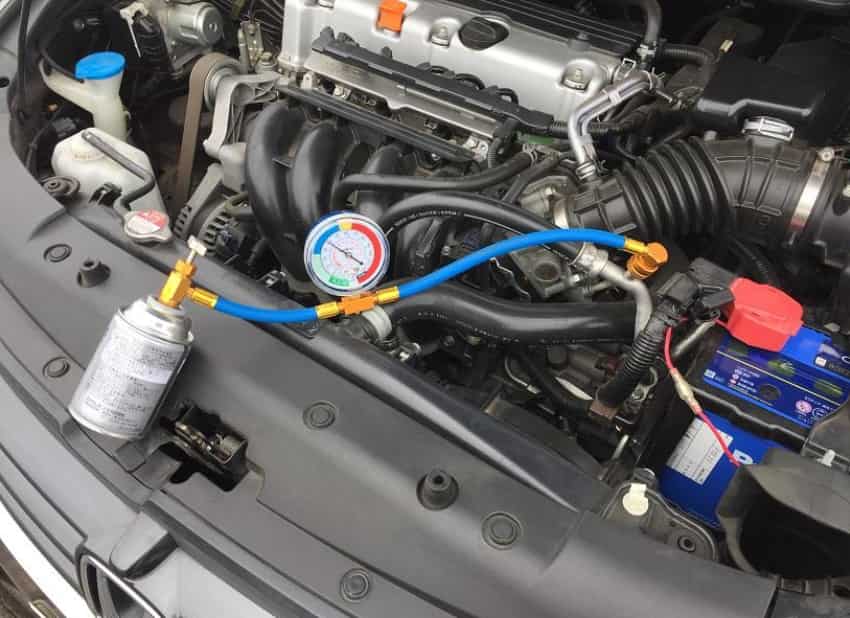
What Refrigerant Does a Honda Odyssey Use by Model Year?
A Honda Odyssey uses different refrigerants depending on its model year, production specifications, and market requirements. Most older Honda Odyssey models use R-134a refrigerant, while newer models may use R-1234yf refrigerant due to updated environmental regulations and automotive industry standards. The correct refrigerant type is always the one listed on the vehicle’s underhood air conditioning label.
The refrigerant label is the most reliable source because Honda designs each air conditioning system with a specific refrigerant charge, compressor oil specification, and service requirement. Using the wrong refrigerant can affect cooling performance, damage system components, and create safety problems during servicing. For example, R-134a and R-1234yf use different service fittings, recovery equipment, and handling procedures, so they should never be mixed in the same Honda Odyssey AC system.
The transition between refrigerants happened gradually across the automotive industry rather than at one single model year. Therefore, owners should not identify refrigerant type only by vehicle generation or online charts. A Honda Odyssey owner should confirm the refrigerant specification by checking the information label inside the engine compartment or referring to official service information for the exact vehicle.
Knowing the correct refrigerant type is the first step before performing an AC recharge. After identifying the refrigerant, the next important factor is determining the correct refrigerant capacity because adding too little or too much refrigerant can reduce cooling performance and increase system stress.
What Refrigerant Capacity Does a Honda Odyssey Need?
A Honda Odyssey requires the exact refrigerant amount specified for its model year and air conditioning configuration. The correct refrigerant capacity is measured by weight, not by the number of recharge cans or a single pressure reading from a low-side gauge. The factory specification ensures that the air conditioning system has enough refrigerant to absorb heat efficiently while maintaining safe operating pressure.
Refrigerant capacity varies because Honda Odyssey models use different AC system designs across generations. Factors such as refrigerant type, front and rear climate control configuration, evaporator design, and component layout affect the total refrigerant volume required. A Honda Odyssey equipped with rear climate control may require a different refrigerant charge compared with a model that only uses front air conditioning because the system contains additional cooling components and refrigerant lines.
Adding too little refrigerant reduces the system’s ability to transfer heat from the cabin to the outside environment. The evaporator may not receive enough refrigerant to provide consistent cooling, causing warm air from the vents and increased compressor cycling. On the other hand, adding too much refrigerant creates excessive system pressure, which can reduce cooling performance and increase stress on the compressor and other AC components.
Pressure gauges can help diagnose system conditions, but they cannot determine the exact refrigerant charge by themselves. AC pressure changes based on ambient temperature, humidity, engine speed, condenser airflow, and compressor operation. Therefore, the most accurate recharge method is to recover the existing refrigerant, evacuate the system when required, and refill the system with the exact specified refrigerant weight.
A correct refrigerant capacity is essential for reliable Honda Odyssey AC performance. Before performing any recharge, always confirm the factory specification and inspect the system for leaks because adding refrigerant does not repair refrigerant loss.
What Are the Signs That a Honda Odyssey Needs an AC Recharge?
A Honda Odyssey needs an AC recharge when the system loses refrigerant and cannot maintain normal cooling performance. The most noticeable sign is weak airflow temperature. The vents produce warm or slightly cool air instead of the cold air expected from a working AC system.
However, weak cooling does not always mean low refrigerant. Several AC problems create similar symptoms. A failing compressor, damaged condenser fan, electrical issue, or airflow restriction can also reduce cooling performance. Therefore, owners should diagnose the system before adding refrigerant.
One common sign of low refrigerant is inconsistent cooling during different driving conditions. For example, the Honda Odyssey may blow colder air while driving at highway speeds but become warmer when the vehicle stops. This happens because the AC system struggles to remove heat when refrigerant levels are insufficient.
Another warning sign is abnormal compressor cycling. The compressor may turn on and off more frequently when the system detects incorrect pressure conditions. Low refrigerant can trigger this response because the system tries to protect the compressor from damage.
Some owners may also notice oily marks around AC hoses, fittings, or service ports. Refrigerant leaks often carry compressor oil through damaged areas. These marks indicate that the system may have lost refrigerant through a leak.
Honda Odyssey models with rear climate control can show another symptom. The front AC may cool properly while the rear AC blows warmer air. This issue may involve the rear evaporator, refrigerant lines, expansion valve, or airflow controls.
A recharge can restore cooling when the system has lost refrigerant. However, adding refrigerant does not fix leaks or damaged components. Proper diagnosis helps prevent repeated recharge problems and protects the Honda Odyssey AC system.
What Should You Check Before Recharging a Honda Odyssey AC System?
Before recharging a Honda Odyssey AC system, you should inspect the entire air conditioning system to confirm that low refrigerant is the actual problem. Refrigerant does not disappear during normal operation because the AC system works as a sealed circuit. A low refrigerant level usually indicates a leak or previous service loss.
The first step is to verify the correct refrigerant type and factory charge specification. Honda Odyssey models use different refrigerants depending on the production year. Using the wrong refrigerant can reduce cooling performance and damage important components. The underhood AC label provides the correct refrigerant information for the specific vehicle.
The next step is to inspect the system for visible damage. Check refrigerant hoses, connections, service ports, and condenser areas for signs of leakage. Refrigerant leaks often leave oily residue because the escaping refrigerant can carry compressor oil through damaged seals or fittings. Finding and repairing leaks prevents repeated recharge problems.
You should also check the compressor and condenser fan operation before adding refrigerant. The compressor creates the pressure difference required for cooling, while the condenser removes heat from the refrigerant. A failed compressor or inactive condenser fan can make the AC blow warm air even when refrigerant levels are correct.
The system should also receive a pressure and temperature evaluation. AC pressure depends on several conditions, including outside temperature, airflow, engine speed, and compressor performance. A single gauge reading cannot confirm the exact refrigerant condition, but it can help identify abnormal system behavior.
Avoid using recharge products that contain leak sealers unless a qualified repair procedure specifically approves them. These products can contaminate recovery equipment and create additional problems during future repairs.
A proper inspection saves time and prevents unnecessary refrigerant additions. When the cause of poor cooling is identified before recharging, the Honda Odyssey AC system can achieve more reliable and consistent performance.
Where Is the Low Pressure AC Port on a Honda Odyssey?
The Honda Odyssey low pressure AC port is located on the larger refrigerant line between the evaporator outlet and the AC compressor. This port allows technicians and compatible recharge equipment to access the low pressure side of the air conditioning system. The exact location changes between model years, so owners should confirm the position for their specific vehicle.
The easiest way to identify the low pressure port is by following the larger aluminum refrigerant line in the engine compartment. The low pressure line carries refrigerant vapor back to the compressor. It usually has a larger diameter than the high pressure line. The service cap may also include an identification mark that helps distinguish the correct port.
The low pressure port and high pressure port serve different functions. The low pressure side operates after the refrigerant absorbs heat inside the evaporator. The high pressure side carries compressed refrigerant from the compressor toward the condenser. Because the high pressure side contains significantly higher pressure, connecting recharge equipment to the wrong port can create safety risks.
Honda Odyssey owners should never choose a service port based only on location. Some components and engine layouts can place the ports in different areas. Always confirm the correct port by checking the service information, the vehicle label, or a model specific repair guide.
Before connecting any recharge equipment, inspect the service port and surrounding area. A damaged valve, missing cap, or oily residue can indicate a refrigerant leak. A clean and properly identified low pressure port helps ensure a safer recharge process and prevents incorrect servicing.
How Do You Test the AC After Recharging It?
After recharging a Honda Odyssey AC system, you should test cooling performance to confirm that the system operates correctly. A successful recharge should produce stable cooling, normal compressor operation, and consistent airflow from the vents.
Start the test by measuring the air temperature from the center vents. Compare the vent temperature with the outside temperature and observe whether the cooling remains consistent during different operating conditions. A system that cools only briefly may still have a leak or another mechanical problem.
Next, check the AC pressure readings while the system operates. Pressure measurements should match the refrigerant type, ambient temperature, and vehicle specifications. Abnormal readings can indicate problems such as overcharging, undercharging, poor condenser airflow, or compressor failure.
For Honda Odyssey models with front and rear climate control, test both areas separately. Uneven cooling between the front and rear cabin may indicate problems with rear evaporator components, airflow controls, or refrigerant distribution.
A recharge is complete only when the system delivers reliable cooling and all components operate normally. Testing after service helps identify problems early and prevents unnecessary refrigerant additions.
How Do You Recharge a Honda Odyssey AC System?
A Honda Odyssey AC recharge requires the correct refrigerant, proper equipment, and accurate charging procedures. The safest method is to recover the existing refrigerant, check the system condition, remove moisture with a vacuum process, and refill the system with the exact refrigerant amount specified by Honda. This process restores cooling performance while protecting the compressor and other AC components.
The first step is to verify the refrigerant type and capacity for the specific Honda Odyssey model year. Different generations may use different refrigerants, such as R-134a or R-1234yf. The vehicle’s underhood AC label provides the correct specification. Using the wrong refrigerant can reduce cooling efficiency and create compatibility problems with the AC system.
Before adding refrigerant, inspect the system for leaks and damage. A recharge cannot repair a leaking hose, damaged seal, faulty compressor, or failed condenser component. If the system has lost a large amount of refrigerant, a technician should locate and repair the leak before performing a recharge.
A complete recharge process starts with refrigerant recovery. This step removes the existing refrigerant and allows technicians to measure the remaining amount. After recovery, the system receives a vacuum process that removes air and moisture from the AC circuit. Moisture inside the system can reduce cooling performance and damage internal components.
The final step is charging the system with the correct refrigerant weight. Technicians use a refrigerant scale because the correct amount is measured by mass, not by the number of cans added. An accurate charge allows the compressor, condenser, and evaporator to operate within their designed pressure range.
What Should You Do After Adding Refrigerant to a Honda Odyssey?
After adding refrigerant, you should test the AC system under normal operating conditions. Start the engine, activate the air conditioning, and allow the system to stabilize before checking performance.
Measure the vent temperature and compare the cooling output between the front and rear cabin areas if the vehicle has rear climate control. A properly charged Honda Odyssey should provide consistent cooling from all active vents.
You should also observe compressor operation and condenser fan activity. The compressor should engage normally, and the condenser fan should remove heat from the refrigerant system. Abnormal cycling, unusual noises, or weak cooling indicate that another problem may exist.
Finally, inspect the service ports and connections for leaks after completing the recharge. A small leak can gradually reduce refrigerant levels and cause the same cooling problems to return. Proper testing confirms that the recharge solved the issue instead of temporarily masking a larger AC problem.
How Do You Recharge a Honda Odyssey AC System?
A Honda Odyssey AC recharge requires the correct refrigerant, proper equipment, and accurate charging procedures. The safest method is to recover the existing refrigerant, check the system condition, remove moisture with a vacuum process, and refill the system with the exact refrigerant amount specified by Honda. This process restores cooling performance while protecting the compressor and other AC components.
The first step is to verify the refrigerant type and capacity for the specific Honda Odyssey model year. Different generations may use different refrigerants, such as R-134a or R-1234yf. The vehicle’s underhood AC label provides the correct specification. Using the wrong refrigerant can reduce cooling efficiency and create compatibility problems with the AC system.
Before adding refrigerant, inspect the system for leaks and damage. A recharge cannot repair a leaking hose, damaged seal, faulty compressor, or failed condenser component. If the system has lost a large amount of refrigerant, a technician should locate and repair the leak before performing a recharge.
A complete recharge process starts with refrigerant recovery. This step removes the existing refrigerant and allows technicians to measure the remaining amount. After recovery, the system receives a vacuum process that removes air and moisture from the AC circuit. Moisture inside the system can reduce cooling performance and damage internal components.
The final step is charging the system with the correct refrigerant weight. Technicians use a refrigerant scale because the correct amount is measured by mass, not by the number of cans added. An accurate charge allows the compressor, condenser, and evaporator to operate within their designed pressure range.
What Should You Do After Adding Refrigerant to a Honda Odyssey?
After adding refrigerant, you should test the AC system under normal operating conditions. Start the engine, activate the air conditioning, and allow the system to stabilize before checking performance.
Measure the vent temperature and compare the cooling output between the front and rear cabin areas if the vehicle has rear climate control. A properly charged Honda Odyssey should provide consistent cooling from all active vents.
You should also observe compressor operation and condenser fan activity. The compressor should engage normally, and the condenser fan should remove heat from the refrigerant system. Abnormal cycling, unusual noises, or weak cooling indicate that another problem may exist.
Finally, inspect the service ports and connections for leaks after completing the recharge. A small leak can gradually reduce refrigerant levels and cause the same cooling problems to return. Proper testing confirms that the recharge solved the issue instead of temporarily masking a larger AC problem.
Why Is the Honda Odyssey AC Still Warm After a Recharge?
A Honda Odyssey AC system can still blow warm air after a recharge when the refrigerant level is not the only problem. A recharge restores cooling only when the system has lost refrigerant and all major components continue to work correctly. If the AC remains warm after service, the vehicle likely has another issue that affects refrigerant flow, heat transfer, or airflow control.
One common cause is an existing refrigerant leak. The system may cool temporarily after adding refrigerant, but the cooling performance will decline again when the refrigerant escapes. Leaks often occur around hoses, seals, condenser connections, or service ports. Finding and repairing the leak is necessary for a long-term solution.
Another possible cause is an incorrect refrigerant charge. An undercharged system cannot absorb enough heat from the cabin because the evaporator does not receive enough refrigerant. An overcharged system creates excessive pressure, which reduces cooling efficiency and increases stress on the compressor.
The AC compressor can also cause warm air after a recharge. The compressor creates the pressure difference that allows the refrigerant cycle to work. If the compressor cannot build enough pressure, the system cannot transfer heat effectively. Electrical problems, worn internal parts, or compressor control issues can prevent normal operation.
A failed condenser fan is another common cause of poor cooling. The condenser removes heat from the refrigerant before it returns to the evaporator. When airflow across the condenser is limited, system pressure increases and cooling performance decreases, especially when the vehicle is stopped.
Other problems may involve the expansion valve, temperature sensors, or air distribution components. These parts control refrigerant flow and cabin airflow. A fault in any of these areas can make the Honda Odyssey AC system produce warm air even after a correct recharge.
Why Does the Front AC Work While the Rear AC Blows Warm?
Honda Odyssey models with rear climate control use additional components to provide cooling for passengers in the back cabin. When the front AC works but the rear AC blows warm air, the problem may involve the rear evaporator, rear expansion valve, refrigerant lines, or rear airflow controls.
The rear AC system depends on proper refrigerant circulation and airflow management. A restriction in the rear refrigerant circuit can prevent the evaporator from absorbing heat. Similarly, a faulty rear blower motor or temperature door actuator can reduce cooling even when the front system operates normally.
Uneven cooling between front and rear areas should not be solved by adding more refrigerant immediately. The system requires diagnosis to determine whether the issue comes from refrigerant distribution, airflow control, or a failed component.
How Much Does a Honda Odyssey AC Recharge Cost?
The cost of a Honda Odyssey AC recharge depends on the refrigerant type, service method, system condition, and whether additional repairs are required. A basic recharge usually costs less than a complete AC repair because it only restores the refrigerant level. However, a professional service often includes inspection, refrigerant recovery, vacuum testing, and performance verification.
A DIY recharge kit may appear to be the cheapest option because it only requires purchasing refrigerant and basic equipment. However, this approach has limitations. Most consumer recharge kits cannot measure the exact refrigerant amount inside the system. They also cannot identify leaks or confirm whether the compressor, condenser, and expansion components work correctly.
A professional Honda Odyssey AC recharge usually includes several diagnostic steps before adding refrigerant. The technician checks the refrigerant type, measures the existing charge, performs leak inspections, removes old refrigerant when necessary, and adds the correct amount by weight. These steps increase the service cost but provide a more accurate repair process.
The refrigerant type also affects the total price. Older Honda Odyssey models that use R-134a generally have lower service costs because the refrigerant and equipment are more common. Newer models that use R-1234yf usually cost more because R-1234yf refrigerant requires specialized equipment and more controlled handling procedures.
Additional repairs increase the total cost when the AC system has a damaged component. A refrigerant leak, failed compressor, defective condenser fan, or malfunctioning expansion valve requires separate diagnosis and repair before the recharge can provide lasting results.
A proper recharge should not focus only on adding refrigerant. The goal is to restore the entire Honda Odyssey AC system to normal operation. A complete inspection helps prevent repeated recharge expenses and protects expensive components from unnecessary damage.
How Often Does a Honda Odyssey Need an AC Recharge?
A Honda Odyssey does not need an AC recharge at a fixed maintenance interval because the refrigerant operates inside a sealed air conditioning system. Unlike engine oil or fuel, refrigerant does not get consumed during normal vehicle operation. If the refrigerant level becomes low, the system usually has a leak or experienced refrigerant loss during previous repairs.
Many owners assume that an AC recharge should happen every year before hot weather arrives. However, regular seasonal recharging is not a normal maintenance requirement for a Honda Odyssey. A properly functioning AC system can maintain the correct refrigerant level for many years without additional refrigerant.
When cooling performance decreases, the first step should be diagnosis rather than immediate recharge. A technician should inspect the system for leaks, check pressure readings, evaluate compressor operation, and measure cooling performance. Adding refrigerant without identifying the cause may provide temporary improvement but will not prevent the problem from returning.
A slow refrigerant loss can occur over a long period because seals and connections can naturally allow small amounts of refrigerant to escape. However, a noticeable loss of cooling performance indicates that the system needs attention. A sudden loss of refrigerant usually points to a damaged component, such as a hose, condenser, evaporator, or service port.
Maintaining the Honda Odyssey AC system involves monitoring cooling performance and addressing problems early. Regular inspections help identify small issues before they develop into expensive repairs. A recharge should be treated as a repair procedure rather than a routine service item.
When Should a Honda Odyssey AC System Be Serviced by a Professional?
A Honda Odyssey AC system should receive professional service when the problem involves refrigerant handling, component failure, or unclear system conditions. Modern vehicle air conditioning systems require accurate diagnosis because incorrect servicing can reduce cooling performance and damage expensive components. A recharge alone cannot solve every AC problem.
Professional service is recommended when the AC system is completely empty of refrigerant. A fully discharged system usually indicates a significant leak or component failure. The technician must locate the leak, repair the damaged area, remove moisture from the system, and recharge it with the correct refrigerant amount.
Professional diagnosis is also important when the refrigerant type is uncertain. Honda Odyssey models use different refrigerants depending on the model year. Mixing R-134a and R-1234yf can create compatibility problems and may contaminate the AC system. Technicians use proper identification methods to confirm the correct refrigerant before service.
A professional inspection is necessary when the compressor produces unusual noise, the system shows abnormal pressure readings, or the AC continues blowing warm air after a recharge. These symptoms may indicate problems with the compressor, condenser fan, expansion valve, pressure sensor, or electrical controls.
Technicians use specialized equipment to service Honda Odyssey AC systems correctly. Common tools include refrigerant recovery machines, vacuum pumps, manifold gauges, refrigerant scales, leak detectors, and temperature measurement tools. These tools allow technicians to evaluate the complete system instead of relying on a simple pressure reading.
Professional service is also the safer choice when the AC system has been opened for component replacement. Any time the sealed refrigerant circuit is exposed to outside air, the system requires proper evacuation and testing before returning to normal operation.
A Honda Odyssey AC recharge should restore reliable cooling, not create repeated service problems. Professional diagnosis helps identify the actual cause and ensures that the repair process protects the entire air conditioning system.
How Can You Keep a Honda Odyssey AC System Cooling Properly?
A Honda Odyssey AC system maintains better cooling performance when owners follow basic preventive maintenance practices and address small problems before they become major failures. The air conditioning system depends on several connected components, including the compressor, condenser, evaporator, refrigerant lines, and airflow controls. A problem in any of these areas can reduce cooling efficiency.
The first step is keeping airflow through the system unrestricted. A dirty cabin air filter can reduce the amount of air entering the cabin, which makes the AC feel weaker even when the refrigerant level remains correct. Replacing a restricted cabin air filter improves airflow and helps the HVAC system distribute cooled air more effectively.
The condenser also requires proper airflow to remove heat from the refrigerant. Dirt, leaves, and road debris can block the condenser surface and reduce heat transfer. When the condenser cannot release heat efficiently, AC pressure increases and cooling performance decreases, especially when the Honda Odyssey operates at low speeds or sits in traffic.
Owners should also operate the AC system regularly, even during cooler months. Running the system periodically allows refrigerant and compressor oil to circulate through the components. This practice helps maintain seal lubrication and reduces the risk of problems caused by long periods of inactivity.
Cooling issues should receive attention as soon as they appear. Weak airflow, unusual compressor sounds, inconsistent temperatures, or longer cooling times can indicate an early problem. Early diagnosis helps prevent additional damage and reduces repair costs.
For Honda Odyssey models with front and rear climate control, both systems should receive regular performance checks. Testing each zone helps identify problems with rear evaporators, airflow controls, or refrigerant distribution before they affect overall comfort.
Proper maintenance does not eliminate every AC problem, but it improves system reliability and extends the service life of important components. A clean, inspected, and correctly charged Honda Odyssey AC system provides more consistent cooling throughout the year.
Conclusion: How Can You Recharge a Honda Odyssey AC System Correctly?
A Honda Odyssey AC recharge requires more than adding refrigerant to the system. The correct process starts with identifying the proper refrigerant type, confirming the factory charge specification, and checking whether the system has an underlying problem. A low refrigerant level usually indicates refrigerant loss, which means the cause should be identified before completing a recharge.
The most reliable recharge method uses the correct equipment to recover refrigerant, remove moisture, and refill the system by weight. This approach helps the compressor, condenser, and evaporator operate within their designed specifications. It also reduces the risk of overcharging, poor cooling performance, and unnecessary component damage.
Honda Odyssey owners should remember that weak AC performance does not always mean the system needs more refrigerant. Problems such as refrigerant leaks, compressor failure, condenser airflow issues, and rear climate control faults can create similar symptoms.
A properly maintained Honda Odyssey AC system delivers consistent cooling when the refrigerant specification, system condition, and component operation work together. Diagnosing the cause before recharging provides a longer-lasting solution and protects the vehicle’s entire air conditioning system.