Few things are more frustrating than seeing the “Jeep ParkSense Unavailable Service Required” message appear on your dashboard just as you’re maneuvering into a tight parking space. One moment your parking assistance system is working perfectly, and the next, the familiar warning beeps disappear, leaving you to rely entirely on your mirrors and backup camera. While this warning doesn’t usually affect your Jeep’s ability to drive, it does indicate that the ParkSense system has detected a fault that needs attention.
The good news is that this warning isn’t always a sign of an expensive repair. In many cases, something as simple as dirt, mud, snow, or moisture covering the ultrasonic parking sensors can trigger the message. However, the problem can also stem from damaged sensors, blown fuses, corroded wiring, software glitches, or even a failing ParkSense control module. Identifying the root cause early can save you both time and money while preventing unnecessary replacement of perfectly functional components.
This comprehensive guide explains everything you need to know about the Jeep ParkSense Unavailable Service Required Message. You’ll learn how the ParkSense system works, what causes the warning to appear, how to diagnose the problem step by step, and which repairs you can safely perform at home. We’ll also discuss common symptoms, estimated repair costs, situations that require professional service, and practical maintenance tips to help keep your parking assistance system operating reliably for years to come.
Whether you own a Jeep Wrangler, Grand Cherokee, Cherokee, Compass, Gladiator, or another model equipped with ParkSense, this guide will help you understand the warning, troubleshoot it with confidence, and determine the most effective solution before heading to the repair shop.
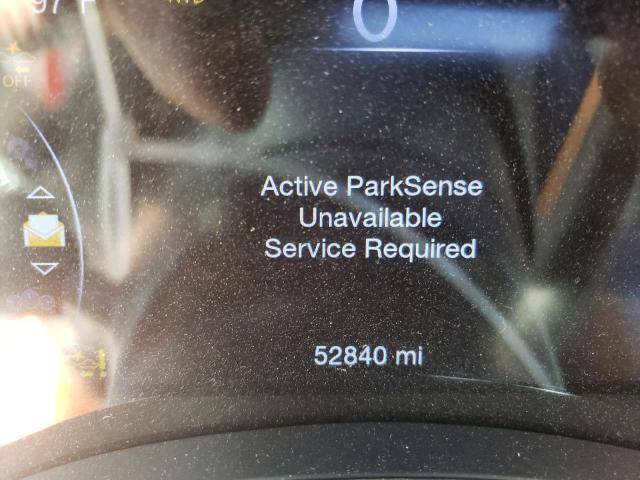
The Jeep ParkSense Unavailable Service Required Message means that the vehicle has detected a problem within the parking assistance system and has temporarily disabled some or all ParkSense functions. When this happens, the ultrasonic sensors may stop detecting nearby vehicles, walls, posts, curbs, or other obstacles. The usual warning tones may also disappear, making low speed parking more difficult.
ParkSense is designed to monitor the area around the front or rear bumper, depending on the Jeep model and trim level. The system uses ultrasonic sensors to measure the distance between the vehicle and nearby objects. When an obstacle is detected, the system provides visual indicators and audible alerts that become more frequent as the vehicle moves closer.
If the control system receives an abnormal signal, loses communication with a sensor, or detects a condition that could affect accuracy, it may deactivate ParkSense as a safety precaution. This prevents the system from giving incorrect distance warnings that could cause the driver to misjudge a parking maneuver.
The message does not always mean that a major component has failed. Dirt, mud, ice, snow, road salt, heavy rain, or moisture on the sensor surface can interfere with ultrasonic signals. In other cases, the warning may be caused by damaged wiring, a loose electrical connector, low battery voltage, a blown fuse, outdated software, or a defective sensor.
Although the Jeep can usually still be driven, the driver should not rely on ParkSense until the fault has been identified. Mirrors, direct observation, and the backup camera should be used carefully when reversing or parking. If the warning remains after cleaning the sensors and restarting the vehicle, further diagnosis may be necessary.
How the Jeep ParkSense System Works
The Jeep ParkSense system is a driver assistance feature that helps identify obstacles during low speed parking maneuvers. Depending on the model, the system may include rear sensors, front sensors, or both. These sensors are usually installed across the bumper and are designed to detect objects within a limited range.
Each sensor sends out ultrasonic sound waves that are not normally audible to the human ear. These waves travel through the air, strike a nearby object, and return to the sensor. The ParkSense control system measures how long the signal takes to return and uses that information to estimate the distance between the Jeep and the obstacle.
When the vehicle approaches an object, the system provides warning tones. The beeps are usually slow when the obstacle is farther away and become faster as the distance decreases. On many Jeep models, a visual display also appears in the instrument cluster or infotainment screen. The display may show different zones or colors to indicate where the obstacle is located.
The system depends on several components working together. These include ultrasonic sensors, wiring connectors, a control module, the vehicle communication network, dashboard displays, and audible warning devices. If one sensor sends an invalid signal, the control module may disable the entire system rather than provide incomplete or inaccurate information.
ParkSense may also operate alongside the backup camera, but the two systems are not identical. A camera provides a visual image, while ParkSense measures distance using sound waves. This means the backup camera may continue working even when the Jeep ParkSense Unavailable Service Required Message appears.
Some drivers assume ParkSense is connected directly to the braking system, but its main purpose is to provide warnings. Certain newer vehicle configurations may include additional parking assistance functions, but drivers should always remain responsible for checking the area around the vehicle.
Several problems can trigger the Jeep ParkSense Unavailable Service Required Message. Some causes are simple and inexpensive to correct, while others require diagnostic equipment or professional repair.
Dirty or Blocked Parking Sensors
Contaminated sensors are among the most common causes of temporary ParkSense failure. Mud, dust, snow, ice, road salt, wax, or dried water spots can block the sensor surface and prevent ultrasonic waves from traveling correctly.
A sensor does not need to be completely covered to create a problem. Even a thin layer of dirt or moisture can affect its ability to measure distance accurately. Carefully cleaning each sensor with a soft cloth and mild soap is often the best first step.
Damaged Ultrasonic Sensors
Parking sensors are mounted in vulnerable areas of the bumper. Minor collisions, parking impacts, flying road debris, or improper bumper repairs can crack a sensor or push it out of position.
A damaged sensor may look normal from the outside but still fail internally. Water intrusion can also damage the electronic components, especially if the sensor housing or seal has been compromised.
Loose, Damaged, or Corroded Wiring
Each ParkSense sensor relies on wiring to communicate with the control system. Loose connectors, corrosion, damaged insulation, or broken wires can interrupt the signal.
Moisture behind the bumper may cause connector corrosion over time. Wiring can also be damaged during body repairs, trailer hitch installation, bumper replacement, or aftermarket accessory installation. Rodents may occasionally chew exposed wiring in vehicles parked for long periods.
Blown Fuse or Electrical Supply Problem
A blown fuse can interrupt power to the ParkSense system or related control modules. Although replacing a fuse is inexpensive, a blown fuse may indicate a deeper electrical problem if it fails again shortly after replacement.
The correct fuse location varies by Jeep model and production year. Owners should consult the vehicle manual before removing or replacing any fuse.
Faulty ParkSense Control Module
The control module processes information from the parking sensors and sends alerts to the driver. If the module fails or loses communication with other vehicle systems, ParkSense may become unavailable.
Module failure is less common than dirty sensors or wiring problems, but it can be more expensive to repair. A replacement module may require programming or configuration before it can communicate properly with the Jeep.
Software Glitch or Outdated Programming
Modern Jeep vehicles rely heavily on software. A temporary communication error, incomplete update, or outdated control module program may cause the ParkSense warning to appear.
Restarting the vehicle may clear a temporary fault, but recurring problems may require a software update performed with appropriate diagnostic equipment.
Low Battery Voltage
Weak battery voltage can create unexpected warning messages in modern vehicles. If voltage drops too low during startup, some control modules may not initialize correctly.
A failing battery, loose battery terminal, or charging system problem can affect ParkSense even when the engine still starts. Battery testing is therefore an important part of the diagnostic process.
Extreme Weather and Moisture
Heavy rain, freezing temperatures, snow buildup, and condensation can interfere with sensor operation. In some situations, the warning may disappear after the sensors dry or the temperature rises.
However, repeated weather related failures may indicate a damaged sensor seal, poor connector protection, or water intrusion behind the bumper.
Symptoms That Often Accompany the ParkSense Warning
The Jeep ParkSense Unavailable Service Required Message rarely appears by itself. In most cases, drivers notice several additional symptoms that help narrow down the underlying cause. Understanding these warning signs can make the diagnostic process faster and prevent unnecessary replacement of parts.
One of the most obvious symptoms is the complete loss of parking assistance. Normally, ParkSense provides audible alerts whenever the vehicle approaches an obstacle. Once the system becomes unavailable, these warning tones disappear entirely, even when reversing toward a wall or another vehicle.
Many Jeep models also display a notification stating that ParkSense is temporarily unavailable or requires service every time the engine is started. In some vehicles, a warning icon remains illuminated in the instrument cluster until the fault has been resolved.
Another common symptom is that the backup camera continues to function normally while the parking sensors stop working. This often confuses drivers because both systems assist with parking. However, the camera and ParkSense are controlled by different components, so one may continue operating even if the other has been disabled.
Drivers may also experience intermittent operation. For example, ParkSense may work correctly in the morning but become unavailable after driving through heavy rain or washing the vehicle. Likewise, the system may stop working in freezing temperatures and begin functioning again after the sensors warm up.
In more serious cases, the warning may be accompanied by additional electrical issues. These can include multiple dashboard warning lights, communication errors between control modules, or other driver assistance systems becoming temporarily unavailable. Such symptoms usually indicate a broader electrical or network communication problem rather than a single faulty parking sensor.
Paying close attention to when the warning appears can provide valuable clues. If the message only occurs after rain, moisture intrusion is a likely cause. If it appears immediately after a minor collision or bumper repair, damaged sensors or wiring should be inspected first. Recognizing these patterns helps reduce diagnostic time and improves the chances of identifying the correct repair on the first attempt.
Step by Step Troubleshooting Guide
Before replacing expensive components, it is important to perform a systematic diagnosis. Many ParkSense problems can be resolved with simple inspections that require little or no special equipment.
Begin by examining every parking sensor on the front and rear bumpers. Look for dirt, mud, road salt, snow, wax residue, or water spots covering the sensor surfaces. Even a small amount of contamination can interfere with ultrasonic signals. Clean each sensor carefully using a microfiber cloth and a mild automotive cleaner, then restart the vehicle to see whether the warning disappears.
Next, perform a visual inspection for physical damage. Check each sensor for cracks, dents, loose mounting clips, or signs of impact. A sensor that has shifted out of position may produce inaccurate readings or fail completely.
If the sensors appear normal, inspect the battery. Low system voltage can affect electronic control modules throughout the vehicle. Measure the battery voltage with a multimeter if available. A healthy battery should generally read around 12.6 volts with the engine off and between 13.7 and 14.7 volts while the engine is running.
The next step is to inspect the ParkSense fuse. Consult the owner’s manual or the fuse box diagram to locate the correct fuse for your Jeep model. Replace any blown fuse with another fuse of the identical amperage. If the replacement fuse fails again shortly afterward, further electrical diagnosis is required because another fault is likely present.
If the warning persists, connect an OBD II diagnostic scanner that supports body control modules. Generic code readers may only access engine related information, while advanced scanners can retrieve manufacturer specific ParkSense diagnostic trouble codes. These codes often identify the affected sensor, communication fault, or control module error, significantly reducing diagnostic time.
For vehicles that continue displaying the warning despite no visible damage, inspect the wiring harness behind both bumpers. Look for loose connectors, corrosion, broken insulation, pinched wires, or evidence of rodent damage. Moisture inside electrical connectors can also interrupt communication between the sensors and the ParkSense module.
If no obvious problems are found, the issue may involve the control module itself or require software updates available only through professional diagnostic equipment. At this stage, visiting a qualified repair facility or Jeep dealership is usually the most efficient solution.
DIY Fixes You Can Try at Home
Many owners can restore normal ParkSense operation without replacing expensive components. Performing a few basic maintenance procedures often eliminates temporary faults and saves the cost of unnecessary repairs.
The simplest repair is cleaning the parking sensors. Because ultrasonic sensors rely on unobstructed sound waves, accumulated dirt is one of the most common reasons for false warnings. Wash the bumper thoroughly, clean each sensor individually, and remove any wax or polishing residue that may have collected around the sensor face.
If moisture is suspected, allow the sensors to dry completely before testing the system again. Parking the vehicle in a warm garage or using compressed air around the sensor housing can help remove trapped moisture after heavy rain or a car wash.
Some temporary software glitches can be cleared by restarting the vehicle. Turn off the engine, remove the key or switch off the ignition, wait several minutes, and restart the Jeep. In certain cases, disconnecting the negative battery terminal for approximately ten to fifteen minutes may reset some electronic modules. Before attempting this procedure, verify that you have any required radio security codes and follow the manufacturer’s recommendations.
Replacing a blown fuse is another inexpensive repair that many owners can perform themselves. Always install a fuse with the same amperage rating as the original. Using a larger fuse can damage electrical components and create additional problems.
Owners with moderate mechanical experience may also replace a failed parking sensor. The process generally involves removing part of the bumper trim, disconnecting the electrical connector, installing the new sensor, and confirming that it is properly seated. However, some Jeep models require sensor calibration or programming after installation, making professional service necessary.
While these DIY solutions can resolve many common causes of the Jeep ParkSense Unavailable Service Required Message, they should not be used to ignore recurring faults. If the warning repeatedly returns after cleaning, resetting, or replacing minor components, a professional diagnostic inspection is recommended to prevent more serious electrical issues from developing.
When Should You Visit a Mechanic?
While many ParkSense issues can be resolved with basic maintenance, some faults require specialized equipment and professional expertise. If you have already cleaned the sensors, inspected the fuse, checked the battery, and restarted the vehicle but the Jeep ParkSense Unavailable Service Required Message continues to appear, it is time to schedule a professional inspection.
One of the clearest signs that professional service is needed is when the warning returns immediately after every engine start. This usually indicates that the system has detected a persistent hardware or communication fault rather than a temporary obstruction on the sensors.
A diagnostic scan performed with manufacturer level equipment can identify faults that ordinary OBD II scanners cannot access. These tools communicate directly with the ParkSense control module and other body control systems, allowing technicians to pinpoint the exact sensor, wiring circuit, or electronic module responsible for the malfunction.
Professional service is also recommended if your Jeep has recently been involved in a collision, even if the bumper damage appears minor. Parking sensors are precisely positioned, and a small impact can misalign the sensor brackets, crack the sensor housing, or damage wiring hidden behind the bumper cover. These problems are often impossible to identify through a simple visual inspection.
Water intrusion is another situation that often requires expert attention. If moisture has entered the wiring connectors or the ParkSense control module, corrosion may continue spreading even after the system temporarily begins working again. Technicians can inspect sealed connectors, repair damaged wiring, and replace affected components before the problem becomes more expensive.
Software related issues should also be handled by a qualified repair facility. Jeep periodically releases software updates that improve communication between electronic modules or correct known system bugs. These updates typically require factory diagnostic equipment and cannot be installed using standard consumer scan tools.
Finally, professional repair becomes necessary whenever the ParkSense control module has failed. Module replacement may require programming, calibration, and synchronization with other vehicle systems before normal operation is restored. Attempting to replace these components without the proper equipment can result in additional warning messages or communication errors.
Seeking professional assistance early often reduces repair costs by preventing small electrical problems from developing into larger system failures.
Jeep ParkSense Repair Costs
The cost of repairing the Jeep ParkSense Unavailable Service Required Message depends on the underlying cause, the Jeep model, labor rates in your area, and whether genuine or aftermarket replacement parts are used. Fortunately, not every warning leads to an expensive repair.
The least expensive solution is simply cleaning the parking sensors. If dirt, road salt, mud, or wax residue is preventing the ultrasonic sensors from functioning properly, cleaning the bumper may restore normal operation at little or no cost.
Replacing a blown fuse is another low cost repair. Even when labor is included, fuse replacement is generally inexpensive unless an underlying electrical short causes repeated failures.
Parking sensor replacement is one of the most common repairs. Individual ultrasonic sensors are relatively affordable, but labor costs increase if the bumper must be removed to access the damaged component. Using original equipment parts typically costs more than aftermarket alternatives, although OEM sensors often provide better compatibility and long term reliability.
If damaged wiring is discovered behind the bumper, repair costs vary depending on the extent of the damage. Replacing a single connector may be inexpensive, while repairing an entire wiring harness can require several hours of labor.
Control module replacement is generally the most expensive repair. In addition to the cost of the module itself, programming and calibration may be necessary before the new unit communicates correctly with the vehicle’s electronic systems.
Software updates are sometimes performed free of charge if they are covered by a manufacturer service campaign or warranty. Otherwise, dealerships may charge a diagnostic or programming fee to install the latest software version.
The following table provides a general estimate of common repair costs.
| Repair | Estimated Cost |
|---|---|
| Clean Parking Sensors | $0 to $20 |
| Replace Fuse | $5 to $25 |
| Replace One Parking Sensor | $120 to $350 |
| Repair Wiring | $150 to $600 |
| Replace ParkSense Control Module | $400 to $900 |
| Software Update | $0 to $200 |
| Professional Diagnostic Inspection | $100 to $180 |
These estimates are intended as general guidelines. Actual repair costs vary depending on the vehicle model, repair facility, and geographic location.
Before authorizing expensive repairs, ask the technician to explain the diagnostic results and confirm which component has failed. Replacing parts without proper diagnosis often leads to unnecessary expenses and may not solve the original problem.
Can You Drive With the ParkSense Warning?
Many owners immediately wonder whether it is safe to continue driving after seeing the Jeep ParkSense Unavailable Service Required Message. In most situations, the answer is yes. The warning normally affects only the parking assistance system and does not prevent the engine, transmission, steering, or braking system from operating correctly.
When ParkSense is unavailable, your Jeep simply loses its ability to provide ultrasonic distance warnings during parking maneuvers. You will no longer hear the familiar beeping sounds that indicate nearby obstacles, and visual distance indicators may also disappear from the display.
On many models, the backup camera continues functioning even when ParkSense has been disabled. While the camera provides a useful view behind the vehicle, it should not be considered a complete replacement for ultrasonic parking sensors. Small objects, low obstacles, and objects outside the camera’s viewing angle may still be difficult to detect.
Drivers should exercise additional caution when reversing in crowded parking lots, garages, or areas with pedestrians. Children, shopping carts, bicycles, pets, and low concrete barriers can be difficult to see using mirrors alone. Always perform a visual inspection of the surrounding area before moving the vehicle.
Although driving is generally safe, ignoring the warning for an extended period is not recommended. A recurring ParkSense fault may indicate a developing electrical problem that could eventually affect other electronic systems if left unresolved. In addition, parking without functional sensors increases the risk of minor collisions that could result in costly bumper repairs.
If the warning appeared immediately after a collision, flooding, battery replacement, or electrical repair, schedule a diagnostic inspection as soon as possible. Identifying the cause early often prevents additional damage and helps restore the convenience and safety features that ParkSense was designed to provide.
In summary, you can usually continue driving your Jeep with the ParkSense warning displayed, but you should not ignore it. Treat the message as an indication that the parking assistance system requires attention, and arrange for proper diagnosis before the problem becomes more serious.
How to Prevent Future ParkSense Problems
Preventive maintenance is the easiest and most cost effective way to reduce the likelihood of seeing the Jeep ParkSense Unavailable Service Required Message. Because the ParkSense system depends on multiple electronic components working together, regular inspections and proper vehicle care can significantly improve its long term reliability.
Start by keeping the parking sensors clean throughout the year. Dirt, mud, road salt, insects, and wax residue can accumulate on the sensor surfaces and interfere with ultrasonic signals. Whenever you wash your Jeep, take a few extra moments to wipe each sensor with a soft microfiber cloth. Avoid using abrasive brushes or harsh chemicals that could scratch or damage the sensor face.
During winter months, inspect the sensors more frequently. Snow, ice, and frozen slush can quickly cover the sensors and trigger temporary warning messages. Removing these materials before driving helps maintain accurate obstacle detection.
Be careful when using pressure washers. While washing your vehicle is important, directing high pressure water directly at the parking sensors or electrical connectors can force moisture into areas that are normally sealed. Instead, use moderate water pressure and keep the spray nozzle a safe distance from the bumper.
Protect your bumpers from unnecessary impacts. Even a low speed collision with a parking barrier or another vehicle can crack a sensor, loosen its mounting bracket, or damage the wiring hidden behind the bumper cover. If your Jeep experiences any impact, inspect the bumper carefully and verify that ParkSense continues to operate normally.
Battery maintenance is equally important. Modern driver assistance systems rely on stable electrical voltage to function correctly. Replace aging batteries before they begin causing voltage fluctuations, and ensure that battery terminals remain clean and securely tightened.
Whenever your Jeep visits a dealership for scheduled maintenance, ask whether software updates are available for the body control module or ParkSense system. Manufacturers periodically release updated software to improve system reliability and correct known issues.
Finally, inspect the wiring around the bumpers during routine maintenance, especially if you frequently drive on rough roads or off road trails. Catching loose connectors or damaged wiring early can prevent larger electrical failures and extend the life of the entire parking assistance system.
By following these simple preventive measures, you can reduce unexpected warning messages, avoid costly repairs, and keep your Jeep’s parking assistance system performing as intended.
Frequently Asked Questions
Water droplets or moisture trapped on the ultrasonic sensors can temporarily interfere with their ability to measure distance accurately. In most cases, the warning disappears after the sensors dry completely. If the message remains, inspect the sensors for water intrusion or damaged electrical connectors.
Can dirty parking sensors trigger the Service Required message?
Yes. Dirt, mud, snow, ice, road salt, wax residue, and even heavy dust can block ultrasonic signals. Cleaning all parking sensors is one of the first troubleshooting steps recommended before replacing any components.
Yes. In most situations, the warning only disables the parking assistance system and does not affect engine performance, steering, braking, or transmission operation. However, drivers should exercise extra caution while reversing because obstacle detection and warning tones may no longer function.
Can I reset the ParkSense system myself?
Sometimes. If the warning is caused by a temporary software glitch or dirty sensors, turning the vehicle off, cleaning the sensors, and restarting the engine may restore normal operation. Disconnecting the battery for a short period may also clear temporary faults on some Jeep models, although it will not repair hardware failures.
How do I know which parking sensor is faulty?
A professional diagnostic scanner that supports manufacturer specific body control modules is the most reliable method. These scanners can identify which sensor or communication circuit has failed, reducing unnecessary parts replacement.
How much does it cost to replace a ParkSense sensor?
Most owners can expect to pay between $120 and $350 for a single sensor replacement, including labor. The exact price depends on the Jeep model, labor rates, and whether original equipment or aftermarket parts are used.
Will a weak battery cause ParkSense problems?
Yes. Low battery voltage can prevent electronic control modules from operating correctly. A failing battery may trigger intermittent ParkSense warnings along with other electrical issues, particularly during cold weather or engine startup.
Is the ParkSense warning covered under warranty?
If your Jeep is still covered by the manufacturer’s warranty or an extended service contract, repairs related to defective sensors, wiring, or control modules may be covered. Damage caused by collisions, road debris, or improper modifications is generally excluded. Always review your warranty terms or consult your Jeep dealership for specific coverage.
Does replacing a parking sensor require programming?
Many Jeep models recognize a new sensor automatically after installation. However, some vehicles require calibration or programming using factory diagnostic equipment. If the warning remains after replacing a sensor, professional calibration may be necessary.
Can cold weather affect ParkSense?
Yes. Extremely low temperatures, ice buildup, and frozen moisture can temporarily reduce sensor performance. Once the sensors thaw and become dry, normal operation often returns without additional repairs.
Conclusion
The Jeep ParkSense Unavailable Service Required Message can be alarming at first, but it does not always indicate a serious mechanical problem. In many situations, the warning is caused by something as simple as dirty parking sensors, temporary moisture, or a blown fuse. Starting with these basic inspections can save both time and repair costs before moving on to more advanced diagnostics.
If simple maintenance does not resolve the issue, the next step is to inspect the vehicle’s electrical system, wiring, battery condition, and diagnostic trouble codes. Persistent warnings may point to a damaged ultrasonic sensor, communication fault, software issue, or a malfunctioning ParkSense control module. Addressing these problems promptly helps prevent additional electrical complications and restores the full functionality of your Jeep’s parking assistance system.
Although your Jeep can usually be driven safely while the warning is displayed, you should remember that ParkSense is an important driver assistance feature designed to improve parking safety and reduce the risk of low speed collisions. Without it, you must rely entirely on your mirrors, backup camera, and direct observation when maneuvering in tight spaces.
Regular cleaning, careful bumper inspections, healthy battery maintenance, and timely software updates are the most effective ways to prevent future ParkSense problems. A few minutes of preventive maintenance can often eliminate unexpected warning messages and extend the life of your vehicle’s electronic parking assistance system.
If the Jeep ParkSense Unavailable Service Required Message continues to appear after completing the recommended troubleshooting steps, schedule a professional diagnostic inspection as soon as possible. Identifying the root cause early is the best way to avoid unnecessary repairs, maintain your Jeep’s advanced safety features, and ensure dependable performance every time you park.