An AFM DOD delete is an engine modification that removes the Active Fuel Management (AFM), also known as Displacement on Demand (DOD), system from compatible General Motors V8 engines. The process typically involves replacing AFM-specific lifters and other valvetrain components with non-AFM parts, followed by updating the engine control module (ECM) calibration to prevent cylinder deactivation.
GM developed AFM technology to improve fuel economy by temporarily deactivating four cylinders during low-load driving conditions. However, AFM-equipped engines can experience mechanical problems, including collapsed lifters, camshaft wear, engine misfires, and ticking noises. These issues have led some Chevrolet, GMC, and Cadillac owners to consider removing the system rather than repairing or retaining its original components.
An AFM delete differs from an AFM disable. A mechanical delete removes AFM-specific hardware, while an electronic disabler prevents cylinder deactivation without replacing the original lifters. This distinction matters because disabling AFM does not eliminate the mechanical components associated with certain lifter failures.
This guide explains how an AFM DOD delete works, which components require replacement, its benefits and disadvantages, installation requirements, expected costs, and engine compatibility. It also examines whether deleting AFM is a practical solution for improving long-term engine reliability.
What Is an AFM DOD Delete?
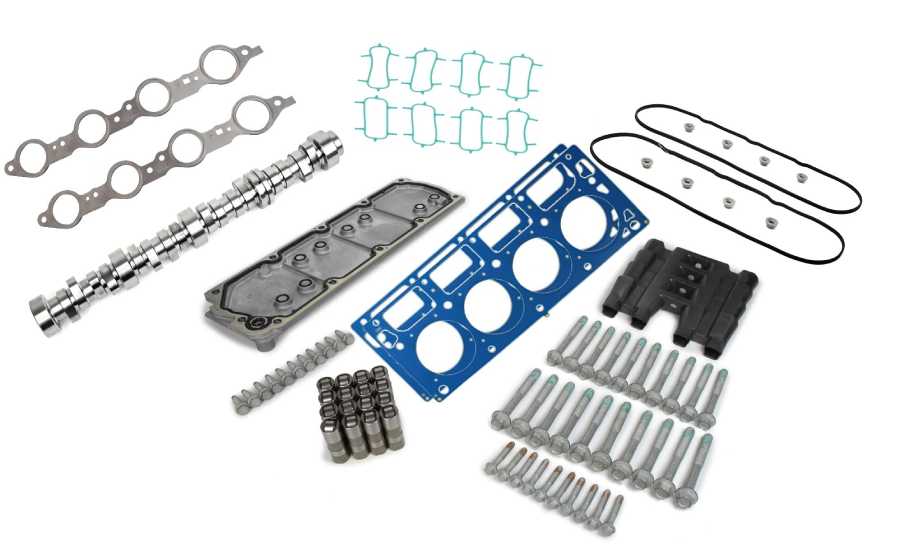
An AFM DOD delete is a mechanical modification that permanently removes the cylinder-deactivation hardware from compatible General Motors V8 engines. The modification replaces AFM-specific valvetrain components with conventional non-AFM parts and requires compatible engine control module (ECM) calibration. Once completed, the engine operates without the factory AFM cylinder-deactivation function.
Active Fuel Management, also called Displacement on Demand, is GM’s fuel-saving technology that allows certain V8 engines to operate on four cylinders under light engine loads. The system uses special hydraulic lifters, electronically controlled oil passages, and engine management software to deactivate selected cylinders. When additional power is required, the ECM restores normal eight-cylinder operation.
An AFM delete eliminates this switching mechanism by replacing the specialized AFM lifters with conventional lifters that do not collapse for cylinder deactivation. Depending on the engine configuration, the modification also involves a compatible camshaft, lifter trays, valley cover components, gaskets, and other related parts. The ECM calibration must then be updated to match the modified valvetrain and prevent AFM activation commands.
The primary purpose of an AFM DOD delete is to eliminate the original AFM-specific lifter mechanism, which is associated with certain valvetrain failures. However, removing AFM does not prevent every type of lifter failure, camshaft wear, or engine damage. The modification also removes the fuel-saving functionality provided by factory cylinder deactivation.
What Is the Difference Between AFM Delete and AFM Disable?
The main difference between an AFM delete and an AFM disable is whether the engine’s mechanical components are replaced. An AFM delete removes the specialized cylinder-deactivation hardware, while an AFM disable electronically prevents the system from activating without changing the original valvetrain.
An AFM delete requires mechanical engine work, including replacing AFM lifters with non-AFM lifters and installing other compatible components. This approach removes the original cylinder-deactivation mechanism and requires an appropriate ECM calibration. Because the procedure involves substantial engine disassembly, it generally requires more labor and higher upfront costs than electronic disabling.
An AFM disable uses an electronic device or an ECM calibration change to keep the engine operating in eight-cylinder mode. Plug-in AFM disablers are available for certain GM vehicles, while compatible tuning tools can modify cylinder-deactivation settings directly. These methods retain the original AFM lifters, camshaft, and related hardware, meaning existing mechanical wear or damage remains uncorrected.
The distinction is particularly important when addressing AFM lifter problems. Electronic disabling prevents commanded cylinder deactivation but does not repair a collapsed lifter or remove the AFM-specific lifter design. A mechanical delete replaces those components, making it a different repair strategy rather than simply another way to switch off AFM.
| Feature | AFM Delete | AFM Disable |
|---|---|---|
| Method | Mechanical modification | Electronic deactivation |
| AFM lifters | Replaced with non-AFM lifters | Retained |
| Camshaft replacement | Depends on engine and parts compatibility | Not required |
| Engine disassembly | Required | Not required |
| ECM calibration | Required | Depends on disabling method |
| Cylinder deactivation | Eliminated | Prevented while disabling remains active |
| Existing lifter damage | Can be addressed during mechanical repair | Not repaired |
| Installation cost | Generally higher | Generally lower |
An AFM delete is the more comprehensive mechanical solution when the objective is to remove AFM-specific valvetrain components. An AFM disable is the less invasive option for preventing cylinder deactivation while retaining the original hardware. Neither approach guarantees freedom from future engine problems, and modifications must be evaluated for vehicle compatibility and applicable emissions requirements.
Why Do GM Owners Delete AFM DOD?
GM owners delete AFM DOD primarily to eliminate AFM-specific lifters, address valvetrain failures, and reduce the risk of recurring cylinder-deactivation hardware problems. The modification is particularly relevant to owners of AFM-equipped Chevrolet Silverado, GMC Sierra, Chevrolet Tahoe, and other compatible GM V8 vehicles experiencing lifter-related issues.
AFM relies on specialized hydraulic lifters that collapse and reactivate in response to engine oil pressure controlled by the valve lifter oil manifold (VLOM). During cylinder deactivation, these lifters prevent selected intake and exhaust valves from opening while the engine continues rotating. This additional mechanical complexity introduces failure points that conventional non-AFM lifters do not have.
A collapsed or stuck AFM lifter can prevent a valve from operating correctly, causing engine misfires, ticking noises, rough idling, and reduced performance. In severe cases, a damaged lifter can also contribute to camshaft lobe wear, increasing repair costs. However, these symptoms are not exclusive to AFM failures and require proper diagnosis before replacing engine components.
Owners considering major valvetrain repairs sometimes choose an AFM delete instead of reinstalling the original cylinder-deactivation hardware. Replacing the AFM lifters with compatible conventional lifters removes the specialized collapsing mechanism. The modification does not eliminate other causes of engine damage, including lubrication problems, incorrect installation, or wear affecting conventional valvetrain components.
The decision also depends on engine condition, repair expenses, vehicle usage, and emissions requirements. For an engine with confirmed AFM lifter damage, a mechanical delete may be considered during an extensive repair. For a properly functioning engine, the cost and potential disadvantages of modifying the factory system require separate evaluation.
What Parts Are Needed for an AFM DOD Delete?
An AFM DOD delete typically requires non-AFM lifters, compatible lifter trays, a suitable camshaft configuration, replacement gaskets, and components that address the original AFM oil-control system. The exact parts depend on the engine generation, existing camshaft, cylinder-head configuration, and selected delete kit.
Common components include:
| Component | Function in an AFM Delete |
|---|---|
| Non-AFM lifters | Replace the collapsible AFM lifters with conventional lifters |
| Lifter trays | Position and retain the replacement lifters |
| Camshaft | Provides valve timing compatible with the selected non-AFM lifters |
| Valley cover or VLOM replacement | Addresses the original AFM oil-control hardware |
| Cylinder head gaskets | Restore sealing after cylinder-head removal |
| Cylinder head bolts | Replace torque-to-yield fasteners where specified |
| Timing cover and related seals | Restore sealing where components are disturbed during disassembly |
| ECM calibration | Prevents AFM operation and matches the modified engine configuration |
Not every delete kit includes all required components. Some kits provide only the primary valvetrain parts, while others include gaskets, bolts, and additional installation hardware. Engine identification and manufacturer specifications must be verified before selecting parts.
Do You Need to Replace the AFM Lifters?
Yes, replacing the AFM lifters with compatible non-AFM lifters is a fundamental requirement of a complete mechanical AFM delete. Simply disabling cylinder deactivation through the ECM leaves the original AFM lifters installed and does not remove their specialized internal mechanism.
AFM lifters use an internal locking mechanism that allows them to collapse during commanded cylinder deactivation. Conventional non-AFM lifters do not perform this function. Replacing the AFM lifters removes the mechanical components responsible for interrupting valve operation during four-cylinder mode.
On many GM AFM-equipped V8 engines, eight cylinders contain a total of 16 hydraulic roller lifters, with eight AFM-specific lifters serving the four cylinders selected for deactivation. A mechanical delete commonly replaces all 16 lifters with a matched non-AFM set to maintain consistent valvetrain operation and compatibility.
Lifter replacement generally requires removing the cylinder heads to access the lifters and their retaining trays. During disassembly, technicians should inspect the camshaft lobes, pushrods, lifter bores, and related components for wear or damage. Installing new lifters without addressing a damaged camshaft or underlying lubrication problem can result in continued valvetrain failure.
Do You Need a New Camshaft for an AFM Delete?
A new camshaft is commonly included in an AFM delete, but whether replacement is mechanically necessary depends on the specific GM engine and the compatibility of the existing camshaft with the replacement lifters. A complete delete must use a camshaft and lifter combination approved for the engine configuration.
Many AFM delete kits include a non-AFM camshaft designed to operate with conventional hydraulic roller lifters. These kits provide a matched valvetrain configuration and may also replace a worn or damaged factory camshaft. However, a non-AFM camshaft is not automatically required solely because the original engine uses AFM; the existing camshaft’s condition and compatibility must be established.
Camshaft selection also affects valve lift, duration, valve timing, and engine operating characteristics. A replacement camshaft with specifications different from the factory profile may require compatible valve springs, pushrods, or other valvetrain components. More aggressive camshaft profiles can change idle quality, torque delivery, and tuning requirements.
For example, an owner repairing a 5.3L GM V8 with a damaged camshaft lobe may select a complete AFM delete kit containing a replacement camshaft and conventional lifters. An engine with an undamaged, compatible factory camshaft may have different parts requirements. In either case, camshaft compatibility must be confirmed using the engine code, model year, and parts manufacturer’s specifications.
Beyond lifters and the camshaft, the AFM oil-control system must be addressed. On engines equipped with a VLOM, the mechanical conversion typically involves installing an appropriate non-AFM valley cover or another manufacturer-approved solution. The ECM calibration must also be updated to prevent cylinder-deactivation commands.
A successful AFM delete depends on component compatibility, correct installation, and appropriate calibration rather than the number of parts included in a kit. Using an incomplete or incompatible combination can cause oil-control problems, incorrect valve operation, diagnostic trouble codes, or additional engine damage.
How Is an AFM DOD Delete Performed?
An AFM DOD delete is performed by removing the engine’s AFM-specific valvetrain components, installing compatible non-AFM parts, and updating the engine control module calibration. The procedure involves substantial engine disassembly and requires correct mechanical installation, component compatibility, and engine management adjustments.
The process begins with identifying the engine’s exact configuration and inspecting its mechanical condition. Technicians must confirm the engine code, model year, existing AFM hardware, and any valvetrain damage before selecting replacement components. For example, an AFM-equipped 5.3L Vortec engine and a newer GM 6.2L engine may require different parts and installation procedures.
The main stages of a mechanical AFM delete include:
- Prepare the engine. Disconnect the battery, drain the necessary fluids, and remove components obstructing access to the cylinder heads, intake manifold, and valvetrain.
- Remove the AFM components. Disassemble the required engine components, remove the original AFM lifters and lifter trays, and inspect the camshaft, pushrods, and related hardware for damage.
- Install compatible non-AFM parts. Fit the replacement lifters, lifter trays, and any required camshaft or oil-control components according to the engine manufacturer’s specifications.
- Reassemble the engine. Install the required gaskets, seals, fasteners, and removed engine components while following the specified tightening sequences and torque procedures.
- Update and verify engine operation. Apply the appropriate ECM calibration, check for diagnostic trouble codes, verify oil pressure, and confirm correct valvetrain operation.
The installation requires specialized automotive tools, including torque wrenches, appropriate engine timing tools, and equipment for accessing and inspecting internal engine components. Incorrect valve timing, improper fastener installation, or incompatible lifters can cause serious engine damage. For this reason, the procedure is best handled by technicians experienced with the specific GM engine family.
Does an AFM Delete Require ECU Tuning?
Yes, a complete mechanical AFM delete requires an appropriate engine control module calibration to prevent the ECM from commanding cylinder deactivation after the AFM hardware has been removed. The calibration must also remain compatible with the engine’s final mechanical configuration.
In an unmodified AFM-equipped engine, the ECM controls cylinder deactivation based on operating conditions such as engine load, throttle demand, and temperature. It coordinates the AFM oil-control system with fuel injection and ignition operation. Once the specialized AFM lifters and related hardware are removed, the original cylinder-deactivation strategy is no longer appropriate.
ECM tuning prevents the engine management system from attempting to activate the removed AFM mechanism. Depending on the engine and replacement parts, additional calibration changes may be required to accommodate a different camshaft profile, idle characteristics, or airflow behavior. Compatible tuning platforms, including certain HP Tuners applications, provide calibration access for supported GM vehicles.
An incorrect calibration can produce diagnostic trouble codes, unstable idle, drivability problems, or improper engine operation. Calibration changes must also comply with applicable emissions regulations. Removing diagnostic functions or defeating emissions-related controls is not an acceptable substitute for a compliant engine calibration.
What Are the Benefits of an AFM DOD Delete?
The main benefits of an AFM DOD delete are eliminating AFM-specific lifter mechanisms, removing cylinder-deactivation transitions, and allowing the installation of a compatible conventional valvetrain. These benefits primarily concern mechanical configuration and operating consistency rather than guaranteed improvements in horsepower or fuel economy.
A mechanical delete removes the specialized lifters responsible for deactivating selected cylinders. Conventional hydraulic roller lifters do not contain the same AFM-specific collapsing mechanism, eliminating that particular failure mode. This is especially relevant when an engine already requires extensive valvetrain repairs because of a confirmed AFM lifter problem.
Another benefit is continuous eight-cylinder operation. Without AFM, the engine no longer switches between four-cylinder and eight-cylinder modes during normal driving. This eliminates the operating transitions associated with factory cylinder deactivation, although the actual effect on perceived smoothness depends on the vehicle’s original calibration, exhaust system, and overall mechanical condition.
An AFM delete can also support a broader engine rebuild or performance modification. Owners replacing a damaged camshaft may choose a compatible non-AFM camshaft and conventional lifter combination. However, performance changes depend on the specifications of the replacement components and the quality of the calibration, not simply on removing AFM.
Does an AFM Delete Improve Engine Reliability?
An AFM delete eliminates AFM-specific lifter failure mechanisms, but it does not guarantee improved overall engine reliability. Its reliability benefit comes from removing the specialized cylinder-deactivation components rather than preventing every possible form of valvetrain damage.
AFM lifters contain internal mechanisms that allow them to collapse when cylinder deactivation is commanded. Failures involving these mechanisms can interfere with valve operation and contribute to misfires or mechanical damage. Replacing them with conventional non-AFM lifters removes the original collapsing mechanism from the engine.
For example, a GM 5.3L V8 experiencing a confirmed collapsed AFM lifter may require cylinder-head removal and lifter replacement. During that repair, installing a compatible non-AFM valvetrain removes the AFM-specific hardware associated with the original failure. The repair must still address any camshaft damage, oil contamination, or lubrication problems discovered during inspection.
Conventional lifters can also fail because of insufficient lubrication, manufacturing defects, incorrect installation, or component wear. A mechanical delete does not protect the engine from these problems. Furthermore, reliable comparative data establishing a specific increase in engine lifespan after AFM deletion is limited.
The strongest reliability argument for an AFM delete is therefore the elimination of a known mechanical failure mechanism, not a measurable guarantee that the modified engine will last longer.
Does an AFM Delete Increase Horsepower?
An AFM DOD delete does not inherently increase an engine’s peak horsepower because a properly functioning AFM-equipped V8 already operates on all eight cylinders when maximum power is required. Any meaningful horsepower increase generally comes from additional modifications, such as a different camshaft, supporting valvetrain components, and appropriate engine calibration.
AFM primarily improves fuel economy by deactivating selected cylinders during low-load operation. Under higher engine loads, the system restores normal eight-cylinder operation. Removing AFM therefore does not unlock four permanently inactive cylinders or automatically increase the engine’s maximum power output.
Horsepower changes become possible when an AFM delete is combined with performance-oriented hardware. For example, a replacement camshaft with increased valve lift or different duration can change airflow through the engine and influence power production. The results depend on camshaft specifications, cylinder-head airflow, intake and exhaust restrictions, engine displacement, and calibration.
A stock-profile non-AFM camshaft installed as part of a reliability-focused repair may produce little or no meaningful peak horsepower improvement. In contrast, a performance camshaft can alter the engine’s power curve, potentially improving output at certain engine speeds while sacrificing low-speed torque or idle quality.
Owners considering an AFM delete solely for horsepower gains should distinguish the effects of cylinder-deactivation removal from those of a performance camshaft upgrade. Accurate power claims require controlled dynamometer testing of the specific engine configuration before and after modification.
What Are the Risks and Disadvantages of an AFM DOD Delete?
The main disadvantages of an AFM DOD delete are reduced fuel-saving capability, high installation costs, potential engine damage from improper modifications, and emissions or warranty complications. Removing the factory cylinder-deactivation system changes how the engine operates and introduces mechanical and financial considerations that owners should evaluate before proceeding.
An AFM delete permanently removes the engine’s ability to deactivate selected cylinders during light-load operation. Although this eliminates the AFM-specific lifter mechanism, it also removes a technology designed to reduce fuel consumption. The resulting fuel economy change depends on driving conditions, engine configuration, and the calibration used after modification.
Mechanical installation introduces another risk. An AFM delete involves internal engine components that require precise alignment, correct lubrication, and manufacturer-specified installation procedures. Incompatible lifters, incorrect camshaft timing, improper valve spring selection, or inadequate ECM calibration can cause poor engine performance and premature component failure.
Legal and warranty considerations are equally important. Modifying a factory engine management system can affect emissions compliance, particularly when the changes alter certified engine operation or disable emissions-related monitoring. In the United States, modifications that constitute emissions tampering may violate federal or state regulations. Warranty coverage can also be affected when a modification causes or contributes to a covered component’s failure.
Does an AFM Delete Reduce Fuel Economy?
An AFM delete can reduce fuel economy because it eliminates the engine’s ability to operate in four-cylinder mode during suitable low-load driving conditions. The size of the reduction depends on how frequently the original AFM system would have activated during normal vehicle operation.
GM designed Active Fuel Management to reduce fuel consumption by temporarily deactivating four cylinders when full engine power is unnecessary. During steady highway cruising or other light-load conditions, the system reduces pumping losses by allowing the remaining active cylinders to operate at a higher relative load. When acceleration or additional torque is required, the engine returns to eight-cylinder operation.
After an AFM delete, all eight cylinders remain active regardless of engine load. This removes the fuel-saving opportunity associated with cylinder deactivation. The effect is generally more relevant during driving conditions that previously allowed frequent AFM activation than during heavy acceleration, towing, or other high-load operation.
For example, a Chevrolet Silverado used primarily for steady highway commuting may experience a different fuel economy change from a similar truck regularly towing heavy trailers. The commuting vehicle provides more opportunities for factory cylinder deactivation, while the towing vehicle spends more time operating under loads that already require eight-cylinder operation.
There is no single reliable MPG reduction that applies to every AFM delete. Vehicle weight, axle ratio, tire size, driving speed, engine condition, and ECM calibration all influence fuel consumption. Owners seeking an accurate comparison should measure fuel use under similar driving conditions before and after modification.
Can an AFM Delete Cause Engine Problems?
An improperly performed AFM delete can cause engine problems, including valvetrain noise, misfires, oil leaks, unstable idle, and premature component wear. These problems generally result from incompatible parts, incorrect mechanical installation, existing engine damage, or unsuitable ECM calibration rather than the absence of AFM itself.
Valvetrain compatibility is a major concern. Hydraulic roller lifters must operate correctly with the camshaft, pushrods, rocker arms, and valve springs. Incorrect pushrod length or improper valvetrain geometry can affect valve operation and accelerate wear. A camshaft installed with incorrect timing can also reduce performance or cause serious mechanical damage.
Lubrication problems present another risk. The original AFM system uses controlled oil pressure to operate its specialized lifters. A mechanical delete must address the engine’s AFM oil-control components using parts appropriate for that specific engine. Incorrect oil passage configurations or improper sealing can interfere with oil management and contribute to component damage.
For example, installing a replacement camshaft without verifying valve spring compatibility can create excessive spring loading or insufficient clearance. Similarly, replacing damaged lifters without inspecting worn camshaft lobes can leave the underlying mechanical problem unresolved.
Engine calibration errors can introduce additional complications. A modified engine may develop rough idle, diagnostic trouble codes, or drivability issues when its calibration does not match the installed hardware. Proper inspection, compatible replacement parts, and post-installation testing are essential to reducing these risks.
How Much Does an AFM DOD Delete Cost?
The total cost of an AFM DOD delete depends on the replacement parts, engine configuration, labor requirements, ECM calibration, and existing engine damage. A complete mechanical delete is substantially more involved than electronic AFM disabling because it requires internal engine work rather than simply changing the cylinder-deactivation control strategy.
The overall expense consists of three primary categories: replacement components, installation labor, and engine calibration. Additional costs arise when technicians discover damaged camshaft lobes, worn pushrods, contaminated oil passages, or other problems during disassembly.
Labor is often a significant part of the total expense because technicians must access components located inside the engine. On many GM V8 applications, this involves removing the intake manifold, cylinder heads, and related valvetrain hardware. A camshaft replacement can require additional front-engine disassembly, increasing the time needed to complete the repair.
The following table summarizes the main cost components without assigning a universal price to parts or labor that vary by vehicle and supplier.
| Cost Component | What Affects the Cost |
|---|---|
| Non-AFM lifters and trays | Engine compatibility, manufacturer, and component quality |
| Replacement camshaft | Factory-style or performance specifications |
| Valley cover and oil-control parts | Engine generation and required AFM hardware changes |
| Gaskets, seals, and bolts | Components removed during engine disassembly |
| Installation labor | Vehicle layout, repair complexity, and workshop hourly rate |
| ECM calibration | Supported tuning platform and calibration requirements |
| Additional repairs | Existing camshaft damage, worn valvetrain parts, or lubrication problems |
Owners should obtain an itemized estimate based on the exact engine code and vehicle configuration. A low-priced kit does not necessarily represent a lower total repair cost when essential installation components or calibration services are excluded.
How Much Does an AFM Delete Kit Cost?
An AFM delete kit’s price depends primarily on its component coverage, engine compatibility, and whether it includes a replacement camshaft. Kits containing only essential conversion parts generally cost less than comprehensive packages with a matched camshaft, lifters, gaskets, bolts, and supporting hardware.
Basic kits may include conventional lifters, lifter trays, and components needed to address the original AFM oil-control system. More complete packages can include a compatible camshaft, timing components, cylinder-head gaskets, and replacement fasteners. Performance-oriented kits may cost more because they use upgraded camshafts or additional valvetrain components.
For example, an owner repairing a GM 5.3L V8 with a damaged camshaft needs to account for both lifter replacement and camshaft replacement. Purchasing a kit without a camshaft may initially appear less expensive, but the missing component must still be purchased separately. The same principle applies to gaskets, head bolts, and other installation hardware.
Kit prices should therefore be compared using a complete parts list rather than the advertised package price alone. Exact prices require checking current supplier listings for the specific engine application.
Installation labor must also be considered separately. Workshop rates vary by location, and the required labor depends on the vehicle’s engine layout and the extent of disassembly. A repair involving existing camshaft damage or additional valvetrain problems will generally require more work than a conversion performed on an otherwise undamaged engine.
An AFM delete is not automatically cheaper than repairing the original AFM system. Replacing failed AFM lifters while retaining the factory configuration may require fewer conversion-specific components, while a mechanical delete adds parts and calibration requirements. However, when extensive engine disassembly and camshaft replacement are already necessary, the difference between the two repair strategies may become smaller.
The most useful cost comparison is an itemized estimate for both options on the same vehicle. Each estimate should account for required parts, labor, calibration, additional repairs, and applicable emissions requirements. This allows owners to evaluate the upfront expense against the specific mechanical problems they are trying to resolve.
Which GM Engines Are Compatible With an AFM DOD Delete?
AFM DOD delete kits are compatible with specific General Motors V8 engines equipped with Active Fuel Management, particularly certain 5.3L, 6.0L, and 6.2L engine configurations. Compatibility depends on the engine code, model year, valvetrain design, and factory cylinder-deactivation system rather than engine displacement alone.
GM introduced AFM across several generations of small-block V8 engines used in Chevrolet, GMC, and Cadillac vehicles. Common applications include certain Chevrolet Silverado, GMC Sierra, Chevrolet Tahoe, Chevrolet Suburban, GMC Yukon, and Cadillac Escalade models. However, not every engine offered in these vehicles uses AFM, and different engine generations require different replacement components.
For example, the 5.3L LC9 and 6.2L L94 belong to GM’s Gen IV small-block engine family, while the 5.3L L83 and 6.2L L86 belong to the newer Gen V EcoTec3 family. Although these engines use cylinder-deactivation technology, their mechanical designs and supporting components differ. An AFM delete kit designed for a Gen IV engine should not be assumed compatible with a Gen V engine.
The following table identifies examples of GM engines associated with AFM technology.
| Engine Code | Displacement | Engine Family | AFM System |
|---|---|---|---|
| LC9 | 5.3L V8 | Gen IV | AFM |
| LH6 | 5.3L V8 | Gen IV | AFM |
| LMG | 5.3L V8 | Gen IV | AFM |
| L94 | 6.2L V8 | Gen IV | AFM |
| L99 | 6.2L V8 | Gen IV | AFM |
| L83 | 5.3L V8 | Gen V | AFM |
| L86 | 6.2L V8 | Gen V | AFM |
These engine codes are examples rather than a complete compatibility list. Kit selection must be based on the exact engine identification and the manufacturer’s application specifications.
Some newer GM engines use Dynamic Fuel Management (DFM), which differs from traditional AFM. While conventional AFM typically switches between four-cylinder and eight-cylinder operation, DFM supports multiple cylinder-deactivation patterns through a more complex control system. Consequently, AFM and DFM delete procedures are not interchangeable.
Engine compatibility also determines whether a conversion requires additional components, such as a different camshaft, valley cover, oil-control hardware, or supporting valvetrain parts. Owners should verify the engine code and factory equipment before purchasing a delete kit or scheduling installation.
Can You Drive With a Failed AFM Lifter Before Deleting AFM?
Driving with a confirmed failed AFM lifter is not recommended because continued engine operation can worsen valvetrain damage and increase repair costs. A collapsed or stuck lifter can prevent the affected valve from operating correctly, potentially causing persistent misfires, abnormal engine noise, and additional mechanical wear.
AFM lifters use an internal locking mechanism that changes how valve motion is transmitted during cylinder deactivation. When this mechanism fails, a lifter may remain collapsed or become mechanically stuck. The affected cylinder can lose normal valve operation, disrupting combustion and reducing engine performance.
Common warning signs include ticking or tapping noises from the engine, rough idling, reduced power, and an illuminated check-engine light. A failed lifter can also trigger cylinder-specific misfire diagnostic trouble codes, such as P0301 or P0307, depending on the affected cylinder. However, these codes identify misfires rather than confirming lifter failure, so additional diagnostic testing is necessary.
Continued driving can allow a damaged lifter to affect the corresponding camshaft lobe or other valvetrain components. Persistent misfires can also send unburned fuel into the exhaust system, potentially overheating and damaging the catalytic converter. The severity depends on the failure mode and how long the engine continues operating.
For example, a Chevrolet Silverado with a persistent ticking noise, severe misfire, and noticeable power loss should be inspected before further use. Continuing to drive under these conditions risks turning a localized valvetrain repair into a more extensive engine repair.
A flashing check-engine light, severe engine knocking, or significant power loss warrants stopping in a safe location and arranging professional assistance rather than continuing to drive. An illuminated oil-pressure warning requires shutting off the engine as soon as it is safe to do so.
An AFM delete should only be considered after diagnosing the underlying mechanical problem. Replacing AFM components without inspecting the camshaft, lubrication system, and associated valvetrain parts can leave existing damage unresolved. The appropriate repair depends on the confirmed failure, engine condition, and applicable emissions requirements.
Read more: Collapsed AFM Lifter: Symptoms, Causes & Fixes
Can You Delete AFM DOD Without Replacing the Camshaft?
An AFM DOD delete can be performed without replacing the camshaft on certain GM engines, provided the existing camshaft is undamaged and compatible with the selected non-AFM lifters. However, camshaft replacement is necessary when the original component is damaged or the conversion kit requires a different camshaft configuration.
The requirement depends on the engine’s valvetrain design and the mechanical components used in the conversion. Some factory AFM camshafts can operate with compatible conventional hydraulic roller lifters, allowing the original camshaft to remain installed. Other configurations require a replacement camshaft to achieve the correct valve operation, lifter compatibility, or intended performance characteristics.
For example, an AFM-equipped GM 5.3L V8 with an undamaged factory camshaft may be eligible for a camshaft-retaining conversion when the parts manufacturer specifically supports that configuration. However, an engine with a collapsed AFM lifter that has damaged a camshaft lobe requires additional repair. Installing new non-AFM lifters against a worn or damaged camshaft does not correct the underlying mechanical defect.
Camshaft condition must be evaluated during engine disassembly. Technicians should inspect the lobes for abnormal wear, scoring, or surface damage and verify compatibility with the replacement lifters. Related components, including pushrods, rocker arms, and valve springs, must also be checked to ensure correct valvetrain geometry and operation.
Electronic AFM disabling provides another option for owners who want to prevent cylinder deactivation without opening the engine. A compatible disabler or ECM calibration change can keep the engine operating in eight-cylinder mode while retaining the original camshaft and AFM lifters. However, this method does not constitute a complete mechanical delete and does not repair existing lifter damage.
The decision to retain or replace the camshaft should therefore be based on the engine code, component condition, and documented compatibility of the selected conversion parts. Avoiding unnecessary camshaft replacement can reduce parts costs, but retaining an incompatible or damaged camshaft increases the risk of additional engine problems.
Is an AFM DOD Delete Worth It?
An AFM DOD delete may be worth considering when a compatible GM engine already requires extensive AFM-related valvetrain repairs, but it is not automatically the best option for every vehicle. The decision depends on the engine’s mechanical condition, total repair cost, expected vehicle ownership period, fuel economy priorities, and applicable emissions requirements.
The strongest case for considering an AFM delete is an engine with confirmed AFM lifter failure that requires significant disassembly. When cylinder-head removal, lifter replacement, and possibly camshaft replacement are already necessary, the additional mechanical work involved in a compatible non-AFM conversion may be relatively limited. Removing the AFM-specific lifter mechanism also eliminates that particular source of future mechanical failure.
However, an AFM delete does not guarantee a longer engine lifespan. Conventional hydraulic lifters, camshafts, oil pumps, and other internal components remain subject to wear and mechanical failure. The quality of the replacement parts, installation procedures, lubrication system, and engine calibration continues to determine the reliability of the modified engine.
For a properly functioning GM V8 with no diagnosed AFM problems, a preventive mechanical delete presents a different financial calculation. The owner must pay for extensive engine work despite having no confirmed mechanical defect. The modification also removes factory cylinder-deactivation functionality, potentially increases fuel consumption, and can create emissions or warranty complications.
Owners should evaluate the following factors before deciding:
| Decision Factor | When an AFM Delete May Be Considered | When Retaining AFM May Be Preferable |
|---|---|---|
| Engine condition | Confirmed AFM lifter failure requiring major repair | Engine operates normally without diagnosed valvetrain damage |
| Repair requirements | Cylinder-head removal and extensive valvetrain work already necessary | No internal engine repairs currently required |
| Mechanical objectives | Eliminate AFM-specific lifter hardware | Preserve the original factory configuration |
| Fuel economy | Willing to accept possible increased fuel consumption | Prioritizes factory fuel-saving functionality |
| Vehicle ownership | Plans to retain the vehicle long enough to justify major repair expenses | Plans to sell the vehicle soon |
| Emissions compliance | A compliant conversion is available and verified | Modification would violate applicable requirements |
| Warranty considerations | Vehicle is outside relevant coverage or implications have been evaluated | Existing warranty protection is an important priority |
A complete cost comparison should include parts, installation labor, ECM calibration, and repairs required to correct existing damage. Owners should request separate estimates for restoring the original AFM system and performing a compatible mechanical conversion. The lower-cost option is not necessarily the better long-term choice if it leaves damaged components unaddressed.
Emissions compliance is a critical limitation. In the United States, engine modifications that defeat or render emissions-related systems inoperative can violate federal law, and state inspection requirements may impose additional restrictions. Owners should confirm whether the proposed modification is legal for their specific vehicle and intended road use before purchasing parts or authorizing installation.
For example, an older Chevrolet Silverado with confirmed AFM lifter and camshaft damage may present a reasonable opportunity to evaluate a non-AFM conversion alongside a factory-style repair. In contrast, a newer GMC Sierra with a functioning engine, remaining warranty coverage, and strict emissions requirements may be better served by retaining its original system.
Ultimately, an AFM DOD delete is most defensible as a carefully evaluated mechanical repair strategy rather than a universal preventive upgrade. It removes AFM-specific cylinder-deactivation hardware but introduces costs, compatibility requirements, and potential legal consequences. The best decision follows a confirmed diagnosis, a complete repair estimate, and verification that the proposed work complies with applicable regulations.