A collapsed AFM lifter is a malfunctioning hydraulic valve lifter in a General Motors (GM) engine equipped with Active Fuel Management (AFM). The failure occurs when the lifter’s internal locking mechanism cannot maintain normal operation, preventing the camshaft from transferring the intended movement to the engine valve. This can cause cylinder misfires, ticking noises, rough idling, and reduced engine performance.
The most common warning signs of a collapsed AFM lifter include repetitive engine ticking, a persistent cylinder misfire, a check engine light, and noticeable power loss. These symptoms occur because the affected intake or exhaust valve may not open correctly, disrupting airflow and combustion inside the cylinder. However, similar symptoms can result from faulty ignition coils, damaged pushrods, or worn camshaft lobes, making mechanical diagnosis necessary before replacing parts.
Fixing a mechanically collapsed AFM lifter generally requires replacing the damaged lifter and inspecting related valvetrain components. Continuing to drive with the failure can increase the risk of additional engine damage, particularly when the lifter roller or camshaft is deteriorating. This guide explains the causes and symptoms of AFM lifter collapse, how to confirm the failure, whether the vehicle is safe to drive, and the repair options and costs involved.
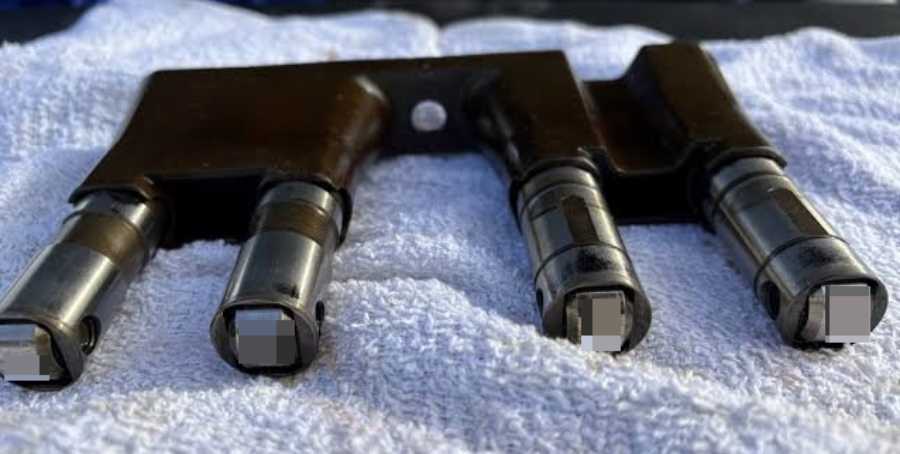
What Is a Collapsed AFM Lifter?
A collapsed AFM lifter is a hydraulic valve lifter that fails to maintain its locked operating position, preventing the affected engine valve from opening normally. Active Fuel Management (AFM) is a cylinder-deactivation system used in certain General Motors V8 engines to improve fuel efficiency by temporarily disabling selected cylinders under light engine loads.
An AFM lifter contains an internal locking mechanism that allows it to switch between normal valve operation and cylinder deactivation. During eight-cylinder operation, locking pins connect the lifter’s inner and outer components, allowing camshaft movement to travel through the pushrod and rocker arm to open the engine valve. When AFM deactivates a cylinder, engine oil pressure controls the locking mechanism, allowing the lifter to absorb camshaft movement while keeping the corresponding valve closed.
A collapsed AFM lifter occurs when the mechanism fails to return to or remain in its normal locked position. As the camshaft rotates, the lifter compresses internally instead of transferring the required movement to the pushrod. Consequently, the intake or exhaust valve may remain closed or open less than intended, interfering with cylinder airflow and combustion. This mechanical failure can produce engine misfires, abnormal valvetrain noise, and reduced power.
A collapsed AFM lifter differs from an ordinary hydraulic lifter that temporarily loses oil pressure or develops excessive internal clearance. Although both conditions can produce ticking noises, an AFM lifter may fail because its cylinder-deactivation locking mechanism becomes stuck, worn, or damaged. Identifying the specific failure is essential because a mechanically damaged AFM lifter generally requires replacement rather than an oil change or additive treatment.
What Are the Symptoms of a Collapsed AFM Lifter?
The five primary symptoms of a collapsed AFM lifter are engine ticking, cylinder misfires, rough idle, reduced engine power, and an illuminated check engine light. These symptoms develop when the affected lifter cannot transfer normal camshaft movement to the engine valve, disrupting the cylinder’s ability to operate correctly.
1. Engine ticking or tapping noise. A collapsed AFM lifter can produce a repetitive metallic ticking sound from the valvetrain, particularly near the affected cylinder bank. The noise occurs when abnormal clearance or movement develops between valvetrain components. It may become more noticeable as engine speed increases because the camshaft and associated components operate more frequently. However, exhaust leaks, other hydraulic lifter problems, and damaged rocker arms can produce similar noises.
2. Cylinder misfires. A collapsed AFM lifter can cause repeated misfires because the affected intake or exhaust valve does not achieve its intended lift. Insufficient intake valve movement restricts the air entering the cylinder, while abnormal exhaust valve movement interferes with the removal of combustion gases. The engine control module may detect irregular crankshaft acceleration and record a cylinder-specific diagnostic trouble code, such as P0301 or P0304, depending on the affected cylinder.
3. Rough engine idle. A collapsed AFM lifter can make the engine shake or vibrate noticeably while idling. This happens because the affected cylinder contributes less torque than the remaining cylinders, creating uneven engine operation. Drivers may notice vibration through the steering wheel, seat, or vehicle body, especially when the transmission is in Drive and the engine is operating at low speed.
4. Reduced engine power. A collapsed AFM lifter can decrease acceleration and overall engine performance by preventing one cylinder from producing its normal power output. The driver may experience hesitation during acceleration, weak throttle response, or difficulty maintaining performance under load. The severity depends on the affected cylinder, the extent of valve movement loss, and whether additional mechanical damage is present.
5. Illuminated or flashing check engine light. A collapsed AFM lifter can trigger the check engine light when the engine control module detects persistent combustion irregularities. Common diagnostic trouble codes include P0300 for random or multiple-cylinder misfires and P0301–P0308 for misfires associated with individual cylinders. A flashing check engine light indicates a potentially catalyst-damaging misfire and requires immediate attention.
These symptoms do not independently confirm a collapsed AFM lifter. Faulty spark plugs, ignition coils, fuel injectors, damaged pushrods, and worn camshaft lobes can produce overlapping symptoms. A reliable diagnosis requires identifying the affected cylinder, excluding ignition and fuel-delivery faults, and verifying abnormal valvetrain operation before replacing the lifter.
What Causes an AFM Lifter to Collapse?
An AFM lifter collapses when its internal locking mechanism fails to maintain the connection needed for normal valve operation. Four important factors associated with AFM lifter malfunction are locking-pin failure, oil-pressure problems, oil contamination, and mechanical wear. These factors affect different parts of the lifter assembly, and identifying the actual failure mechanism is necessary to determine the appropriate repair.
1. Internal locking-pin failure. AFM lifters use spring-loaded locking pins to connect their inner and outer components during normal cylinder operation. When these pins become stuck, worn, or damaged, the lifter may fail to lock into its extended operating position. The camshaft then moves the lifter’s outer body without transferring the intended motion through the pushrod. Repeated operation with an improperly engaged locking mechanism can worsen component wear and eventually result in persistent valve lift loss.
2. Engine oil-pressure problems. The AFM system relies on controlled oil pressure to operate the lifter’s cylinder-deactivation mechanism. A valve lifter oil manifold assembly (VLOM) regulates oil delivery to the AFM lifters in applicable GM engines. Problems involving oil pressure, oil passages, or control solenoids can interfere with proper lifter switching. However, low engine oil pressure does not automatically mean an AFM lifter has collapsed. Oil-pressure readings and system operation must be checked against the specifications for the particular engine.
3. Oil contamination and deposits. Contaminated engine oil can interfere with the small oil passages and moving components inside an AFM lifter. Sludge, varnish deposits, and suspended debris may restrict oil flow or prevent internal components from moving freely. For example, a sticking locking mechanism may fail to engage or disengage correctly during changes in cylinder-deactivation mode. Oil contamination can contribute to lifter malfunction, although it does not establish that the locking pins are permanently damaged.
4. Mechanical wear and component damage. AFM lifters operate under repeated contact loads from the camshaft and experience continuous movement through the engine’s operating range. Wear or damage to the lifter’s internal components can prevent proper locking, while roller or bearing failure can damage the camshaft lobe. A worn camshaft can also reduce valve lift and produce symptoms resembling a collapsed lifter. Because these failures can occur together, both the lifter and its corresponding camshaft lobe should be inspected when mechanical damage is suspected.
A collapsed AFM lifter should not be attributed to poor maintenance without supporting evidence. Internal component defects, abnormal operating conditions, lubrication faults, and accumulated wear can produce similar outcomes. Determining whether the lifter is sticking, mechanically collapsed, or affected by another valvetrain problem helps prevent unnecessary replacement of otherwise functional components.
How Do You Diagnose a Collapsed AFM Lifter?
Diagnosing a collapsed AFM lifter requires identifying the affected cylinder, ruling out ignition and fuel-delivery problems, and confirming abnormal valve operation. A diagnostic trouble code or ticking noise alone cannot establish that the lifter has failed. The most reliable approach combines electronic diagnosis with mechanical inspection, progressing from accessible tests to component disassembly when necessary.
Which OBD-II Codes Can Indicate an AFM Lifter Problem?
P0300 and cylinder-specific codes P0301 through P0308 are common diagnostic trouble codes associated with engine misfires that may result from AFM lifter failure. These codes indicate combustion irregularities detected by the engine control module, but they do not identify the failed mechanical component.
P0300 indicates random or multiple-cylinder misfires, while P0301 identifies a misfire in cylinder 1, P0304 identifies cylinder 4, and P0308 identifies cylinder 8. On a GM V8 equipped with conventional AFM, the cylinders selected for deactivation are typically 1, 4, 6, and 7. A persistent misfire involving one of these cylinders can justify further investigation of its AFM lifter mechanism, although the engine configuration must be verified first.
An OBD-II scan should include stored and pending trouble codes, freeze-frame information, and available misfire counters. These records help determine whether the misfire occurs during idle, acceleration, or particular operating conditions. For example, repeated misfire counts on cylinder 4 accompanied by valvetrain ticking provide a stronger reason to inspect the cylinder’s valve operation than a misfire code without supporting mechanical symptoms.
Other diagnostic trouble codes may identify related oil-control or cylinder-deactivation problems, depending on the engine and control system. These codes should be interpreted using manufacturer-specific diagnostic information rather than treated as universal indicators of collapsed lifters.
How Can You Rule Out Other Causes of Engine Misfires?
Other causes of engine misfires can be ruled out by checking the ignition system, fuel delivery, and basic mechanical condition before removing the lifters. Spark plugs, ignition coils, fuel injectors, and damaged valvetrain components can create symptoms that closely resemble AFM lifter failure.
Begin by inspecting the spark plug and ignition coil associated with the misfiring cylinder. A worn spark plug, damaged coil, or poor electrical connection can interrupt combustion even when the lifter operates normally. Where the engine design allows, swapping a suspected ignition coil with one from a functioning cylinder provides a useful comparison. If the misfire follows the coil, the ignition component is a more likely cause than a collapsed lifter.
Fuel-delivery problems should also be investigated when ignition components test correctly. A malfunctioning injector can cause insufficient or inconsistent fuel delivery, resulting in rough idle, hesitation, and cylinder-specific misfires. Injector electrical tests and appropriate fuel-system checks help distinguish these problems from mechanical valve operation faults.
A compression test provides additional information about cylinder sealing and mechanical condition. A cylinder with abnormal valve movement may produce an unusual compression reading, depending on which valve is affected and how severely its lift is reduced. However, normal compression does not conclusively rule out an AFM lifter problem because some failures affect valve lift without eliminating cylinder sealing.
A cylinder leak-down test can help identify leakage through intake valves, exhaust valves, piston rings, or the head gasket. It does not directly measure valve lift or prove that a lifter has collapsed. If ignition, fuel delivery, and cylinder sealing checks do not explain a persistent misfire, direct inspection of valvetrain movement becomes the next diagnostic step.
How Do You Confirm a Collapsed AFM Lifter Mechanically?
A collapsed AFM lifter is confirmed by identifying abnormal valve lift or lifter operation and inspecting the affected components for locking-mechanism failure. The inspection procedure depends on the GM engine family, vehicle configuration, and accessibility of the valvetrain.
A technician can begin by removing the appropriate valve cover and inspecting the rocker arms, pushrods, and valve springs. With the engine operated or rotated using an approved service procedure, the technician compares valve movement on the suspected cylinder with the expected movement of a properly functioning cylinder. A rocker arm that moves substantially less than expected may indicate a collapsed lifter, bent pushrod, worn camshaft lobe, or another mechanical defect.
Pushrod inspection is important because a bent pushrod can restrict valve movement without requiring a collapsed lifter. Removing and checking the pushrod for straightness helps eliminate this alternative. Rocker arm condition, valve spring integrity, and abnormal component clearance should also be evaluated before concluding that the lifter itself has failed.
If external inspection indicates a lifter problem, further engine disassembly may be required to access the lifter assembly. The technician can then examine the locking mechanism, lifter body, roller, and contact surfaces for sticking, wear, or physical damage. The corresponding camshaft lobe should be inspected for scoring, abnormal wear, or deterioration that could require additional repair.
The following table summarizes the main diagnostic findings and their interpretations.
| Diagnostic finding | Possible cause | Recommended verification |
|---|---|---|
| Cylinder-specific P0301–P0308 code | Ignition, fuel, or mechanical fault | Inspect ignition components and misfire data |
| Ticking noise with persistent misfire | Lifter or other valvetrain problem | Inspect rocker arm and valve movement |
| Misfire moves after swapping ignition coils | Faulty ignition coil | Verify coil operation |
| Reduced rocker arm movement | Collapsed lifter, bent pushrod, or worn camshaft | Compare valve lift and inspect components |
| Abnormal compression | Valve sealing, piston, or other mechanical fault | Perform compression and leak-down tests |
| Damaged lifter locking mechanism | Mechanical AFM lifter failure | Inspect the removed lifter and related components |
A confirmed diagnosis should identify both the failed component and any resulting damage. Replacing an AFM lifter without inspecting the camshaft, pushrod, and associated valvetrain components can leave the underlying mechanical problem unresolved.
Can You Drive With a Collapsed AFM Lifter?
Driving with a confirmed collapsed AFM lifter is not recommended because continued engine operation can worsen valvetrain damage and expose the catalytic converter to repeated misfires. Although an engine with one malfunctioning lifter may continue running, the affected cylinder cannot operate normally when its intake or exhaust valve fails to achieve the required lift. The severity of the risk depends on the lifter’s failure mode and whether other engine components have already been damaged.
A collapsed AFM lifter can create abnormal movement and loading within the valvetrain. If the lifter’s roller or internal components deteriorate, continued operation can damage the corresponding camshaft lobe and introduce metal debris into the engine oil. A bent pushrod or damaged rocker arm may also require replacement if abnormal valve operation has affected these components. However, camshaft damage is not inevitable with every collapsed AFM lifter, particularly when the failure involves the internal locking mechanism without roller deterioration.
Persistent engine misfires create an additional concern. When a misfire allows unburned fuel to enter the exhaust system, excessive heat can develop inside the catalytic converter and damage its internal substrate. The risk depends on the type and severity of the misfire, since a cylinder with severely restricted valve movement may behave differently from one experiencing an ignition failure.
Stop driving immediately if the check engine light flashes, severe metallic knocking develops, or the engine displays a low oil-pressure warning. These conditions indicate potentially serious problems that require prompt attention. A vehicle with a confirmed collapsed AFM lifter should be transported to a qualified repair facility rather than driven for an extended period. Early diagnosis and repair help limit the possibility of additional component damage and higher repair costs.
How Do You Fix a Collapsed AFM Lifter?
Fixing a mechanically collapsed AFM lifter generally requires replacing the defective lifter and inspecting the associated camshaft, pushrod, and valvetrain components. The repair method depends on whether the lifter is temporarily sticking, has a damaged locking mechanism, or has caused additional mechanical wear. A complete repair must address both the failed component and any underlying oil-control or lubrication problems that contributed to the malfunction.
Can a Collapsed AFM Lifter Be Fixed Without Replacement?
A mechanically damaged AFM lifter cannot be reliably repaired with an oil change, engine additive, or AFM disabler. These measures do not restore broken locking pins, damaged internal components, or worn lifter surfaces. Replacement is the appropriate repair when inspection confirms that the lifter can no longer maintain its normal locked operating position.
An oil change may help address a sticking condition when contaminated oil or deposits interfere with lifter operation, provided the internal components remain mechanically intact. However, this approach should follow an assessment of oil condition, oil pressure, and the manufacturer’s diagnostic procedures. A temporary reduction in ticking noise does not confirm that the locking mechanism is functioning correctly or that mechanical damage has been eliminated.
Engine oil additives marketed as lifter treatments also have important limitations. Products intended to remove deposits or reduce noise cannot rebuild worn locking pins or repair a damaged lifter roller. Using an additive as a substitute for mechanical diagnosis can delay necessary repairs and allow an existing failure to progress.
An electronic AFM disabler is not a mechanical repair. Although it can prevent cylinder-deactivation commands on compatible vehicles, it cannot restore a lifter that has already collapsed or repair a damaged camshaft. If the lifter remains mechanically unlocked, disabling AFM operation will not return normal valve lift.
How Do You Replace a Collapsed AFM Lifter?
Replacing a collapsed AFM lifter involves accessing the affected lifter assembly, removing the defective component, inspecting related engine parts, and installing the correct replacement lifter. The procedure varies by GM engine family and vehicle model. On many GM pushrod V8 engines, lifter replacement requires removing the intake manifold, cylinder head, and other components that obstruct access to the lifter trays.
The repair begins by confirming the affected cylinder and identifying the correct replacement components for the engine. After disconnecting the battery and preparing the engine according to the service manual, the technician removes the necessary intake and valvetrain components. The rocker arms and pushrods are then removed as required to access the cylinder head and lifter assemblies.
Once the lifters are accessible, the technician removes the affected lifter and examines its internal mechanism, roller, and contact surfaces. The corresponding camshaft lobe must also be inspected for scoring, flattening, or abnormal wear. A damaged camshaft requires additional repair because installing a new lifter against a deteriorated camshaft lobe can lead to continued valvetrain problems.
The replacement lifter must match the engine’s original configuration and applicable manufacturer specifications. During reassembly, the technician installs the required lifter guides or trays, gaskets, seals, and other service parts. Fasteners must be tightened using the correct engine-specific torque specifications and tightening sequences. Components that use torque-to-yield fasteners must receive new fasteners where required by the service procedure.
Replacing all AFM lifters is not automatically necessary when one lifter fails. The appropriate replacement scope depends on the condition of the remaining lifters, engine mileage, manufacturer service guidance, and the amount of disassembly already required. Replacing additional worn or suspect lifters during the same repair may reduce the likelihood of repeating labor-intensive disassembly, but serviceable components should not be condemned without a mechanical or procedural justification.
Some owners consider a mechanical AFM-delete conversion instead of installing replacement AFM lifters. This modification generally involves compatible non-AFM lifters and, depending on the engine, additional hardware and engine control module calibration. A proper conversion requires verifying component compatibility and addressing applicable emissions regulations. An electronic AFM disabler alone is not equivalent to a mechanical AFM delete.
After reassembly, the technician should verify oil pressure, check for abnormal valvetrain noise, clear relevant diagnostic trouble codes, and confirm that the engine operates without recurring misfires. The repair is complete only when normal valve operation has been restored and any associated mechanical or oil-control faults have been addressed.
How Much Does It Cost to Fix a Collapsed AFM Lifter?
Repairing a collapsed AFM lifter typically costs $2,500–$4,500 at an independent US repair shop for a one-bank lifter repair on a GM 5.3L V8. More extensive repairs involving all lifters and a damaged camshaft can cost $4,000–$7,500 or more. These are published estimates rather than fixed prices, and the final bill depends on the engine configuration, labor rates, replacement parts, and extent of mechanical damage.
Labor represents a substantial portion of the repair expense because accessing AFM lifters on many GM pushrod V8 engines requires removing the cylinder head and associated components. A repair may involve lifters, lifter guides, gaskets, cylinder-head bolts, fluids, and additional valvetrain parts. Labor rates also vary between independent repair shops and dealerships, making the same mechanical repair more expensive in certain locations.
The following table provides estimated repair costs for GM 5.3L V8 applications in the United States.
| Repair type | Estimated total cost |
|---|---|
| One-bank lifter replacement | $2,500–$4,500 |
| All 16 lifters replaced, camshaft serviceable | $3,500–$5,500 |
| Lifter and camshaft replacement | $4,000–$7,500+ |
| Mechanical AFM-delete conversion | $3,500–$6,000 |
These estimates reflect typical independent-shop repair scenarios and should not be treated as manufacturer-standard pricing. A vehicle-specific estimate is necessary to establish the actual cost.
Camshaft damage is one of the main reasons AFM lifter repair costs increase. When a lifter roller or camshaft lobe shows significant wear, replacing the lifter alone may not restore proper valve operation. Camshaft replacement can require additional disassembly, timing components, gaskets, and labor. Metal debris from component deterioration may also require further inspection of the lubrication system.
Replacing additional lifters during the same repair can increase parts costs while reducing the need for repeated disassembly if another lifter subsequently fails. However, the appropriate replacement scope should follow engine-specific service guidance and inspection results. Owners should request a written estimate identifying the failed components, replacement parts, labor charges, and any recommended additional repairs before authorizing the work.
Which GM Engines Are Affected by AFM Lifter Problems?
AFM lifter problems affect specific General Motors engines equipped with Active Fuel Management, particularly certain 5.3L and 6.2L V8 engines used in Chevrolet, GMC, and Cadillac vehicles. These engines use specialized hydraulic lifters to deactivate selected cylinders during light-load operation. Not every GM V8 contains AFM lifters, and the cylinder-deactivation system varies by engine generation and model year.
The Chevrolet Silverado 1500 and GMC Sierra 1500 are two prominent applications of AFM technology. Certain trucks equipped with the 5.3L L83 or 6.2L L86 EcoTec3 V8 use conventional AFM lifters. The same engine families also appear in selected Chevrolet Tahoe, Chevrolet Suburban, GMC Yukon, and Cadillac Escalade models. Earlier GM Gen IV V8 engines also used AFM, including applications introduced during the 2000s.
The following table identifies several GM engine applications associated with AFM or its successor, Dynamic Fuel Management.
| GM engine | Example vehicle applications | Cylinder-deactivation system |
|---|---|---|
| 5.3L L83 V8 | Silverado, Sierra, Tahoe, Suburban, Yukon | AFM |
| 6.2L L86 V8 | Silverado, Sierra, Yukon, Escalade | AFM |
| 5.3L L82 V8 | Selected Silverado 1500 and Sierra 1500 models | AFM |
| 5.3L L84 V8 | Silverado 1500, Sierra 1500 and selected SUVs | DFM |
| 6.2L L87 V8 | Silverado 1500, Sierra 1500 and selected SUVs | DFM |
AFM and DFM are different cylinder-deactivation systems, although both use specialized lifters to control valve operation. Conventional AFM on many GM V8 engines deactivates four designated cylinders, typically cylinders 1, 4, 6, and 7. Dynamic Fuel Management uses a more flexible control strategy that can deactivate different cylinder combinations according to engine operating conditions.
This distinction matters during diagnosis and repair. Conventional AFM and DFM systems can differ in their oil-control arrangements, lifter configurations, and service procedures. A replacement lifter or AFM-delete kit intended for an older 5.3L L83 engine should not be assumed compatible with a newer 5.3L L84 engine.
Vehicle owners should confirm the engine’s identification code, model year, and cylinder-deactivation system before ordering parts. The vehicle identification number (VIN), manufacturer service information, and engine-specific parts catalogs can establish the correct configuration. These details are more reliable than assuming every Chevrolet Silverado or GMC Sierra with a 5.3L V8 uses the same lifter design.
Read more: Ford F150 Brake Recall: Affected Years & Fixes
Can an AFM Disabler Prevent Lifter Collapse?
An AFM disabler cannot guarantee prevention of AFM lifter collapse because it does not eliminate the lifter’s internal mechanical components or repair existing wear. An electronic AFM disabler prevents cylinder-deactivation commands on compatible GM vehicles, keeping the engine operating in its full-cylinder mode. Although this reduces normal switching between activated and deactivated cylinder states, there is insufficient evidence to establish that an electronic disabler reliably prevents lifter failure.
Conventional Active Fuel Management uses oil-pressure-controlled locking mechanisms inside specialized hydraulic lifters. During cylinder deactivation, the system releases the locking pins in designated lifters, allowing their internal components to move without opening the corresponding valves. An electronic AFM disabler changes the system’s operating commands but leaves the original lifters, locking pins, and associated mechanical components installed. Consequently, internal wear, lubrication problems, and component defects can still cause lifter malfunction.
An AFM disabler also cannot fix an already collapsed lifter. If the locking mechanism is mechanically damaged or remains stuck in an unlocked position, preventing future cylinder-deactivation commands will not restore normal valve lift. The affected cylinder may continue misfiring until the defective lifter or another damaged valvetrain component is repaired.
A mechanical AFM delete is different from an electronic disabler. A complete mechanical conversion generally replaces the original AFM lifters with compatible non-AFM lifters and may require additional engine components and engine control module calibration. The required parts depend on the engine family and specific conversion procedure. Such modifications can also affect emissions compliance, warranty coverage, and vehicle inspection eligibility.
For owners concerned about AFM lifter reliability, an electronic disabler should not be treated as a substitute for maintenance or mechanical diagnosis. Its ability to prevent future lifter failures has not been established by controlled long-term reliability studies, and any modification should be evaluated for compatibility with the vehicle’s engine and applicable regulations.
How Can You Reduce the Risk of AFM Lifter Failure?
The most practical ways to reduce the risk of AFM lifter problems are to maintain the correct engine oil, follow manufacturer service intervals, monitor lubrication-system performance, and investigate abnormal engine symptoms promptly. These practices support hydraulic lifter operation and help identify developing mechanical problems. However, preventive maintenance cannot eliminate every failure associated with internal locking mechanisms or defective components.
1. Use the manufacturer-specified engine oil. AFM lifters depend on properly controlled engine oil pressure and flow for normal operation. Using oil that meets the vehicle manufacturer’s viscosity and performance specifications helps maintain appropriate lubrication and hydraulic-system behavior. GM engines have different oil requirements depending on their generation and application, so owners should verify the correct SAE viscosity and applicable dexos specification in the owner’s manual rather than assuming every AFM-equipped engine uses the same oil.
2. Follow the recommended oil-change interval. Engine oil gradually accumulates contaminants and experiences changes in its operating properties. Regular oil and filter replacement helps control deposits and suspended debris that could interfere with narrow oil passages or moving lifter components. Vehicles exposed to frequent short trips, extended idling, towing, or other severe operating conditions may require maintenance intervals different from those used under normal driving conditions. The manufacturer’s maintenance schedule and oil-life monitoring system should guide service decisions.
3. Maintain proper engine oil levels and investigate pressure problems. Insufficient oil levels or abnormal oil pressure can interfere with lubrication and hydraulic component operation. Owners should check oil levels using the procedure specified for their vehicle and investigate recurring oil-pressure warnings instead of simply adding oil repeatedly. If an oil-pressure problem is suspected, a technician should verify actual pressure against the engine’s service specifications and inspect the relevant lubrication and AFM oil-control components.
4. Investigate unusual valvetrain noises early. Persistent ticking, tapping, or knocking can indicate abnormal operation of a lifter, rocker arm, pushrod, or camshaft component. A brief noise during startup does not automatically establish AFM lifter failure, but repeated or worsening noise deserves inspection. Identifying a malfunction before significant roller or camshaft deterioration develops may reduce the extent of required repairs.
5. Diagnose engine misfires promptly. A persistent cylinder-specific misfire can be an early indication of abnormal valve operation, although ignition and fuel-system faults are also common causes. Retrieving diagnostic trouble codes and checking misfire data helps identify the affected cylinder and determine the next diagnostic steps. A flashing check engine light requires immediate attention because severe misfires can damage the catalytic converter.
Preventive maintenance should also include checking for manufacturer service bulletins and applicable warranty coverage when AFM lifter problems occur. GM has published technical service information addressing valve lifter concerns in certain engine applications, but the appropriate procedures and coverage depend on the vehicle identification number, model year, and engine configuration.
Proper maintenance reduces avoidable lubrication-related risks, while early diagnosis helps limit damage when an AFM lifter begins to malfunction. Neither maintenance nor electronic AFM disabling provides a guaranteed solution to mechanical lifter failure. Owners experiencing persistent ticking, cylinder misfires, or abnormal valve movement should have the engine inspected before additional valvetrain damage develops.