A 5.3 AFM delete programmer is an electronic tuning device that disables Active Fuel Management (AFM) on compatible General Motors 5.3L V8 engines. It prevents the engine from switching between eight-cylinder and four-cylinder operation by modifying Engine Control Module (ECM) settings or electronically overriding AFM activation. However, disabling AFM through a programmer does not physically remove AFM lifters, replace mechanical components, or repair existing engine damage.
GM introduced AFM to reduce fuel consumption by deactivating four cylinders under light engine loads. The system is found in various Chevrolet Silverado, GMC Sierra, Tahoe, Suburban, and Yukon models equipped with AFM-supported 5.3L engines. Although AFM improves fuel efficiency under certain driving conditions, its specialized lifters and oil-control components introduce additional mechanical complexity.
There are three main electronic solutions for disabling AFM: plug-in OBD-II disablers, handheld performance programmers, and professional ECU tuning software. Products such as the Range AFM Disabler, compatible DiabloSport tuners, and HP Tuners offer different levels of functionality, installation complexity, and vehicle support.
Choosing the right AFM programmer requires checking the engine generation, model year, ECM compatibility, and cylinder-deactivation system. This guide explains how these devices work, compares available options, identifies compatibility requirements, and examines installation costs, lifter reliability, fuel economy, and mechanical AFM deletion.
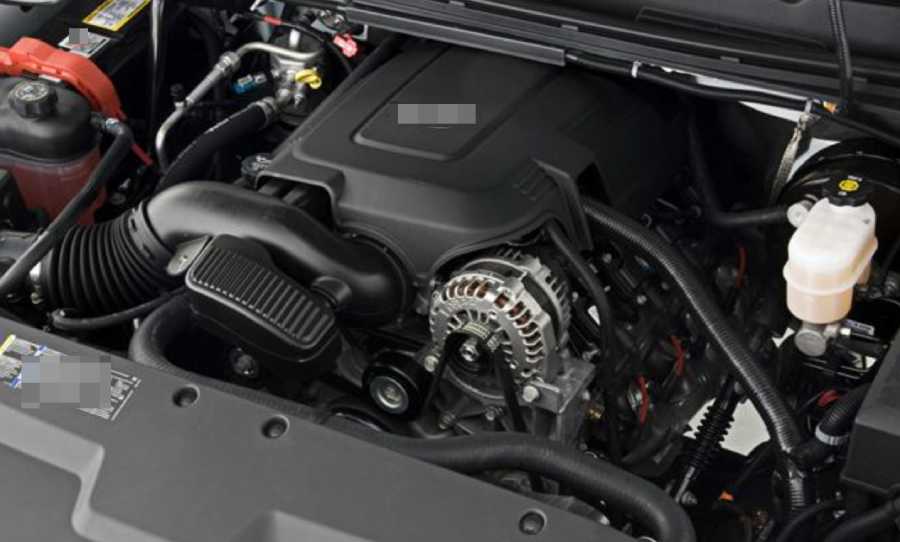
What Is a 5.3 AFM Delete Programmer?
A 5.3 AFM delete programmer is an electronic device or tuning tool that disables Active Fuel Management (AFM) on compatible GM 5.3L V8 engines. It prevents the engine from entering four-cylinder mode, allowing all eight cylinders to remain active during normal operation. Unlike a mechanical AFM delete kit, a programmer changes engine control behavior without removing the AFM lifters, camshaft, or oil-control components.
There are three main types of electronic AFM disabling solutions: OBD-II plug-in disablers, handheld ECU programmers, and professional tuning software. Plug-in disablers operate through the vehicle’s diagnostic port and generally do not require permanent calibration changes. Handheld programmers modify supported ECM calibration settings, while professional tuning platforms provide more extensive access to engine management parameters. The available functions depend on the specific device, vehicle model year, and ECM configuration.
The distinction between AFM disabling and AFM deletion is important when evaluating engine reliability. Electronic disabling prevents commanded cylinder deactivation but leaves the original AFM hardware installed. Mechanical deletion replaces AFM-specific components with compatible non-AFM parts and requires appropriate ECM calibration. For example, a 2015 Chevrolet Silverado 1500 equipped with an AFM-supported 5.3L EcoTec3 engine may use a compatible electronic disabler without undergoing mechanical engine modifications. However, the original AFM lifters remain inside the engine and can still experience mechanical failure.
How Does an AFM Delete Programmer Work on a 5.3L Engine?
An AFM delete programmer works by preventing the Engine Control Module (ECM) from commanding cylinder deactivation on a compatible GM 5.3L V8 engine. Under normal conditions, Active Fuel Management switches between V8 and V4 operation according to engine load, throttle demand, operating temperature, and other monitored conditions. When AFM is disabled, the engine continues operating on all eight cylinders instead of entering its fuel-saving four-cylinder mode.
GM’s AFM system uses electronically controlled oil solenoids and specialized hydraulic lifters to deactivate four cylinders. During V4 operation, the ECM commands the AFM oil-control system to direct pressurized engine oil toward the designated lifters. The lifters then collapse internally, preventing the corresponding valves from opening while the ECM suspends fuel injection to those cylinders. On GM 5.3L AFM V8 engines, cylinders 1, 4, 6, and 7 are deactivated during four-cylinder operation.
Electronic AFM disabling changes how the ECM manages this process. An ECU programmer can modify supported calibration parameters so that AFM activation is disabled. An OBD-II disabler instead communicates electronically with the vehicle to inhibit AFM operation without performing a conventional calibration flash. The exact communication strategy varies by product, and an OBD-II disabler should not be treated as equivalent to a full ECU tuning platform.
For example, a compatible handheld tuner can disable AFM through an ECM calibration change that remains in place after the programming device is disconnected. A compatible plug-in disabler generally needs to remain connected to maintain its disabling function. Removing the plug-in module typically allows the vehicle to resume its original AFM behavior, provided the factory system is functioning correctly.
Disabling AFM does not eliminate the mechanical components responsible for cylinder deactivation. The AFM lifters, oil passages, and related hardware remain installed, even when the ECM no longer commands V4 operation. Consequently, an AFM programmer cannot repair a collapsed lifter, damaged camshaft, or existing lubrication problem. Its primary function is to change cylinder-deactivation behavior rather than mechanically convert the engine to a non-AFM configuration.
What Are the Best AFM Delete Programmers for a 5.3L V8?
The Range AFM Disabler, compatible DiabloSport programmers, and HP Tuners VCM Suite are three options for disabling Active Fuel Management on supported GM 5.3L V8 engines. Range focuses on plug-and-play cylinder-deactivation control, DiabloSport offers handheld engine tuning on supported applications, and HP Tuners provides advanced ECM calibration capabilities. The best choice depends on vehicle compatibility, installation requirements, and whether the owner needs AFM disabling alone or additional tuning functions.
A plug-in disabler is the simplest option for owners who want to prevent V4 operation without flashing the factory ECM. Handheld programmers are better suited to owners who need additional supported tuning features, while professional calibration software provides greater control over engine management settings. However, not every programmer supports every GM 5.3L engine, and compatibility must be verified using the vehicle’s model year, engine code, and ECM.
How Does the Range AFM Disabler Work?
The Range AFM Disabler is an OBD-II plug-in module that prevents AFM activation without rewriting the factory ECM calibration. The device connects to the diagnostic port beneath the dashboard and electronically inhibits cylinder deactivation while operating. This allows compatible GM 5.3L V8 engines to remain in eight-cylinder mode during normal driving.
Range Technology offers AFM and AFM/DFM disabling products for different GM vehicle generations. Its product listings include compatible Silverado, Sierra, Tahoe, Suburban, and other GM applications. Installation does not require removing engine components or using professional tuning software. The module generally remains connected during operation, and removing it restores the vehicle’s original cylinder-deactivation control.
Range devices are designed primarily for electronic disabling rather than performance calibration. They do not provide the same engine-map editing capabilities as professional tuning platforms. Compatibility also varies between older AFM vehicles, newer DFM-equipped engines, and updated GM electronic architectures. For example, Range identifies specific restrictions for refreshed 2022 trucks and certain later SUV applications, while offering separate products for newer models.
Can DiabloSport and HP Tuners Disable AFM?
DiabloSport and HP Tuners can disable AFM on supported GM 5.3L vehicles through engine calibration changes, although their available functions and technical requirements differ. Unlike a plug-in AFM disabler, an ECU tuning solution changes supported calibration settings rather than continuously relying on an attached OBD-II module.
DiabloSport handheld programmers, including compatible inTune models, provide vehicle-specific tuning functions through an OBD-II connection. Depending on the programmer and supported calibration, available adjustments may include AFM settings, transmission behavior, and other engine parameters. AFM control is not guaranteed on every DiabloSport device or vehicle application, so the exact product part number and supported functions must be checked before purchase.
HP Tuners uses an MPVI interface with VCM Suite software to read, modify, and write supported vehicle calibrations. On compatible GM ECMs, VCM Editor provides access to AFM control parameters. The platform also supports diagnostic scanning and data logging, making it suitable for experienced tuners and professional workshops. Vehicle licensing credits are required, and certain newer GM ECMs need additional unlocking or modification services before calibration changes can be written.
The main differences between these solutions are summarized below.
| Feature | Range AFM Disabler | DiabloSport | HP Tuners |
|---|---|---|---|
| Device type | OBD-II module | Handheld programmer | Professional tuning platform |
| AFM disabling | Electronic intervention | Supported ECU calibration | Supported ECU calibration |
| ECM flashing | No | Yes | Yes |
| Installation difficulty | Low | Moderate | Advanced |
| Additional tuning | Limited or model-specific | Model-specific | Extensive calibration access |
| Licensing | Generally no tuning credits | Product-dependent | Vehicle credits |
| Best suited for | Simple AFM disabling | Handheld tuning | Advanced ECU calibration |
For owners seeking a straightforward electronic solution, a compatible Range module requires the least technical involvement. DiabloSport is an alternative when supported handheld tuning functions are needed. HP Tuners provides greater calibration flexibility but requires more technical knowledge and may involve additional hardware, licensing, or ECM services. None of these products mechanically removes AFM components or guarantees protection against lifter failure.
Which GM 5.3L Engines Support AFM Delete Programmers?
AFM delete programmers support selected GM 5.3L V8 engines equipped with Active Fuel Management or Dynamic Fuel Management, but compatibility depends on engine generation, vehicle model year, and electronic control system. Common applications include AFM-equipped Gen IV Vortec engines, Gen V EcoTec3 engines, and certain newer DFM-equipped trucks. A device designed for one generation should not be assumed to work on another.
Engine displacement alone is insufficient for selecting an AFM programmer. GM produced several 5.3L V8 variants with different engine control modules, cylinder-deactivation systems, and calibration requirements. Some 5.3L engines do not have AFM, while newer engines may use DFM instead. Owners should identify the engine code and verify the manufacturer’s compatibility listing before choosing a device.
Which Gen IV and Gen V 5.3L Engines Are Compatible?
Gen IV 5.3L engines such as the LH6, LMG, and LC9, along with the Gen V L83, are common AFM-equipped applications for electronic disabling solutions. These engines appeared in various GM trucks and SUVs, although the exact engine code and equipment depend on the vehicle’s production year and configuration.
Gen IV Vortec 5300 engines use AFM hardware and engine management systems that differ from later EcoTec3 designs. The LH6, LMG, and LC9 are examples of AFM-equipped variants, while other Gen IV 5.3L engines were produced without cylinder deactivation. Installing an AFM disabler on a vehicle without AFM provides no cylinder-deactivation function to disable.
The Gen V L83 5.3L EcoTec3 engine introduced direct fuel injection and updated engine management while retaining AFM functionality. It was used in Chevrolet Silverado 1500 and GMC Sierra 1500 trucks beginning with the 2014 model year. Compatible programmers can disable AFM on supported L83 applications, but Gen IV device compatibility does not automatically extend to Gen V vehicles.
The following table identifies common engine families and the compatibility checks required.
| Engine code | Generation | Cylinder-deactivation system | Programmer considerations |
|---|---|---|---|
| LH6 | Gen IV | AFM | Verify vehicle year and ECM support |
| LMG | Gen IV | AFM | Confirm device-specific fitment |
| LC9 | Gen IV | AFM | Check engine and vehicle application |
| L83 | Gen V | AFM | Requires compatible Gen V support |
| L84 | Gen V | DFM | Requires DFM-compatible solution |
These engine codes identify relevant applications rather than confirming that a particular programmer fits every vehicle using that engine. The manufacturer’s vehicle-specific compatibility information remains the deciding factor.
Can an AFM Programmer Disable DFM on Newer 5.3L Engines?
An AFM-only programmer cannot be assumed to disable Dynamic Fuel Management (DFM) on newer GM 5.3L engines. DFM uses a more advanced cylinder-deactivation strategy than conventional AFM, allowing different cylinder combinations to operate according to engine demand. The L84 5.3L EcoTec3 engine is a common DFM-equipped application in newer Chevrolet Silverado and GMC Sierra trucks.
Conventional AFM switches between eight-cylinder and four-cylinder operation using a fixed group of deactivated cylinders. DFM supports a broader range of firing patterns and cylinder combinations, requiring different control strategies. As a result, a programmer developed specifically for older AFM systems may not communicate correctly with a DFM-equipped vehicle or provide the necessary disabling function.
DFM-compatible products are available for selected GM applications, including dedicated Range AFM/DFM disablers and supported professional tuning solutions. However, compatibility can change across model years and electronic architectures. For example, HP Tuners identifies special ECM requirements for certain 2019–2021 GM trucks equipped with the L84 engine, while Range lists different device applications for earlier and later truck generations.
Before purchasing a programmer for a DFM-equipped 5.3L engine, owners should confirm the engine code, model year, ECM type, and exact product compatibility. A vehicle identification number (VIN) can help distinguish production configurations, particularly when manufacturers specify different support for refreshed models. Selecting a DFM-compatible device is essential because AFM and DFM are related technologies but do not use identical control strategies.
How Do You Disable AFM on a 5.3L Engine With a Programmer?
To disable AFM on a 5.3L engine, use a compatible OBD-II disabler or an ECU programmer that supports the vehicle’s engine control module. A plug-in disabler electronically prevents cylinder deactivation while connected, whereas an ECU programmer changes supported calibration settings to keep the engine operating in V8 mode. Both methods avoid mechanical engine disassembly, but their installation procedures and technical requirements differ.
A plug-in AFM disabler generally requires four steps. First, identify the vehicle’s model year, 5.3L engine code, and cylinder-deactivation system. Second, select a device specifically listed as compatible with that application. Third, locate the OBD-II diagnostic port beneath the driver’s side dashboard and connect the module according to the manufacturer’s instructions. Fourth, start the engine and verify normal operation using the device manufacturer’s recommended checks.
For example, a compatible Range AFM Disabler can be installed on a supported Chevrolet Silverado 1500 by connecting the module directly to the diagnostic port. The device operates without removing engine components or performing a conventional ECM calibration flash. However, it generally must remain connected to maintain AFM disabling. Removing the module allows the original cylinder-deactivation strategy to resume, provided the factory system operates correctly.
Disabling AFM through an ECU programmer requires a different procedure. The technician connects a compatible programming interface, reads the existing ECM calibration, and saves a backup before making changes. Supported AFM parameters are then modified using the programmer’s available controls or calibration software. The updated calibration is written to the ECM following the manufacturer’s instructions, with stable battery voltage maintained throughout the programming process to reduce the risk of an interrupted flash.
Professional platforms such as HP Tuners provide calibration editing through VCM Editor and diagnostic monitoring through VCM Scanner. On supported GM 5.3L applications, a qualified tuner can adjust the appropriate AFM control settings and verify their operation afterward. Some ECMs require additional unlocking services or licensing credits before programming is possible. Incorrect calibration changes can cause drivability problems, diagnostic trouble codes, or ECM programming failures.
AFM disabling should be verified through diagnostic data rather than engine sound alone. A compatible scan tool can monitor available cylinder-deactivation commands, operating modes, and related ECM parameters during suitable driving conditions. On vehicles equipped with a V4/V8 dashboard indicator, the display provides an additional reference, but it is not a substitute for diagnostic confirmation.
After installation, inspect the vehicle for warning lights, abnormal engine behavior, and stored diagnostic trouble codes. An AFM programmer should not be used to conceal an existing misfire or mechanical fault. If the engine already has lifter noise, cylinder-specific misfires, or reduced compression, those conditions require diagnosis independently of the AFM disabling procedure.
How Much Does a 5.3 AFM Delete Programmer Cost?
A 5.3 AFM delete programmer generally costs less than a mechanical AFM delete, but the total expense depends on the device type, vehicle compatibility, and required tuning services. Plug-in disablers involve a hardware purchase with minimal installation labor, while handheld programmers and professional ECU tuning can require additional software, licensing, and technical work.
For preliminary budgeting, plug-in AFM disablers commonly fall within an estimated $150–$300 range. Compatible handheld performance programmers can cost approximately $300–$700, depending on the product generation and included tuning features. These figures are planning estimates rather than verified current retail quotations. Actual prices should be checked against the exact manufacturer part number, seller, and vehicle application before purchase.
Professional ECU tuning has a different cost structure because the owner may need a programming interface, vehicle licensing credits, and calibration services. An HP Tuners setup, for example, involves compatible MPVI hardware and credits for licensing supported control modules. Certain newer GM ECMs also require additional unlocking or modification services. Professional labor increases the total cost when the vehicle owner does not perform the calibration work.
The following table summarizes the main cost differences.
| AFM disabling method | Estimated cost | Additional requirements |
|---|---|---|
| Plug-in AFM disabler | $150–$300 | Compatible OBD-II module |
| Handheld ECU programmer | $300–$700 | Supported vehicle calibration |
| Professional ECU tuning | Varies by vehicle and service | Interface, licensing, calibration labor |
| Mechanical AFM delete | Typically substantially higher | Replacement parts, engine labor, ECM calibration |
The least expensive solution is not necessarily the most suitable. A plug-in disabler is designed for owners who primarily want to stop cylinder deactivation without modifying the factory calibration. A handheld programmer becomes more relevant when the owner also needs supported engine or transmission tuning functions. Professional ECU tuning is appropriate when detailed calibration control is required and the vehicle’s ECM is supported.
A mechanical AFM delete involves substantially more labor because the original AFM-specific components must be replaced with compatible non-AFM hardware. Depending on the engine and repair scope, this work can require removal of the cylinder heads, camshaft-related components, and associated hardware. Electronic disabling avoids that mechanical work but does not provide the same physical conversion.
The total cost should include compatibility verification, installation requirements, licensing, and any necessary diagnostic work. Owners should also account for potential warranty and emissions-compliance implications before purchasing a device. A programmer that is incompatible with the vehicle’s ECM or cylinder-deactivation system provides no useful AFM disabling function, regardless of its purchase price.
Does Disabling AFM Prevent Lifter Failure on a 5.3L Engine?
Disabling AFM on a 5.3L engine does not guarantee prevention of lifter failure because the original AFM lifters and related mechanical components remain installed. An AFM programmer prevents the Engine Control Module (ECM) from commanding cylinder deactivation, but it does not eliminate existing lifter wear, lubrication problems, or mechanical defects. Electronic disabling changes how the system operates rather than replacing components that are susceptible to failure.
GM’s Active Fuel Management system uses specialized hydraulic lifters that can collapse internally when commanded by the engine’s oil-control system. These lifters allow selected cylinders to stop opening their intake and exhaust valves during V4 operation. The mechanism depends on controlled oil pressure, internal locking pins, and properly functioning lifter components. Problems involving these parts can prevent a lifter from returning to normal operation or maintaining proper valve movement.
A collapsed or malfunctioning AFM lifter can produce several symptoms, including persistent ticking noises, cylinder misfires, rough idling, reduced engine performance, and diagnostic trouble codes. For example, a failed lifter may prevent an intake or exhaust valve from opening correctly, disrupting combustion in the affected cylinder. Continued operation with a damaged lifter can also contribute to camshaft wear and additional valvetrain damage.
An AFM programmer prevents normal commanded transitions into cylinder-deactivation mode on supported vehicles. This reduces the number of intentional AFM activation cycles during operation, but there is insufficient evidence to conclude that electronic AFM disabling eliminates or reliably prevents lifter failure. The lifters continue operating mechanically as part of the valvetrain, and failures can still occur because of wear, defective components, oil contamination, or lubrication-related problems.
Electronic AFM disabling also cannot repair an existing collapsed lifter. Once a lifter has suffered mechanical damage, preventing future AFM activation does not restore its internal locking mechanism or repair a damaged camshaft lobe. A vehicle displaying persistent valvetrain noise or misfire symptoms requires mechanical diagnosis before any programming changes are considered.
For owners concerned about long-term reliability, the distinction is between preventing commanded AFM operation and removing AFM-specific hardware. An electronic disabler accomplishes the first objective. A properly performed mechanical AFM delete addresses the second by replacing the relevant components with compatible non-AFM hardware.
What Is the Difference Between an AFM Programmer and an AFM Delete Kit?
An AFM programmer disables cylinder deactivation electronically, while a mechanical AFM delete kit replaces AFM-specific engine components to eliminate the original mechanical deactivation system. Both approaches can keep a compatible GM 5.3L V8 operating on all eight cylinders, but they differ substantially in installation complexity, cost, mechanical changes, and long-term service requirements.
An electronic AFM programmer works through the vehicle’s engine management system. Depending on the device, it either prevents AFM activation through an OBD-II module or modifies supported ECM calibration settings. The original camshaft, hydraulic lifters, and oil-control hardware remain installed. This approach avoids engine disassembly and is primarily intended to change cylinder-deactivation behavior.
A mechanical AFM delete involves replacing the specialized AFM lifters with conventional non-AFM lifters and making the associated hardware and calibration changes required by the engine configuration. The conversion removes the original lifter-based cylinder-deactivation functionality rather than simply preventing the ECM from activating it. Because the procedure involves internal engine components, it requires substantially more labor and technical expertise than electronic disabling.
What Parts Are Replaced During a Mechanical AFM Delete?
A mechanical AFM delete on a GM 5.3L V8 generally requires non-AFM lifters, compatible lifter guides, appropriate camshaft components, and related gaskets and hardware. The exact parts depend on whether the engine is a Gen IV Vortec or Gen V EcoTec3 design, its existing mechanical condition, and the selected conversion kit.
AFM engines use specialized lifters that respond to oil-pressure commands during cylinder deactivation. Replacing these components with conventional lifters removes the internal collapsing mechanism used by AFM. The replacement camshaft must have a compatible profile and valvetrain configuration. A complete conversion also requires inspection of related components, including pushrods, valve springs, and camshaft bearings where applicable.
Oil-control hardware must also be addressed according to the engine design. Certain Gen IV conversions use a non-AFM valley cover or other components to eliminate the original AFM oil-control arrangement. Gen V engines have different oil-management architecture and require conversion parts specifically designed for their configuration. Components from different engine generations should not be assumed interchangeable.
Mechanical deletion also requires suitable ECM calibration changes. The original calibration may continue attempting to command cylinder deactivation or monitor AFM-related functions after the hardware has been removed. A properly configured calibration must match the mechanical conversion and preserve appropriate engine operation and diagnostics. Any modification must also comply with applicable emissions regulations.
For example, converting an AFM-equipped Gen IV 5.3L engine with damaged lifters may involve removing the cylinder heads, replacing the lifters and camshaft, installing the required non-AFM hardware, and updating the ECM calibration. Additional repairs may be necessary if the original failure damaged the camshaft or contaminated the lubrication system with metal particles.
Is a Mechanical AFM Delete Better Than an AFM Programmer?
A mechanical AFM delete is more comprehensive than an electronic programmer because it removes the AFM-specific lifter mechanism, but it is not the best solution for every 5.3L engine owner. The appropriate choice depends on the engine’s condition, repair objectives, available budget, and legal requirements.
For a healthy engine whose owner only wants to prevent V4 operation, a compatible electronic disabler provides a less invasive solution. Installation generally does not require opening the engine, replacing valvetrain components, or purchasing a complete mechanical conversion kit. However, the original AFM lifters remain installed, and the programmer cannot eliminate the possibility of mechanical lifter failure.
A mechanical AFM delete becomes more relevant when the engine already requires significant valvetrain repair or when a complete non-AFM hardware conversion is the intended objective. Replacing damaged AFM lifters with compatible non-AFM components addresses the original deactivation mechanism directly. Nevertheless, mechanical deletion does not prevent unrelated engine failures, including problems caused by inadequate lubrication, overheating, or improper installation.
The following comparison summarizes the differences.
| Feature | AFM Programmer | Mechanical AFM Delete Kit |
|---|---|---|
| Primary function | Disables AFM commands | Removes AFM-specific mechanical functionality |
| Engine disassembly | Not normally required | Required |
| AFM lifters | Remain installed | Replaced |
| Camshaft replacement | Not required | Typically required |
| ECM calibration | Depends on device | Required |
| Installation complexity | Low to advanced | High |
| Mechanical lifter repair | No | Can address damaged components |
| Cost | Generally lower | Substantially higher |
| Reversibility | Usually simpler | Requires mechanical work |
| Emissions considerations | Application-dependent | Application-dependent |
The decision should begin with the engine’s mechanical condition. A 5.3L V8 with no lifter-related symptoms does not automatically require a mechanical conversion simply because it uses AFM. Conversely, a vehicle with a collapsed lifter or damaged camshaft needs appropriate mechanical repair rather than relying on electronic disabling to resolve the fault.
An AFM programmer is a cylinder-deactivation control solution, while a mechanical AFM delete is an engine hardware conversion. Understanding this distinction helps owners avoid purchasing a programmer for a problem that requires physical repair or undertaking unnecessary engine disassembly when their objective is limited to disabling AFM operation.
Read more: Best AFM Disabler: Top Options Compared
Does an AFM Delete Programmer Affect Fuel Economy?
Disabling AFM on a GM 5.3L V8 can increase fuel consumption because the engine no longer switches to four-cylinder operation during suitable light-load conditions. Active Fuel Management was developed to reduce fuel use by temporarily deactivating four cylinders when full engine output is unnecessary. An AFM delete programmer prevents this operating mode, keeping all eight cylinders active during normal driving.
AFM improves fuel efficiency by reducing pumping losses and allowing the active cylinders to operate at a more efficient load. During steady highway cruising, the engine requires relatively little power to maintain vehicle speed. AFM responds by deactivating selected cylinders while the remaining cylinders produce the necessary torque. When AFM is disabled, all eight cylinders continue operating, eliminating the fuel-saving benefit associated with cylinder deactivation.
The actual fuel economy difference depends on driving conditions, vehicle weight, transmission behavior, engine calibration, and the frequency of AFM activation before disabling. Highway driving at consistent speeds generally provides more opportunities for cylinder deactivation than heavy acceleration, towing, or operation under high engine loads. Consequently, disabling AFM can have a greater effect on fuel consumption during light-load cruising than during driving conditions where the engine would already remain in V8 mode.
GM has described conventional AFM as a technology capable of improving fuel economy under suitable operating conditions, with benefits varying by engine and vehicle application. However, these manufacturer estimates should not be interpreted as a guaranteed fuel economy loss after installing an AFM programmer. The actual difference for an individual vehicle requires controlled testing under comparable driving conditions.
An AFM delete programmer also does not automatically increase horsepower or torque. Disabling cylinder deactivation changes the engine’s operating strategy rather than increasing its maximum power output. A healthy 5.3L V8 already operates on all eight cylinders when substantial power is required, including during strong acceleration and heavy towing. Therefore, preventing V4 operation does not inherently increase peak engine output.
Some drivers prefer the more consistent engine response associated with continuous V8 operation, particularly when AFM transitions are noticeable. However, perceived improvements in smoothness or throttle response should be distinguished from measurable horsepower gains. A programmer that also modifies ignition timing, fueling, or transmission calibration may change performance, but those effects result from additional tuning rather than AFM disabling alone.
The primary trade-off is continuous eight-cylinder operation in exchange for losing the fuel-saving opportunities provided by AFM. Owners prioritizing maximum fuel efficiency should consider this limitation before disabling the system, while those seeking to eliminate V4 transitions should understand that fuel consumption may increase.
Can an AFM Delete Programmer Affect Your Warranty or Emissions Compliance?
An AFM delete programmer can affect vehicle warranty coverage and emissions compliance, particularly when it modifies ECM calibration or disables an emissions-related engine control strategy. The consequences depend on the device, vehicle application, applicable regulations, and the relationship between the modification and any subsequent mechanical failure.
In the United States, the Magnuson-Moss Warranty Act does not automatically eliminate an entire vehicle warranty simply because an aftermarket product has been installed. However, a manufacturer may deny coverage for a particular repair when the aftermarket modification caused the failure or damage at issue. An AFM-related calibration change can therefore become relevant during warranty evaluation, especially when a claim involves engine management, powertrain operation, or components affected by the modification.
ECU programmers can leave detectable evidence of calibration changes. Modern GM engine control modules may store calibration identification information, verification data, or programming history that technicians can inspect during diagnosis. Returning a vehicle to its original calibration does not necessarily eliminate every record associated with previous programming activity.
Plug-in AFM disablers differ from conventional ECU programmers because they generally do not rewrite the factory calibration. Nevertheless, avoiding a calibration flash does not guarantee that a modification will have no warranty implications. The device’s operating behavior and its relationship to the reported failure remain relevant.
Emissions compliance requires separate consideration. The U.S. Environmental Protection Agency prohibits tampering with emissions control systems and selling or installing defeat devices that bypass, defeat, or render those systems inoperative under applicable Clean Air Act provisions. Whether a particular AFM disabling product is compliant depends on its design, the vehicle application, and the relevant regulatory requirements. An aftermarket device should not be assumed legal for public-road use solely because it connects through the OBD-II port or does not trigger a check engine light.
State-level requirements can impose additional restrictions. California, for example, regulates aftermarket emissions-related modifications through the California Air Resources Board (CARB). Products that affect regulated vehicle systems may require an applicable CARB Executive Order to qualify for legal use on specified vehicles. Approval for one engine, model year, or product configuration does not automatically extend to other applications.
Mechanical AFM deletion introduces additional compliance considerations because it replaces original engine components and requires corresponding calibration changes. Removing cylinder-deactivation hardware does not independently establish that the modified vehicle continues to satisfy its applicable emissions certification requirements. The legality of the completed conversion must be evaluated for the specific vehicle and jurisdiction.
Before installing an AFM programmer, owners should verify the manufacturer’s compatibility documentation, emissions-related product disclosures, and any applicable CARB Executive Order or other regulatory approval. Vehicles still covered by a powertrain warranty also warrant a review of the manufacturer’s warranty terms and the potential consequences of calibration changes.
The safest purchasing decision is to select a device that is explicitly compatible with the vehicle and permitted for its intended use. Electronic AFM disabling, mechanical deletion, warranty coverage, and emissions compliance are separate considerations that must be evaluated before modifying a GM 5.3L V8 engine.