The best AFM disabler is one that reliably prevents cylinder deactivation while remaining compatible with your vehicle’s engine, model year, and Active Fuel Management (AFM) or Dynamic Fuel Management (DFM) system. For GM truck and SUV owners, Range Technology offers dedicated plug-in disablers, while DiabloSport and HP Tuners provide tuning alternatives with different features and installation requirements.
An AFM disabler keeps supported engines operating on all available cylinders instead of switching between full-cylinder and reduced-cylinder modes. This makes it a practical option for drivers who prefer consistent engine operation without performing a mechanical AFM delete. However, disabling AFM does not remove factory AFM lifters or guarantee protection against lifter failure.
Choosing the right device requires checking vehicle compatibility, AFM/DFM support, installation method, reversibility, and overall value. A disabler designed for an older Chevrolet Silverado may not work with a newer GMC Sierra equipped with DFM, even when both vehicles use V8 engines.
This guide compares leading AFM disablers and tuning alternatives, explains their differences, and helps you determine which solution best fits your GM vehicle.
What Are the Best AFM Disablers for GM Vehicles?
The best AFM disablers for GM vehicles include Range Technology’s AFM and DFM disablers, while DiabloSport and HP Tuners offer alternative ways to control cylinder deactivation through engine tuning. These solutions differ in vehicle compatibility, installation requirements, customization, and how they interact with the engine control module (ECM).
Range Technology focuses on plug-and-play devices that connect to the OBD-II port without requiring permanent engine modifications. DiabloSport provides handheld tuning solutions for supported GM vehicles, while HP Tuners offers more advanced calibration tools for users who need greater control over engine parameters.
The right choice depends on whether your vehicle uses AFM or DFM, its engine and model year, and whether you want a dedicated disabler or a broader tuning solution.
Is the Range Technology AFM Disabler the Best Overall Option?
The Range Technology AFM Disabler is a strong choice for owners of compatible GM vehicles who want a simple, reversible way to disable Active Fuel Management. It connects to the vehicle’s OBD-II port and is designed to keep the engine operating on all cylinders without requiring ECU reprogramming.
Its main advantage is straightforward installation. Drivers do not need to replace engine components, purchase separate tuning software, or modify factory calibration files. The device works through the vehicle’s diagnostic connection, making it suitable for owners who prefer a dedicated AFM-disabling solution rather than a full performance tuner.
The Range AFM Disabler is designed for specific GM applications, including certain Chevrolet Silverado, GMC Sierra, Tahoe, Suburban, and Yukon models. Compatibility depends on the engine, model year, and factory cylinder-deactivation system. Buyers should confirm the manufacturer’s fitment information before purchasing because not every GM V8 engine uses the same AFM configuration.
Another advantage is reversibility. Removing the device allows the vehicle to return to its factory AFM operating strategy, provided no other modifications have changed that behavior. However, the device does not remove AFM lifters, repair existing mechanical damage, or guarantee that lifter problems will not occur.
For drivers seeking a dedicated plug-in solution with minimal installation complexity, the Range AFM Disabler is a practical option when the vehicle is explicitly listed as compatible.
Is the Range Technology DFM Disabler Best for DFM-Equipped Vehicles?
The Range Technology DFM Disabler is designed for supported GM vehicles equipped with Dynamic Fuel Management, making it a more appropriate option than an AFM-only device for compatible DFM applications. DFM uses a more flexible cylinder-deactivation strategy than traditional AFM, so device compatibility must be evaluated separately.
Traditional AFM generally switches between full-cylinder and reduced-cylinder operation using predetermined cylinder configurations. DFM can use a broader range of cylinder activation patterns based on engine load and driving conditions. These differences mean that an older AFM disabler should not be assumed to work with a DFM-equipped engine.
Range’s DFM-specific solutions are intended to prevent supported engines from entering cylinder-deactivation modes without requiring a mechanical delete. However, installation requirements and operating behavior depend on the exact product version and vehicle application. Not every DFM-equipped GM vehicle supports the same plug-in device.
Owners of Chevrolet Silverado 1500, GMC Sierra 1500, and other GM vehicles equipped with DFM should verify their engine, model year, and manufacturer compatibility listing. A 5.3L or 6.2L engine designation alone is insufficient to establish fitment.
For owners who want to retain factory engine hardware while avoiding DFM cylinder-deactivation operation, a compatible Range DFM Disabler is a relevant option. It does not physically remove DFM components or eliminate the possibility of mechanical failure.
How Do the Best AFM Disablers Compare?
The best AFM disablers differ in installation complexity, vehicle compatibility, customization, and overall value. Range Technology and DiabloSport Sprint devices focus on plug-and-play cylinder-deactivation control, while HP Tuners provides advanced engine calibration capabilities. The right solution depends on whether the driver needs a dedicated AFM disabler or a broader engine tuning platform.
The following table compares four solutions based on their primary functions and installation requirements.
| Product | Disabling Method | Installation | Main Advantage | Best For |
|---|---|---|---|---|
| Range Technology AFM Disabler | OBD-II plug-in | Easy | Dedicated AFM control | Compatible GM vehicles with AFM |
| Range Technology DFM Disabler | Vehicle-specific plug-in solution | Easy on supported applications | DFM-specific functionality | Compatible DFM-equipped GM vehicles |
| DiabloSport Sprint S1000 | OBD-II plug-in | Easy | Dedicated AFM/DFM disabling on listed applications | Drivers seeking a plug-in alternative |
| HP Tuners | ECU calibration | Advanced | Extensive tuning capabilities | Experienced tuners and performance workshops |
Range Technology and DiabloSport Sprint are the more straightforward choices for drivers who only want to disable cylinder deactivation. Their plug-in designs avoid the need to edit engine calibration files. Installation generally involves connecting the compatible device to the OBD-II port and following the manufacturer’s operating instructions. Removing a plug-in module also provides a simpler path back to factory cylinder-deactivation behavior than reversing a custom ECU calibration.
HP Tuners offers greater flexibility because supported calibrations can expose engine parameters beyond AFM operation. This is valuable for custom engine builds and broader performance tuning projects, but it introduces additional hardware, licensing, and technical requirements. A driver who only wants full-cylinder operation during everyday driving may not benefit from that extra complexity.
Price comparisons should account for the complete setup rather than the device alone. A dedicated disabler generally has a simpler purchase structure, while HP Tuners may require an interface, vehicle-specific credits, and additional controller services. The lowest initial price does not necessarily represent the best value if the product lacks support for the vehicle’s engine or model year.
Vehicle compatibility is the deciding factor across all four solutions. A device designed for a traditional AFM-equipped 5.3L V8 may not support a newer DFM-equipped engine. Buyers should confirm the exact product part number and supported vehicle application before comparing convenience, features, or cost.
How Do You Choose the Best AFM Disabler for Your Vehicle?
Choose the best AFM disabler by checking four factors: vehicle compatibility, cylinder-deactivation system, installation method, and total ownership cost. These criteria determine whether a device will work with the vehicle and whether it meets the driver’s expectations.
Vehicle compatibility comes first. Record the vehicle’s make, model, model year, engine displacement, and engine code before shopping. GM vehicles with the same engine displacement can use different control modules or cylinder-deactivation systems. For example, a Chevrolet Silverado 1500 with a 5.3L V8 may require a different solution depending on its production year and whether it uses AFM or DFM. Confirm the exact application against the manufacturer’s current compatibility list.
AFM and DFM support must be verified separately. Traditional Active Fuel Management uses a more limited cylinder-deactivation strategy, while Dynamic Fuel Management can vary the number and combination of active cylinders more extensively. A device advertised as an AFM disabler is not automatically compatible with DFM. Check the product description for explicit support rather than assuming all GM V8 engines use interchangeable technology.
Installation method determines the amount of work and technical knowledge required. Plug-in disablers connect through the OBD-II port and are intended for drivers who want a straightforward, reversible solution. ECU tuning tools require compatible hardware, calibration software, and an understanding of engine control parameters. For an otherwise stock vehicle, a supported plug-in disabler is generally the simpler choice. Custom engine builds may justify the additional capabilities of a tuning platform.
Total ownership cost includes more than the purchase price. Compare the device price, required accessories, software licensing, controller unlock fees, manufacturer support, and return policy. Buyers should also review emissions-related restrictions and potential warranty implications. A lower-priced product offers poor value if it cannot support the vehicle or creates additional installation expenses.
The most practical buying decision is to select a manufacturer-supported device that matches the vehicle’s exact configuration and provides only the functions the driver needs. Range Technology and DiabloSport Sprint are relevant starting points for dedicated plug-in solutions, while HP Tuners is better suited to supported vehicles requiring broader calibration work.
Which GM Vehicles Support AFM Disablers?
AFM disablers support selected Chevrolet, GMC, and Cadillac vehicles equipped with Active Fuel Management or Dynamic Fuel Management. Common applications include the Chevrolet Silverado 1500, GMC Sierra 1500, Chevrolet Tahoe, Chevrolet Suburban, GMC Yukon, and Cadillac Escalade. However, compatibility depends on the engine, model year, cylinder-deactivation system, and specific disabler model.
GM introduced AFM across several V8 engine families before expanding the use of DFM in newer vehicles. As a result, two trucks with similar engines may require different disabling solutions. For example, a 2018 Silverado 1500 with a 5.3L V8 uses a different cylinder-deactivation strategy from a 2020 Silverado 1500 equipped with DFM. Selecting a device based solely on engine displacement can lead to purchasing an incompatible product.
The following table summarizes common GM applications and the compatibility checks required before purchasing an AFM disabler.
| GM Vehicle | Common Engine Options | Cylinder-Deactivation System | Compatibility Considerations |
|---|---|---|---|
| Chevrolet Silverado 1500 | 5.3L and 6.2L V8 | AFM or DFM, depending on configuration | Verify model year, engine code, and device support |
| GMC Sierra 1500 | 5.3L and 6.2L V8 | AFM or DFM, depending on configuration | Check engine and ECM compatibility |
| Chevrolet Tahoe | 5.3L and 6.2L V8 | AFM or DFM, depending on generation | Confirm model year and supported engine |
| Chevrolet Suburban | 5.3L and 6.2L V8 | AFM or DFM, depending on generation | Verify exact vehicle application |
| GMC Yukon | 5.3L and 6.2L V8 | AFM or DFM, depending on generation | Check manufacturer fitment listings |
| Cadillac Escalade | 6.2L V8 | AFM or DFM, depending on generation | Confirm engine management system and device support |
This table identifies vehicle families that may have compatible disabling solutions; it does not establish that every listed model year or engine is supported.
Chevrolet Silverado and GMC Sierra trucks are important applications because their V8 configurations span multiple generations of cylinder-deactivation technology. Older AFM-equipped models may support traditional plug-in disablers, while newer DFM-equipped trucks require products specifically designed for their engine management systems. Refreshed GM truck models also introduce compatibility differences that make the exact production configuration important.
Full-size GM SUVs follow a similar pattern. The Tahoe, Suburban, Yukon, and Escalade have used different V8 engines and cylinder-deactivation strategies across generations. A device that works with an older AFM-equipped Tahoe should not be assumed to support a newer DFM-equipped Yukon or Escalade.
Before purchasing, use the vehicle identification number (VIN) and factory specifications to confirm the engine and model year. Then compare those details with the disabler manufacturer’s official compatibility chart. The correct device must explicitly support the vehicle’s engine management configuration, not merely its brand or engine size.
How Do You Install a Plug-In AFM Disabler?
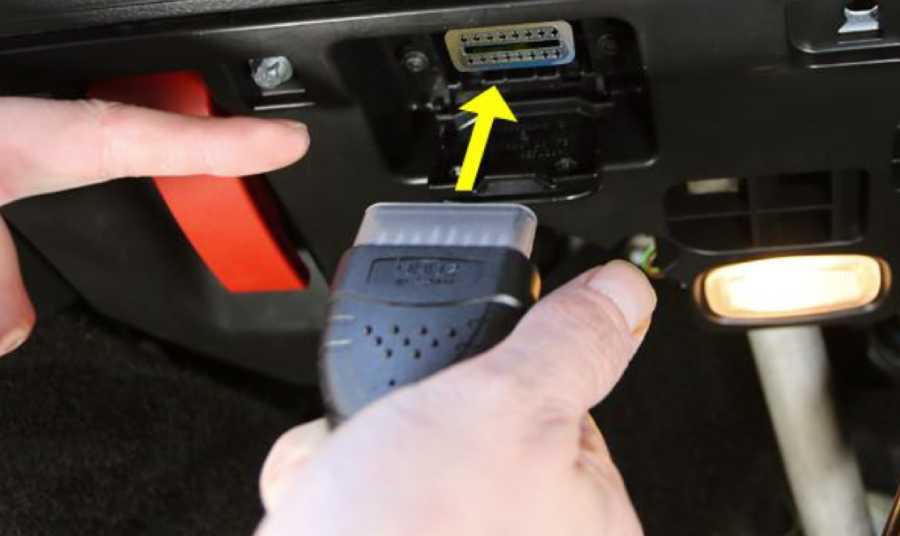
Install a compatible plug-in AFM disabler by locating the vehicle’s OBD-II diagnostic port, connecting the device according to the manufacturer’s instructions, and verifying that it operates correctly. Most dedicated plug-in solutions do not require mechanical engine modifications or custom ECU programming, making installation considerably simpler than an AFM delete or calibration-based solution.
The OBD-II port is generally located beneath the driver’s side dashboard on compatible GM vehicles. It uses a standardized 16-pin diagnostic connector that provides access to vehicle communication systems. Its exact position varies by model and generation, so owners should consult the vehicle manual when the connector is not immediately visible.
Follow these steps when installing a compatible plug-in AFM disabler:
- Confirm vehicle compatibility. Check the disabler’s part number, supported model years, engine configuration, and AFM or DFM compatibility before connecting it.
- Park the vehicle safely. Place the transmission in Park, engage the parking brake, and follow the device manufacturer’s ignition and installation instructions.
- Locate the OBD-II port. Find the diagnostic connector beneath the dashboard, usually near the steering column or driver’s footwell.
- Connect the disabler. Insert the device into the OBD-II port without forcing the connector or damaging its pins.
- Follow the activation instructions. Some devices operate automatically after connection, while others have specific ignition-cycle or operating requirements.
- Verify normal operation. Check the manufacturer’s status indicators or recommended verification procedure, and confirm that no unexpected warning messages or diagnostic issues appear.
A dedicated plug-in AFM disabler is designed to maintain full-cylinder operation while connected to a supported vehicle. However, installation alone does not prove that the device is functioning correctly. Owners should use the manufacturer’s verification method rather than relying exclusively on changes in exhaust sound, throttle response, or dashboard indicators.
Removing a plug-in AFM disabler is generally simpler than reversing an ECU tune. For supported devices that do not rewrite factory calibration, disconnecting the module allows the original cylinder-deactivation strategy to resume. Follow the manufacturer’s removal instructions, including any ignition-off or shutdown requirements, to avoid communication errors.
Plug-in disablers should not be confused with mechanical AFM delete kits. They do not replace lifters, camshafts, or other internal engine components. They also should not be assumed to repair existing engine faults or eliminate all risks associated with the factory cylinder-deactivation hardware.
Finally, avoid connecting an incompatible device or modifying its wiring to force installation. If the vehicle develops warning lights, diagnostic communication problems, or abnormal engine behavior after installation, remove the device according to the manufacturer’s instructions and investigate the cause before continuing to drive.
How Does an AFM Disabler Work?
An AFM disabler works by preventing a compatible engine from activating its factory cylinder-deactivation system, keeping all cylinders operating during normal driving. Dedicated plug-in devices connect to the vehicle’s OBD-II port and communicate with supported engine control systems to inhibit AFM operation without physically modifying internal engine components.
Active Fuel Management is a General Motors technology designed to reduce fuel consumption during light-load driving. In a typical AFM-equipped V8 engine, the engine control module (ECM) can deactivate four of the eight cylinders when full engine power is unnecessary. The system uses electronically controlled oil flow and specialized lifters to prevent selected intake and exhaust valves from opening, while fuel delivery to the deactivated cylinders is suspended.
An AFM disabler prevents the engine from entering this reduced-cylinder operating mode. For example, a compatible Chevrolet Silverado 1500 equipped with a 5.3L V8 can remain in eight-cylinder operation during highway cruising instead of switching to four-cylinder mode. The exact electronic method depends on the disabler’s design and supported vehicle platform.
An electronic AFM disabler does not remove or replace the factory AFM hardware. The original lifters, camshaft, oil control components, and engine management equipment remain installed. This distinction matters because disabling cylinder deactivation changes how the system operates but does not repair worn components or eliminate every potential mechanical failure.
What Is the Difference Between AFM and DFM Disablers?
The main difference between AFM and DFM disablers is the cylinder-deactivation system they are designed to control. AFM disablers target General Motors’ traditional Active Fuel Management system, while DFM disablers target the more advanced Dynamic Fuel Management system used in selected newer GM engines.
Traditional AFM generally switches a V8 engine between eight-cylinder and four-cylinder operation. Dynamic Fuel Management uses a more flexible strategy that can deactivate different combinations of cylinders according to engine load, speed, and operating conditions. GM’s DFM technology supports 17 cylinder activation patterns, allowing the engine controller to select configurations that better match changing power requirements.
| Feature | AFM | DFM |
|---|---|---|
| Full name | Active Fuel Management | Dynamic Fuel Management |
| Cylinder-deactivation strategy | Predetermined cylinder groups | Multiple cylinder activation patterns |
| Typical V8 operation | Eight-cylinder or four-cylinder mode | Variable active-cylinder combinations |
| Control complexity | Relatively simple | More advanced |
| Disabler requirement | AFM-compatible device | DFM-compatible device |
| Common applications | Selected older GM V8 vehicles | Selected newer GM V8 vehicles |
These differences directly affect product compatibility. An AFM disabler designed for an older Chevrolet Silverado does not automatically support a newer Silverado equipped with DFM, even when both trucks have 5.3L V8 engines. The device must support the specific engine controller and cylinder-deactivation strategy.
AFM and DFM disablers serve the same general purpose but are not universally interchangeable. Some aftermarket products support both technologies on explicitly listed vehicles, while others are limited to particular model years, engines, or control modules. Buyers should verify the manufacturer’s compatibility information before choosing a device.
Neither type of disabler physically deletes the cylinder-deactivation hardware. Both are electronic solutions intended to prevent supported engines from entering reduced-cylinder operation while retaining the factory mechanical components.
Can an AFM Disabler Prevent Lifter Failure?
An AFM disabler cannot guarantee prevention of lifter failure because it does not remove or repair the factory AFM lifters. Disabling cylinder deactivation reduces the frequency of AFM activation, but the engine retains the same mechanical components that can develop wear, sticking, or internal damage.
GM’s Active Fuel Management system uses specialized hydraulic lifters that collapse under controlled conditions to deactivate selected cylinders. The engine control module coordinates this process through oil pressure and electronically operated solenoids. When AFM is active, the system changes the operation of specific intake and exhaust valves without stopping the pistons from moving.
AFM lifter failures can involve several mechanical problems, including collapsed lifters, damaged internal locking mechanisms, oil pressure irregularities, and component wear. These problems may produce ticking noises, engine misfires, rough operation, or diagnostic trouble codes. In severe cases, damaged lifters can affect the camshaft and require substantial engine repairs.
An electronic disabler prevents supported engines from repeatedly entering AFM mode during normal operation. This changes the operating demands placed on the cylinder-deactivation mechanism, but it does not establish that the device prevents lifter failure. Reliable evidence demonstrating a specific reduction in long-term lifter failure rates from aftermarket AFM disablers is insufficient to support such a guarantee.
An AFM disabler is not a substitute for repairing damaged lifters or maintaining the engine’s lubrication system. Owners experiencing persistent ticking, misfires, or abnormal engine operation should investigate the underlying mechanical problem rather than relying on a disabler to correct it. A mechanical AFM delete involves replacing relevant factory components and making the necessary calibration changes, making it fundamentally different from electronic disabling.
For drivers concerned about AFM lifter reliability, a compatible disabler changes cylinder-deactivation behavior without requiring engine disassembly. Its effectiveness should be evaluated as an operational modification, not a proven method of eliminating lifter-related failures.
Does an AFM Disabler Affect Fuel Economy?
An AFM disabler can reduce fuel economy because it prevents the engine from using cylinder deactivation to improve efficiency during low-load driving. The actual difference depends on the vehicle, engine, driving conditions, and the amount of time the factory system would otherwise operate in reduced-cylinder mode.
Active Fuel Management reduces fuel consumption by deactivating selected cylinders when full engine output is unnecessary. During steady highway cruising, for example, an AFM-equipped V8 can operate on four cylinders under suitable conditions. This allows the remaining active cylinders to operate at a different load point, reducing certain engine pumping losses and improving efficiency.
When an AFM disabler keeps all eight cylinders active, the engine no longer receives the fuel-saving benefit of cylinder deactivation. The effect is most relevant during light-load conditions, such as consistent highway driving on level roads. During heavy acceleration, towing, or climbing steep grades, the engine already requires greater power and would generally operate with all cylinders active.
The following table explains how driving conditions influence the potential fuel economy impact.
| Driving Condition | Factory AFM Behavior | Potential Impact of Disabling AFM |
|---|---|---|
| Steady highway cruising | Cylinder deactivation may operate frequently | Greater opportunity for fuel economy loss |
| Stop-and-go traffic | AFM operation varies with engine load | Variable impact |
| Heavy acceleration | Full-cylinder operation generally required | Limited direct difference |
| Towing heavy loads | Full-cylinder operation is commonly required | Limited direct difference |
| Uphill driving | Higher engine load limits AFM activation | Limited direct difference |
There is no universal MPG reduction that applies to every AFM disabler or GM vehicle. Fuel consumption depends on factors such as engine displacement, transmission gearing, vehicle weight, tire size, road conditions, and driving habits. Claims that disabling AFM always causes a specific MPG loss should be treated cautiously unless supported by controlled testing on the relevant vehicle.
Drivers can evaluate the impact by comparing fuel consumption before and after installing a compatible disabler under similar conditions. Calculating actual miles driven per gallon of fuel consumed across multiple tanks provides a more useful comparison than relying exclusively on dashboard fuel economy estimates.
For owners who prioritize consistent full-cylinder operation, the potential fuel economy tradeoff is an important purchasing consideration. Drivers whose primary goal is maximizing fuel efficiency may prefer retaining the factory AFM or DFM system rather than disabling it.
Can an AFM Disabler Affect Your Vehicle Warranty?
An AFM disabler can affect warranty coverage if the manufacturer determines that the device caused or contributed to a covered component’s failure. However, installing an aftermarket device does not automatically void the entire vehicle warranty. In the United States, warranty disputes involving aftermarket modifications are governed in part by the Magnuson-Moss Warranty Act.
Under this federal law, manufacturers generally cannot deny warranty coverage solely because a vehicle uses an aftermarket product. A manufacturer may deny a particular repair claim when the aftermarket modification caused the problem being repaired. For example, an engine-related warranty claim may receive additional scrutiny if a cylinder-deactivation device interfered with engine control functions or contributed to the reported failure.
Plug-in AFM disablers and ECU tuning solutions also present different warranty considerations. Dedicated OBD-II disablers generally operate without permanently rewriting the factory engine calibration, while tuning tools such as HP Tuners can modify calibration data stored in supported control modules. Removing a plug-in device does not guarantee that previous operation is undetectable, and restoring a factory calibration does not necessarily erase every record of a modification.
Vehicle owners should review their warranty terms and the disabler manufacturer’s documentation before installation. Important considerations include powertrain coverage, emissions-related warranties, manufacturer restrictions, and the specific functions modified by the device. Warranty protection depends on the circumstances of the repair claim rather than a universal rule that applies to every aftermarket modification.
For vehicles still covered by a factory powertrain warranty, a compatible plug-in disabler may offer greater convenience and reversibility than custom ECU tuning. Nevertheless, reversibility should not be confused with guaranteed warranty protection.
Read more: How Old Do You Have to Be to Lease a Car?
Is Using an AFM Disabler Legal?
The legality of using an AFM disabler on public roads in the United States depends on emissions regulations, the device’s regulatory status, and the vehicle’s intended use. A product that disables factory cylinder-deactivation functions is not automatically street-legal simply because it connects through the OBD-II port or can be removed without permanent engine modifications.
The federal Clean Air Act prohibits certain modifications that remove or render inoperative emissions-control devices or elements of design. The Environmental Protection Agency (EPA) evaluates aftermarket products according to their effects on regulated emissions systems and compliance requirements. Whether a specific AFM disabler constitutes prohibited tampering depends on the product’s operation, the vehicle application, and the applicable regulatory requirements.
California imposes additional restrictions through the California Air Resources Board (CARB). Aftermarket products that affect emissions-related systems may require an applicable CARB Executive Order to qualify for legal use on pollution-controlled vehicles. A product’s availability for online purchase does not establish that it has received this authorization.
For example, DiabloSport identifies its Sprint S1000 AFM module as not legal for sale or use in California. Buyers should verify the current manufacturer’s emissions disclaimer and any applicable regulatory approvals before purchasing or installing a device.
Disabling AFM does not necessarily mean removing a catalytic converter, disabling an oxygen sensor, or turning off an emissions diagnostic monitor. However, the absence of those changes alone does not establish that the modification complies with federal or state law. Emissions compliance must be assessed for the specific product and vehicle application.
Before using an AFM disabler on public roads, confirm the manufacturer’s stated legal-use restrictions, applicable federal requirements, and state emissions regulations. Owners in states with vehicle inspection programs should also verify whether the modification affects inspection eligibility. Products intended exclusively for competition or off-road applications should not be assumed legal for street-driven vehicles.
Is an AFM Disabler Better Than an AFM Delete Kit?
An AFM disabler is better for drivers who want to prevent cylinder deactivation without opening the engine, while an AFM delete kit is more appropriate for owners who need to remove factory AFM hardware during an engine repair or rebuild. Both approaches address cylinder-deactivation operation, but they differ significantly in installation complexity, cost, reversibility, and mechanical changes.
An electronic AFM disabler prevents a compatible engine from entering reduced-cylinder operation while retaining the factory lifters, camshaft, and oil control components. Most dedicated plug-in devices connect through the OBD-II port and require no internal engine modifications. This makes them suitable for owners who want consistent full-cylinder operation without undertaking a major mechanical project.
A mechanical AFM delete involves replacing the components responsible for cylinder deactivation. Depending on the engine, the conversion may require non-AFM lifters, a compatible camshaft, lifter guides, gaskets, and additional hardware. The engine calibration must also be adjusted to accommodate the mechanical changes. Because the procedure involves substantial engine disassembly, professional installation is often appropriate.
The following table compares the two approaches.
| Feature | AFM Disabler | AFM Delete Kit |
|---|---|---|
| Primary function | Prevents AFM activation electronically | Removes AFM-specific mechanical functionality |
| Installation | Simple for compatible plug-in devices | Requires significant engine disassembly |
| Factory AFM lifters | Remain installed | Typically replaced with non-AFM lifters |
| ECU modification | Not generally required for plug-in devices | Calibration changes generally required |
| Reversibility | Usually straightforward for plug-in devices | Requires substantial mechanical work |
| Cost | Generally lower | Higher due to parts and labor |
| Existing lifter damage | Does not repair damaged components | Can address damaged lifters through replacement |
| Best application | Compatible vehicles without an existing mechanical repair requirement | Engine rebuilds, lifter repairs, and planned mechanical conversions |
Cost is one of the largest differences between an AFM disabler and a mechanical delete. A dedicated plug-in device generally requires a single hardware purchase, while a mechanical delete involves replacement parts, labor, fluids, and calibration work. Total conversion costs depend on the engine configuration, component selection, workshop labor rates, and whether additional repairs are necessary.
Mechanical deletion also addresses a limitation of electronic disabling: the continued presence of factory AFM lifters. A properly completed conversion replaces the relevant cylinder-deactivation components, removing their original operating mechanism. However, it does not eliminate unrelated engine problems, guarantee long-term reliability, or remove the need for routine maintenance.
An AFM delete is not automatically the better choice for an otherwise healthy engine. The additional labor, expense, and mechanical changes may be difficult to justify when the owner’s only objective is to prevent cylinder deactivation. Conversely, an electronic disabler cannot repair a collapsed lifter or damaged camshaft, making it unsuitable as a replacement for necessary mechanical repairs.
Both approaches also require consideration of warranty coverage and emissions regulations. Mechanical deletion and related ECU calibration changes may have additional regulatory implications, particularly for vehicles used on public roads.
For a compatible GM vehicle without existing AFM-related mechanical damage, a plug-in AFM disabler is the simpler and less invasive option. For an engine already undergoing lifter replacement or a comprehensive rebuild, a properly engineered mechanical AFM delete may be a more appropriate long-term modification, subject to applicable emissions requirements.