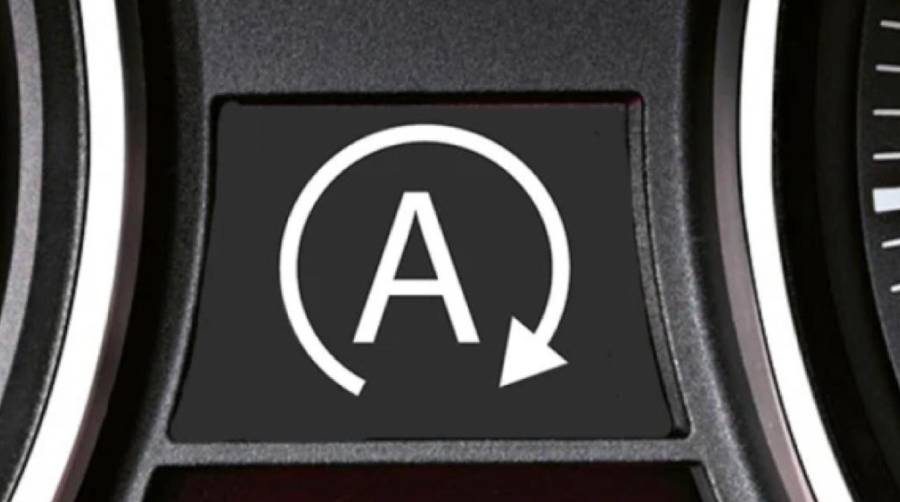
The A with a circle around it in a car represents the Automatic Start-Stop system, a feature that automatically shuts off the engine when the vehicle comes to a complete stop and restarts it when the driver is ready to move. The system reduces unnecessary engine idling, lowers fuel consumption, and limits exhaust emissions during stops at traffic lights or in heavy traffic.
The circled A symbol typically appears on the dashboard or a control button, but its meaning depends on the symbol’s color, design, and the vehicle manufacturer. A green A with a circular arrow generally indicates normal Start-Stop operation, while a yellow or amber symbol may indicate that the system is temporarily unavailable or has detected a malfunction. A crossed-out A can indicate that the feature is disabled or that operating conditions have not been met.
Seeing the A symbol does not necessarily mean something is wrong with your car. The system may remain inactive because of a weak battery, low engine temperature, high air-conditioning demand, or other operating conditions. Understanding these differences helps drivers distinguish normal system behavior from problems that require attention.
This guide explains what the circled A symbol means, why it appears, how to identify warning signs, and what to do when the Automatic Start-Stop system stops working.
What Does the A With a Circle Around It Mean in a Car?
The A with a circle around it is the symbol for the Automatic Start-Stop system in many modern cars. The letter A represents automatic operation, while the surrounding circular arrow indicates the engine’s stop-and-restart cycle. This feature automatically turns off the engine when the vehicle stops and restarts it when the driver prepares to move, reducing fuel consumption and emissions caused by unnecessary idling.
The Auto Start-Stop system operates under specific conditions determined by the vehicle’s electronic control unit (ECU). In many automatic-transmission vehicles, the engine shuts off when the driver presses the brake pedal and the car comes to a complete stop. Releasing the brake typically triggers an automatic restart. In manual-transmission vehicles, the system may shut off the engine when the transmission is in neutral and the clutch pedal is released, then restart it when the clutch is pressed.
The circled A symbol appears in two common locations: the instrument cluster and the Start-Stop control button. On the instrument cluster, it communicates the system’s operating status or warns about conditions preventing automatic engine shutdown. On a physical button, the same symbol identifies the control used to enable or disable the feature. The exact indicator behavior varies among manufacturers, including Ford, BMW, Mercedes-Benz, Volkswagen, and Jeep.
What Do the Different A With a Circle Symbols Mean?
The different A with a circle symbols indicate whether the Automatic Start-Stop system is operating, unavailable, disabled, or experiencing a malfunction. Manufacturers distinguish these conditions through indicator colors, crossed-out symbols, and additional warning marks. However, the meaning of each variation depends on the vehicle’s make, model, and dashboard design.
| Symbol appearance | Common meaning | Recommended action |
|---|---|---|
| Green A with circular arrow | Automatic engine stop is active | No action required |
| Yellow or amber A with circular arrow | System unavailable or warning condition | Check dashboard messages |
| A with a line through it | System disabled or automatic stopping unavailable | Check system settings and operating conditions |
| A with an exclamation mark | Possible Start-Stop system fault | Consult the owner’s manual and check for faults |
| A on a dashboard button | Start-Stop system control | Press to change the setting, if supported |
What Does a Green A With a Circle Mean?
A green A with a circle generally indicates that the Automatic Start-Stop system is functioning normally, often showing that the engine has been automatically stopped while the vehicle is stationary. The indicator confirms that the engine shutdown is intentional rather than the result of an unexpected stall.
For example, when a driver stops at a red traffic light, the engine may shut off while the vehicle’s electrical systems continue operating. The green Start-Stop indicator can remain illuminated until the driver releases the brake and the engine restarts. The precise display behavior depends on the manufacturer’s indicator system.
What Does a Yellow or Amber A With a Circle Mean?
A yellow or amber A with a circle can indicate that the Auto Start-Stop system is unavailable or has detected a condition requiring attention. Unlike a green indicator, an amber symbol may signal that automatic engine shutdown cannot occur under the current operating conditions or that the system requires inspection.
One common reason is insufficient battery charge. The battery management system can prevent automatic engine shutdown when it determines that the available electrical energy may not support a reliable restart. Other conditions include a cold engine, high cabin heating or cooling demand, and certain sensor faults. A persistent amber warning accompanied by a malfunction message should be diagnosed according to the vehicle manufacturer’s instructions.
What Does an A With a Line Through It Mean?
An A with a line through it commonly indicates that the Automatic Start-Stop function is disabled or temporarily unavailable. The crossed-out symbol communicates that the engine will not automatically shut off under the current conditions, even when the vehicle comes to a complete stop.
The symbol may appear after the driver manually disables Start-Stop using the dashboard button or vehicle settings. It can also appear when the system prevents automatic shutdown because of low battery charge, unsuitable engine temperature, or other operating requirements. A crossed-out A does not automatically indicate a mechanical failure.
An A symbol accompanied by an exclamation mark may represent a separate Start-Stop malfunction warning on certain vehicles. Drivers should check the dashboard message and owner’s manual to distinguish this warning from normal system inactivity. The symbol’s shape and color alone are not sufficient to diagnose a specific component failure.
Why Is the A With a Circle Light On in My Car?
The A with a circle light turns on to indicate the operating status of the Automatic Start-Stop system, including when the engine shuts off automatically, when the feature is temporarily unavailable, or when the vehicle detects a system fault. The exact meaning depends on the indicator’s color, whether it flashes or stays illuminated, and any accompanying dashboard message.
The symbol commonly appears when a vehicle stops at a traffic light or in heavy traffic. When the driver presses the brake pedal and the vehicle reaches a complete stop, the engine control unit checks whether automatic shutdown is permitted. If the battery has sufficient charge, the engine is within its required temperature range, and other operating conditions are satisfied, the system shuts off the engine. A Start-Stop indicator may then illuminate to confirm that the engine has stopped intentionally. In many automatic vehicles, releasing the brake pedal triggers an automatic restart.
The A symbol can also appear while the engine continues running. This happens when the Start-Stop system is enabled but cannot shut off the engine because one or more operating requirements have not been met. For example, a vehicle may keep its engine running when the battery charge is low, the windshield defroster is operating, or the cabin requires substantial heating or cooling. These conditions do not necessarily indicate a malfunction.
A persistent A warning light requires a different interpretation from a normal operating indicator. If the symbol remains amber, flashes, or appears alongside a Start-Stop malfunction message, the vehicle may have detected a fault in its battery management, electrical, or engine control systems. Drivers should consult the owner’s manual to identify the warning and determine whether further inspection is necessary.
Why Is the Auto Start-Stop System Not Working?
The Auto Start-Stop system stops working when the vehicle cannot satisfy the conditions required for safe automatic engine shutdown and restarting. The most common operating restrictions involve battery charge, engine temperature, climate-control demand, and vehicle-specific safety requirements. Electrical or sensor faults can also prevent the feature from functioning.
The system continuously monitors operating conditions through the engine control unit and associated sensors. Before shutting off the engine, it checks whether sufficient electrical power is available to operate essential systems and restart the engine. If a required condition is not satisfied, the engine continues running even when the vehicle is stationary. This protective behavior prevents unnecessary shutdowns that could interfere with normal vehicle operation.
The main reasons Auto Start-Stop may not activate include:
- Low battery charge: The battery management system prevents automatic shutdown when available electrical energy is insufficient for a reliable restart.
- Unsuitable engine temperature: The engine may need to reach its programmed operating temperature before automatic stopping is permitted.
- High climate-control demand: Air conditioning, heating, or windshield defogging may require the engine to remain running.
- Vehicle operating conditions: Steering input, transmission position, brake pressure, seat belt status, or an open hood can prevent activation, depending on the vehicle.
- Electrical or sensor faults: Problems involving battery monitoring, brake sensors, charging components, or control modules can disable the feature.
Can a Weak Car Battery Disable Auto Start-Stop?
A weak car battery can disable the Auto Start-Stop system because the vehicle must maintain enough electrical energy to restart the engine reliably. The battery management system monitors battery charge and, in equipped vehicles, additional parameters such as temperature and battery condition. When the available charge falls below the manufacturer’s required threshold, the control system prevents automatic engine shutdown.
Auto Start-Stop vehicles commonly use enhanced flooded batteries (EFB) or absorbent glass mat (AGM) batteries designed to support frequent engine restarts and electrical loads while the engine is stopped. These batteries must supply power to components such as lighting, infotainment, and climate-control electronics during an automatic stop. As battery capacity declines with age or insufficient charging, the vehicle may disable Start-Stop while continuing to operate normally.
For example, a car used primarily for short trips may not provide enough driving time to restore the battery charge consumed during starting and electrical operation. The Start-Stop feature may remain unavailable until the battery recovers sufficient charge. If the system continues to remain inactive after normal driving, a battery and charging-system test can help determine whether battery deterioration or another electrical problem is responsible.
Engine temperature also affects Start-Stop availability. After a cold start, the engine management system may keep the engine running to support warm-up, emissions control, and cabin heating. The feature becomes available once the required operating conditions are satisfied. The temperature thresholds and warm-up requirements differ between vehicle models.
Climate-control demand creates another operating restriction. When the air conditioner requires engine-driven compressor operation or the heating system needs additional engine heat, the control unit may prevent automatic shutdown or restart the engine earlier than expected. Windshield defogging can also take priority over fuel-saving operation to maintain visibility.
A faulty sensor can prevent the Start-Stop system from receiving the information needed to authorize engine shutdown. For example, an incorrect brake pedal sensor signal may prevent the control unit from confirming that the driver is holding the vehicle stationary. Battery monitoring faults and communication problems between control modules can produce similar symptoms. Unlike temporary restrictions caused by temperature or electrical demand, these faults may require diagnostic scanning and component testing to identify the underlying cause.
How Do You Fix an A With a Circle Warning Light?
To fix an A with a circle warning light, identify the indicator’s meaning, check the battery condition, verify the Auto Start-Stop operating requirements, and diagnose any persistent system faults. The correct repair depends on whether the symbol indicates temporary system unavailability or an actual malfunction. A warning light alone does not identify which component needs replacement.
Start by checking the dashboard message and the vehicle owner’s manual. A crossed-out A or an amber indicator may appear when the Start-Stop system is temporarily unavailable because of low battery charge, engine temperature, or climate-control demand. If the vehicle operates normally and no malfunction message appears, the system may resume operation automatically once its requirements are satisfied.
Next, inspect the battery and charging system. A weak 12V battery is a common reason for Start-Stop inactivity because the vehicle must reserve sufficient electrical energy for engine restarting. A qualified technician can perform a battery condition test and check charging-system performance. Battery voltage alone does not establish whether an AGM or EFB battery has enough capacity to support repeated starts. Some vehicles also require battery registration or battery management system adaptation after replacement.
Check whether operating conditions are preventing automatic shutdown. Allow the engine to reach its normal operating temperature, verify that the hood is securely closed, and confirm that the vehicle is being operated according to the manufacturer’s Start-Stop requirements. High air-conditioning demand, windshield defogging, and certain transmission or steering conditions can temporarily prevent activation.
If the warning remains active, an automotive diagnostic scanner capable of reading manufacturer-specific fault codes can help identify electrical, sensor, or control-module problems. For example, a malfunctioning battery monitoring sensor may report incorrect battery information, causing the engine control unit to disable automatic stopping. Repairing the underlying fault is more effective than replacing components based only on the dashboard symbol.
How Do You Reset an Auto Start-Stop Warning Light?
An Auto Start-Stop warning light generally clears when the condition preventing normal operation is resolved, although some faults require diagnostic repair and code clearing. There is no universal reset procedure because manufacturers use different control modules, diagnostic requirements, and warning-light strategies.
For temporary restrictions, the system may return to normal operation after the battery reaches an acceptable charge level, the engine warms up, or excessive climate-control demand ends. Some vehicles reassess Start-Stop availability during the next driving cycle. However, restarting the vehicle does not guarantee that a warning will disappear.
For a persistent malfunction, the correct procedure is to retrieve diagnostic trouble codes, identify the failed component or operating condition, complete the necessary repair, and follow the manufacturer’s reset instructions. Clearing fault codes without correcting the cause can result in the warning returning. Disconnecting the battery solely to reset the system is not recommended because it may erase vehicle settings or interfere with electronic system adaptations.
Professional inspection is necessary when the Start-Stop warning appears alongside starting difficulties, repeated stalling, charging-system warnings, or other electrical malfunctions. These symptoms can indicate problems extending beyond the automatic engine shutdown feature.
Is It Safe to Drive With the A With a Circle Light On?
It is generally safe to drive with the A with a circle light on when the symbol indicates normal Auto Start-Stop operation or temporary system unavailability and the vehicle otherwise operates correctly. The indicator does not automatically mean that the engine, transmission, or electrical system has failed. However, a persistent malfunction warning requires evaluation before the vehicle’s condition can be considered safe.
A green Start-Stop indicator commonly confirms that the engine has shut off automatically while the vehicle is stationary. In this situation, the system is performing its intended function, and the driver can continue driving when the engine restarts normally. Similarly, a crossed-out A may simply indicate that automatic engine shutdown is disabled or unavailable. The engine continues running during stops, but the vehicle can otherwise operate normally.
An amber A warning deserves closer attention, particularly when accompanied by a dashboard malfunction message. If the vehicle starts reliably, accelerates normally, and shows no additional warning lights, the issue may be limited to the Start-Stop feature. Drivers should still consult the owner’s manual and arrange an inspection when the warning persists.
Stop driving as soon as it is safe if the vehicle repeatedly stalls, fails to restart, loses power, or displays a serious engine or charging-system warning. These symptoms may indicate a broader mechanical or electrical problem rather than an isolated Start-Stop malfunction. A red oil-pressure warning, engine overheating warning, or other manufacturer-designated stop-driving alert requires following the vehicle’s emergency instructions.
For example, a vehicle displaying an amber Start-Stop unavailable message while operating normally may only need a battery condition check. In contrast, a vehicle that shuts off at an intersection and cannot restart requires immediate attention because it can obstruct traffic and expose occupants to additional risks. The safest response depends on the warning message and the vehicle’s actual behavior, not the circled A symbol alone.
How Does the Automatic Start-Stop System Work?
The Automatic Start-Stop system works by shutting off the engine when a vehicle stops and restarting it when the driver prepares to move. The system reduces fuel consumption during idling while maintaining essential electrical functions, including lighting, infotainment, and selected climate-control components.
The process begins when the vehicle slows to a complete stop. The engine control unit (ECU) evaluates information from the brake pedal sensor, battery management system, engine temperature sensors, and other vehicle-specific inputs. If the required conditions are satisfied, the ECU authorizes automatic engine shutdown. In many automatic-transmission vehicles, this occurs while the driver holds the brake pedal at a traffic light. Releasing the brake typically initiates the restart sequence.
Automatic engine restarting relies on a starter motor or another starting mechanism designed for the vehicle’s Start-Stop architecture. Conventional systems commonly use reinforced starter motors and AGM or EFB batteries to handle repeated starting cycles. Some mild-hybrid vehicles use a belt-driven starter-generator or integrated starter-generator instead. These components work with the vehicle’s electronic controls to restart the engine when driving resumes.
The battery management system plays a critical role because electrical accessories continue consuming energy while the engine is stopped. It monitors available battery power and prevents automatic shutdown when restarting reliability could be compromised. For example, a vehicle with insufficient battery charge may keep the engine running at a red light even though the Auto Start-Stop feature is enabled. This explains why the circled A indicator can show that the system is unavailable without indicating an engine malfunction.
Read more: Does an Exhaust Tip Change the Sound? Explained
How Do You Turn Off the Automatic Start-Stop System?
You can turn off the Automatic Start-Stop system by pressing its dedicated disable button or changing the setting through the vehicle’s infotainment system, depending on the manufacturer and model. The control commonly displays an A surrounded by a circular arrow, sometimes accompanied by the word OFF or a line crossing the symbol.
In vehicles equipped with a physical Start-Stop button, the control is commonly located on the center console, dashboard, or near the gear selector. Pressing the button disables automatic engine shutdown for the current operating period. Depending on the vehicle, an indicator on the button or instrument cluster confirms that the feature has been deactivated. The engine then continues running during normal stops instead of shutting off automatically.
Some vehicles provide Start-Stop controls through the infotainment display or vehicle settings menu. Drivers can locate the relevant option under engine, driving, or vehicle settings where supported. However, not every vehicle offers a manual disable function, and control availability differs across manufacturers, model years, and powertrain configurations.
Many vehicles automatically reactivate Start-Stop when the ignition is switched off and the engine is started again. This occurs because the manufacturer programs the system to return to its default operating state during a new driving cycle. For example, a driver may disable Start-Stop before entering heavy traffic but find the feature enabled again after restarting the vehicle the following morning.
Disabling Auto Start-Stop through the manufacturer’s controls does not normally prevent the vehicle from operating. However, the engine will continue idling during stops, eliminating the fuel savings associated with automatic shutdown. Drivers should use the vehicle’s approved settings rather than disconnecting sensors, modifying electrical wiring, or installing unverified bypass devices, which can interfere with vehicle diagnostics and electronic control systems.
Does the Auto Start-Stop System Save Fuel or Damage the Engine?
The Auto Start-Stop system saves fuel by eliminating unnecessary engine idling and does not inherently damage an engine designed to support automatic restarting. Its fuel-saving effectiveness depends on driving conditions, stop duration, and vehicle design. The system provides the greatest benefit in urban traffic, where frequent stops create opportunities to reduce fuel consumption.
When a conventional combustion engine idles, it continues burning fuel even though the vehicle is not moving. Auto Start-Stop eliminates this consumption during eligible stops by shutting down the engine. According to the U.S. Department of Energy, eliminating unnecessary idling can improve fuel economy, particularly in stop-and-go driving. The actual savings vary because engine size, traffic congestion, climate-control demand, and the frequency of automatic shutdowns affect total fuel consumption.
Auto Start-Stop also reduces exhaust emissions during periods when the engine would otherwise idle. However, the system provides limited fuel savings during uninterrupted highway driving because the engine rarely encounters conditions that trigger automatic shutdown. Its primary advantage comes from reducing stationary engine operation rather than improving combustion efficiency while driving.
Does Auto Start-Stop Wear Out the Starter or Battery?
Auto Start-Stop increases the frequency of engine starting cycles, but vehicles equipped with the system use components designed to withstand repeated restarts. These commonly include reinforced starter motors, enhanced batteries, and electronic controls that manage starting conditions. Although repeated operation contributes to component wear over time, it does not automatically cause premature starter or battery failure.
Traditional starter motors are designed primarily for occasional engine starts, while Start-Stop-compatible starters are engineered for substantially more frequent operation. Depending on the vehicle’s design, the system may use a reinforced starter motor, belt-driven starter-generator, or integrated starter-generator. The engine control unit coordinates these components to restart the engine when the driver releases the brake or performs another designated action.
Battery requirements also differ from those of conventional vehicles. Auto Start-Stop systems commonly use absorbent glass mat (AGM) or enhanced flooded batteries (EFB) because they support repeated charge-discharge cycles and provide electrical power while the engine is stopped. Installing an incompatible replacement battery can reduce system performance and create charging or battery-management problems.
Engine lubrication is another consideration because engine components experience different operating conditions during starting and continuous running. Manufacturers account for repeated warm restarts through engine design, lubrication systems, and operating restrictions. For example, the system may prevent automatic shutdown when engine temperature or other conditions fall outside programmed limits. These safeguards reduce unnecessary mechanical stress but do not eliminate normal engine wear.
Leaving Auto Start-Stop enabled is generally appropriate when the vehicle is functioning correctly and the manufacturer recommends normal system operation. Drivers who prefer uninterrupted engine operation can use the factory-provided disable control where available. However, a persistent Start-Stop warning, unreliable restarting, or abnormal electrical behavior should be investigated rather than treated as a reason to permanently ignore the system.