Yes, Toyota owns Lexus. Lexus is the luxury vehicle brand of Toyota Motor Corporation, the same parent company behind the Toyota automotive brand. Toyota developed Lexus as a separate premium marque to compete in the luxury vehicle market while maintaining Toyota’s broader mass-market vehicle lineup. Lexus officially entered the U.S. market in 1989 with the LS 400 and ES 250.
Toyota’s ownership does not mean Lexus and Toyota are identical brands or that every Lexus is simply a Toyota with a different badge. The two brands operate at different positions within Toyota Motor Corporation’s automotive business. Toyota primarily covers mainstream passenger cars, SUVs, trucks, and electrified vehicles, while Lexus focuses on luxury vehicles with different standards for design, interior materials, refinement, features, and customer experience.
The relationship becomes more complex at the engineering and manufacturing level. Certain Lexus and Toyota vehicles share platforms, powertrains, hybrid technology, or other components, while other Lexus models have architectures and specifications developed for their own product requirements. Understanding this distinction explains both why Lexus benefits from Toyota’s engineering and manufacturing resources and why the two brands can produce noticeably different vehicles. This article explains Toyota’s ownership of Lexus, why Lexus was created, how the two brands share technology, where Lexus vehicles are made, and the key differences between Toyota and Lexus.
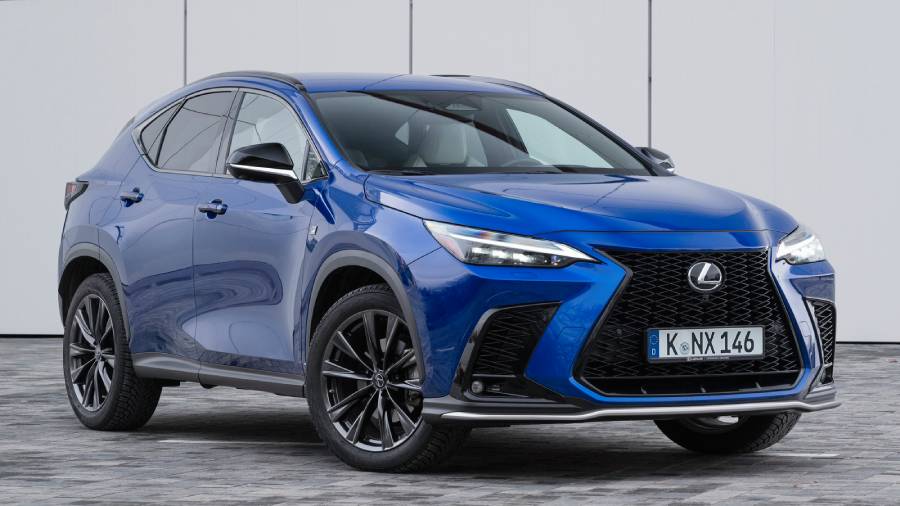
Does Toyota Own Lexus?
Yes, Toyota Motor Corporation owns Lexus. Lexus is Toyota’s luxury automotive brand rather than an independently owned automaker. Toyota established Lexus to sell premium vehicles under a separate brand while retaining ownership and access to Toyota’s engineering, manufacturing, and technology resources.
Toyota Motor Corporation, Toyota, and Lexus refer to different levels of the organization. Toyota Motor Corporation is the parent company, while Toyota and Lexus are automotive brands within its business. This distinction matters because saying that “Toyota owns Lexus” refers to corporate ownership; it does not mean the Toyota brand itself is a separate company that acquired Lexus.
Lexus maintains a distinct position within Toyota Motor Corporation. Toyota serves a broad mainstream market with vehicles ranging from passenger cars and crossovers to SUVs and trucks. Lexus targets the luxury market, where buyers expect higher levels of interior quality, refinement, comfort, technology, and dealership service. This positioning allows Toyota Motor Corporation to serve mainstream and luxury customers without placing both product groups under the same brand identity.
Ownership also gives Lexus access to Toyota’s broader automotive resources. The two brands can share vehicle architectures, engines, hybrid systems, transmissions, manufacturing expertise, and other technologies when appropriate. However, the final vehicles can differ substantially in materials, suspension tuning, noise insulation, features, design, and performance characteristics. For this reason, a Lexus should not automatically be described as a Toyota with a Lexus badge simply because Toyota owns the brand.
When Did Toyota Create Lexus?
Toyota developed Lexus during the 1980s and launched the brand in the United States in 1989. The project originated from Toyota’s plan to develop a flagship luxury vehicle capable of competing at the higher end of the automotive market. Instead of positioning that vehicle within its existing mainstream lineup, Toyota created a separate luxury brand around it.
The development effort became associated with Toyota’s flagship luxury-car project, which ultimately produced the Lexus LS 400. Toyota needed more than an expensive version of an existing vehicle to establish credibility in the luxury segment. The resulting product had to compete on attributes such as ride comfort, cabin refinement, build quality, performance, noise levels, and equipment while supporting a new premium brand identity.
Lexus entered the U.S. market in 1989 with the LS 400 and ES 250. The LS 400 served as the flagship and demonstrated the new brand’s luxury positioning, while the ES 250 gave Lexus a second model for its initial lineup. This launch established Lexus as a separate consumer-facing marque even though Toyota Motor Corporation remained its owner.
Creating Lexus also allowed Toyota to separate two market positions. Toyota could continue serving mainstream vehicle buyers while Lexus competed for luxury customers without forcing the Toyota name to cover both segments. That distinction remains central to the relationship today: Lexus is owned by Toyota Motor Corporation, but it operates with its own luxury brand identity, vehicle lineup, and market positioning.
Is Lexus the Same Company as Toyota?
Lexus and Toyota are not the same automotive brand, but both operate under Toyota Motor Corporation. Toyota Motor Corporation is the parent organization, while Toyota serves primarily as its mainstream vehicle brand and Lexus serves as its luxury vehicle brand. This structure allows the two marques to target different buyers while using resources from the same automotive group.
The distinction is most visible in product positioning. Toyota sells vehicles across broad segments, including passenger cars, crossovers, SUVs, pickup trucks, hybrids, and other electrified vehicles. Lexus concentrates on the premium and luxury markets. Its vehicles are developed around attributes such as higher-grade cabin materials, greater sound insulation, ride refinement, premium technology, distinctive styling, and a customer experience designed for luxury-car buyers.
Being separate brands does not require Toyota and Lexus to develop every component independently. Toyota Motor Corporation can use engineering knowledge, powertrains, vehicle architectures, safety technologies, and manufacturing processes across both brands. Sharing these resources can reduce unnecessary duplication while allowing engineers to adapt the final product to the requirements of each marque.
The result is a relationship based on shared corporate ownership but different brand identities. A Toyota and a Lexus may have technical connections beneath the surface, yet differences in design, equipment, tuning, materials, and market positioning can make the finished vehicles substantially different. The extent of that relationship depends on the specific models being compared rather than applying equally to every Toyota and Lexus vehicle.
Does Toyota Make Lexus Vehicles?
Yes, Lexus vehicles are produced within Toyota Motor Corporation’s manufacturing system. Toyota owns Lexus and provides the larger engineering and production infrastructure behind the luxury brand. Lexus vehicles, however, are assembled according to specific model requirements rather than being produced as ordinary Toyota vehicles and rebadged after assembly.
Japan remains an important manufacturing base for Lexus. Production has been associated with specialized facilities within Toyota’s manufacturing network, including plants responsible for particular Lexus models and powertrains. Lexus production also extends outside Japan for selected vehicles and markets. This means the country of assembly can differ according to the Lexus model, model year, and destination market.
Manufacturing location should also be separated from brand ownership. A Lexus assembled outside Japan remains a Lexus owned by Toyota Motor Corporation. Likewise, production within a Toyota-operated facility does not turn the vehicle into a Toyota-branded model. Ownership identifies the corporate relationship, while manufacturing identifies where and how a specific vehicle is produced.
Toyota’s manufacturing resources give Lexus access to established production processes, engineering expertise, quality-control systems, and supply networks. Lexus can then apply requirements appropriate to a luxury vehicle, including different materials, equipment, fit and finish, refinement targets, and model-specific production procedures. The combination explains how Lexus can benefit from Toyota’s industrial scale while maintaining a separate luxury-market identity.
Does Lexus Use Toyota Engines and Platforms?
Yes, some Lexus vehicles share engines, platforms, hybrid systems, transmissions, and other components with Toyota vehicles. Both brands belong to Toyota Motor Corporation, so sharing engineering resources allows the company to use proven technologies across multiple models. However, the level of component sharing varies by vehicle, and a shared engine or platform does not make two vehicles identical.
A vehicle platform provides the underlying architecture on which a model is developed. Two Toyota and Lexus vehicles can therefore use related architecture while receiving different suspension settings, body structures, dimensions, sound insulation, interior materials, technology, and performance characteristics. Toyota Motor Corporation can use the same fundamental engineering investment across several vehicles while adjusting each product for its intended market.
Powertrains can follow a similar approach. Certain Lexus vehicles use engines or hybrid technology related to systems found in Toyota models. The final application can still differ because engineers can change transmission calibration, power output, drivetrain configuration, cooling, exhaust components, sound insulation, and other vehicle-specific settings. Hybrid technology is another important area of shared expertise because Toyota has deployed electrified powertrains across both Toyota and Lexus product lines.
This engineering relationship creates economies of scale without requiring the two brands to offer the same driving experience. Toyota generally develops products for broader market segments, while Lexus applies shared technologies within a luxury-oriented package. For example, additional noise isolation, different suspension calibration, higher-grade cabin materials, and model-specific equipment can substantially change how a Lexus feels even when part of its underlying engineering is related to a Toyota vehicle.
Several Lexus models have close architectural relationships with Toyota vehicles, but the relationship is different for each model. One of the clearest examples is the Lexus LX and Toyota Land Cruiser. The two full-size SUVs have historically shared fundamental architecture and engineering resources, while Lexus positions the LX as the more luxury-focused product through differences in styling, cabin appointments, technology, equipment, and vehicle tuning.
The Lexus GX also has a close technical relationship with Toyota’s body-on-frame SUV family. This relationship illustrates why identifying a shared platform is more accurate than simply calling one vehicle a rebadged version of another. Vehicles developed from related architecture can share structural and mechanical foundations while being configured for different customers, equipment levels, and market positions.
Relationships also exist elsewhere in the Toyota and Lexus lineups, but comparisons should be made by generation and model rather than by brand alone. Platforms, powertrains, and model strategies change over time. Two vehicles that were closely related in one generation do not necessarily retain exactly the same relationship after either model is redesigned.
For this reason, “Lexus uses Toyota technology” is accurate as a broad description, while “every Lexus is a rebadged Toyota” is not. Toyota Motor Corporation shares engineering where it supports product development, but Lexus vehicles receive specifications appropriate to the brand’s luxury positioning.
What Is the Difference Between Toyota and Lexus?
The main difference between Toyota and Lexus is market positioning: Toyota primarily serves the mainstream vehicle market, while Lexus is Toyota Motor Corporation’s luxury brand. This distinction affects vehicle design, interior materials, refinement, technology, equipment, pricing, and the overall ownership experience. Although models from the two brands can share engineering resources, Lexus uses those resources to produce vehicles designed for a higher luxury segment.
Interior quality is one of the clearest differences. Lexus vehicles generally place greater emphasis on premium upholstery, trim materials, seat design, cabin lighting, sound insulation, and the tactile quality of frequently used controls. Toyota vehicles can also offer well-equipped interiors, particularly in higher trim levels, but their primary objective is not necessarily to meet the same luxury positioning. This distinction becomes clearer when comparing related vehicles rather than comparing the brands only by their badges.
Ride refinement and noise control also separate the brands. Lexus can use additional sound-deadening materials, model-specific suspension tuning, and other measures intended to reduce road, wind, and powertrain noise. Toyota may prioritize a different combination of comfort, practicality, durability, fuel economy, capability, and price depending on the model. As a result, two vehicles with related mechanical foundations can deliver noticeably different experiences from behind the wheel.
Features and technology provide another point of differentiation. Lexus models can receive luxury-focused comfort, convenience, infotainment, audio, and driver-assistance equipment appropriate to their market position. The exact difference depends on the models and trim levels being compared because a high-specification Toyota can offer equipment that overlaps with an entry-level Lexus. Brand positioning therefore does not mean every Lexus feature is unavailable on every Toyota.
Price reflects these differences. Lexus vehicles generally occupy higher price segments because buyers are paying for more than the underlying engine or platform. Interior materials, refinement, equipment, styling, luxury-brand positioning, and customer experience contribute to the final product. This is why comparing a Toyota and Lexus solely on whether they share components provides an incomplete picture of their differences.
Are Lexus Vehicles as Reliable as Toyota Vehicles?
Lexus vehicles can offer reliability comparable to Toyota vehicles, but reliability should be evaluated by model, model year, powertrain, and maintenance history rather than ownership alone. Toyota and Lexus benefit from engineering resources within the same parent company, and shared components can give certain models a common technical foundation. That relationship does not guarantee identical reliability across both lineups.
Vehicle complexity is one reason reliability can differ. A Lexus may contain additional comfort systems, electronic features, power-operated equipment, adaptive components, or more complex powertrain technology than a related Toyota. Each additional system introduces components that can eventually require diagnosis, repair, or replacement. A vehicle can therefore have a durable engine and transmission while still developing problems with other equipment as it ages.
Model generation also matters. Reliability results from the specific components and engineering decisions used in a particular vehicle, not simply the logo on its grille. A redesigned engine, transmission, hybrid system, infotainment system, or suspension component can change the ownership record of one generation compared with another. For used-car buyers, examining the exact model year and powertrain is consequently more useful than assuming all Lexus vehicles have the same reliability.
Maintenance history becomes especially important as a vehicle gets older. Two examples of the same Lexus model can have very different long-term conditions if one received scheduled maintenance and timely repairs while the other was neglected. Mileage, driving environment, accident history, previous repairs, and service records can all affect the condition of a used vehicle.
Toyota ownership therefore provides useful context for Lexus reliability, particularly where the brands share proven engineering, but it should not be treated as a guarantee that every Lexus will be as reliable as every Toyota. Buyers should evaluate reliability at the model and model-year level and then inspect the history and condition of the individual vehicle they intend to purchase.
Which Lexus Models Are Related to Toyota Models?
Several Lexus models are related to Toyota vehicles through shared or closely related platforms, powertrains, and vehicle architectures. The relationship is particularly visible among SUVs, where Toyota Motor Corporation can develop a common engineering foundation and adapt it for different brands. However, the exact relationship depends on the model and generation, so related vehicles should not automatically be treated as identical products.
The Lexus LX and Toyota Land Cruiser are among the clearest examples. Both full-size SUVs have used closely related body-on-frame architecture, but they serve different positions in the market. The Land Cruiser emphasizes a combination of durability, off-road capability, and utility, while the Lexus LX adds a stronger luxury focus through its cabin, equipment, styling, refinement, and brand positioning.
The Lexus GX is another example of engineering shared within Toyota Motor Corporation’s body-on-frame vehicle family. Depending on the generation and market, the GX has close architectural relationships with Toyota off-road SUVs. Lexus differentiates the finished vehicle with model-specific styling, interior appointments, technology, suspension or chassis calibration, and luxury-focused equipment.
Other Toyota and Lexus vehicles can share powertrain technologies or platform families without being direct equivalents. This distinction is important because platform sharing occurs throughout the automotive industry. A common architecture gives manufacturers a foundation for areas such as structural design, drivetrain packaging, and production, while individual models can still differ substantially.
| Lexus model | Related Toyota vehicle or family | Main relationship |
|---|---|---|
| Lexus LX | Toyota Land Cruiser | Closely related body-on-frame architecture |
| Lexus GX | Toyota body-on-frame SUV family | Related architecture and mechanical systems |
| Selected Lexus hybrids | Toyota hybrid vehicle families | Shared hybrid engineering and technologies |
| Selected Lexus cars and crossovers | Toyota platform families | Platform or powertrain relationships vary by generation |
The safest way to compare the brands is therefore to examine a specific Lexus model, generation, and powertrain. A technical relationship between one Lexus and one Toyota does not prove that the same relationship applies across the entire Lexus lineup.
What Other Car Brands Does Toyota Own?
Toyota Motor Corporation’s automotive business extends beyond the Toyota and Lexus brands. Its wider corporate network includes other automotive businesses and relationships, but ownership must be distinguished from subsidiaries, controlling interests, and minority investments. A company connected to Toyota is not automatically a wholly owned Toyota brand.
Daihatsu is closely integrated into the Toyota group and specializes primarily in compact vehicles and kei cars. Hino Motors has also had a major corporate relationship with Toyota and focuses on commercial vehicles such as trucks and buses. These businesses occupy different automotive segments from Lexus, which gives Toyota Motor Corporation exposure to markets ranging from compact and commercial vehicles to mainstream passenger vehicles and luxury cars.
Toyota also has equity relationships with other automakers. An equity stake, however, should not be described as equivalent to owning an automotive brand outright. Corporate shareholdings and alliances can also change over time, making the distinction especially important when discussing Toyota’s current brand portfolio.
Lexus therefore occupies a specific position within the broader Toyota automotive structure: it is Toyota Motor Corporation’s luxury vehicle brand. Toyota serves the mainstream market, while other businesses and investments extend the corporation’s presence into additional automotive segments. This corporate structure explains why Lexus can maintain a distinct luxury identity while benefiting from the engineering, manufacturing, and technological resources of one of the world’s largest automakers.
Read more: Lexus Shift Lock Override Button Facts You Should Know
Is Lexus Owned by Toyota or Is It an Independent Brand?
Lexus is owned by Toyota Motor Corporation and is not an independently owned automaker. Lexus functions as Toyota Motor Corporation’s luxury vehicle brand, while Toyota operates as its mainstream automotive brand. The two marques have different identities and market positions, but they ultimately belong within the same corporate automotive structure.
Lexus maintains enough separation to operate as a distinct consumer-facing brand. It has its own name, badge, vehicle lineup, design direction, luxury positioning, dealership experience, and product requirements. These distinctions explain why consumers encounter Lexus and Toyota as separate brands even though the same parent company sits behind both.
Corporate ownership also allows Lexus to use Toyota Motor Corporation’s engineering and industrial resources. Depending on the model, this relationship can include shared or related platforms, powertrains, hybrid technologies, components, manufacturing expertise, and production facilities. Lexus can then combine those resources with different materials, equipment, refinement targets, vehicle tuning, and styling to meet the expectations of the luxury market.
The distinction between ownership and brand identity is therefore essential. Toyota Motor Corporation owns Lexus, while Lexus operates as its distinct luxury automotive brand. A shared parent company explains the technical and manufacturing connections between Toyota and Lexus, but it does not make every vehicle from the two brands equivalent.