A clicking blend door actuator usually means the actuator cannot move or hold the HVAC blend door in the position requested by the climate control system. Five common causes are worn or stripped internal gears, a stuck blend door, lost actuator calibration, an electrical or control problem, and incorrect actuator installation or alignment. The clicking often comes from behind the dashboard and may start when you turn on the vehicle, switch between hot and cold air, or adjust the HVAC controls.
The noise occurs because the actuator uses a small electric motor and reduction gears to move the blend door, which regulates the mix of heated and cooled air entering the cabin. When damaged gears slip or the door resists movement, the actuator may repeatedly attempt to reach its commanded position, producing a rhythmic clicking or ticking sound. A calibration problem can create a similar symptom even when the actuator gears are still functional.
A clicking noise does not automatically mean the actuator needs replacement. Identifying when the noise occurs, which HVAC setting triggers it, and whether the outlet temperature responds correctly helps distinguish a failed blend door actuator from a stuck door or another HVAC actuator. This guide explains the causes, diagnostic process, repair options, replacement considerations, and costs associated with a clicking blend door actuator.
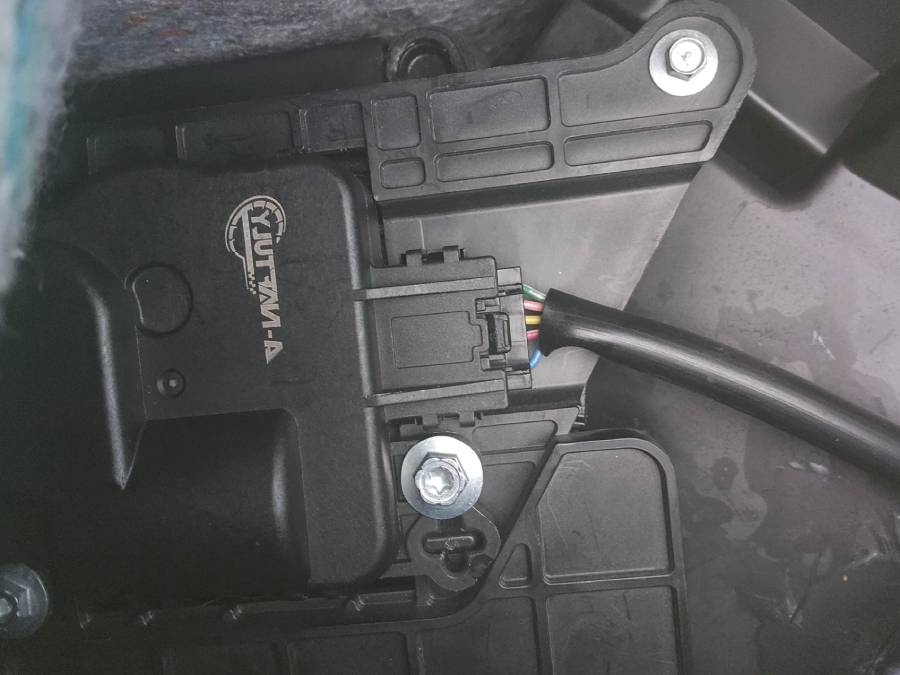
Why Is My Blend Door Actuator Clicking?
Your blend door actuator is clicking because the actuator is repeatedly trying to move or position the HVAC blend door but cannot complete the commanded movement correctly. The problem can originate inside the actuator, at the blend door, or in the system that determines the actuator position. The repeated attempt to move creates the clicking or ticking noise heard behind the dashboard.
A blend door actuator converts an electrical command from the vehicle’s HVAC controls into mechanical movement. Inside the actuator, a small electric motor turns reduction gears connected to an output shaft. The shaft moves the blend door inside the HVAC housing, changing how much heated or cooled air enters the cabin. When the system requests a different temperature, the actuator rotates the door to the required position.
Clicking begins when this movement is interrupted or incorrectly controlled. For example, stripped gear teeth can prevent the output shaft from following the motor. The motor continues turning while damaged gear teeth repeatedly slip against each other, producing a rhythmic click. A stuck blend door can create a similar result because the actuator attempts to move a door that has excessive resistance.
The timing of the clicking provides useful diagnostic information. Clicking that starts when you change the temperature setting points toward the blend door and its actuator because that command requires the blend door to move. Clicking that occurs when changing the vent from the dashboard to the floor or defrost setting may instead involve a mode door actuator. Identifying which HVAC command triggers the noise helps narrow down the faulty component before parts are removed.
What Causes a Blend Door Actuator to Click?
There are 5 main causes of a clicking blend door actuator: worn internal gears, a stuck blend door, lost actuator calibration, an electrical or control problem, and incorrect actuator installation or alignment. Although these problems can produce a similar clicking sound, they do not require the same repair.
1. Worn or stripped actuator gears are a common mechanical cause of repeated clicking. The actuator relies on small reduction gears to transfer torque from its electric motor to the blend door. When gear teeth wear down, crack, or strip, the motor can continue rotating without moving the output shaft through its intended range. The damaged teeth repeatedly engage and slip, creating a consistent clicking noise while the actuator tries to reach its commanded position.
Gear damage can also explain why the clicking repeats at the same point whenever the temperature setting changes. The actuator may move normally through part of its range before reaching the damaged section of the gear. At that point, the gear slips and the blend door stops moving even though the motor remains energized. An actuator with physically stripped gears generally requires replacement rather than recalibration.
2. A stuck or obstructed blend door can make a functional actuator click under load. The blend door moves inside the HVAC housing, and the actuator must overcome the resistance required to reposition it. If the door binds, becomes obstructed, or its movement mechanism is damaged, the actuator may be unable to complete the requested rotation.
This distinction matters because a stuck blend door and a failed actuator are not the same fault. Installing a new actuator without checking whether the blend door can move correctly can leave the original clicking problem unresolved. It can also place excessive load on the replacement actuator. Diagnosis should therefore verify both actuator operation and blend door movement whenever access to the components allows it.
3. Lost actuator calibration can cause clicking even when the actuator is still mechanically capable of moving the door. The HVAC system needs to associate actuator positions with the physical travel limits of the blend door. When this position relationship is incorrect, the system may command the actuator beyond the door’s actual stopping point or repeatedly attempt to reach a position it cannot recognize correctly.
Calibration problems are especially relevant when clicking begins after HVAC work, electrical service, battery-related procedures, or actuator replacement. The exact relearn procedure varies by vehicle manufacturer and HVAC system. A universal reset procedure should not be applied to every vehicle because some systems perform automatic calibration while others require a manufacturer-specific procedure or diagnostic equipment.
4. An electrical or HVAC control problem can interfere with actuator positioning. The actuator depends on its electrical connector, wiring, control signal, and position feedback system to receive and execute commands. A poor connection, damaged circuit, incorrect control signal, or position-feedback fault can cause the actuator to behave differently from the setting selected at the climate controls.
Electrical diagnosis becomes more important when the actuator behaves inconsistently rather than clicking at the same mechanical point every time. For example, intermittent operation combined with other HVAC control problems warrants checking the connector and circuit before assuming that stripped gears are the only possible cause. Replacing an actuator without confirming its power, control, and mechanical operation can result in unnecessary parts replacement.
5. Incorrect installation or alignment can make a new blend door actuator click immediately after replacement. The actuator output and blend door shaft need to be positioned correctly when the new part is installed. An incorrectly aligned actuator may reach its internal travel limit before the blend door reaches the position expected by the HVAC system.
A newly installed actuator that clicks should therefore not automatically be considered defective. Check that the replacement part matches the vehicle application, the actuator is correctly seated on the door shaft, the mounting points are secure, and the blend door moves through its required range. The vehicle’s specified calibration or relearn procedure should also be completed when the HVAC system requires it.
The cause should be identified before choosing the repair. Stripped gears generally point toward actuator replacement, a calibration error may require a relearn procedure, and a stuck blend door requires correcting the door or HVAC housing problem. This diagnosis prevents the clicking sound from being treated as proof that the actuator itself is always the failed component.
Why Does My Blend Door Actuator Click When I Start the Car?
A blend door actuator can click when you start the car because the HVAC system commands the actuator to move to a stored or requested position, exposing a mechanical or calibration problem as soon as the actuator begins moving. The noise may last for several seconds and stop, or it may continue if the actuator repeatedly fails to reach the position expected by the HVAC system.
The actuator receives a command that determines where the blend door should be positioned for the selected cabin temperature. Its electric motor then drives the internal gears and output shaft to move the door. An actuator with stripped or damaged gear teeth may begin clicking as soon as this startup movement occurs because the motor turns while the damaged gears slip instead of transferring movement to the blend door.
A calibration problem can produce a similar startup symptom. The HVAC system needs the actuator position to correspond with the physical travel range of the blend door. If these positions no longer correspond correctly, the system may attempt to drive the actuator toward a position that the door has already reached or cannot reach. The resulting repeated movement can sound like clicking behind the dashboard.
The duration and consistency of the noise help narrow the diagnosis. Clicking that occurs for several seconds after nearly every startup suggests a repeatable HVAC door positioning problem. Clicking that continues after startup or returns whenever the climate settings are adjusted provides additional evidence that an actuator or HVAC door cannot complete its commanded movement. The specific actuator still needs to be identified because a vehicle can use separate actuators for temperature mixing, airflow direction, and recirculation.
Why Does My Blend Door Actuator Click When I Change the Temperature?
A blend door actuator that clicks when you change the temperature is likely having difficulty moving the blend door between its hot and cold positions. Changing the temperature setting is particularly useful for diagnosis because it directly requests movement from the blend door actuator on HVAC systems that use this type of actuator for temperature control.
The sequence begins at the climate controls. When you change the requested cabin temperature, the HVAC control system commands the actuator to reposition the blend door. The actuator motor turns its reduction gears, the output shaft rotates, and the blend door changes the proportion of air passing through or around the heating section of the HVAC system. The resulting airflow becomes warmer or cooler according to the requested setting.
A mechanical actuator failure interrupts this sequence. For example, an actuator may successfully move the blend door through part of its travel before damaged gear teeth reach their engagement point. The gear then slips repeatedly, producing a click while the door remains stationary or moves inconsistently. This can explain a combination of two symptoms: clicking behind the dashboard and vent temperature that does not respond correctly to the selected temperature setting.
The relationship between the HVAC setting and the noise also helps distinguish the blend door actuator from other actuators. If clicking consistently starts when the temperature is moved from cold to hot or hot to cold, investigate the blend door actuator and blend door first. If the noise instead starts when selecting dashboard vents, floor vents, or defrost, the mode door actuator becomes a stronger suspect. Clicking triggered specifically by the recirculation button points toward the recirculation door actuator rather than the temperature blend door actuator.
Testing the controls in this way provides a useful diagnostic shortcut before dashboard components are removed. Match the control that triggers the clicking with the HVAC function that fails to identify which door and actuator should be inspected. This approach is more reliable than assuming every clicking sound behind the dashboard comes from the blend door actuator.
How Can I Tell Which HVAC Actuator Is Clicking?
You can identify which HVAC actuator is clicking by matching the noise with the climate-control function that triggers it. A vehicle may have multiple HVAC actuators behind the dashboard, and each actuator controls a different air door. Clicking during a temperature adjustment points toward the blend door actuator, while clicking during a vent-mode or recirculation change points toward a different actuator.
What Does the Blend Door Actuator Control?
The blend door actuator controls the position of the blend door to regulate the temperature of air entering the cabin. When you change the temperature setting, the HVAC system commands the actuator to move the door toward a warmer or cooler position.
A failing blend door actuator may click during this movement because its internal gears slip, its position is incorrect, or the blend door resists movement. The temperature from the vents may also remain too hot, too cold, or inconsistent with the selected setting. Clicking that repeatedly appears when moving the temperature control between hot and cold therefore provides a strong reason to inspect the blend door actuator.
What Does the Mode Door Actuator Control?
The mode door actuator controls where air exits the HVAC system, such as through the dashboard vents, floor vents, or defrost outlets. It changes airflow direction rather than primarily controlling air temperature.
A mode door actuator can produce a clicking sound similar to a failing blend door actuator. The difference is the triggering command. If the clicking starts when you switch from dashboard vents to floor vents or select defrost, the mode door actuator should be investigated before replacing the blend door actuator. Air that continues coming from the wrong vents provides another clue that the mode door or its actuator is not reaching the requested position.
What Does the Recirculation Door Actuator Control?
The recirculation door actuator controls whether the HVAC system draws outside air into the cabin or recirculates air already inside the vehicle. Pressing the recirculation button commands this door to change position.
Clicking that begins specifically when recirculation is switched on or off points toward the recirculation door actuator. Depending on the vehicle, this actuator may be located near the glove box or another section of the HVAC housing, which can make its noise sound similar to a blend door actuator located elsewhere behind the dashboard.
The most useful distinction is therefore based on function: temperature changes indicate the blend door actuator, vent-direction changes indicate the mode door actuator, and recirculation changes indicate the recirculation door actuator. This test does not replace physical diagnosis, but it narrows the search to the actuator associated with the failing HVAC function.
How Do I Diagnose a Clicking Blend Door Actuator?
Diagnose a clicking blend door actuator by locating the noise, reproducing it with the HVAC controls, checking the resulting air temperature, inspecting the actuator, and verifying that the blend door can move correctly. The goal is to confirm whether the actuator itself has failed before replacing it.
Start by reproducing the symptom with the vehicle stationary. Turn the HVAC system on and listen for the location of the clicking. Change the temperature gradually from the cold setting toward the hot setting and then back again. Note exactly when the clicking begins and whether it stops at a particular temperature setting. A repeatable click associated with temperature adjustment provides stronger evidence of a blend door actuator problem than a noise that occurs only when changing vent direction.
Check the air coming from the vents during the same test. The selected temperature and actual outlet temperature should respond to the blend door movement. An actuator problem becomes more likely when clicking occurs together with air that remains hot after selecting cold, remains cold after selecting heat, or changes inconsistently. The combination of noise and incorrect temperature provides more diagnostic information than the clicking sound alone.
Locate the actuator before removing or replacing parts. Access varies substantially between vehicle models because manufacturers position HVAC actuators at different points on the HVAC housing. Some can be reached after removing a glove box or lower dashboard panel, while others require considerably more interior disassembly. Use the service information for the specific year, make, and model to identify the blend door actuator rather than assuming that the first actuator visible behind the dashboard controls temperature.
Inspect the actuator mounting and electrical connector once the component is accessible. Look for a loose mounting point, damaged connector, obvious actuator housing damage, or signs that the actuator is moving abnormally when the temperature setting changes. A clicking actuator that attempts to rotate but repeatedly stops or jumps at the same position can indicate an internal mechanical problem such as damaged gears.
Verify the blend door itself when the repair procedure allows the actuator to be removed safely. The door should not be assumed to move correctly simply because the actuator is clicking. Excessive resistance or restricted movement can indicate that the blend door or its mechanism is the underlying problem. Installing a new actuator onto a door that cannot move through its intended range may leave the clicking unresolved or place excessive load on the replacement part.
Calibration should also be considered when the actuator and blend door appear mechanically functional. The required procedure depends on the vehicle. Some HVAC systems can relearn actuator positions automatically, while others use a manufacturer-specific calibration process or diagnostic equipment. Follow the service procedure for the specific vehicle instead of repeatedly disconnecting the battery or removing HVAC fuses based on a generic reset method.
The diagnosis should end with a specific fault rather than the clicking noise itself. Replace the actuator when testing identifies an internal actuator failure, perform the specified relearn when incorrect calibration is responsible, and repair the blend door or related mechanism when restricted door movement is causing the actuator to click. Confirming the failed component first reduces unnecessary replacement and prevents a new actuator from being installed without correcting the original problem.
How Do I Fix a Clicking Blend Door Actuator?
Fix a clicking blend door actuator by correcting the specific fault that prevents the actuator and blend door from reaching the commanded position. The 2 primary repair paths are recalibrating an actuator that remains mechanically functional or replacing an actuator with failed gears, motor components, or position-control components. A stuck or damaged blend door requires a separate repair because replacing the actuator alone does not correct restricted door movement.
Before choosing either repair, confirm that the clicking actually comes from the blend door actuator. Change the temperature setting and verify that the noise occurs when the actuator is commanded to move. Inspect its electrical connector and mounting, and check the blend door for restricted movement when the vehicle-specific repair procedure provides safe access. This prevents a mode door actuator, recirculation actuator, wiring problem, or stuck HVAC door from being mistaken for a failed blend door actuator.
How Do I Recalibrate a Blend Door Actuator?
Recalibrate the blend door actuator when it can still move the door but its learned position no longer corresponds with the actual travel range of the blend door. Calibration allows the HVAC control system to establish the positions associated with the door’s operating range so that the actuator stops at the correct points.
A calibration problem differs from stripped internal gears. An actuator with intact gears may move normally but attempt to travel beyond an expected position, repeatedly return to an incorrect position, or behave incorrectly after HVAC or electrical work. In this situation, restoring the correct position reference can resolve the clicking without replacing a mechanically functional actuator.
The recalibration procedure is vehicle-specific. Depending on the HVAC system, relearning may occur automatically, require a defined ignition and control sequence, or require a compatible diagnostic scan tool. For this reason, a generic procedure such as disconnecting the battery, pulling an HVAC fuse, or repeatedly cycling the ignition should not be presented as a universal blend door actuator reset.
Use the service procedure specified for the vehicle’s year, make, model, and HVAC configuration. After completing the procedure, operate the temperature control through its normal range and confirm that the actuator moves without clicking. The vent temperature should also respond to the selected setting. Clicking that remains at the same actuator position after a correct calibration indicates that further mechanical diagnosis is necessary.
When Should I Replace the Blend Door Actuator?
Replace the blend door actuator when diagnosis confirms an internal mechanical or electrical failure that calibration cannot correct. Stripped gear teeth are a clear example because recalibration cannot restore missing or damaged gear surfaces. A failed motor, defective internal position mechanism, or actuator that cannot consistently move through its required range can also justify replacement.
Repeated clicking at the same point in actuator travel is a useful mechanical clue. The motor may begin moving normally, reach a damaged section of the gear train, and then produce repeated clicks as the gears slip. The blend door may consequently stop before reaching the requested position, leaving the cabin air hotter or colder than the temperature selected on the controls.
Check the blend door before installing the replacement actuator whenever the repair procedure allows it. The door should move through its intended range without abnormal resistance. Do not use a new actuator to force a blend door that is stuck or difficult to move. Excessive resistance can prevent the repair from solving the original problem and place unnecessary load on the replacement actuator.
The replacement actuator must also match the required location and vehicle application. A vehicle with multiple HVAC actuators may use components that appear similar while serving different functions or positions. Confirm the correct part for the temperature blend door rather than selecting an actuator solely because it physically resembles the removed component.
Correct alignment is equally important during installation. The actuator output and blend door shaft must engage in the positions specified by the repair procedure. Forcing the actuator onto a misaligned shaft can create improper travel or immediate clicking when the HVAC system commands movement.
Complete the vehicle-specific calibration or relearn procedure after installation when required. Then test the HVAC system by moving the temperature setting from cold to hot and back again. A successful repair should eliminate the repeated clicking and restore predictable temperature control through the vents. If a new actuator still clicks, recheck actuator alignment, blend door movement, calibration, the electrical connection, and whether the correct HVAC actuator was replaced.
Can I Drive With a Clicking Blend Door Actuator?
You can generally drive with a clicking blend door actuator because the actuator is part of the HVAC system and does not directly control the engine, transmission, brakes, or steering. The failure primarily affects cabin temperature control and, depending on which HVAC door is affected, the ability to direct conditioned air where it is needed. The clicking should still be diagnosed because an HVAC door stuck in the wrong position can create practical visibility and comfort problems.
A failed blend door actuator can leave the blend door fixed at one position. If it remains toward the cold position, the heater may provide insufficient warm air. If it remains toward the hot position, the air conditioning system may be unable to deliver the expected cold air even when the refrigeration side of the AC system is functioning. An actuator that moves intermittently can also cause the vent temperature to change unpredictably.
The urgency increases when the HVAC problem interferes with windshield defogging or defrosting. The exact effect depends on which HVAC door or actuator has failed because airflow direction is commonly controlled by a mode door rather than the temperature blend door. However, inadequate temperature control combined with another HVAC door problem can make it harder to clear condensation, frost, or ice from the windshield. Reduced visibility should be treated as a driving-safety problem rather than merely a cabin-comfort issue.
Continued clicking also indicates that the underlying fault remains present. For example, an actuator with damaged gears may continue attempting to move whenever the HVAC system commands a new position. A stuck blend door can continue placing resistance on the actuator. Driving the vehicle does not correct either mechanical problem, and repeated operation should not be used as a substitute for diagnosis.
A clicking blend door actuator usually does not require you to stop driving immediately, but it should be repaired when it prevents reliable heating, cooling, or windshield climate control. Diagnose the affected HVAC door first, especially when the symptom involves airflow direction or defrost operation, because clicking behind the dashboard does not prove that the temperature blend door actuator is the failed component.
How Much Does It Cost to Replace a Blend Door Actuator?
The total cost to replace a blend door actuator consists of the price of the replacement actuator plus the labor required to access, remove, install, and calibrate it. Labor can create a large difference between vehicles because actuator location and dashboard design determine how much interior trim or HVAC equipment must be removed.
The actuator itself is only one part of the repair cost. Replacement parts vary according to the vehicle’s year, make, model, HVAC configuration, actuator location, and whether an OEM or aftermarket component is used. Vehicles with several HVAC actuators also require correct part identification because the temperature blend door actuator may differ from the mode or recirculation actuator.
Labor depends heavily on accessibility. An actuator located behind a removable glove box or lower dashboard panel can require substantially less disassembly than an actuator positioned deep within the dashboard or HVAC housing. A difficult location increases labor time even when the failed component itself is relatively small. This explains why two blend door actuator replacements can have significantly different total repair costs.
Additional diagnosis can also affect the final bill. A technician may need to determine which actuator is producing the noise, verify electrical operation, inspect blend door movement, and perform an HVAC calibration or relearn after installation. If diagnosis reveals that the blend door or another part of the HVAC housing is damaged, the repair becomes different from a straightforward actuator replacement and can require considerably more disassembly.
For a vehicle-specific estimate, use parts cost + vehicle-specific labor time + diagnostic or calibration charges when applicable rather than relying on one universal replacement price. A reliable estimate requires the vehicle’s year, make, model, engine or trim when relevant, and the location of the failed actuator. Current local labor rates also affect the final amount.
Do not approve actuator replacement based only on the clicking sound. Confirm that the actuator is the failed component before comparing replacement costs. Recalibration can resolve a position-related problem in some systems, while a stuck or damaged blend door requires a different repair. Accurate diagnosis prevents the cost of replacing a functional actuator without eliminating the original clicking noise.
What Are the Other Symptoms of a Bad Blend Door Actuator?
A bad blend door actuator can cause 5 main symptoms besides repeated clicking: incorrect vent temperature, no temperature change, inconsistent heating or cooling, ticking or knocking behind the dashboard, and HVAC controls that do not produce the expected blend door movement. These symptoms occur because the actuator can no longer position the blend door accurately enough to regulate the mixture of heated and cooled air.
Incorrect vent temperature is one of the strongest symptoms when it appears together with clicking. The temperature selected on the climate controls should correspond with movement of the blend door and a resulting change in outlet temperature. A failed actuator can leave the door closer to the hot or cold position, causing warm air when cold air is requested or cool air when heat is selected. This symptom should still be distinguished from refrigeration, heater, coolant, and HVAC control problems that can also affect outlet temperature.
A lack of temperature change provides another diagnostic clue. Moving the temperature control from its lowest to highest setting should command substantial blend door movement. If the selected temperature changes on the control panel but the air from the vents remains at approximately the same temperature, the blend door may not be moving through its required range. An actuator with stripped gears can produce this behavior because its motor operates without transferring sufficient movement to the door.
Inconsistent heating or cooling can occur when the actuator works through only part of its range or operates intermittently. For example, damaged gears may engage normally at one position but slip when the actuator reaches another section of its travel. The cabin temperature can therefore respond correctly to certain settings and incorrectly to others. This pattern is more informative when it can be reproduced by moving the temperature control through the same range several times.
Ticking and knocking behind the dashboard can represent variations of the same mechanical problem that produces clicking. The exact sound depends on how the actuator, gears, shaft, and HVAC door behave during a failed movement. Noise alone cannot identify the affected actuator because blend, mode, and recirculation actuators can all produce sounds from the dashboard area. Matching the sound to the HVAC command that triggers it remains necessary for accurate diagnosis.
HVAC controls that fail to produce the expected door response provide further evidence of an actuator or door problem. A temperature command should produce temperature-related blend door movement, while vent-direction and recirculation commands operate other HVAC doors. Clicking combined with incorrect temperature control is more specific to the blend door system than clicking by itself. This combination helps narrow the diagnosis before the actuator is removed.
Read more: i-ACTIVSENSE System Malfunction: Meaning, Causes, and Fixes
How Can I Prevent Blend Door Actuator Problems?
Blend door actuator failure cannot always be prevented because internal motors, gears, and position components can wear or fail over time, but correct diagnosis and installation can reduce avoidable actuator damage. The most useful preventive actions are addressing abnormal HVAC operation early, avoiding repeated operation of a malfunctioning door, using the correct replacement part, checking blend door movement, and completing the required calibration after repairs.
Address persistent clicking when it first becomes repeatable instead of repeatedly cycling the temperature controls in an attempt to make the noise disappear. A mechanical click indicates that an HVAC component is not completing its movement normally. If a blend door is binding, repeatedly commanding the actuator through the same restricted range continues to place load on its motor and gears without correcting the underlying restriction.
Check blend door movement before installing a replacement actuator when the vehicle-specific service procedure provides access to the door shaft. A new actuator is designed to position the door, not to overcome a mechanically stuck or damaged door. Identifying excessive resistance first prevents the replacement part from being subjected to the same condition associated with the original failure.
Use an actuator specified for the vehicle and the correct HVAC door location. Vehicles can contain multiple actuators with similar housings, and visual similarity does not establish that two parts have the same operating range, electrical configuration, or application. Matching the replacement to the year, make, model, HVAC configuration, and actuator position reduces installation and compatibility problems.
Install the actuator without forcing its output onto a misaligned blend door shaft. Correct engagement allows the actuator and door to move through their intended range together. If the actuator does not align as expected, verify the specified installation position instead of rotating or forcing components solely to make the mounting holes line up.
Complete the manufacturer-specified HVAC calibration or relearn procedure when the system requires it. Calibration establishes the positional relationship used by the control system to command the actuator correctly. After installation, move the temperature control through its operating range and verify both quiet actuator operation and predictable changes in vent temperature.
The most effective approach is to treat clicking as a diagnostic symptom rather than a problem that should automatically be solved by replacing the actuator. Confirming blend door movement, actuator condition, installation, and calibration addresses the actual failure mechanism and reduces the chance of the same clicking returning after repair.