Turtle Wax is a good choice for car owners who want an accessible way to improve paint appearance and add routine surface protection. The brand offers several types of car care products, including waxes, sprays, polishes, and ceramic based products, so the actual results depend on which Turtle Wax product you use and how you apply it. A traditional wax, for example, serves a different purpose from a polish or a ceramic coating.
The main benefits of Turtle Wax include improved gloss, water repellency, surface protection, and relatively simple application for DIY car care. However, Turtle Wax does not automatically correct scratches, oxidation, or other significant paint defects. The condition of the paint before application has a direct effect on the final appearance, while washing habits, weather exposure, and product formulation affect how long the protection lasts.
This guide evaluates whether Turtle Wax is good by looking at its quality, benefits, visible results, durability, ease of application, and overall value. It also explains how Turtle Wax compares with car polish and ceramic coating so you can determine which type of paint care best matches your vehicle and maintenance goals.
Is Turtle Wax Good for Your Car?
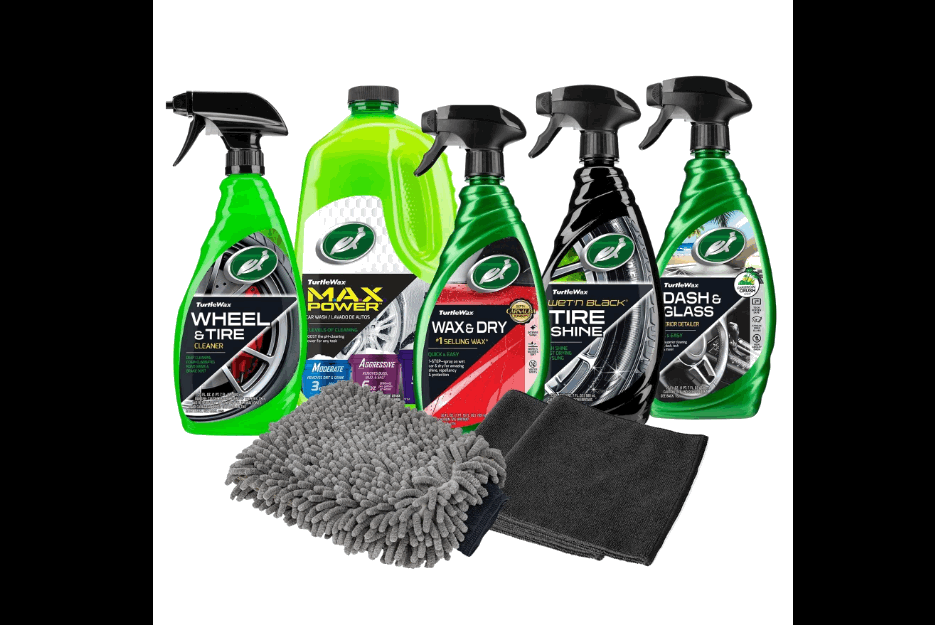
Turtle Wax is a good option for routine car care. It works well for drivers who want paint protection, better gloss, and easy DIY application. The brand offers several car care products. These include waxes, sprays, polishes, and ceramic based products. Each product serves a different purpose.
The specific product affects the final result. A traditional wax focuses on surface protection and appearance. A polish serves a different role. It helps refine the paint surface and improve its appearance. Ceramic based products also use a different approach to paint protection. For this reason, you should evaluate the specific Turtle Wax product rather than the brand alone.
Paint condition also affects the result. Clean and well prepared paint gives the product a better surface to work with. Oxidation, heavy contamination, and visible defects can reduce the quality of the finish. These problems may require cleaning or polishing before you apply a protective product.
Turtle Wax suits drivers who prefer DIY car care. The product range gives vehicle owners several ways to maintain their paint. It can improve appearance and add routine protection without requiring professional detailing for every application.
However, Turtle Wax does not suit every paint care goal. Drivers who want long term protection may need a different solution. Drivers who want simple maintenance and improved gloss may find Turtle Wax more suitable. The best choice depends on protection needs, application effort, maintenance habits, and expected durability.
What Benefits Does Turtle Wax Provide?
Turtle Wax provides five main benefits for routine vehicle care: paint protection, improved gloss, water repellency, better surface appearance, and easier maintenance. These benefits explain why many drivers use wax and other protective products after washing their vehicles.
Paint protection is a primary purpose of automotive wax. The product creates a protective layer over the paint surface. This layer helps separate the paint from direct exposure to everyday contaminants and environmental conditions. It does not make the paint immune to damage. It adds another layer of protection to a regular maintenance routine.
Improved gloss is another key benefit. A properly prepared paint surface can look cleaner, smoother, and more reflective after treatment. The condition of the paint still controls much of the final appearance. Wax can enhance good paint, but it does not permanently remove deep scratches or severe oxidation.
Water repellency also contributes to the overall result. A treated surface can cause water to form beads instead of spreading across the paint. This hydrophobic behavior can make routine maintenance easier. Water and some contaminants have less contact with the surface when the protective layer remains effective.
Turtle Wax can also simplify DIY car care. Vehicle owners can use the products as part of a regular washing and protection routine. The best results come from choosing the right product for the paint condition and applying it correctly. Proper preparation also plays an important role in the final finish.
How Good Are Turtle Wax Results on Car Paint?
Turtle Wax can improve the appearance of car paint when you apply the right product to a clean surface. The main visible results include better gloss, stronger water repellency, and a cleaner surface appearance. The final result depends on the paint condition, product type, preparation, and application method.
Paint condition has a direct effect on the finish. Clean paint gives Turtle Wax a better surface for application. Heavy contamination can interfere with the product and reduce the quality of the finish. Oxidized or heavily damaged paint also needs more than a protective product. Polishing or paint correction may provide better results before applying wax.
Product selection also affects performance. Turtle Wax offers different products for different car care purposes. A wax focuses on protection and appearance. A polish focuses more on refining the paint surface. Ceramic based products focus on a different type of surface protection. You should therefore match the product with the condition of the paint and the result you want.
Application technique also matters. An even application helps create a consistent finish across the vehicle. Excessive product does not automatically produce better protection or more gloss. Proper preparation, correct application, and regular maintenance work together to determine the final result.
How Long Does Turtle Wax Last?
Turtle Wax durability depends on the specific product, washing routine, weather exposure, surface preparation, and application quality. There is no single lifespan that applies to every Turtle Wax product. Different formulations provide different levels of protection.
Frequent washing can reduce the protective effect over time. Strong cleaning products can also affect the protective layer. Regular exposure to sunlight, rain, and environmental contaminants adds further stress to the surface. A vehicle that stays outdoors can therefore experience different results from a vehicle that remains in a garage.
Surface preparation also affects durability. Dirt and contaminants can prevent the product from bonding properly with the paint surface. Applying Turtle Wax to clean and prepared paint gives the protective layer a better foundation. Correct application also helps the product perform as intended.
You can extend the useful life of the protection with proper maintenance. Wash the vehicle with suitable products and avoid unnecessarily aggressive cleaning methods. Monitor the surface rather than relying only on a fixed reapplication schedule. Reduced water beading and changes in surface feel can indicate that the protective effect has declined.
Because Turtle Wax sells several types of car care products, durability should always be evaluated at the product level. The product instructions provide the most relevant application and maintenance guidance for that specific formula.
Is Turtle Wax Easy to Apply?
Turtle Wax is generally easy to apply for DIY car care. The process mainly requires a clean vehicle, proper surface preparation, the correct product, and suitable application conditions. This makes Turtle Wax practical for drivers who want to maintain their vehicles without professional detailing for every application.
Start with a clean surface. Wash the vehicle to remove dirt and other loose contaminants. Dry the paint before applying the product. If the surface contains stubborn contamination, additional preparation may improve the final result. Clean paint gives the product a more suitable surface for application.
The application method depends on the Turtle Wax product. Follow the instructions for the specific formula rather than using the same method for every product. Apply the recommended amount and work across the surface evenly. Using more product does not automatically create better protection or a higher level of gloss.
Several mistakes can reduce the final result. Applying the product to dirty paint can trap contaminants against the surface. Working under unsuitable conditions can also affect application and finishing. Using excessive product can make the process harder without providing a proportional benefit.
Turtle Wax is therefore a practical option for beginners and experienced DIY detailers. The main advantage comes from its straightforward role in a regular car care routine. However, simple application does not remove the need for proper preparation. A good result still depends on the condition of the paint and the way you prepare and maintain the surface.
Is Turtle Wax Better Than Car Polish?
Turtle Wax is not automatically better than car polish because wax and polish serve different purposes. Wax mainly adds protection and enhances appearance. Polish focuses on refining the paint surface and improving its visual condition. The right choice depends on the problem you want to solve.
Wax works as a protective layer over the paint. It can improve gloss and create water repellent behavior. This makes it useful after cleaning and preparing the vehicle. Wax does not normally function as a paint correction product. It should not replace polishing when the paint has visible defects that require surface refinement.
Car polish serves a different purpose. Polishing can help improve the appearance of certain paint imperfections by refining the surface. It is more relevant when the vehicle has issues such as dullness or minor surface defects. The exact result depends on the polish, paint condition, and application method.
Many car owners can use both products as part of a complete maintenance routine. Cleaning prepares the surface. Polishing can refine the paint when needed. Wax can then add protection and enhance the finish. This sequence separates correction from protection and prevents users from expecting one product to perform every function.
The better option therefore depends on the desired result. Choose wax when protection and appearance enhancement are the priority. Choose polish when paint refinement is the main goal. If the paint already looks healthy, a protective Turtle Wax product may provide the result you want without unnecessary polishing.
Is Turtle Wax Better Than Ceramic Coating?
Turtle Wax is not automatically better than a ceramic coating. The better option depends on the level of protection, durability, cost, and application effort you expect. Turtle Wax can suit drivers who want simple DIY protection. Ceramic coating can suit owners who want longer lasting surface protection and are willing to invest more time in preparation.
Turtle Wax products can provide gloss and water repellency with a relatively simple application process. This makes them practical for routine vehicle maintenance. Drivers can apply suitable products as part of their normal washing and detailing routine. The lower level of commitment also makes wax attractive for people who prefer to refresh their vehicle’s protection regularly.
Ceramic coatings use a different protection approach. They form a more durable protective layer on the paint when properly prepared and applied. This can provide longer lasting protection than a traditional wax. However, ceramic coating also requires more careful surface preparation. Some applications may require paint correction before the coating is installed.
The choice therefore depends on the owner’s priorities. Choose Turtle Wax when easy application, routine protection, and lower commitment matter most. Consider ceramic coating when longer term protection and durability matter more. Neither option provides a universal solution for every vehicle or every owner.
Is Turtle Wax Worth the Money?
Turtle Wax is worth the money for drivers who want affordable DIY paint care with practical protection and appearance benefits. Its value comes from the combination of product performance, ease of application, and the ability to maintain a vehicle without relying on professional detailing for every treatment.
The value becomes stronger when the vehicle already has paint in good condition. A suitable Turtle Wax product can enhance the appearance and add routine protection without requiring an extensive correction process. Drivers who enjoy maintaining their own vehicles can also save on professional service costs by handling regular applications themselves.
However, value depends on expectations. A driver who wants short term appearance enhancement may find Turtle Wax sufficient. A driver who expects long term protection may prefer a ceramic coating or another advanced protection system. Paying more for a product does not automatically make it the better choice. The product must match the protection goal.
Turtle Wax therefore provides the most value for everyday drivers, DIY detailers, and vehicle owners who want a practical maintenance solution. It becomes less suitable when maximum durability is the primary requirement. In that situation, comparing Turtle Wax with longer lasting paint protection systems provides a better basis for the purchase decision.
What Are the Pros and Cons of Turtle Wax?
Turtle Wax has several advantages for everyday car care. Its main strengths are easy application, paint protection, gloss enhancement, water repellency, and accessibility for DIY users. These benefits make the brand practical for drivers who want to maintain their vehicles without professional detailing after every wash.
Another advantage is product variety. Turtle Wax offers different solutions for different car care needs. Drivers can choose products focused on waxing, polishing, spraying, or ceramic based protection. This range allows users to select a product based on their paint condition and maintenance goals rather than using one solution for every situation.
Turtle Wax also has limitations. Results vary between products, and durability depends on factors such as washing frequency, weather exposure, surface preparation, and application quality. A product that works well for routine protection may not satisfy someone who expects long term protection from a single application.
Wax also has functional limits. It can improve appearance and provide protection, but it does not replace paint correction. Deep scratches, severe oxidation, and significant paint defects require a different treatment. Turtle Wax works best when users choose the right product and set realistic expectations about its purpose.
Is Turtle Wax Good for Most Car Owners?
Turtle Wax is a good choice for most car owners who want practical paint care, improved appearance, and routine surface protection. It works particularly well for drivers who prefer DIY maintenance and want a straightforward way to care for their vehicle’s exterior.
The strongest case for Turtle Wax comes from its balance of protection and usability. A suitable product can improve gloss, increase water repellency, and add a protective layer to properly prepared paint. The application process also fits naturally into a regular vehicle maintenance routine.
However, Turtle Wax is not the best solution for every situation. Owners who need long term protection may prefer ceramic coating. Owners dealing with scratches, oxidation, or other paint defects may need polishing or paint correction first. These options address different problems and should not be treated as interchangeable.
Overall, Turtle Wax is good for everyday car owners who value accessible application, appearance enhancement, and routine paint protection. The most important decision is not whether Turtle Wax is good in general. It is whether the specific Turtle Wax product matches the vehicle’s paint condition and the owner’s protection goals.
For readers comparing longer term protection options, a related guide on car wax vs ceramic coating would provide the next useful step in the decision process.