Honda Odyssey sliding door sensor problems can prevent the power sliding door from opening or closing correctly, trigger repeated warning beeps, display dashboard alerts, or cause the door to reverse before it fully latches. Although these symptoms often lead owners to suspect a failed sensor, the sensor itself is not always the root cause. A worn latch, damaged wiring, weak battery voltage, misaligned door, or excessive resistance inside the sliding door mechanism can produce nearly identical behavior because every component works together within the power sliding door system.
The Honda Odyssey power sliding door relies on multiple sensors, switches, and electronic controls to monitor the door throughout its entire travel. The control unit continuously compares information from the pinch sensor, door position sensor, and latch switch before commanding the motor to continue moving or stop. When one of these signals becomes inaccurate or mechanical resistance exceeds the expected range, the system responds by interrupting door operation to protect passengers and prevent component damage. This safety strategy explains why a simple alignment issue may generate the same warning as an electrical fault.
Understanding the difference between a true sensor failure and a related mechanical or electrical problem is the key to avoiding unnecessary repairs. Replacing expensive parts without confirming the actual cause often fails to solve the problem and increases repair costs. This guide explains the most common symptoms, identifies the underlying causes, walks through a logical diagnostic process, and outlines the most effective repair solutions. By following a structured approach, Honda Odyssey owners can determine whether the problem requires a simple adjustment, a component replacement, or professional diagnosis while keeping the power sliding door operating safely and reliably.
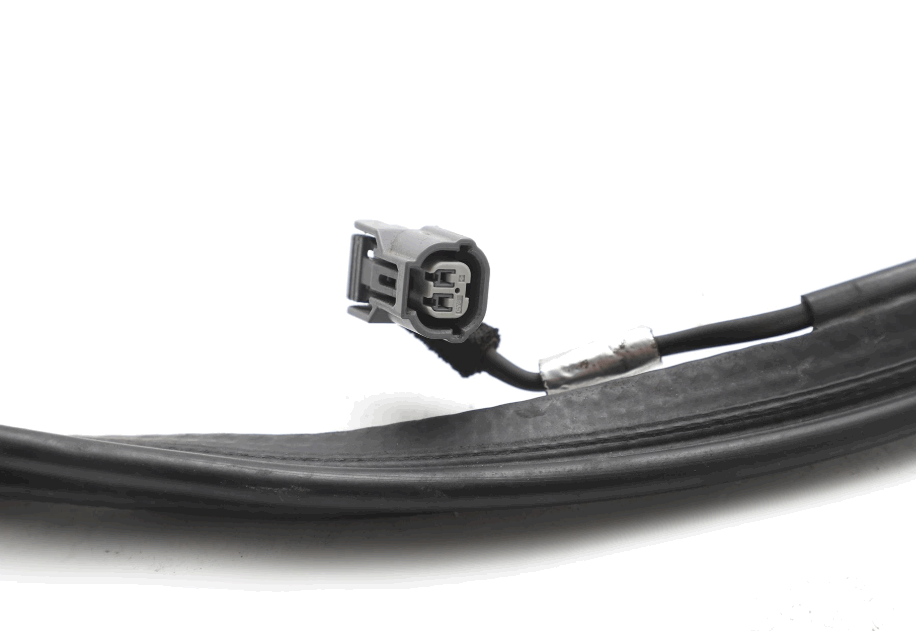
What Are the Most Common Honda Odyssey Sliding Door Sensor Problems?
Honda Odyssey sliding door sensor problems usually involve six common failures. These include false obstruction detection, incorrect door position signals, latch switch faults, damaged wiring, poor electrical connections, and sensor calibration errors. Each issue interrupts communication inside the power sliding door system. As a result, the door may stop unexpectedly. It may also reverse direction or display a warning message.
False obstruction detection is one of the most common complaints. The anti-pinch sensor monitors resistance while the door closes. It stops the motor when it detects an object. However, dirt, moisture, damaged weather stripping, or excessive friction can produce the same signal. The control module assumes an obstacle is present. In reality, the doorway may be completely clear.
Incorrect door position information is another frequent problem. The control unit monitors the door throughout its travel. It checks whether the door is open, moving, or fully latched. A faulty position sensor or worn latch switch can send inaccurate data. As a result, the dashboard may display a warning. The power door may also refuse to finish closing.
Electrical faults can create similar symptoms. Every sensor depends on stable communication with the control module. The wiring harness bends whenever the door moves. Years of repeated movement can weaken the wires or loosen the connectors. Therefore, the fault may appear only occasionally. This makes diagnosis more challenging.
Mechanical wear can also mimic a sensor failure. Worn rollers, dirty tracks, damaged cables, or poor alignment increase resistance during door movement. The control module detects the extra load. It responds as though the anti-pinch sensor has found an obstruction. The door then stops or reverses to protect the system.
For this reason, the phrase “Honda Odyssey sliding door sensor problems” does not always mean the sensor has failed. The real fault may involve the latch, wiring, rollers, tracks, motor, or control module. A complete inspection is always more reliable than replacing the sensor based on symptoms alone. It also reduces unnecessary repairs and improves long-term reliability.
What Symptoms Indicate a Honda Odyssey Sliding Door Sensor Problem?
Honda Odyssey sliding door sensor problems often begin with small changes in door operation. At first, the door may hesitate or stop unexpectedly. Over time, the problem usually becomes more consistent. Recognizing the early symptoms helps prevent unnecessary repairs and further damage to the power sliding door system.
One of the most common symptoms is a door that starts closing and then reverses. The anti-pinch system is designed to protect passengers from injury. It immediately reverses the door when it detects unexpected resistance. However, the resistance is not always caused by an object. Dirty tracks, damaged weather stripping, poor alignment, or a faulty sensor can trigger the same response. As a result, the door may reopen even when the doorway is completely clear.
Another common sign is a door that stops before reaching the fully closed position. The control module expects confirmation from the door position sensor and latch switch during every closing cycle. If either component sends incorrect information, the system interrupts the operation. Consequently, the door may remain slightly open or refuse to latch. In some cases, the dashboard continues to display a sliding door warning after the door appears closed.
Some owners also notice repeated warning beeps. Others see a power sliding door warning light on the instrument panel. These alerts indicate that the system has detected an abnormal operating condition. However, they do not identify the failed component. The actual cause may involve the sensor, latch, wiring, motor, or another part of the sliding door assembly.
Intermittent operation is another important symptom. The sliding door may work normally several times before failing again. This pattern often points to a loose connector, damaged wiring, or unstable battery voltage. Mechanical resistance can also create inconsistent behavior because the load changes as the door moves. Therefore, technicians should inspect both the electrical system and the mechanical components before replacing any parts.
Some vehicles can still operate the door manually even though the power function no longer works. This symptom usually indicates that the motor has stopped receiving the correct command or that the control module has disabled automatic operation. It does not always mean the motor has failed. A faulty sensor, latch switch, or electrical connection can produce the same result.
No single symptom confirms a defective sliding door sensor. Several different faults can create nearly identical behavior. A complete diagnosis should always compare the warning messages, door movement, electrical signals, and mechanical condition. This approach leads to a faster repair and helps avoid replacing parts that still function correctly.
What Causes Honda Odyssey Sliding Door Sensor Problems?
Honda Odyssey sliding door sensor problems usually occur when the power sliding door system receives incorrect information or encounters unexpected resistance. Although many owners blame the sensor first, it is rarely the only component involved. The sliding door relies on sensors, switches, wiring, the control module, and several mechanical parts working together. If any of these components fail, the system may stop the door, trigger a warning, or reverse the closing cycle to prevent damage.
A dirty or damaged anti-pinch sensor is one of the most common causes. This sensor detects resistance while the door is closing. Dirt, moisture, damaged rubber, or debris can interfere with its normal operation. As a result, the control module believes an object is blocking the doorway and immediately reverses the door. In many cases, cleaning the sensor or removing debris restores normal operation without replacing any parts.
Electrical faults are another frequent source of sensor-related problems. The wiring harness flexes every time the sliding door opens or closes. After years of repeated movement, the wires may crack internally or the connectors may become loose or corroded. These faults interrupt communication between the sensors and the control module. Consequently, the sliding door may work normally one moment and fail the next.
Mechanical wear can also produce the same symptoms. Worn rollers, dirty tracks, poor door alignment, or a sticking latch increase the force needed to move the door. The control module detects the extra resistance and interprets it as an obstruction. Therefore, the door may stop or reverse even though the sensor is functioning correctly. Low battery voltage can make the situation worse because the motor operates more slowly and the control module receives unstable electrical input.
For this reason, a failed sensor is only one possible cause of Honda Odyssey sliding door sensor problems. A complete inspection should include the sensor, latch, wiring, tracks, rollers, battery, and control module. Finding the true source of the fault prevents unnecessary repairs and restores reliable sliding door operation more efficiently.
How Can You Diagnose a Honda Odyssey Sliding Door Sensor Problem?
Diagnosing Honda Odyssey sliding door sensor problems requires a logical process instead of replacing parts based on symptoms alone. Many electrical and mechanical faults create similar warning signs. A systematic inspection helps identify the real cause and reduces unnecessary repair costs. It also prevents replacing a sensor that is still working correctly.
Begin by checking the door under normal operating conditions. Make sure the power sliding door switch is turned on and the vehicle battery is fully charged. Next, inspect the upper, center, and lower tracks for dirt, leaves, or other debris. Even a small obstruction can increase resistance and affect door movement. The weather stripping should also be clean and correctly positioned because damaged rubber can activate the anti-pinch system.
The next step is to test the door manually. Turn off the power sliding door system and move the door through its full travel. The movement should feel smooth and consistent from beginning to end. Grinding noises, excessive force, or uneven movement usually indicate worn rollers, damaged cables, poor alignment, or a sticking latch. These mechanical problems often produce the same symptoms as a faulty sensor.
After confirming the mechanical condition, inspect the electrical components. Check the anti-pinch sensor, latch switch, visible wiring, and electrical connectors for damage or corrosion. The wiring harness deserves special attention because it flexes whenever the door moves. Loose connectors or broken wires may cause intermittent faults that appear only in certain door positions.
Finally, scan the power sliding door system with a compatible diagnostic tool. A standard OBD-II scanner may not access body control functions. A professional scan tool can read sensor data, latch status, and module fault codes. Combining scan results with a physical inspection provides the most accurate diagnosis. This method helps identify the real fault and prevents unnecessary replacement of expensive sliding door components.
How Do You Fix Honda Odyssey Sliding Door Sensor Problems?
The best way to fix Honda Odyssey sliding door sensor problems depends on the actual cause of the failure. Replacing the sensor should never be the first step because many issues originate elsewhere. A complete inspection often reveals problems with the wiring, latch, tracks, or door alignment. Fixing the correct component saves time, reduces repair costs, and restores reliable door operation.
Start with the simplest repairs before replacing any parts. Clean the upper, center, and lower door tracks to remove dirt and debris. Next, inspect the anti-pinch sensor and the surrounding weather stripping. Dirt, moisture, or damaged rubber can interfere with normal sensor operation. Cleaning these areas may eliminate false obstruction warnings and restore smooth door movement.
If the problem remains, inspect the electrical system. Check the wiring harness for damaged insulation, loose connectors, or corrosion. The harness bends every time the sliding door moves, making it one of the most common failure points. Repairing a damaged wire or cleaning a corroded connector often solves intermittent sensor problems without replacing expensive components.
Mechanical repairs may also be necessary. Worn rollers, damaged cables, or poor door alignment increase the force needed to move the door. The control module interprets this extra resistance as an obstruction and reverses the door. Replacing worn rollers, adjusting the door, or repairing the latch can restore normal movement and eliminate false sensor warnings.
Replace the anti-pinch sensor only after confirming that it has failed. Physical damage, water intrusion, or incorrect diagnostic readings usually indicate that replacement is necessary. After installing the new component, complete the appropriate reset or initialization procedure for the vehicle’s model year. This allows the control module to recognize the repaired system and verify proper operation.
After every repair, test the sliding door through several complete opening and closing cycles. Confirm that the door moves smoothly, latches securely, and no longer displays warning messages. A final functional test ensures that both the electrical system and the mechanical components are working together correctly. This final step helps prevent repeat failures and confirms that the repair has resolved the original problem.
How Much Does It Cost to Repair a Honda Odyssey Sliding Door Sensor Problem?
The cost to repair Honda Odyssey sliding door sensor problems depends on the failed component rather than the warning itself. A sensor warning does not always mean the sensor has failed. In many cases, the problem involves the wiring, latch, rollers, or door alignment. For this reason, an accurate diagnosis should always come before replacing any parts.
Minor repairs are usually the most affordable option. Cleaning the door tracks, removing debris, or repositioning damaged weather stripping often requires little time and few materials. Repairing a loose connector or replacing a damaged wire may also solve the problem without major expense. These simple repairs can restore normal door operation if the sensor is still functioning correctly.
Costs increase when worn mechanical components require replacement. Damaged rollers, a sticking latch, or a stretched cable require additional labor because the door must be partially disassembled. Door alignment can also increase repair time since technicians must adjust the sliding door before testing the system again. These repairs are more expensive than basic maintenance, but they often solve recurring sensor warnings.
Replacing the anti-pinch sensor or latch switch generally costs more than cleaning or wiring repairs. The final price depends on the model year, the replacement part, and local labor rates. Some Honda Odyssey models also integrate certain sensors into larger assemblies. In those cases, technicians may need to replace the entire latch or related component instead of the sensor alone.
The highest repair costs usually involve the sliding door motor, cable assembly, or control module. These components require more labor and careful calibration after installation. Fortunately, they fail less often than wiring or latch-related parts. Replacing them without proper testing can lead to unnecessary expenses.
A professional diagnosis is often the best investment before authorizing major repairs. Identifying the exact cause prevents unnecessary parts replacement and reduces overall repair costs. It also ensures the sliding door operates safely and reliably after the repair is complete.
Is It Safe to Drive With Honda Odyssey Sliding Door Sensor Problems?
Driving with Honda Odyssey sliding door sensor problems is not always unsafe, but the condition should never be ignored. Some faults only disable the power sliding door function, while others prevent the door from latching securely. The level of risk depends on the underlying cause. Therefore, the door should always be inspected before the vehicle is driven.
The first step is to confirm that the sliding door closes completely. Check that the latch engages firmly and that the door sits flush with the vehicle body. Open and close the door manually if the power function does not work. The door should move smoothly and lock without excessive force. If it remains partially open or feels loose, the vehicle should not be driven until the problem is repaired.
Some sensor-related warnings result from electrical issues rather than mechanical failures. A damaged wire, faulty latch switch, or weak battery can trigger a warning even when the door is fully closed. In these situations, the vehicle may still be safe to drive for a short distance. However, the warning should be diagnosed as soon as possible because intermittent electrical faults can become more serious over time.
Mechanical problems require more caution. Worn rollers, damaged cables, poor door alignment, or a sticking latch can prevent the sliding door from locking correctly. These faults increase the risk of the door opening unexpectedly while driving. They can also place additional stress on the motor and other sliding door components, leading to more expensive repairs.
If the sliding door repeatedly reverses, refuses to latch, or displays a warning after every reset, discontinue using the power door function until the cause is identified. Operating a malfunctioning system repeatedly can increase wear and damage additional components. A complete inspection is the safest solution before returning the vehicle to normal use.
In general, a warning light alone does not determine whether the vehicle is safe to drive. The condition of the door itself is far more important. If the door latches securely and remains closed, the risk is usually lower. If the latch cannot hold the door properly, the vehicle should be repaired immediately to protect both passengers and other road users.
How Can You Prevent Honda Odyssey Sliding Door Sensor Problems?
Preventing Honda Odyssey sliding door sensor problems is much easier than repairing them. Regular maintenance keeps the power sliding door system working smoothly and reduces unnecessary wear. It also helps detect small issues before they develop into expensive repairs. A few simple maintenance habits can significantly improve long-term reliability.
Keeping the sliding door tracks clean is one of the most effective preventive measures. Dust, sand, leaves, and road debris gradually build up inside the tracks. This increases resistance and forces the motor to work harder. As a result, the control module may mistake the extra load for an obstruction. Cleaning the tracks regularly helps the door move freely and reduces false sensor warnings.
Routine inspection of the rollers, latch, and weather stripping is equally important. Worn rollers can cause the door to bind during operation. A sticking latch may prevent the control module from confirming that the door is fully closed. Damaged weather stripping can also interfere with the anti-pinch sensor. Replacing worn parts early helps prevent larger mechanical failures.
The electrical system should also receive regular attention. Check the battery condition and clean the battery terminals during routine maintenance. Stable voltage allows the motor and control module to operate correctly. It also reduces the risk of intermittent electrical faults that can imitate sensor failures. Inspecting visible wiring and connectors for damage or corrosion is another good practice.
Avoid forcing the sliding door when it stops unexpectedly. Many owners try to push or pull the door while the motor is still operating. This can damage the cable, rollers, or door alignment. Instead, disable the power function first and identify the reason the door stopped. Correcting the underlying problem is always safer than forcing the mechanism.
Finally, do not ignore warning lights or unusual door behavior. A door that moves more slowly, produces unusual noises, or reverses unexpectedly often provides an early warning of a developing problem. Addressing these symptoms promptly helps prevent additional damage and reduces future repair costs. Regular maintenance and early diagnosis remain the best ways to keep the Honda Odyssey sliding door system operating safely and reliably.
Conclusion
Honda Odyssey sliding door sensor problems are not always caused by a failed sensor. In many cases, the warning results from worn mechanical parts, damaged wiring, poor door alignment, or unstable battery voltage. Because these faults produce similar symptoms, replacing the sensor without proper testing often fails to solve the problem. A systematic diagnosis is the most effective way to identify the real cause.
Start by observing how the sliding door behaves during normal operation. Check whether it moves smoothly, latches completely, and responds consistently to the power controls. Next, inspect the tracks, rollers, latch, weather stripping, wiring, and electrical connectors for visible damage or excessive wear. If no obvious fault is found, use a compatible diagnostic scanner to verify sensor readings and control module data before replacing any components.
Routine maintenance also plays an important role in preventing future failures. Keeping the tracks clean, maintaining a healthy battery, and inspecting moving parts regularly can reduce mechanical resistance and improve sensor accuracy. Addressing small issues early helps extend the lifespan of the entire power sliding door system while avoiding unnecessary repair costs.
If the sliding door continues to reverse, refuses to latch, or displays warning messages after basic inspections, professional diagnosis is recommended. Modern Honda Odyssey models rely on electronic control systems that often require specialized diagnostic equipment. Identifying the exact source of the problem protects both passenger safety and your repair budget. With the correct diagnosis and timely maintenance, the power sliding door can continue to operate smoothly and reliably for many years.