Finding the Jeep Grand Cherokee fuel filter location can be surprisingly confusing, especially if you’ve searched online and found conflicting answers. Some sources claim the fuel filter is mounted along the frame rail, while others insist it cannot be replaced separately. The truth is that the fuel filter location depends entirely on the model year and generation of your Jeep Grand Cherokee.
Over the years, Jeep has significantly redesigned the Grand Cherokee’s fuel delivery system. Earlier models feature an external, serviceable fuel filter that can be replaced as part of routine maintenance. However, many later generations use an integrated fuel filter inside the fuel pump module, meaning there is no standalone fuel filter to replace. This design often leads owners to spend hours searching under the vehicle for a component that simply isn’t there.
Whether you own a classic 1995 ZJ, a 2004 WJ, a 2018 WK2, or the latest WL Grand Cherokee, knowing the correct fuel filter location can save you time, prevent unnecessary repairs, and help you diagnose fuel system problems more accurately.
In this comprehensive guide, you’ll learn exactly where the fuel filter is located on every Jeep Grand Cherokee generation, which models have a replaceable filter, common symptoms of a clogged fuel filter, and what to do if your vehicle uses a lifetime in-tank fuel filter. By the end of this article, you’ll know precisely where to look based on your Jeep’s model year.
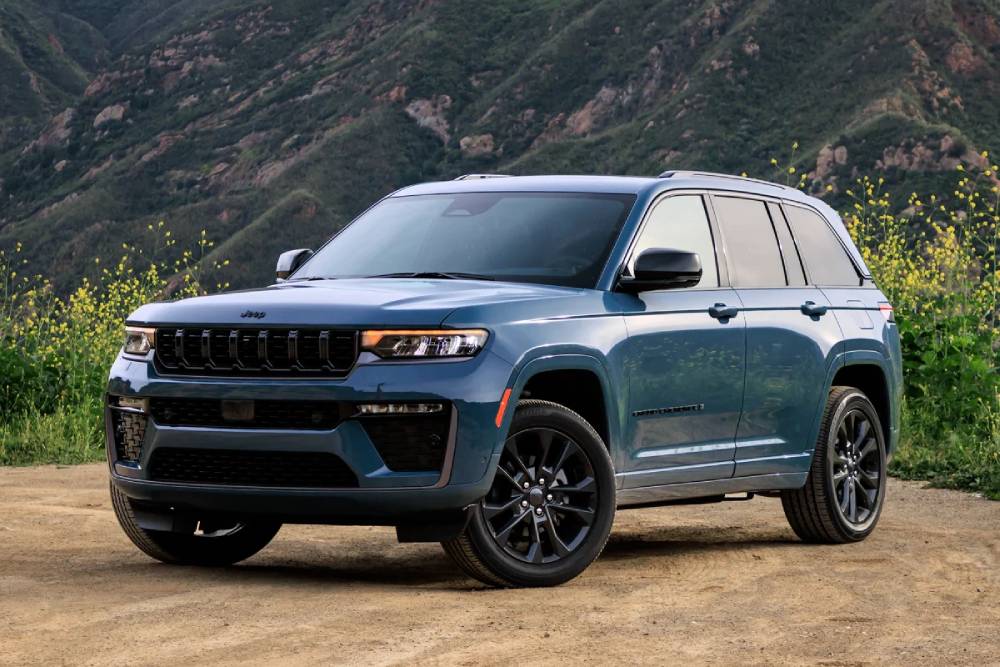
Quick Answer: Where Is the Fuel Filter on a Jeep Grand Cherokee?
The Jeep Grand Cherokee fuel filter location depends on the model year, engine, fuel type, and market in which the vehicle was sold.
On most 1993 to 1998 ZJ gasoline models, the Jeep Grand Cherokee has an external fuel filter mounted underneath the vehicle near the fuel tank and rear axle. This filter is accessible and can normally be replaced separately.
For 1999 to 2004 WJ gasoline models, the fuel filter is commonly combined with the fuel pressure regulator. The assembly is mounted near the fuel tank rather than in the engine compartment. It can be serviced separately on many versions, but the exact configuration should be confirmed using the vehicle identification number, engine type, or factory service information.
Most 2005 and newer gasoline powered Grand Cherokees do not have a traditional external fuel filter. The filter is generally located inside the fuel tank as part of the fuel pump or fuel delivery module. It is not treated as a routine maintenance item, and replacing it may require removal of the fuel tank and replacement of a larger assembly.
Diesel models are an important exception. Certain diesel powered Grand Cherokees use a serviceable fuel filter or fuel filter and water separator assembly outside the fuel tank. For this reason, owners should never purchase parts based only on the model year.
The simplest rule is:
Older gasoline models usually have an external serviceable filter. Newer gasoline models usually have an in tank filter. Diesel models may have a separate serviceable fuel filter and water separator.
Jeep Grand Cherokee Fuel Filter Location by Model Year
1993 to 1998 Jeep Grand Cherokee ZJ
Fuel type: Gasoline
Typical filter location: Underneath the vehicle, close to the fuel tank and above or near the rear axle or differential
Serviceable separately: Yes
Important note: The precise mounting point and fuel line arrangement can vary slightly by model year, engine, emissions package, and production specification. Repair information for the ZJ confirms that these vehicles used a replaceable fuel filter as a maintenance component.
1999 to 2004 Jeep Grand Cherokee WJ
Fuel type: Gasoline
Typical filter location: Near the fuel tank, commonly incorporated into a fuel filter and pressure regulator assembly
Serviceable separately: Often yes, depending on the exact configuration
Important note: Owners frequently mistake this component for part of the fuel pump because it performs both filtering and fuel pressure regulation functions.
2005 to 2010 Jeep Grand Cherokee WK
Fuel type: Gasoline
Typical filter location: Inside the fuel tank as part of the fuel pump module
Serviceable separately: Generally no
Important note: There is usually no external gasoline fuel filter mounted along the frame rail. When the internal filter or pump module fails, replacing the module may be necessary.
2005 to 2010 Jeep Grand Cherokee WK Diesel
Fuel type: Diesel
Typical filter location: Engine compartment or underbody area, depending on the engine and regional specification
Serviceable separately: Yes on applicable diesel configurations
Important note: Diesel fuel systems use different filtration components from gasoline systems. Always match the replacement filter to the engine code and market specification.
2011 to 2021 Jeep Grand Cherokee WK2 Gasoline
Fuel type: Gasoline
Typical filter location: Inside the fuel tank as part of the fuel pump or fuel delivery module
Serviceable separately: Generally no
Important note: The internal filter is designed for long term use rather than replacement at a routine mileage interval. A fuel pressure test should be performed before assuming the filter is restricted.
2011 to 2021 Jeep Grand Cherokee WK2 Diesel
Fuel type: Diesel
Typical filter location: Underneath the vehicle near the fuel tank or protected by an underbody shield on applicable EcoDiesel versions
Serviceable separately: Yes
Important note: The diesel unit may combine fuel filtration with water separation. One documented service procedure places the filter and water separator underneath the vehicle on the left side, ahead of the fuel tank and below the transfer case skid plate. Exact placement can vary by year and market.
2022 and Newer Jeep Grand Cherokee WL Gasoline
Fuel type: Gasoline
Typical filter location: Inside the fuel tank as part of the fuel delivery module
Serviceable separately: Generally no
Important note: Owners should verify the configuration through the official manual or parts catalog because the WL platform is available with several powertrain options. Jeep provides model specific owner resources for current Grand Cherokee vehicles.
2022 and Newer Jeep Grand Cherokee WL Plug In Hybrid
Fuel type: Gasoline plug in hybrid
Typical filter location: Within the gasoline fuel delivery system, typically associated with the in tank module
Serviceable separately: Generally not treated as a routine maintenance item
Important note: The high voltage hybrid system adds additional safety considerations. Fuel system diagnosis or tank removal should be performed only after following the correct high voltage isolation procedures.
Jeep Grand Cherokee Fuel Filter Location: 1993 to 1998 ZJ
The first generation Jeep Grand Cherokee, known by the ZJ platform code, was produced for the 1993 through 1998 model years. Unlike most newer Grand Cherokees, the ZJ generally uses an external fuel filter that owners can inspect and replace without opening the fuel tank.
Where Is the Fuel Filter Located on a ZJ?
On most gasoline powered ZJ models, the fuel filter is located underneath the rear portion of the vehicle. Look near the fuel tank, rear axle, and differential area. The filter is attached to the fuel line and secured to the body or chassis with a retaining bracket.
Depending on the model year and production configuration, the filter may appear directly above or slightly forward of the rear differential. It is a small cylindrical component with a fuel connection at each end. A commonly referenced ZJ repair procedure identifies the filter beneath the center of the vehicle above the differential.
The component can be difficult to see when the Jeep is sitting at normal ride height. Dirt, corrosion, undercoating, and road debris may also make the filter blend in with the surrounding parts. Using a flashlight from behind the rear axle usually makes it easier to identify.
Before purchasing a replacement, compare the new filter with the original component. Connection styles can differ among model years and replacement part brands. Some filters use quick connect fittings, while other configurations may use short hoses, clamps, or different retaining hardware.
How to Access the ZJ Fuel Filter
The fuel filter is accessed from underneath the vehicle. Although a ZJ may provide enough ground clearance for a visual inspection, lifting the vehicle can provide more working space.
The Jeep must be parked on a level surface with the transmission in Park and the parking brake applied. The wheels remaining on the ground should be secured with wheel chocks. When additional clearance is required, use correctly rated jack stands at approved support points. Never work beneath a vehicle supported only by a hydraulic jack.
Before disconnecting any fuel line, relieve the pressure in the fuel system according to the correct service procedure. Gasoline can remain under pressure even after the engine has been turned off. Wear eye protection, keep absorbent shop towels nearby, and work in a well ventilated area away from cigarettes, heaters, sparks, and open flames.
Is the ZJ Fuel Filter Replaceable?
Yes. The external filter on most 1993 to 1998 gasoline powered Jeep Grand Cherokee ZJ models is a serviceable component. Period service information for the ZJ also lists fuel filter replacement as a recommended maintenance operation under applicable schedules.
However, owners should not replace the filter solely because the engine is difficult to start or lacks power. Those symptoms can also be caused by a weak fuel pump, a failing pressure regulator, contaminated injectors, ignition problems, electrical faults, or an inaccurate sensor signal.
A proper diagnosis should include checking fuel pressure and observing how well the system maintains pressure after the engine is switched off. If pressure is below specification, the technician must determine whether the restriction is in the filter or whether the pump, regulator, wiring, or fuel lines are responsible.
Signs the ZJ Fuel Filter May Be Restricted
A partially clogged fuel filter may allow enough fuel to reach the engine at idle but restrict flow when the engine is under load. The Jeep may start and run normally around town, then hesitate during hard acceleration, climbing, towing, or highway driving.
Possible symptoms include:
Difficulty starting the engine
Hesitation during acceleration
Reduced power at higher engine speeds
Surging under load
Intermittent stalling
Low measured fuel pressure
A fuel pump that sounds unusually loud
Poor performance when the fuel tank is nearly empty
These symptoms do not automatically prove that the filter is clogged. Testing the fuel pressure before replacing parts can prevent unnecessary expenses and help identify a weak pump before it leaves the driver stranded.
Common Problems During ZJ Fuel Filter Replacement
The biggest difficulty is often not locating the filter but disconnecting fuel lines that have remained untouched for many years. Plastic retaining clips may become brittle, while metal fittings can corrode and seize.
Pulling aggressively on a stuck connector can damage the fuel line. If a connector does not release normally, clean the area first and inspect the retaining mechanism carefully. Use the correct fuel line disconnect tool when required.
The replacement filter must also be installed in the correct direction. Most fuel filters have an arrow showing the direction of fuel flow. That arrow should point toward the engine. Installing the filter backward can restrict fuel delivery and cause drivability problems.
After installation, cycle the ignition to pressurize the system and inspect every connection for leakage before starting the engine. Check the connections again while the engine is running. Even a small gasoline leak requires immediate correction.
The external and replaceable design makes the ZJ one of the easiest Grand Cherokee generations to service. Even so, fuel system work demands careful preparation. Confirming the part number, relieving pressure, supporting the vehicle correctly, and checking for leaks are essential steps in a safe repair.
Jeep Grand Cherokee Fuel Filter Location (1999–2004 WJ)
The second-generation Jeep Grand Cherokee, known as the WJ, introduced several changes to the fuel delivery system. As a result, many owners become confused when searching for the Jeep Grand Cherokee fuel filter location because it differs significantly from the earlier ZJ generation.
Unlike the ZJ, which typically features a conventional inline fuel filter, most gasoline-powered WJ models use a combination fuel filter and fuel pressure regulator assembly. This component is mounted near the fuel tank rather than inside the engine bay. Because it combines two functions into one unit, many owners mistakenly assume the vehicle has no fuel filter at all.
Where Is the Fuel Filter Located on a WJ?
For most gasoline-powered 1999 through 2004 Jeep Grand Cherokee models, the fuel filter is installed near the top of the fuel tank as part of the fuel pressure regulator assembly. It is connected directly to the fuel supply and return lines and is positioned to regulate fuel pressure before gasoline reaches the fuel injectors.
Accessing the assembly usually requires raising the vehicle safely. Depending on the drivetrain and suspension configuration, additional components may partially block access to the filter assembly.
Some early production vehicles and export models may have slight differences in the fuel system layout. Therefore, owners should always verify the correct configuration using their VIN or factory service manual before ordering replacement parts.
Is the WJ Fuel Filter Replaceable?
In many gasoline-powered WJ models, the filter and pressure regulator can be replaced as one assembly without replacing the entire fuel pump module.
However, aftermarket catalogs occasionally list different configurations for the same model year because engine options and emissions specifications vary between regions. Purchasing parts based solely on the model year may result in receiving an incorrect component.
If the engine experiences low fuel pressure, technicians should verify whether the problem originates from the pressure regulator, fuel pump, leaking fuel lines, clogged injectors, or the filter itself before replacing any parts.
Common Symptoms of a Restricted Fuel Filter
A restricted fuel filter or failing pressure regulator may produce symptoms such as:
Long crank times before the engine starts
Engine hesitation during acceleration
Loss of power when climbing hills
Poor throttle response
Reduced fuel economy
Engine misfires under heavy load
Difficulty maintaining highway speeds
These symptoms may also indicate a failing fuel pump, making fuel pressure testing an essential part of the diagnosis.
Maintenance Tips for WJ Owners
Although Jeep did not specify frequent replacement intervals for every WJ configuration, inspecting the fuel system whenever drivability problems appear is a good preventive practice.
When replacing the filter assembly:
Relieve fuel system pressure before disconnecting any lines.
Inspect all quick-connect fittings for cracks or damaged retaining clips.
Replace any leaking O-rings or seals.
After installation, cycle the ignition several times to build fuel pressure before starting the engine.
Finally, inspect every connection carefully for leaks while the engine is running.
Jeep Grand Cherokee Fuel Filter Location (2005–2010 WK)
The third-generation WK represented one of the biggest changes in the history of the Jeep Grand Cherokee fuel system. Beginning with this generation, most gasoline-powered models no longer use an external serviceable fuel filter.
Instead, Jeep integrated the fuel filter into the fuel pump module located inside the fuel tank. This design reduces the number of external fuel line connections and helps improve long-term reliability, but it also changes how owners perform maintenance.
Where Is the Fuel Filter on a WK?
If you own a gasoline-powered 2005 through 2010 Jeep Grand Cherokee, you will not find a traditional inline fuel filter underneath the vehicle.
The filter is built into the fuel pump assembly inside the fuel tank. Because it forms part of the complete module, Jeep does not consider it a routine maintenance item.
Many owners spend hours searching along the frame rails before realizing that no external filter exists on their vehicle.
Why Did Jeep Move the Fuel Filter Inside the Tank?
Modern fuel systems operate under higher pressure than earlier designs and require cleaner fuel delivery.
By placing the filter inside the fuel tank, Jeep reduced the chances of contamination entering the fuel system during maintenance while also extending filter life.
This design also helps:
Reduce vapor emissions
Improve fuel system sealing
Simplify external fuel plumbing
Protect the filter from road debris and corrosion
Increase overall durability
The trade-off is that replacing the filter becomes considerably more expensive because the fuel tank often must be removed.
When Should the Fuel Pump Module Be Replaced?
Since the filter is integrated into the pump module, replacement is generally recommended only when testing confirms a failure.
Common warning signs include:
Low fuel pressure
Engine stalls while driving
Difficulty starting after the vehicle has been parked
Whining noise from the fuel tank
Loss of engine power
Intermittent hesitation during acceleration
Diagnostic trouble codes related to fuel pressure
Before replacing the module, technicians should verify electrical power, ground circuits, fuel pressure, and fuel volume output.
Diesel WK Models
Owners of diesel-powered WK models should remember that the fuel system differs significantly from gasoline versions.
Many diesel engines use an external serviceable fuel filter combined with a water separator. The exact location depends on the engine option and market specification, so owners should identify the engine before ordering replacement components.
Jeep Grand Cherokee Fuel Filter Location (2011–2021 WK2)
The fourth-generation WK2 continued using an integrated fuel system for gasoline-powered vehicles. As with the previous generation, most owners searching for the Jeep Grand Cherokee fuel filter location eventually discover that there is no separate filter mounted underneath the vehicle.
Instead, the fuel filter is incorporated into the fuel pump assembly inside the fuel tank.
Where Is the Fuel Filter on a WK2?
For gasoline-powered WK2 models, the fuel filter is housed inside the fuel delivery module located in the fuel tank.
Unlike older Jeep models, the filter cannot normally be replaced by itself. Servicing the fuel filter typically requires replacing the complete fuel pump assembly if diagnostics indicate an internal failure.
This integrated design is used on vehicles equipped with the 3.6L Pentastar V6, 5.7L HEMI V8, and several other gasoline engines depending on the production year.
Does the Fuel Filter Require Regular Replacement?
No.
Unlike traditional inline fuel filters that required replacement every 30,000 to 60,000 miles, the WK2 fuel filter is designed to last for the service life of the fuel pump module under normal operating conditions.
Routine maintenance schedules generally do not list the fuel filter as a regularly replaceable component.
However, contaminated fuel, water intrusion, or internal pump damage may shorten its lifespan.
Diagnosing Fuel System Problems
Because the filter cannot be inspected visually, diagnosis becomes more important than replacement.
Professional technicians often perform:
Fuel pressure testing
Fuel volume testing
Electrical circuit inspection
Pump current draw analysis
Scan tool diagnostics
Injector performance testing
Only after these tests confirm an internal restriction or pump failure should the fuel pump module be replaced.
EcoDiesel Models
WK2 models equipped with the EcoDiesel engine use a different fuel filtration system.
These vehicles include a serviceable diesel fuel filter that is separate from the gasoline fuel pump module. In many cases, the diesel filter also functions as a water separator and should be replaced according to the maintenance schedule specified for the engine.
For this reason, owners should always verify whether their Jeep is gasoline or diesel powered before searching for the fuel filter location or purchasing replacement parts.
Jeep Grand Cherokee Fuel Filter Location (2022–Present WL)
The fifth-generation Jeep Grand Cherokee WL continues the modern fuel system design introduced in previous generations. If you are searching for the Jeep Grand Cherokee fuel filter location on a 2022 or newer model, you should know that most gasoline-powered WL models do not have a separate external fuel filter.
Instead, the fuel filter is integrated into the fuel delivery module, which is installed inside the fuel tank. This assembly combines multiple components, including the electric fuel pump, fuel pressure regulation system, fuel level sensor, and fuel filter. Because these components work together as a single unit, Jeep does not recommend replacing the fuel filter as part of routine maintenance.
Where Is the Fuel Filter on a WL?
On gasoline-powered WL models, the fuel filter is located inside the fuel tank.
Unlike older Grand Cherokee generations, there is no filter mounted along the frame rail or underneath the vehicle. Removing the fuel filter requires access to the fuel pump module, which usually involves lowering the fuel tank or removing the pump through the service opening if equipped.
This design minimizes the number of external fuel connections, reducing the possibility of leaks while improving long-term reliability.
Why Doesn’t Jeep Recommend Routine Fuel Filter Replacement?
Modern gasoline sold in North America and many other markets is significantly cleaner than fuel available decades ago. Combined with improved fuel tank design and advanced filtration technology, manufacturers can design filters that last much longer than traditional inline filters.
Replacing the internal filter unnecessarily offers little benefit and may actually increase the risk of contamination entering the fuel system during disassembly.
Instead of replacing the filter at a fixed mileage, Jeep recommends diagnosing the fuel system only when symptoms appear.
Signs the Fuel Pump Module May Need Attention
Although the filter itself is designed for long service life, the entire fuel delivery module can eventually wear out.
Possible warning signs include:
Engine cranks longer than normal
Intermittent loss of power
Engine stalls after starting
Reduced acceleration
Low fuel pressure
Whining noise coming from the fuel tank
Check Engine Light accompanied by fuel pressure related diagnostic codes
Because these symptoms can also result from ignition problems, injector issues, or electronic control faults, proper diagnostic testing should always be performed before replacing expensive components.
Hybrid Models
The Jeep Grand Cherokee 4xe plug-in hybrid still relies on a gasoline fuel system for its internal combustion engine. Although the hybrid drivetrain introduces additional high-voltage components, the gasoline fuel delivery system follows a similar integrated design.
Any repairs involving the fuel tank should be performed only after following all manufacturer safety procedures for disabling the high-voltage electrical system.
How to Tell If Your Fuel Filter Is Clogged
A clogged fuel filter can gradually reduce fuel flow to the engine, causing a wide range of drivability problems. Because these symptoms develop slowly, many drivers mistakenly blame spark plugs, injectors, or the battery while overlooking the fuel system.
Recognizing the early warning signs can help prevent more expensive repairs later.
Hard Starting
One of the earliest symptoms of a restricted fuel filter is difficulty starting the engine.
When the filter becomes partially blocked, the fuel pump must work harder to deliver sufficient fuel pressure. As a result, the engine may crank longer before starting, especially after sitting overnight.
Poor Acceleration
A partially clogged filter may provide enough fuel while the engine is idling but fail to deliver adequate fuel during acceleration.
Drivers often notice:
Slow throttle response
Lack of power when merging onto highways
Difficulty overtaking other vehicles
Reduced performance while towing
Engine Hesitation
Engine hesitation occurs when fuel delivery cannot keep pace with engine demand.
Instead of accelerating smoothly, the vehicle may hesitate briefly before gaining speed. This symptom often becomes more noticeable when climbing hills or carrying heavy loads.
Loss of Power at High Speeds
Higher engine speeds require greater fuel volume.
If the filter is severely restricted, the engine may perform normally around town but struggle to maintain highway speeds.
Drivers sometimes describe the sensation as though the engine is “running out of breath.”
Engine Misfires
Insufficient fuel delivery can create a lean air-fuel mixture.
When this happens, one or more cylinders may misfire, producing rough engine operation, vibration, or a flashing Check Engine Light.
Misfires should never be ignored because prolonged operation can damage the catalytic converter.
Poor Fuel Economy
An inefficient fuel system forces the engine management system to compensate whenever possible.
Although many factors affect fuel economy, a restricted fuel filter may contribute to increased fuel consumption under certain driving conditions.
Fuel Pump Noise
A clogged filter forces the fuel pump to work harder than normal.
Over time, this extra workload may cause the pump to become noticeably louder.
A whining sound coming from the fuel tank should never be ignored because replacing a fuel pump is significantly more expensive than diagnosing a fuel delivery issue early.
How to Confirm the Problem
The only reliable way to determine whether a fuel filter is actually restricted is through proper diagnostic testing.
A technician may perform:
Fuel pressure testing
Fuel volume testing
Fuel pressure leak-down testing
Electronic scan tool diagnostics
Injector balance testing
Electrical circuit inspection
Replacing parts without testing often results in unnecessary expenses while failing to solve the original problem.
Can You Replace the Fuel Filter Yourself?
Whether you can replace the fuel filter yourself depends entirely on the generation of your Jeep Grand Cherokee.
Some older models were designed with routine fuel filter replacement in mind, while newer vehicles require significantly more labor because the filter is built into the fuel pump assembly.
Models Suitable for DIY Replacement
Owners of many 1993 through 1998 ZJ models can usually replace the external fuel filter at home using basic hand tools.
Some 1999 through 2004 WJ gasoline models also allow replacement of the fuel filter and pressure regulator assembly without removing the entire fuel tank, although access can be more difficult.
If you have previous experience working with fuel systems and follow proper safety procedures, these jobs are generally manageable for experienced DIY mechanics.
Models That Require Fuel Tank Removal
Beginning with most gasoline-powered 2005 WK, WK2, and WL models, replacing the fuel filter normally requires servicing the fuel pump module inside the fuel tank.
This process often includes:
Safely supporting the vehicle
Draining or reducing the fuel level
Disconnecting electrical connectors
Disconnecting fuel lines
Removing protective shields
Lowering the fuel tank
Removing the locking ring
Replacing the fuel pump module
Reinstalling the tank and testing for leaks
Because of the complexity involved, many owners choose to have this work performed by a qualified repair shop.
Tools Commonly Required
Depending on the model year, you may need:
Socket and ratchet set
Fuel line disconnect tools
Jack and jack stands
Safety glasses
Chemical-resistant gloves
Drain pan
Shop towels
Torque wrench
OBD-II scan tool
Fuel pressure gauge
Service manual for your specific model
Essential Safety Precautions
Gasoline is extremely flammable.
Before beginning any fuel system repair:
Work in a well-ventilated area.
Keep all flames and ignition sources away from the vehicle.
Disconnect the negative battery cable when recommended by the service manual.
Relieve fuel system pressure before disconnecting fuel lines.
Clean dirt around fittings before opening the system.
Immediately wipe up spilled fuel.
Inspect carefully for leaks after completing the repair.
Never smoke while working on the fuel system.
Should You Replace the Fuel Filter Preventively?
For older Grand Cherokee models equipped with an external fuel filter, replacing the filter at appropriate service intervals can help maintain proper fuel flow and reduce stress on the fuel pump.
For newer gasoline-powered WK, WK2, and WL models, preventive replacement of the integrated fuel filter is generally unnecessary. Since the filter is part of the fuel pump module, replacing it without evidence of failure increases repair costs and exposes the fuel system to unnecessary disassembly.
The best approach is to monitor vehicle performance, perform regular maintenance, use high-quality fuel from reputable stations, and diagnose fuel system problems with proper testing before replacing any components.
Common Mistakes When Looking for the Fuel Filter
Searching for the Jeep Grand Cherokee fuel filter location seems straightforward, yet many owners spend hours looking in the wrong place or replacing parts that are functioning correctly. Understanding the most common mistakes can save both time and money while preventing unnecessary repairs.
Assuming Every Grand Cherokee Has an External Fuel Filter
One of the biggest misconceptions is believing that every Jeep Grand Cherokee has a replaceable inline fuel filter mounted underneath the vehicle.
This is only true for certain older models. Beginning with most gasoline-powered WK models produced from 2005 onward, Jeep integrated the fuel filter into the fuel pump module inside the fuel tank.
Owners often crawl underneath the vehicle expecting to find a cylindrical filter attached to the frame rail, only to discover there is nothing there.
Before beginning any inspection, always identify your Grand Cherokee’s model year and generation.
Confusing the Fuel Pump with the Fuel Filter
Another common mistake is confusing the fuel pump with the fuel filter.
Although both components are part of the fuel delivery system, they perform different functions.
The fuel pump moves gasoline from the fuel tank to the engine under pressure.
The fuel filter removes dirt, rust, and other contaminants before fuel reaches the injectors.
On many newer Grand Cherokee models, these components are housed inside the same module. However, they are not the same part.
A failed fuel pump does not automatically mean the filter is clogged, and a restricted filter does not always indicate a faulty pump.
Ignoring Engine Type
Many owners search using only the model year.
For example, a 2015 gasoline Grand Cherokee and a 2015 EcoDiesel Grand Cherokee use very different fuel systems.
Diesel engines typically include a serviceable fuel filter and water separator, while gasoline models usually rely on an integrated in-tank filter.
Always verify:
Model year
Vehicle generation
Engine size
Fuel type
Market specification
These details ensure you locate the correct component.
Replacing Parts Without Testing
Poor acceleration or hard starting does not automatically mean the fuel filter is clogged.
Many drivability problems can also result from:
Weak fuel pumps
Dirty fuel injectors
Faulty spark plugs
Ignition coil failures
Vacuum leaks
Failing crankshaft sensors
Dirty mass airflow sensors
Low battery voltage
Replacing the fuel filter without diagnosing the fuel system often wastes money while leaving the original problem unresolved.
Professional technicians typically begin with fuel pressure and fuel volume tests before replacing any fuel system components.
Purchasing the Wrong Replacement Part
Online parts catalogs occasionally list multiple fuel filters for the same model year.
This usually happens because different engines, emissions packages, and regional versions use different fuel system designs.
Whenever possible, order parts using your VIN instead of relying solely on the vehicle’s model year.
This simple step greatly reduces the chance of purchasing incompatible components.
Forgetting Basic Safety Procedures
Working with gasoline requires careful preparation.
Common safety mistakes include:
Opening fuel lines without relieving pressure
Working near open flames
Using improper lifting equipment
Failing to support the vehicle with jack stands
Ignoring fuel leaks after installation
Wearing inadequate eye protection
Even experienced DIY mechanics should treat every fuel system repair with caution.
Taking a few extra minutes to prepare properly can prevent injuries and expensive repairs.
Frequently Asked Questions
Where is the fuel filter on a Jeep Grand Cherokee?
The answer depends on the model year. Most 1993 through 1998 gasoline models have an external fuel filter mounted underneath the vehicle near the fuel tank. Most gasoline-powered models built from 2005 onward use an integrated fuel filter inside the fuel pump module located within the fuel tank.
Does every Jeep Grand Cherokee have a replaceable fuel filter?
No.
Older generations generally feature a serviceable fuel filter.
Most modern gasoline-powered Grand Cherokee models use a non-serviceable filter that is integrated into the fuel pump module.
Certain diesel models continue to use a replaceable fuel filter and water separator.
Where is the fuel filter on a 2004 Jeep Grand Cherokee?
Most 2004 WJ gasoline models use a fuel filter combined with the fuel pressure regulator near the fuel tank.
The exact configuration may vary depending on the engine and production specifications.
Where is the fuel filter on a 2015 Jeep Grand Cherokee?
The 2015 gasoline-powered WK2 does not have an external fuel filter.
Instead, the filter is integrated into the fuel pump module inside the fuel tank.
EcoDiesel models use a separate serviceable fuel filter.
How often should the fuel filter be replaced?
Replacement intervals depend on the vehicle design.
Older Grand Cherokee models equipped with an external filter should follow the maintenance schedule specified for that generation.
For most newer gasoline-powered models with an integrated filter, routine replacement is not required.
Can a clogged fuel filter damage the engine?
A severely restricted fuel filter can reduce fuel pressure and cause lean engine operation.
If ignored, prolonged fuel starvation may increase stress on the fuel pump, reduce engine performance, and contribute to injector or catalytic converter issues.
Early diagnosis is always recommended.
Can I replace the fuel filter at home?
Owners of older ZJ models can usually replace the external fuel filter with basic hand tools.
Replacing the integrated fuel filter on newer WK, WK2, and WL gasoline models is considerably more complicated because the fuel pump module must usually be removed from the fuel tank.
How can I tell whether my fuel pump or fuel filter is failing?
Both components can produce similar symptoms.
Fuel pressure testing, fuel volume testing, and electrical diagnosis are the most reliable methods for identifying the actual cause of the problem.
Replacing parts without testing often leads to unnecessary expenses.
Conclusion
Knowing the correct Jeep Grand Cherokee fuel filter location is essential before attempting any maintenance or repairs. The answer is not the same for every vehicle because Jeep has redesigned the fuel system several times throughout the Grand Cherokee’s history.
If you own a 1993 to 1998 ZJ, your vehicle most likely has a replaceable external fuel filter mounted underneath the vehicle near the fuel tank. Many 1999 to 2004 WJ models use a combination fuel filter and fuel pressure regulator assembly located near the fuel tank.
For most gasoline-powered 2005 WK, 2011 WK2, and 2022 WL models, the fuel filter is integrated into the fuel pump module inside the fuel tank. These filters are designed for long service life and are generally not replaced as part of routine maintenance. Diesel-powered models remain an important exception because they often use a separate serviceable fuel filter and water separator.
Before purchasing replacement parts or beginning repairs, always confirm your vehicle’s model year, engine type, and fuel system configuration. A few minutes spent verifying this information can prevent costly mistakes and unnecessary labor.
If your Grand Cherokee is experiencing hard starting, hesitation, poor acceleration, or loss of power, avoid assuming the fuel filter is at fault. Proper fuel pressure testing and systematic diagnosis will identify the real cause of the problem and help ensure the repair is completed correctly the first time.
By understanding the fuel filter location for your specific Jeep Grand Cherokee generation, you can perform maintenance with greater confidence, avoid common misconceptions, and keep your vehicle running reliably for years to come.