Choosing the right fuel for your Jeep Grand Cherokee may seem like a simple task, but using the correct gasoline can significantly impact your vehicle’s performance, fuel economy, and long term engine reliability. Whether you’ve just purchased a new Grand Cherokee or own an older model, you may be wondering whether your SUV requires regular gasoline, mid grade fuel, or premium unleaded. With multiple engine options available across different model years, the answer isn’t always the same.
The good news is that most Jeep Grand Cherokee models are designed to run on standard unleaded gasoline, while certain high performance engines and turbocharged variants perform best with higher octane fuel. Understanding your vehicle’s fuel requirements not only helps maximize engine efficiency but also prevents issues such as engine knocking, reduced power, and unnecessary fuel expenses.
In this complete guide, you’ll learn exactly what gas type your Jeep Grand Cherokee requires based on its engine and model year. We’ll explain octane ratings in simple terms, compare regular and premium gasoline, discuss what happens if you accidentally use the wrong fuel, and provide practical tips to improve fuel economy. By the end of this article, you’ll have all the information you need to confidently choose the right gasoline and keep your Jeep Grand Cherokee performing at its best for years to come.
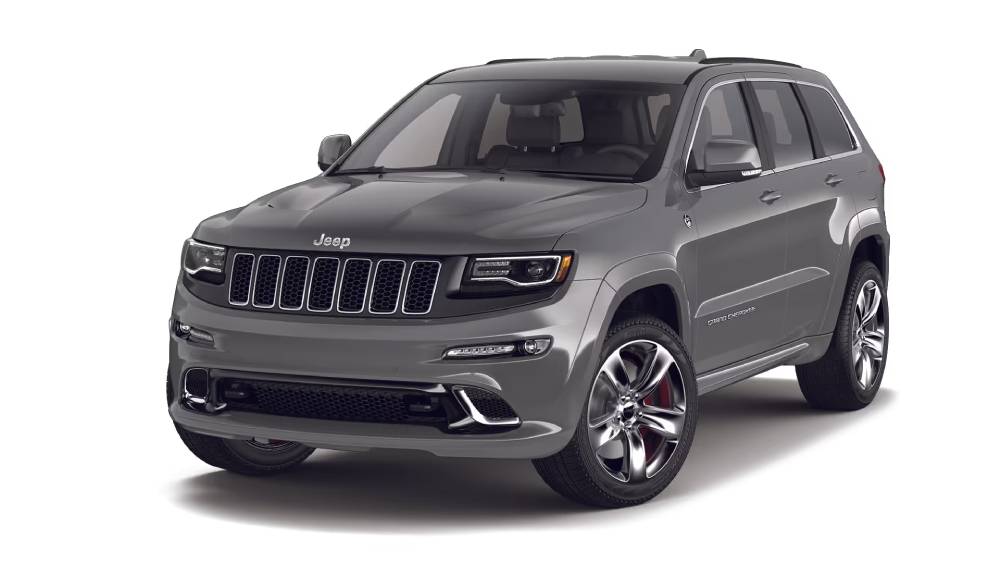
What Gas Type Does the Jeep Grand Cherokee Use?
The correct Jeep Grand Cherokee gas type depends primarily on the engine and model year. Most Grand Cherokee models use unleaded gasoline, but the recommended octane rating can range from regular 87 octane to premium 91 octane or higher.
For many owners, the simplest answer is this: a Jeep Grand Cherokee equipped with the widely used 3.6 liter Pentastar V6 normally runs on regular unleaded gasoline with an octane rating of 87. Current Jeep specifications also list regular unleaded gasoline as the recommended fuel for the 2026 Grand Cherokee.
However, not every Grand Cherokee follows the same requirement. Older models with the 5.7 liter HEMI V8 generally recommend 89 octane gasoline for the best performance and fuel economy, although 87 octane may be acceptable in certain model years. Performance focused versions, including models equipped with the 6.4 liter V8 or 6.2 liter supercharged V8, require premium unleaded gasoline with an octane rating of at least 91.
The table below provides a general overview.
| Jeep Grand Cherokee engine | Typical fuel recommendation | Octane rating |
|---|---|---|
| 3.6 liter Pentastar V6 | Regular unleaded | 87 |
| 5.7 liter HEMI V8 | Midgrade recommended | 89 recommended, 87 acceptable in specified models |
| 6.4 liter V8 | Premium unleaded | 91 or higher |
| 6.2 liter supercharged V8 | Premium unleaded | 91 or higher |
| 2.0 liter turbo hybrid 4xe | Regular unleaded acceptable | 87 minimum, premium may improve performance |
| Newer 2.0 liter turbo gasoline engine | Regular unleaded | 87 |
These recommendations should be treated as a general guide rather than a replacement for the instructions supplied with your specific vehicle. Jeep has offered different engines, calibrations, and powertrains across generations. Even two Grand Cherokees from nearby model years may have different fuel recommendations.
Before filling the tank, check the fuel door label, owner’s manual, or vehicle information linked to your Vehicle Identification Number. This small step can prevent unnecessary spending at the pump and help you avoid the performance problems associated with using gasoline below the required octane rating.
It is also important to distinguish between the words “required,” “recommended,” and “acceptable.” If Jeep requires premium fuel, you should consistently use the specified premium grade. If premium is only recommended, the engine may safely operate on regular gasoline, but it might deliver less power or respond differently under heavy acceleration, towing, or high temperature driving.
Understanding Octane Ratings
Octane ratings measure a gasoline’s resistance to uncontrolled combustion inside the engine. At fuel stations in the United States, gasoline is commonly sold as 87 regular, 89 midgrade, and 91 or 93 premium.
The octane number does not indicate how much energy the fuel contains, nor does it automatically mean that premium gasoline is cleaner or more efficient. Its main purpose is to show how well the fuel resists engine knock.
Engine knock occurs when the air and fuel mixture burns at the wrong time or combusts unevenly inside the cylinder. Instead of producing a controlled flame, part of the mixture can ignite unexpectedly. This creates a metallic knocking or pinging sound and places additional stress on internal engine components.
Modern Jeep Grand Cherokee engines use knock sensors and electronic engine controls to detect abnormal combustion. When the system identifies knocking, it may adjust ignition timing to protect the engine. That protection is useful, but it can also reduce acceleration, responsiveness, and overall performance.
This is why octane requirements often increase with engine output. A standard 3.6 liter V6 is engineered to perform properly on 87 octane gasoline. A high compression or supercharged performance engine produces more heat and cylinder pressure, so it needs fuel with greater resistance to premature combustion.
Using premium gasoline in a Grand Cherokee designed for 87 octane normally does not cause damage. The main disadvantage is financial. Unless the engine has been designed to take advantage of the higher octane rating, drivers may notice little or no meaningful improvement in horsepower, fuel economy, or smoothness. Jeep’s 2019 guidance for the 3.6 liter engine specifically stated that premium gasoline was not required and would not provide an advantage over regular fuel.
Using fuel below the required octane rating creates a different situation. A single accidental fill may not immediately destroy the engine, especially if the vehicle’s computer reduces power to compensate. Repeated use, however, can increase the risk of knocking and poor performance.
Fuel quality also matters. Even gasoline with the correct octane rating can cause hard starting, hesitation, or stalling if it is contaminated or poorly formulated. Filling up at a busy, reputable station can reduce this risk because the fuel supply is usually replenished more frequently.
Jeep Grand Cherokee Fuel Requirements by Engine
3.6 Liter Pentastar V6
The 3.6 liter Pentastar V6 is one of the most common engines found in the Jeep Grand Cherokee. It is designed to use high quality regular unleaded gasoline rated at 87 octane.
This makes the V6 attractive to families and daily drivers who want a capable SUV without paying premium fuel prices at every stop. Filling the tank with 91 or 93 octane gasoline is generally unnecessary unless the owner’s manual for a particular vehicle states otherwise.
Owners should avoid assuming that premium gasoline will automatically increase fuel economy. Driving habits, tire pressure, traffic conditions, vehicle weight, and maintenance usually have a much greater influence on fuel consumption.
5.7 Liter HEMI V8
The 5.7 liter HEMI V8 requires more attention because its recommendation differs from that of the standard V6. For many Grand Cherokee model years, Jeep recommends 89 octane gasoline to achieve the best combination of performance and fuel economy. The manufacturer has also listed 87 octane as acceptable for certain versions.
Using 87 octane occasionally may be practical when 89 is unavailable, but owners who frequently tow, carry heavy cargo, drive in extreme heat, or demand strong acceleration may benefit from following the 89 octane recommendation.
The extra cost can become noticeable because V8 models tend to consume more fuel than V6 versions. Still, choosing a cheaper grade against the recommendation may not produce real savings if the engine reduces timing or performance.
6.4 Liter V8 and 6.2 Liter Supercharged V8
The 6.4 liter V8 used in SRT models and the 6.2 liter supercharged V8 found in the Trackhawk are high performance engines. These powertrains require premium unleaded gasoline rated at 91 octane or higher.
Jeep’s fuel guidance for these engines specifies premium fuel because they operate under substantially greater loads and cylinder pressures than the standard V6.
Regular gasoline should not become the normal choice for these vehicles. Although the engine management system may respond to lower octane fuel by reducing ignition timing, the driver could experience weaker acceleration and reduced performance. Persistent use may also increase the likelihood of knocking under demanding conditions.
Owners who purchase an SRT or Trackhawk should include premium fuel in the expected cost of ownership. These models were developed for power and performance, so using the required fuel is part of maintaining the driving experience they were designed to deliver.
Jeep Grand Cherokee 4xe
The Grand Cherokee 4xe combines a turbocharged 2.0 liter gasoline engine with an electric motor and rechargeable battery. According to Jeep’s 2025 vehicle documentation, the 2.0 liter hybrid engine can use 87 octane gasoline. The same document notes that higher octane premium gasoline may allow the engine to achieve optimal performance.
This distinction is important. Owners do not necessarily need to purchase premium gasoline for ordinary operation, but higher octane fuel may be useful when maximum engine performance is desired.
Because the 4xe can complete some journeys using electric power, gasoline may remain in its tank longer than it would in a conventional Grand Cherokee. Owners who drive mostly on battery power should still follow Jeep’s maintenance guidance and avoid leaving aging fuel in the vehicle for excessive periods.
The safest rule for every engine is simple: use the fuel grade printed on your specific vehicle’s fuel door or listed in its owner’s manual. The Jeep Grand Cherokee gas type can change by engine, trim, market, and model year, so vehicle specific information should always take priority over general advice.
Fuel Type by Model Year
Although the Jeep Grand Cherokee has remained one of the most recognizable midsize SUVs for decades, its fuel recommendations have evolved alongside new engines, improved technologies, and changing emissions standards. Knowing your vehicle’s model year is just as important as knowing which engine is under the hood because fuel requirements may vary even when the engine appears similar.
The following table provides a general overview of recommended gasoline grades for popular Jeep Grand Cherokee model years.
| Model Year | Common Engine Options | Recommended Fuel |
|---|---|---|
| 2011 to 2013 | 3.6L Pentastar V6, 5.7L HEMI V8 | 87 for V6, 89 recommended for HEMI |
| 2014 to 2016 | 3.6L V6, 5.7L HEMI, 6.4L SRT | 87 for V6, 89 for HEMI, 91 plus for SRT |
| 2017 to 2021 | 3.6L V6, 5.7L HEMI, 6.4L SRT, 6.2L Trackhawk | 87, 89, or 91 plus depending on engine |
| 2022 to 2026 | 3.6L V6 and 2.0L Turbo 4xe | 87 for standard engines, follow owner recommendations for specific trims |
Owners of newer Grand Cherokee models benefit from advanced engine management systems that automatically adjust ignition timing based on fuel quality. While these systems provide additional protection, they should not be viewed as a substitute for using the recommended gasoline.
If you are purchasing a used Jeep Grand Cherokee, never assume the previous owner always used the correct fuel. Verify the engine type using the Vehicle Identification Number, review the owner’s manual, or inspect the fuel door label. These sources provide the most accurate information for your specific vehicle.
Drivers who frequently travel across different states or countries should also remember that octane measurement systems can vary by region. In North America, fuel pumps typically display the Anti Knock Index, while many other countries use the Research Octane Number. Understanding this difference helps prevent confusion when refueling abroad.
Whenever there is a discrepancy between online information and your owner’s manual, always follow the manufacturer’s official recommendation. Jeep engineers determine the appropriate fuel based on extensive testing of each engine configuration.
Regular vs Premium Gas
One of the most common questions among Jeep Grand Cherokee owners is whether premium gasoline is worth the additional cost. The answer depends entirely on the engine installed in your vehicle.
Regular gasoline, typically rated at 87 octane, is designed for engines with standard compression ratios. It is the least expensive option available at most fuel stations and provides excellent performance for Grand Cherokee models equipped with the 3.6 liter Pentastar V6.
Premium gasoline generally carries an octane rating of 91 or higher. It is formulated to resist pre ignition in high compression or forced induction engines. Vehicles such as the Grand Cherokee SRT and Trackhawk are specifically engineered to take advantage of premium fuel.
For most V6 owners, filling the tank with premium gasoline will not noticeably increase horsepower, fuel economy, or engine longevity. Modern engines are calibrated to perform efficiently using the fuel grade specified by the manufacturer. Spending extra money on higher octane gasoline when it is not required usually offers little measurable benefit.
There are situations where premium fuel may provide slight advantages. Drivers towing heavy trailers, climbing steep mountain roads, or operating in extremely hot climates may notice smoother performance if their engine recommends, rather than requires, higher octane fuel. However, these improvements are often modest and may not justify the additional fuel cost for everyday driving.
The table below summarizes the differences.
| Feature | Regular Gasoline | Premium Gasoline |
|---|---|---|
| Typical Octane | 87 | 91 to 93 |
| Cost | Lower | Higher |
| Best For | Standard V6 engines | High performance V8 and turbocharged engines requiring premium |
| Fuel Economy | Similar when recommended | Similar unless engine is designed for premium |
| Engine Protection | Excellent when recommended | Necessary only for engines requiring higher octane |
The best financial decision is to purchase the gasoline grade specified for your engine. Using a higher octane fuel than necessary rarely provides enough additional performance to offset its higher price.
What Happens If You Use the Wrong Gas?
Accidentally filling your Jeep Grand Cherokee with the wrong gasoline grade is a common concern, especially for new owners. Fortunately, the consequences depend on which fuel was used and what your engine actually requires.
If your vehicle is designed for regular 87 octane gasoline and you accidentally fill it with premium fuel, there is usually no reason for concern. Premium gasoline burns safely in engines designed for regular fuel. In most cases, the only noticeable difference is the higher price you paid at the pump. Performance improvements are typically minimal because the engine cannot fully utilize the additional octane.
The opposite situation deserves more attention. If your Jeep Grand Cherokee requires premium gasoline and you fill it with regular fuel, the engine management system will usually detect the lower octane and adjust ignition timing to reduce the risk of engine knock. While this protective feature helps prevent immediate damage, you may notice slower acceleration, reduced throttle response, lower towing performance, and decreased overall efficiency.
Repeated use of gasoline below the recommended octane level can place additional stress on high performance engines. Under demanding conditions such as towing, aggressive acceleration, or driving in high temperatures, persistent knocking may eventually contribute to premature engine wear if the manufacturer’s fuel recommendations are consistently ignored.
Another mistake involves using diesel fuel in a gasoline powered Jeep Grand Cherokee or gasoline in a diesel vehicle. This is a much more serious problem than selecting the wrong octane rating. If the wrong type of fuel is pumped into the vehicle, do not start the engine. Starting the vehicle can circulate contaminated fuel through the fuel system and significantly increase repair costs. Instead, have the vehicle towed to a qualified repair facility where the fuel system can be properly drained and inspected.
If you accidentally use the wrong octane once, there is generally no need to panic. Refill the vehicle with the correct gasoline at your next opportunity and monitor for unusual engine noises or warning lights. If symptoms such as persistent knocking, rough idling, or reduced performance continue after refueling with the correct gasoline, schedule an inspection with a qualified technician to ensure no underlying issues are present.
Tips for Better Fuel Economy
Using the correct Jeep Grand Cherokee gas type is only one part of maximizing fuel efficiency. Your driving habits, maintenance routine, and overall vehicle condition have a much greater impact on fuel consumption than many drivers realize. By following a few simple practices, you can reduce fuel costs while helping your Grand Cherokee perform at its best.
Maintain Proper Tire Pressure
Underinflated tires create additional rolling resistance, forcing the engine to work harder. Even a small drop in tire pressure can reduce fuel economy over time.
Check your tire pressure at least once a month and before long trips. Always inflate your tires to the pressure listed on the driver’s door jamb rather than the maximum pressure printed on the tire itself.
Follow the Recommended Maintenance Schedule
Routine maintenance keeps your engine operating efficiently. Dirty air filters, worn spark plugs, contaminated engine oil, and overdue service can all increase fuel consumption.
Follow Jeep’s recommended maintenance intervals for oil changes, filter replacements, and engine inspections. A properly maintained engine burns fuel more efficiently and delivers better overall performance.
Drive Smoothly
Aggressive acceleration and hard braking waste fuel. Rapid changes in speed require the engine to consume significantly more gasoline than gradual acceleration.
Whenever possible, accelerate smoothly, anticipate traffic conditions, and maintain a consistent speed. Highway driving at steady speeds generally produces better fuel economy than frequent stop and go traffic.
Reduce Excess Weight
Every additional pound carried by your vehicle requires extra energy to move. Remove unnecessary cargo from the trunk or cargo area, especially heavy equipment that is not used regularly.
Roof racks, cargo boxes, and bicycle carriers can also increase aerodynamic drag, reducing highway fuel economy even when they are empty.
Use Cruise Control on Highways
Cruise control helps maintain a constant speed during highway driving. By minimizing unnecessary acceleration and deceleration, it can improve fuel efficiency on long trips.
This feature is especially useful on flat highways where traffic conditions allow steady driving.
Avoid Excessive Idling
Modern engines consume less fuel restarting than they do idling for extended periods. If you expect to remain stopped for more than a minute, turning off the engine may help reduce unnecessary fuel consumption when it is safe to do so.
Purchase Quality Fuel
Not all gasoline is identical. Buying fuel from reputable stations helps ensure cleaner fuel and proper detergent additives that keep fuel injectors and combustion chambers cleaner over time.
While premium gasoline is not necessary unless your engine requires it, choosing fuel from trusted brands can contribute to consistent engine performance.
Plan Your Trips
Combining several short errands into one longer trip allows the engine to reach its optimal operating temperature more quickly. Cold engines consume more fuel during the first few minutes of operation, making multiple short trips less efficient than one continuous drive.
By combining these driving habits with the correct fuel grade, most Jeep Grand Cherokee owners can enjoy lower operating costs while maintaining excellent vehicle performance.
Frequently Asked Questions
Can I use 87 octane gas in a Jeep Grand Cherokee?
Yes, if your Jeep Grand Cherokee is equipped with the 3.6 liter Pentastar V6 or another engine specifically designed for regular unleaded gasoline. Always verify the recommended fuel grade in your owner’s manual or on the fuel door before refueling.
For vehicles that require premium gasoline, using the recommended fuel helps the engine achieve its intended performance and efficiency. However, if your Grand Cherokee is designed for regular gasoline, switching to premium fuel is unlikely to produce a noticeable improvement in fuel economy.
High performance models equipped with the 6.4 liter V8 or the supercharged 6.2 liter V8 require premium unleaded gasoline with an octane rating of at least 91. Some 5.7 liter HEMI models also recommend midgrade fuel for optimal performance.
Yes. Mixing regular and premium gasoline is generally safe because both are unleaded fuels. The resulting octane rating will fall somewhere between the two grades. While this is acceptable occasionally, it should not replace consistently using the fuel grade recommended by Jeep.
No. Premium gasoline will not harm an engine designed for regular fuel. The primary disadvantage is the additional cost, as most engines calibrated for 87 octane will experience little or no measurable performance benefit.
Most modern Jeep Grand Cherokee models use electronic engine controls that can adjust ignition timing to reduce knocking. You may notice reduced power or slower acceleration, but a single tank of regular gasoline is unlikely to cause immediate engine damage. Refill with the correct fuel as soon as practical.
Where can I find the recommended fuel type for my Jeep Grand Cherokee?
The easiest places to check are the owner’s manual, the label inside the fuel filler door, or the vehicle specifications provided by Jeep using your Vehicle Identification Number.
Conclusion
Choosing the correct Jeep Grand Cherokee gas type is one of the simplest ways to protect your investment and ensure your SUV performs as Jeep intended. While many Grand Cherokee models equipped with the 3.6 liter Pentastar V6 operate perfectly on regular 87 octane gasoline, higher performance engines such as the 5.7 liter HEMI, 6.4 liter V8, and 6.2 liter supercharged V8 may require higher octane fuel to deliver their full potential.
Understanding the difference between regular, midgrade, and premium gasoline helps you make informed decisions every time you visit the fuel station. Using the manufacturer’s recommended fuel grade can improve engine performance, reduce the likelihood of knocking, and contribute to long term reliability without spending more than necessary.
Remember that fuel recommendations may vary by engine, trim level, and model year. Before filling your tank, always consult your owner’s manual or check the label inside the fuel door to confirm the correct gasoline for your specific vehicle.
With the right fuel, proper maintenance, and efficient driving habits, your Jeep Grand Cherokee can deliver dependable performance, excellent driving comfort, and years of reliable service. Whether you use your SUV for daily commuting, family road trips, off road adventures, or towing heavy loads, following the correct fueling practices will help you get the most from every mile.
If you found this guide helpful, consider sharing it with other Jeep owners or bookmarking it for future reference. Have a question about your specific Jeep Grand Cherokee model or engine? Leave a comment below, and we’ll be happy to help you find the right answer.